Sparkling Things for the Holidays

4

I’d like to take a moment to wish you health and happiness for the holiday season.

And did I mention bling?

Image

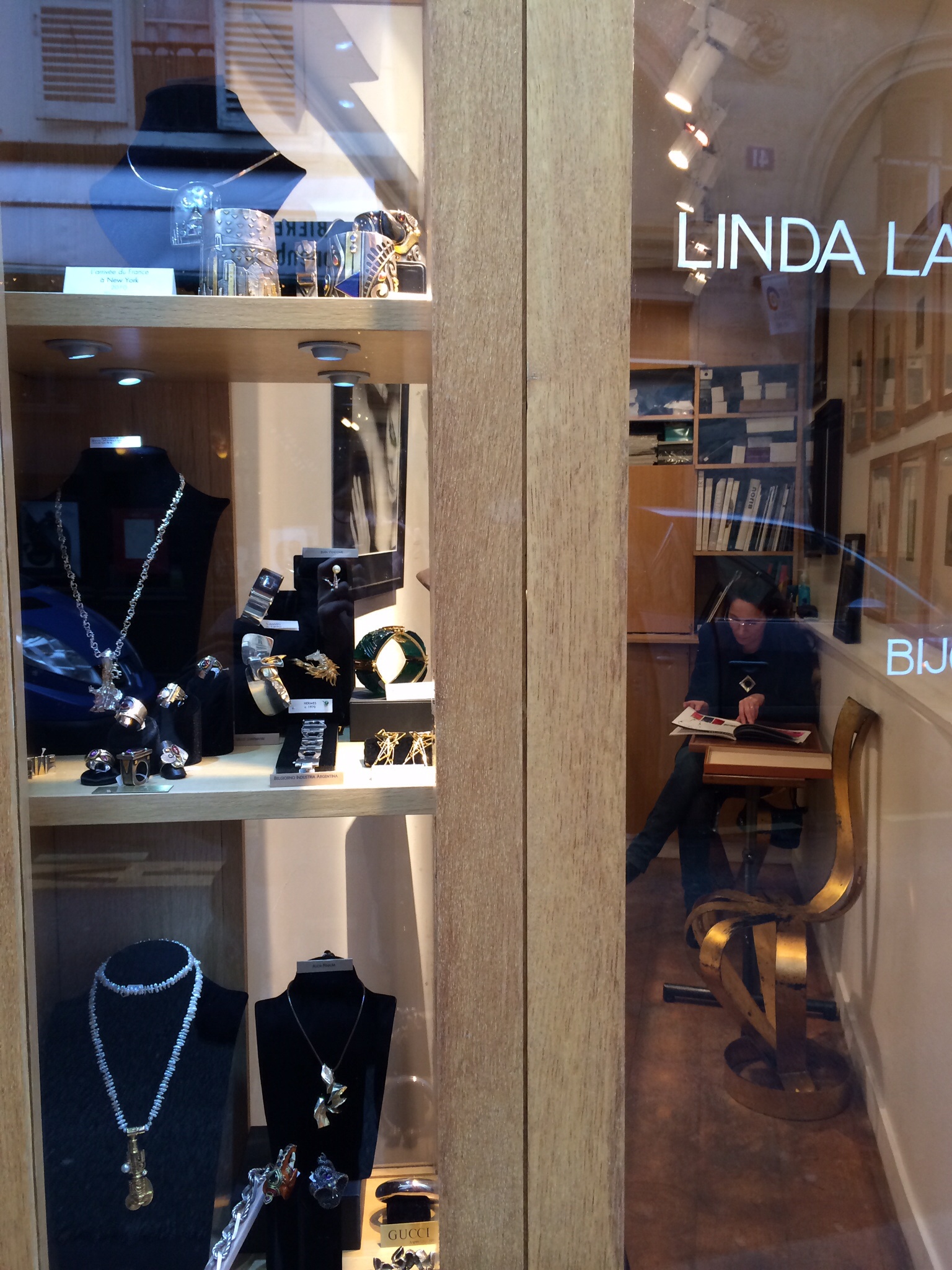
Well, t’is the season to be jolly and enjoy sparkly things.  So here are a few I spotted as I was wandering about the neighborhood where we’re staying in Paris.

Image

How’s about that 40s gold and sapphire bracelet in the lower left corner? I can’t even imagine the prices of these vintage pieces. Usually I’m blogging about sewing and vintage fashion, but once you’re done, you do need something to go on it, right? Talk to me, Harry Winston, diamonds are a girl’s best friend!

Image

Love that deco lavelier in the center at the top.

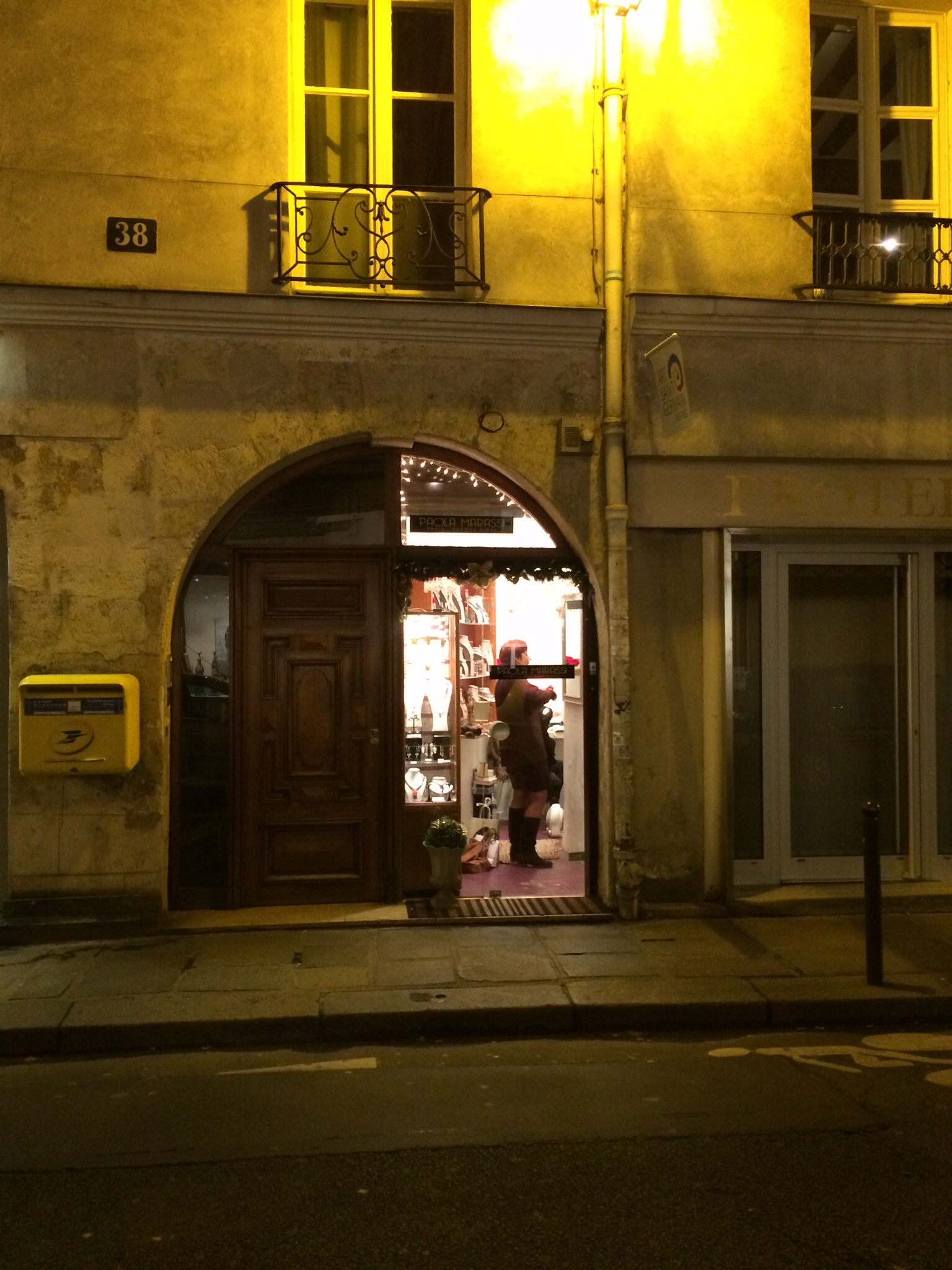
The area is filled with jewelbox-sized shops that are approximately 7 feet by 3 feet…just enough room for the proprietor to sit, and a visitor to turn around.Image

Image

In this shop,the proprietress sits there beading all day. Is that your idea of crafting heaven or hell? The door says Paris/Buenos Aires, which sounds like a pretty good deal to me.

It’s not all precious gems and gold, though. The tiny shop Tiany Chambard, specializing in Art Deco bakelite and chrome, has been on the rue Jacob for more than 25 years.Image


And other things in the neighborhood are equally jewel-like.Image

Image

Image

Thank you so much for joining me here at Jet Set Sewing this year. I appreciate each and every visit. Happy holidays!

Julie

Bonjour Paris

4

image Here’s the view out of the apartment window of the best friends we’ve never met, the owners of our vacation rental in Paris. We’re staying in the 6th arrondisement, the left bank neighb where Hemingway and Beauvoir hung out, which has morphed into a high-rent district and primo shopping area, while hanging onto at least some of its artsy charm.

Having left my sewing machine at home, I plan to fill my days researching Paris mode and shopping for supplies for future projects. Fortunately we’ve been to Paris enough that I feel absolutely no compulsion to do anything cultural or historic and neither does anyone else in the family.

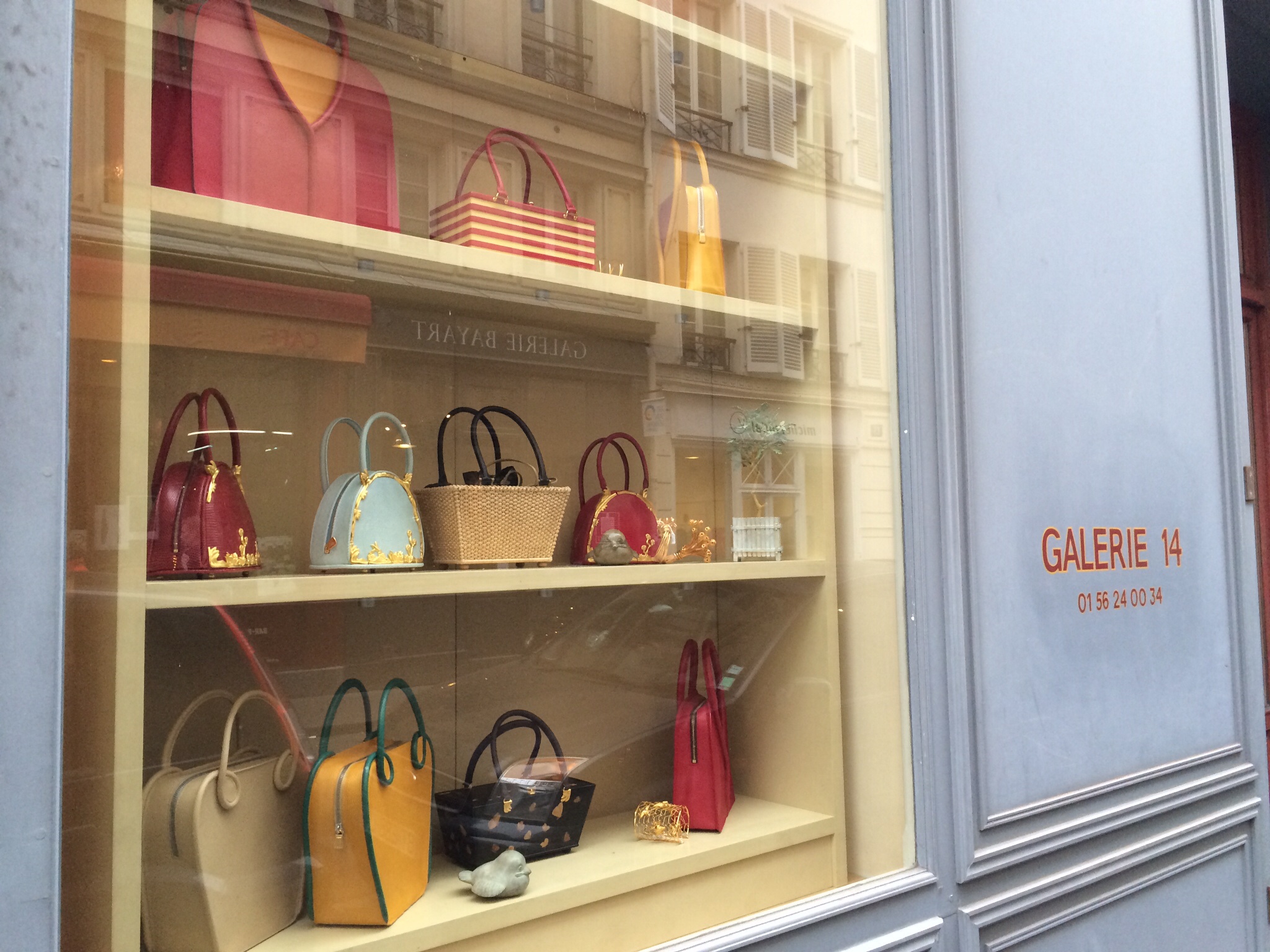
imageUnder the guise of “getting groceries” yesterday, I escaped the boys and wandered the neighborhood. About 40 feet down the rue des Beaux Arts, I came across this “gallery” with beautifully designed and handcrafted leather bags. Love the striped box bag on the top; very 40s.

image Turning onto the rue Boneparte, I passed the array of small galleries and high-end boutiques that have taken over the area. Some are well-known, like Azzadine Alaia’s shop, where I encountered this masterful suede and embroidered dress with cropped emerald shearling jacket (and matching boots and gloves) highlighting the sexy draping and construction he’s known for. Fortunately, most Paris shop windows helpfully list the price of items inside, saving you from going in and embarrassing yourself.

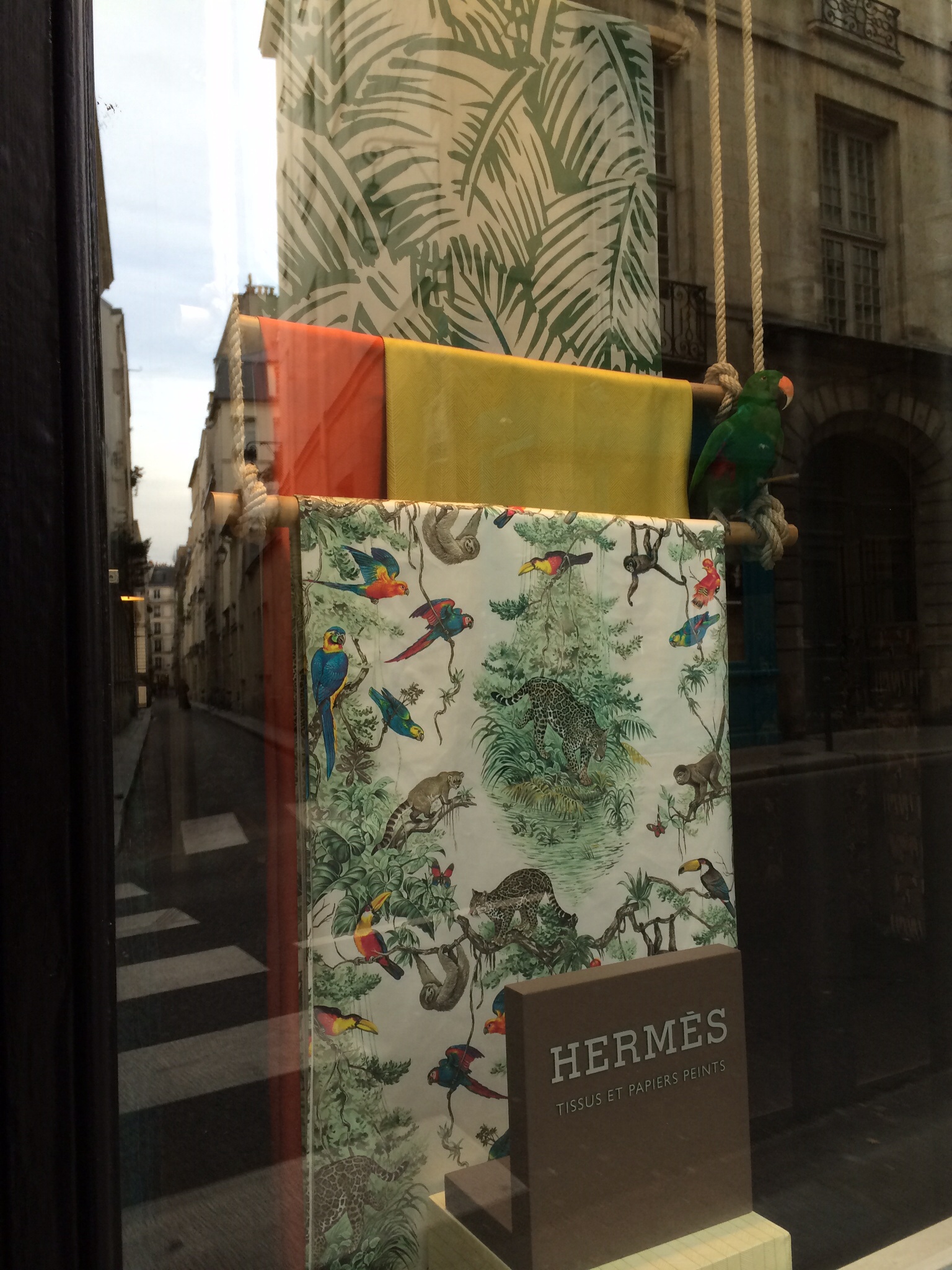
image  This area has a number of antique furniture galleries and shops for decorator fabric. I was mighty glad that the Hermes fabric and wallpaper shop was closed as I would have been sorely tempted. I’m not much of a home dec maven, but I do believe that a girl should have some Hermes scarves in her arsenal (my vintage collection came from Ebay and the Paris “depot vente” (consignment store) called Reciproque) and I might have convinced myself to make some Hermes pillows to go with them.

imageEverything in these little shops is so beautifully crafted and artfully arranged.

image  Everything.

image  I had long  passed the grocery store and the cafe where Hemingway hung out, so I wandered into the Monoprix, which is what Target would be if it were next to Armani, across from Cartier, and not stuffed to the gills  with off-shore crap.  I’m still thinking about the all-wool expressionist scarf on the right.

image But, honestly, I knew where  I was  going all  along.  I had to visit my old friend Agnes  b.  This French brand is  semi-culty  among hip American prep-school girls and the Japanese.  I’ve been wearing “Agnes” since my husband’s daughter introduced me to her line in the late 80s. Her sweaters and tops, made of cotton rib or merino, still work with my “urban boomer granny” uniform of black stretch jeans, black top, and colorful asides like the aforementioned Hermes scarves. There were a number of women in there shopping in pairs (like the women in the photo, one of whom has a massive Chanel bag slung over her shoulder). All around, women were exclaiming “jolie!” (pretty), “mignon” (cute) or “fou” (crazy). No one appeared to be shopping for gifts, and unlike the U.S. at Christmas, the store music was not blasting “it’s the MOST WUNNNDERFUL time of the year…” to inspire the legion of American women nearing holiday collapse.

image While I was there, I saw a version of the knitted “hoodie” that American Look designer Claire McCardell invented in the 40s and tried unsuccessfully to patent. She liked to ski, so she made it to keep her ears warm.

I picked up one of Agnes b.’s cotton sweaters with snaps, and wore it out to dinner with my husband last night. Having mailed off my Xmas presents before leaving the US, and having visited with family earlier in the year, chilling in Paris over the holidays IS the most wonderful time of the year.

I’m going to be shopping for fabric and notions over the next several days. Any suggestions?

How to make the Madeleine Vionnet 30s Scarf

14

image

In a recent post I promised details about making a scarf designed by Madeleine Vionnet, which is shown at the bottom of this post in the photo composite. As I mentioned, the Betty Kirke “Vionnet” book, which you can see on this link: http://www.amazon.com/Madeleine-Vionnet-Betty-Kirke/dp/1452110697/ref=sr_1_1?ie=UTF8&qid=1387372857&sr=8-1&keywords=vionnet+kirke has drawings of pattern pieces for a number of Vionnet gowns, and also for this scarf. The one thing that’s missing is the “key” to the dimensions of the pieces, which makes the gowns difficult to recreate.

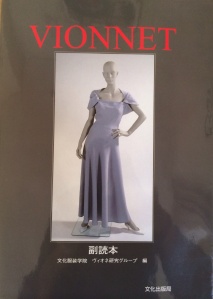
In recent years, the Bunka fashion school in Japan took Betty Kirke’s drawing and recreated them, putting the pattern pieces on a grid. There was an exhibit of the recreated gowns, and then the book with the patterns and instructions (pictured above) was released. Currently this book is only available in Japanese, but between the two books it’s possible for an English-speaker to figure out how to recreate the patterns, which is pretty amazing. Here’s a link to the Bunka Vionnet  book:  http://www.amazon.com/Vionnet-Japanese-Bunka-Fashion-College/dp/4579109430/ref=sr_1_1?ie=UTF8&qid=1387373215&sr=8-1&keywords=vionnet+bunka

I decided to test out a method of recreating these designs by using a relatively simple pattern, which was the scarf. Since these books are under copyright, I won’t be showing the actually pages with the pattern and direction, but you’ll get the idea.

Since I was too lazy to draw the gridded pattern onto a larger sheet of paper, I found a website called rapidresizer.com, copied and uploaded the picture of the pattern in the book, then was able to set it to print out on a larger scale. It came out piece by piece on 8″x10″ paper, and then I taped it together like a PDF pattern. After some trial and error, it worked fine.

I traced over the pattern with butcher block paper, and it looked like this:

imageIf you look closely, you’ll see that the grainline is on the bias, which a very important element in the drape of the scarf. Vionnet’s manipulation of the stretch on the bias in her garments are what made them architectural masterpieces. According to Betty Kirke, Vionnet did a line of dresses that she shipped to US manufactures that were unhemmed. The idea was that the bias cuts would stretch to fit anyone, and all the store had to do was lengthen or shorten for the individual customer. Unfortunately the idea was way ahead of it’s time and it bombed. But wow, what a forward-thinking concept!

The instructions for the scarf are all in Japanese, but I’ll give you the general jist:

Cut two of the pattern piece shown above, on the bias. Choose a fabric with some crispness, or underline a soft fabric with identical pieces of silk organza. You’ll need about 1 1/2 to 2 yards of fabric, and I suggest using something that looks interesting on the bias. Here, I used some vintage 30s wool challis from International Silk and Woolens in Los Angeles.

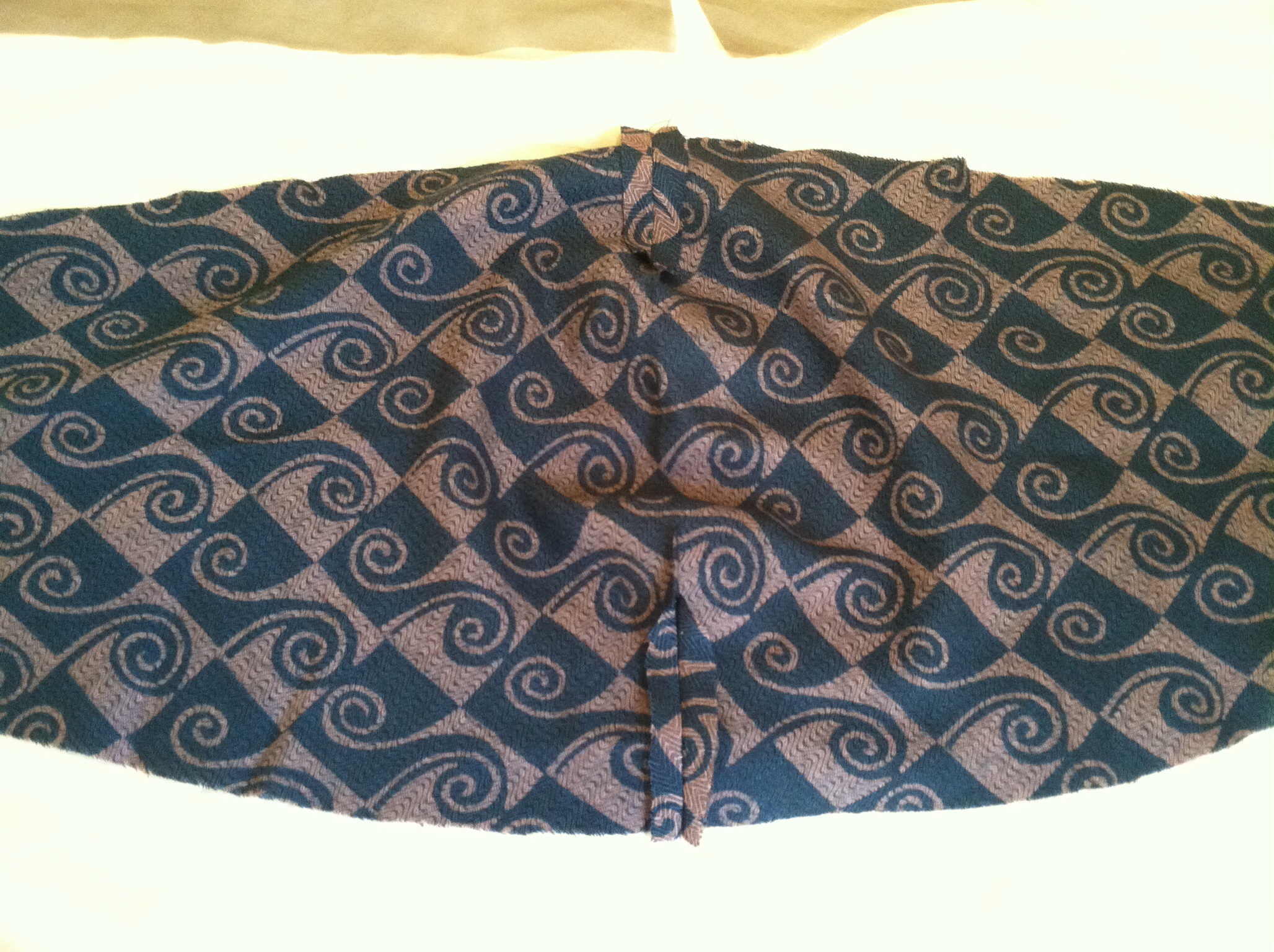
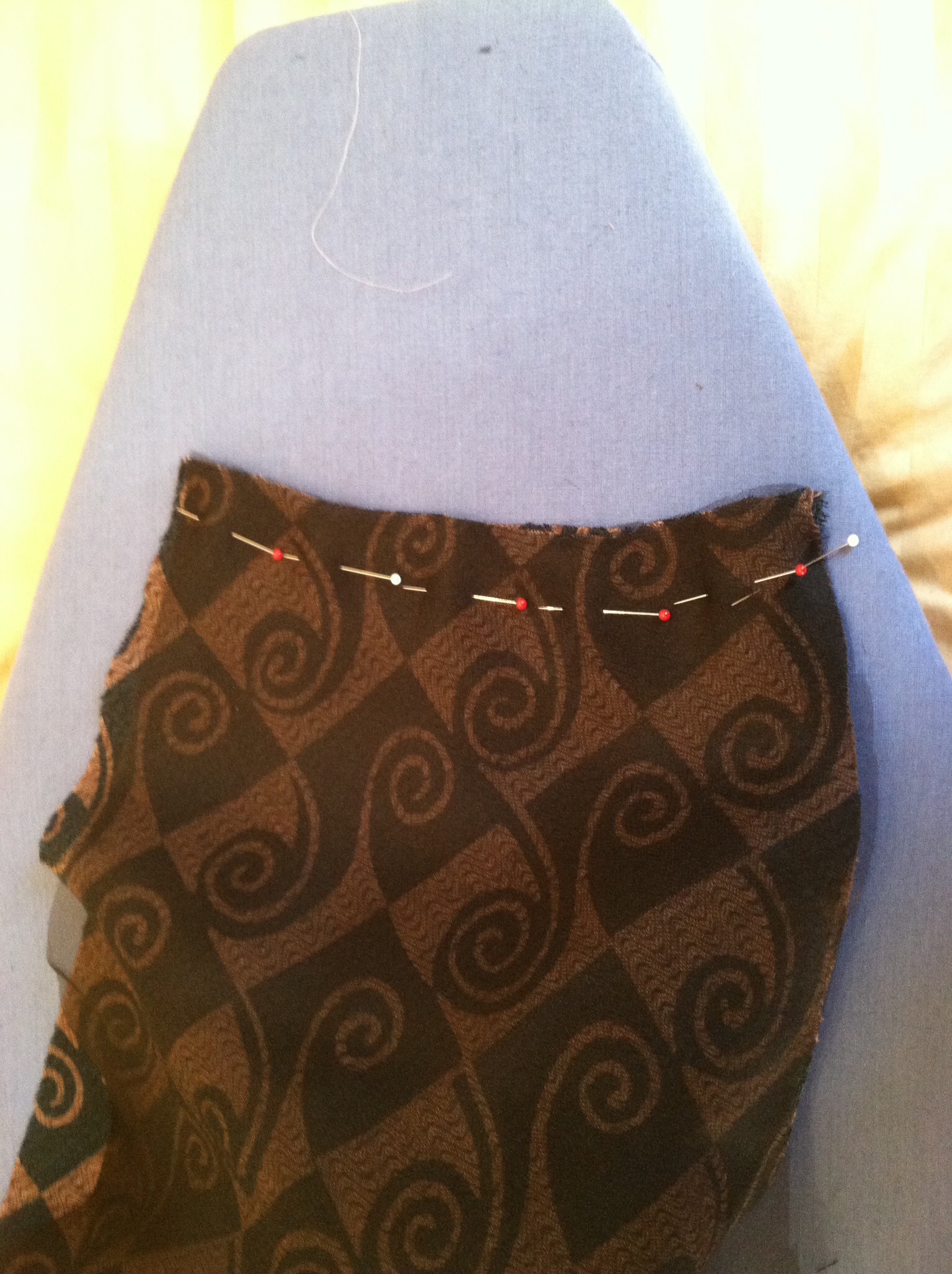
imageSew the “V” shaped cutouts into darts on both sides of both pieces, right sides together, and press. When sewing on the bias, be very careful not to stretch the fabric as you feed it into the machine.

imageSew two of the short ends of the pieces right sides together (you can see I’ve added a silk organza underlining to this soft wool challis).

imageFold the entire scarf lengthwise, right sides together, and sew along the lengthwise seam, again being careful not to stretch it as you’re sewing. Press the seam open.

imageTurn the entire length of the scarf right side out via one of the short ends. The lengthwise seam is now the center back of the scarf. Give that seam and the rest of the scarf a soft steam press, avoiding making creases.

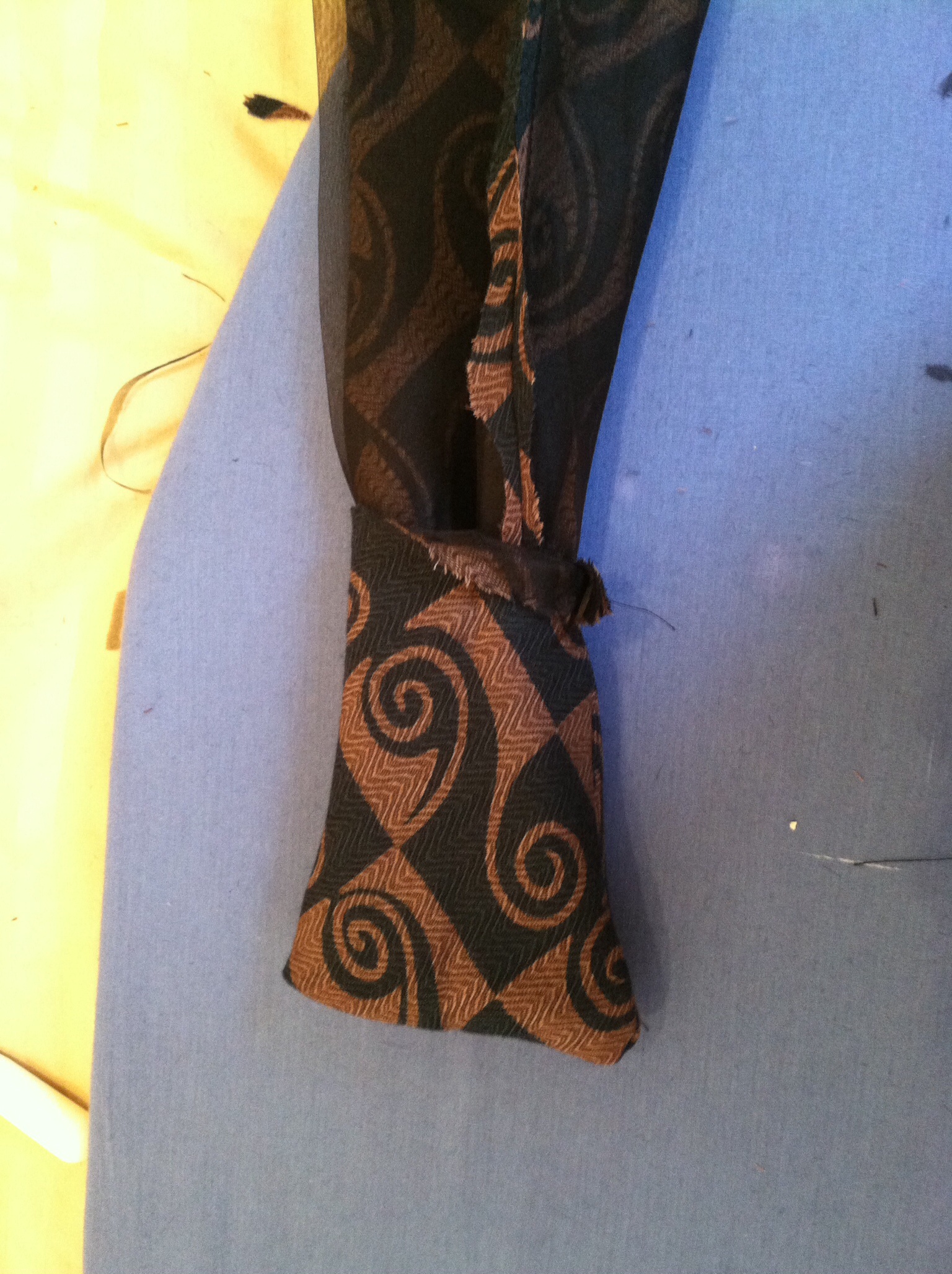
imageTuck under the seam allowances of the two raw ends at either end of the scarf. Make the scarf into a circle like an infinity scarf, without any twists. Insert one unfinished end into the other and fell-stitch them together. You’re done!

imageTo wear the scarf, fold it in half and put the two narrow ends behind your neck. The two large loops will be hanging down in front of your chest. Stick your hands through the loops as shown, grab the outer edges and pull them through. The scarf becomes a bow like magic! Fiddle with it a little to hide the seam. Sometimes I find it works better to put it on inside-out so the seam is hidden when you pull the loops through.

This scarf is so distinctive, yet easy to wear. The bias cut and darts give it that bow “poof” without a big knot. What a great design!

This is why I’m doing this type of re-creation, honestly. It’s one thing to see these designs in photos, but it’s much more educational and meaningful to go through the designer’s process and then hold it in your hand. My hat’s off to Betty Kirke and the people at Bunka who painstakingly researched these patterns. It’s a rare window into early 20th century design.

I’d be curious to know whether any of you are fans of Vionnet. Have you seen any of her creations up close? She closed her atelier during WWII so I can’t imagine there are many of her gowns still circulating in the vintage world, though there are a number of them in museums, thank goodness. I’ve been getting so many interesting comments, and would love to hear more. Thanks for stopping by.

Vintage Couture Heaven

9

I was searching online about my favorite vintage dealer, Didier Ludot, and stumbled upon this new video series by Hamish Bowles, world-class couture collector and Editor-at-Large at US Vogue Magazine.

It features Hamish traveling the world and visiting many of the top collections and vendors of vintage haute couture and ready-to-wear, curated by a true connoisseur. The series includes a visit to Didier Ludot’s shop.

You can find it here: http://video.vogue.com/watch/vintage-bowles-shopping-at-didier-ludot-in-paris?c=series

The series is classy and worth a look. I always enjoy Hamish Bowles’ writing in Vogue.

Didier Ludot’s tiny shop in the Palais Royal in Paris can only be described as a crammed museum of fashion, and if you’re lucky enough to charm him into having a look you can see some of the great works of 20th century haute couture. Across the courtyard, (former home of the author Colette, and a place with a checkered history that includes a number of duels) you’ll find Didier Ludot’s other shop, “La Petite Robe Noire” (The Little Black Dress) which sells vintage designer black dresses and his own line of clothing–a modern takes on vintage cocktail numbers. When you see stars on the red carpet coyly saying they’re wearing vintage “from Paris”, it’s probably from his shop.

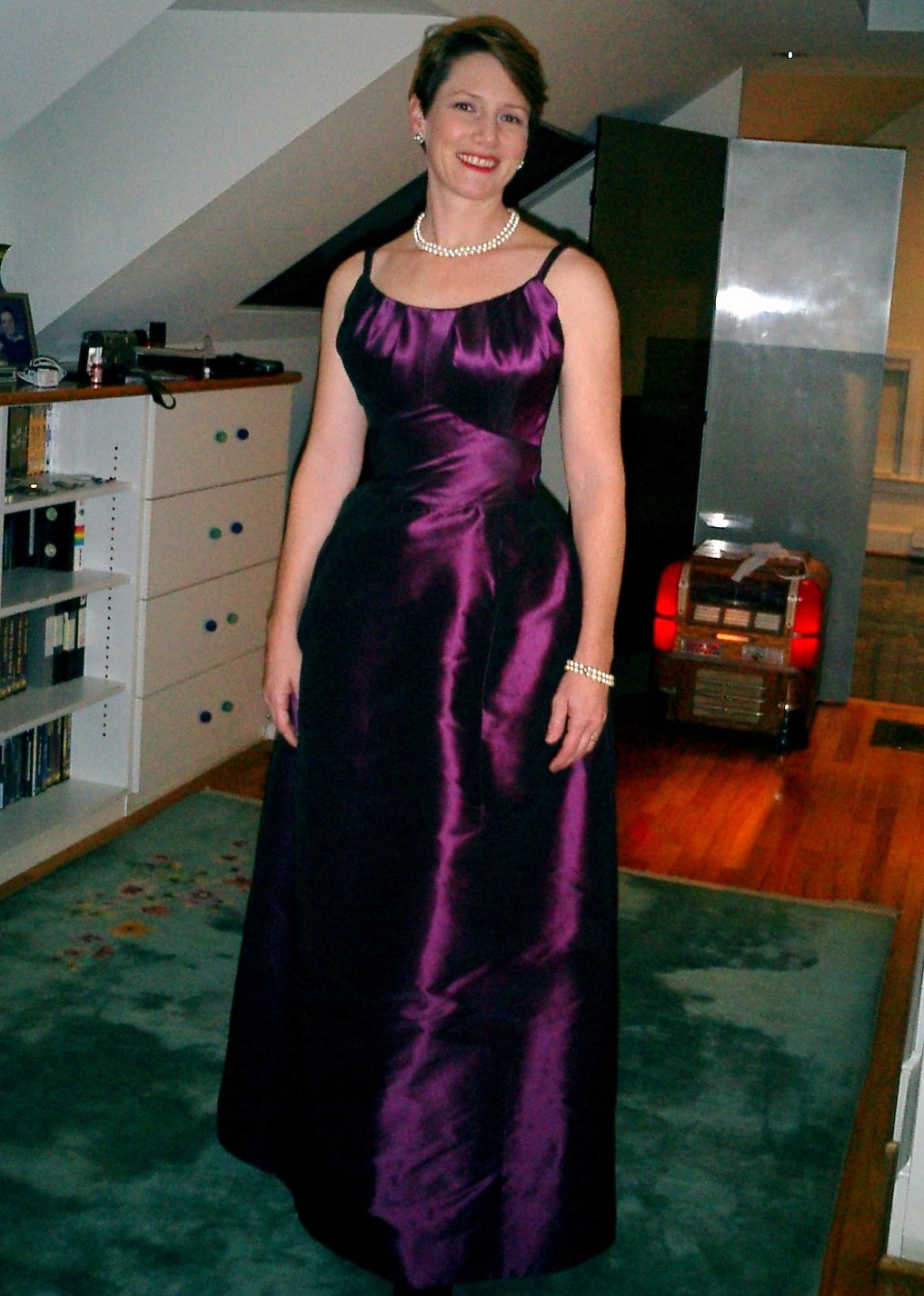
Part of my story is that, as the wife of the lawyer for a number of big show-biz events, a couple of times a year I need to don a gown with a capital “G”. Shopping that should be fun is actually a pain, because modern eveningwear is expensive and awful.

About 15 years ago, my husband, (who unlike most American men has a good eye, an appreciation for good design, and no intimidation about shopping for his wife) spotted this dress as we were walking by Didier’s shop on the way to Juveniles Wine Bar, which is around the corner from the Palais Royal:

Late 50s Jean Patou Dress designed by Karl Lagerfeld.

Late 50s Jean Patou Dress designed by Karl Lagerfeld.

It was on a Barbie-waist-size mannequin, which coincidentally is not my size. When we looked in the shop, Didier, clad in what appeared to be Louis the 16th’s striped pajama bottoms and dancing slippers, was negotiating with a couple of Japanese guys over a 60s Hermes Kelly bag. My protests about the dress not fitting and being mortified went unbidden.

My husband shoved me in the shop, charmed Didier, and before you knew it, I was being shoveled into the hidden interior mesh and boned corset onto which the dress is loosely tacked. The dress itself was made of a heavily-woven iridescent aubergine silk, lined with silk organza, and it was so stiff it could almost stand by itself. The label was Jean Patou, which at that time was designed by Karl Lagerfeld, just starting his career.

Inside the streamlined exterior of the dress was miles of hand-sewing and more engineering than the Golden Gate. To get the corset closed, I would exhale forcefully, then have my husband do up the band of hooks and eyes on the back. After that he would zip up the zipper on the dress over the corset, and from then on I would not draw another full breath until the dress was off again.

I wore that dress to at least 10 events, because, unlike the very American concept of being cool by wearing “something new”, a dress that distinctive can be worn repeatedly, in the more European concept of something being a signature of your taste. The corset gave me a wasp-waist, wonderful posture, and then incredible internal distress as soon as I would eat something at dinner after the event. The last time I wore it, my son was three months old, and upon returning home to a squalling, hungry child and a dress that required ten minutes and a lady’s maid to remove, I hung it up for good. Oh, how I wish I had taken a picture of the interior before I sold it!

Since then, I’ve always made a point to peer in the vitrine of Didier’s shop while walking through the Palais Royal on the way to Juveniles, and once in awhile, I go in and pick something up.

I’ve seen that my blog has had visitors from Saudi Arabia, South Africa, the Netherlands and other points in Europe, New Zealand, Australia, India, Asia, US, Canada… Thank you for stopping by! Do you have a favorite “vintage” shopping place in your area? Please leave a comment; I’d love to hear about it.

Chanel/Vionnet Smackdown!

14
The book "Madeleine Vionnet" by Betty Kirke

The book “Madeleine Vionnet” by Betty Kirke

Are you ready to rrrrrumble?!? This post looks at who’s cooler, Coco Chanel or Madeleine Vionnet. Chanel is still in the public eye due to intense marketing by the modern company that bears her name, as well as the numerous books about her highly dramatic life.

But I’d argue that one of Chanel’s design contemporaries in the 20s and 30s, Madeleine Vionnet, was every bit of a maverick. She perfected the bias cut, inspired countless designers (including my current girl-crush, Claire McCardell), and yet was a much more decent and mature human being.

As  Chanel references for the smackdown, I’m using my faulty memory of a number of books either glorifying or trashing “Mademoiselle” Coco, the chain-smoking party girl who basically made it possible for women to wear comfortable clothes, become enlightened, go to work, and then stress out about having it all. Thanks, hon.

I’ll admit that I’m cribbing a number of points from a review (by The Vintage Traveler blog) of a book about Chanel positing that not only did Chanel have a Nazi lover during WWII, but she was also a spy. Here’s a link to that review, and Lizzie, thank you again for reading a book so I don’t have to:

http://thevintagetraveler.wordpress.com/2013/10/19/currently-reading-sleeping-with-the-enemy-coco-chanels-secret-war/

As my reference for Vionnet, I’m using one of the sewing/vintage fashion world’s most fabulous books, “Madeleine Vionnet” by Betty Kirke. This book should either be put on your coffee table or Christmas list immediately. Here’s the link on Amazon:

http://www.amazon.com/Madeleine-Vionnet-Betty-Kirke/dp/1452110697/ref=sr_1_1?s=books&ie=UTF8&qid=1386857010&sr=1-1&keywords=vionnet

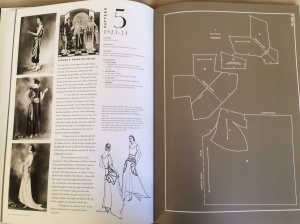
Originally published in 1991, this cult classic is filled with pictures of Vionnet’s groundbreaking bias-cut gowns, and it includes drawings of the pattern pieces, meticulously researched by the author. The text is a complete history of Vionnet, her philosophy, her methods of construction, her inspirations, her company. All I have to say to Betty Kirke, author of this excellent tome, is “you rock”. Here’s a peek inside:
image

Smackdown point #1:

Who was better to her workers?

Coco Chanel had a bitter labor dispute with her workers in the 30s that she lost. Rumor has it that she shut down her atelier during World War II to get back at them, putting 3,000 people out of work.

Madeleine Vionnet, on the other hand, remembering her exploitive treatment at couture houses as a girl, was the first to offer her workers coffee breaks, paid vacation, maternity leave, and the opportunity to advance in the company. During vacations her employees were welcome to come hang out with her at her villa in the south of France. Score 1 Vionnet.

Smackdown point #2:

Who was riding out WWII shacking up with a Nazi in the Paris Ritz? And sleeping with just about everybody else the rest of the time? I have to admit I’ve given that a lot of thought while hand-stitching the Chanel jackets I’ve made.

Meanwhile, Vionnet was caring for her father in a little garden apartment until his death in 1922. After that, she married a man 18 years younger and their relationship was a happy one in the early years at least. You go girl.

Smackdown point #3:

Whose clothing from the 30s would I been seen in walking down the street in now?

Well, unless I’m going to a toga party, I’d be more comfortable wearing a 30s Chanel suit than a floaty bias-cut gown. I’ll give you that one, Coco. However, I have made a bias-cut scarf from a pattern in the Vionnet book that’s very jaunty, and I have been wearing it to death.

Smackdown point #4:

Whose clothing from the 30s would I wear to the Oscars? Though Chanel did create a number of lovely gowns in that era, the hands-down winner is Vionnet, whose bias-cut confections were architectural works of art. Also, because they’re cut on the bias, they have more give, so you can gain a few pounds and still get in them.

And the winner is…

I’ll admit, it’s splitting hairs. They both got women out of corsets and into the modern world. They both were innovators in manipulating fabric for soft structure. They both were geniuses who inspired generations of designers. And they represent the “yin and yang” of modern woman–the unconscionable control freak vs. the mature mentor.

Here’s a photo of Deepika, founder and fearless leader of patternreview.com, modeling a Vionnet scarf that I made:

Deepika in Vionnet Scarf

She looked so cute, I just had to hand it over to her. In my next post, I’ll be writing about how I made this scarf using drawings from the Vionnet book and instructions from this Japanese pattern book:
image

It’s an easy and fun project.

Who do you think wins the smackdown? Chanel or Vionnet? Leave a comment and let me know. And I’m always interested in hearing about your projects! Thanks for stopping by.

I’m tired of Coco, how about you?

13

Okay, here are a few last details of the construction of Chanel Jacket #4 that I’d like to add before moving onto my next, much more fun topic, a Coco Chanel vs. Madame Vionnet Smackdown! Are you working on a Chanel-style jacket right now? If so, leave me a comment; I’d love to hear about it.

1962 Chanel pattern released by Spadea

1962 Chanel pattern released by Spadea

As I mentioned before, this Spadea Chanel pattern from 1962 was drafted from a retail jacket, the design of which was licensed from Chanel by the US company Suzy Perette. This was a common practice back in the days before off-shore manufacturing. In fact, the pink suit worn by Jacqueline Kennedy on the tragic day of the assassination, though often attributed to Chanel, was actually a copy made in a New York haute couture boutique. Here’s a story about the historic preservation of that suit from the New York Times:

The instructions from the 1962 Spadea Chanel pattern I used were very thorough and old school in terms of construction. Though I had never made welt pockets before, by following the instructions they were a breeze.

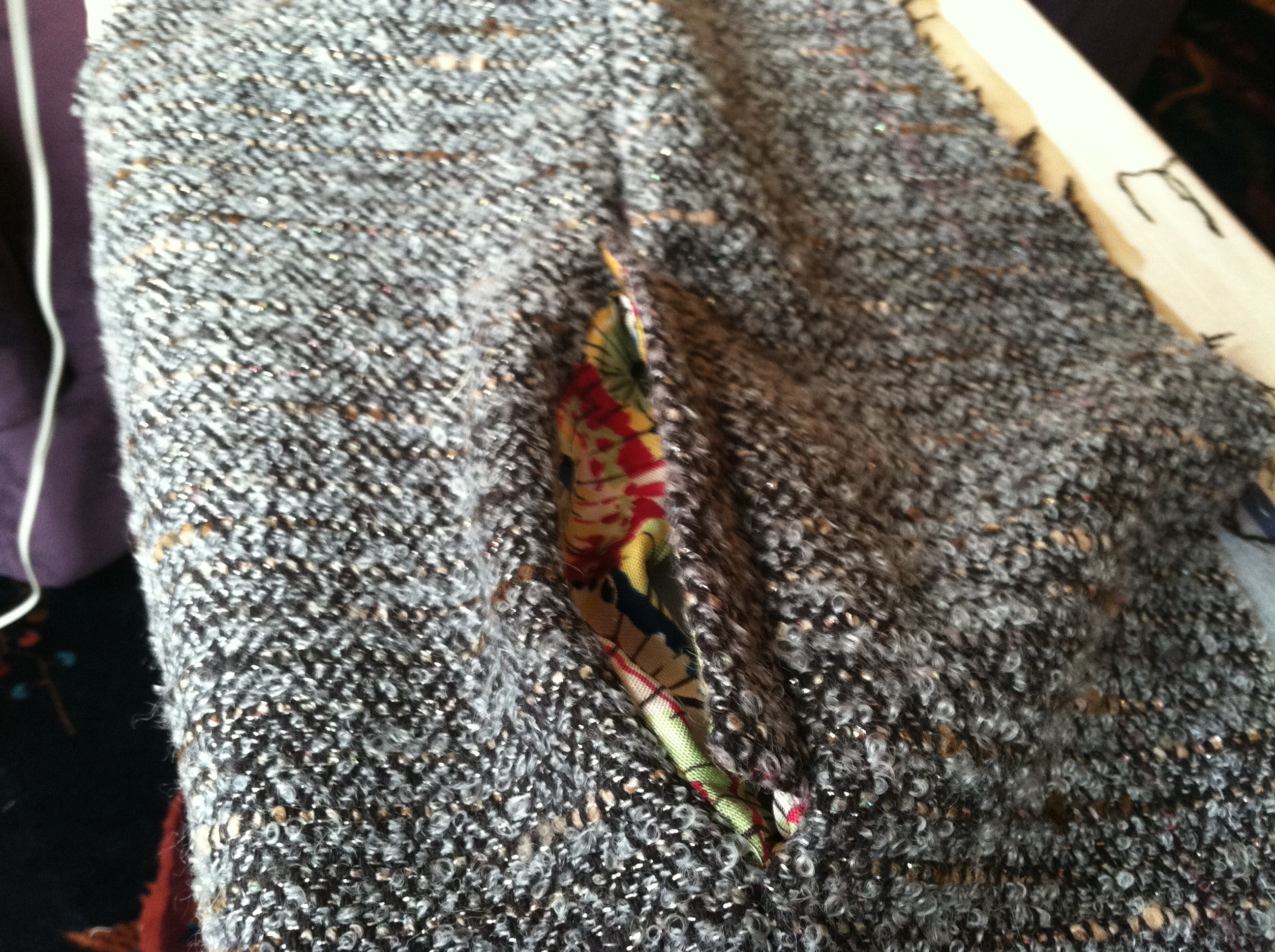
Pocket welts

Pocket welts

I created the flaps, attached the pockets, sewed up the side panel seam, and voila, a pretty little pocket made of colorful lining. Though Chanel jackets don’t typically have vertical pockets like this, I have seen examples from this era.

Completed welt pockets

Welt pocket in progress

Let’s talk about the obsession with 3-part sleeves, shall we? The two godmothers of haute couture, Susan Khalje and Claire Shaeffer, both have their disciples make 3-part sleeves for their home-made Chanel jackets, so the sleeve has a graceful bend at the elbow and the vent is high enough on the cuff to show off the trim and buttons.

But the truth is, not all Chanel jackets have had three-part sleeves. In Claire Shaeffer’s new book, for example, she shows several vintage Chanel jackets with two-part sleeves. The Spadea pattern I used cleverly fakes the three-part sleeve with a one-part sleeve by putting some ease in the seam to give it the bend at the elbow. Then the vent is added by cutting a slash in the sleeve and adding a facing that goes around the cuff.

Sleeve facing

Sleeve facing

Whether this is the original Chanel design, or a change made by Suzy Perette for US manufacturing, we’ll never know. But it does work pretty well. It’s still time-consuming, but probably not as much of a hassle as building a three-part sleeve.

My last comment on the sleeve is that I added sleevehead under the sleeve cap and then steamed it on a sleeveboard like this, to give the sleeve cap a nice, round shape.

Shaping sleeve cap

Shaping sleeve cap

After lining the jacket, I added the trim, chain (cleverly woven into a 5/8″ tape–much easier to sew on), buttons, and button loops, then collapsed.

Finished cuff and chain

Finished cuff and chain

My blog has been visited by people from around the world and I appreciate you all. Even the spammer guy from Korea! What projects are you working on? Please leave me a comment and let me know.

Working with a vintage unprinted pattern, if you’re lazy.
0
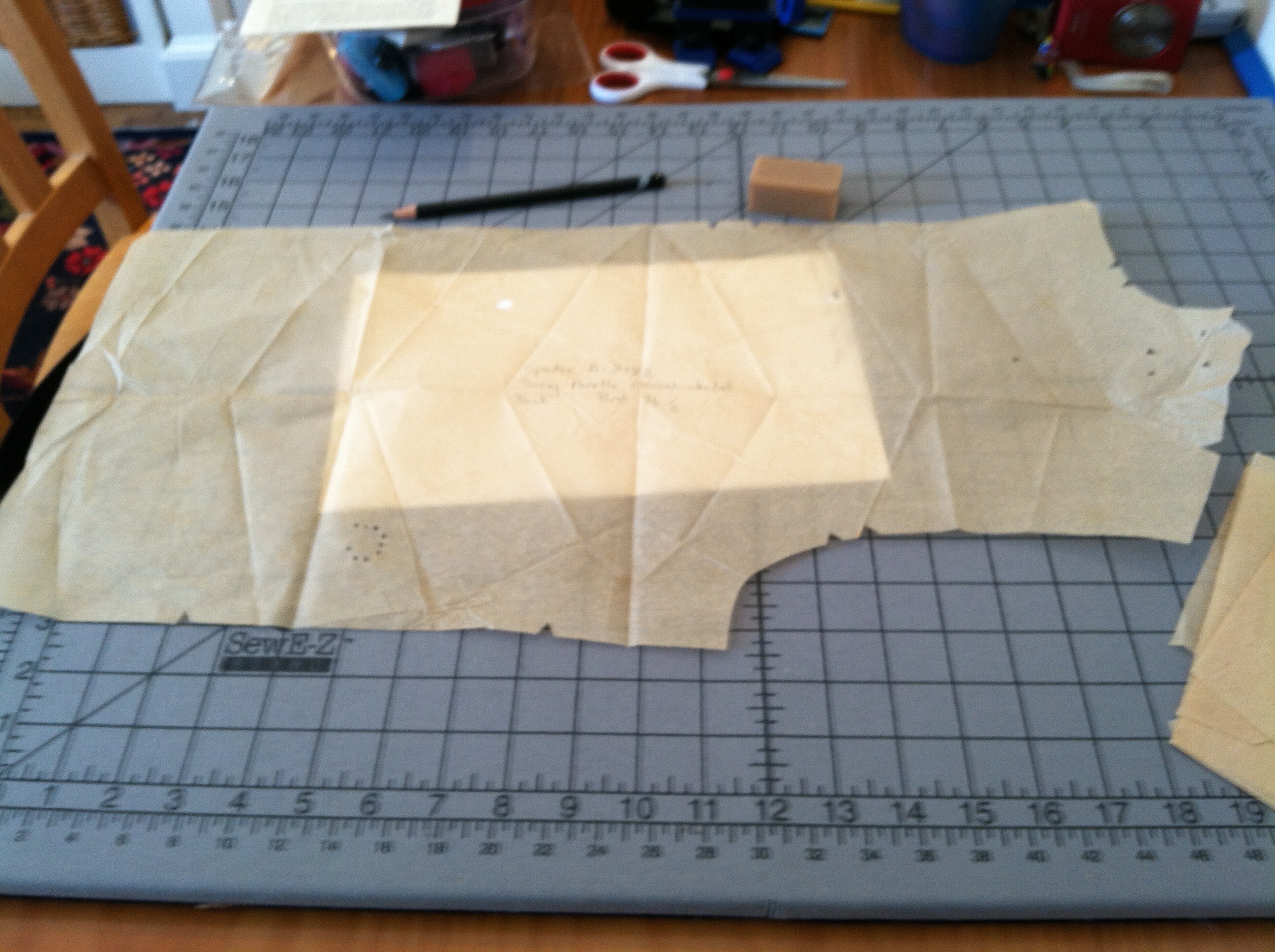
1962 Spadea/Chanel unprinted pattern

1962 Spadea/Chanel unprinted pattern

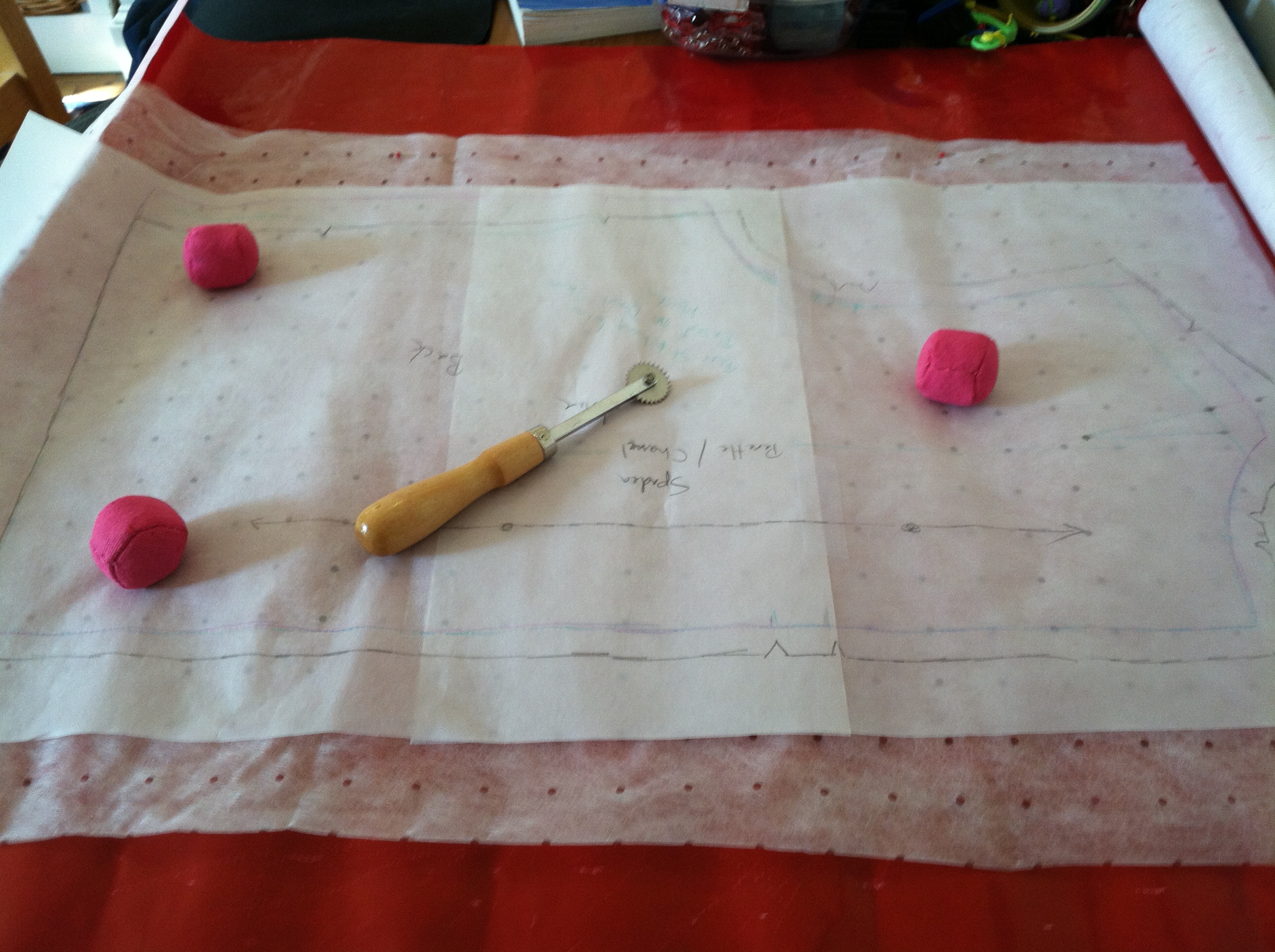
If you sew from vintage patterns, you may have been nonplussed to open that package and see absolutely nothing printed on the pieces, like in the photo above. Printed patterns only came into vogue in the 50s, and before that people needed to follow the notches and dots cut into the pattern to find their way. The Spadea company continued to hand-cut their unprinted patterns well into the 60s.
Above is a piece of the Spadea/Chanel jacket pattern I wrote about in a previous post. The instructions included with the pattern explain what the markings mean.  Each pattern piece has a letter made of small dots punched in it, to identify the back, front, sleeve etc. The notches are small “v” shapes on the side, three large dots indicate the fold, two large dots indicate the grainline, and medium and small dots are used in the instruction to indicate buttons, buttonholes, ease lines etc.

Marking pattern on to "Kwik Trace" muslin

Marking pattern on to “Kwik Trace” muslin

The first thing I do when I open an unprinted vintage pattern is write the pattern number, name and original bust size measurement on each piece so they don’t get mixed up with other patterns. Since I was using a rare vintage pattern, I traced it onto tracing paper and put the original away. Then I compared the pattern piece with a pattern from a previous jacket I made to make some fit adjustments. You can do this with a pattern block or sloper if you have one. (Those are basic fitting patterns some people make for themselves to fit patterns more quickly. So far I’ve been too lazy to make one.)

I then used a large piece of tracing paper (from the http://www.richardthethread.com/  website in LA) and a tracing wheel to copy the pattern onto my “muslin” version of the jacket. (Though in this case I’m using Kwik Trace tracing fabric rather than actual muslin, again being lazy.) The downside of Kwik Trace is that it’s unwoven and doesn’t have a grain, so I wouldn’t recommend it for projects where you need to know how the fabric will behave, such as a bias cut dress.

Completed "muslin" of jacket

Completed “muslin” of jacket

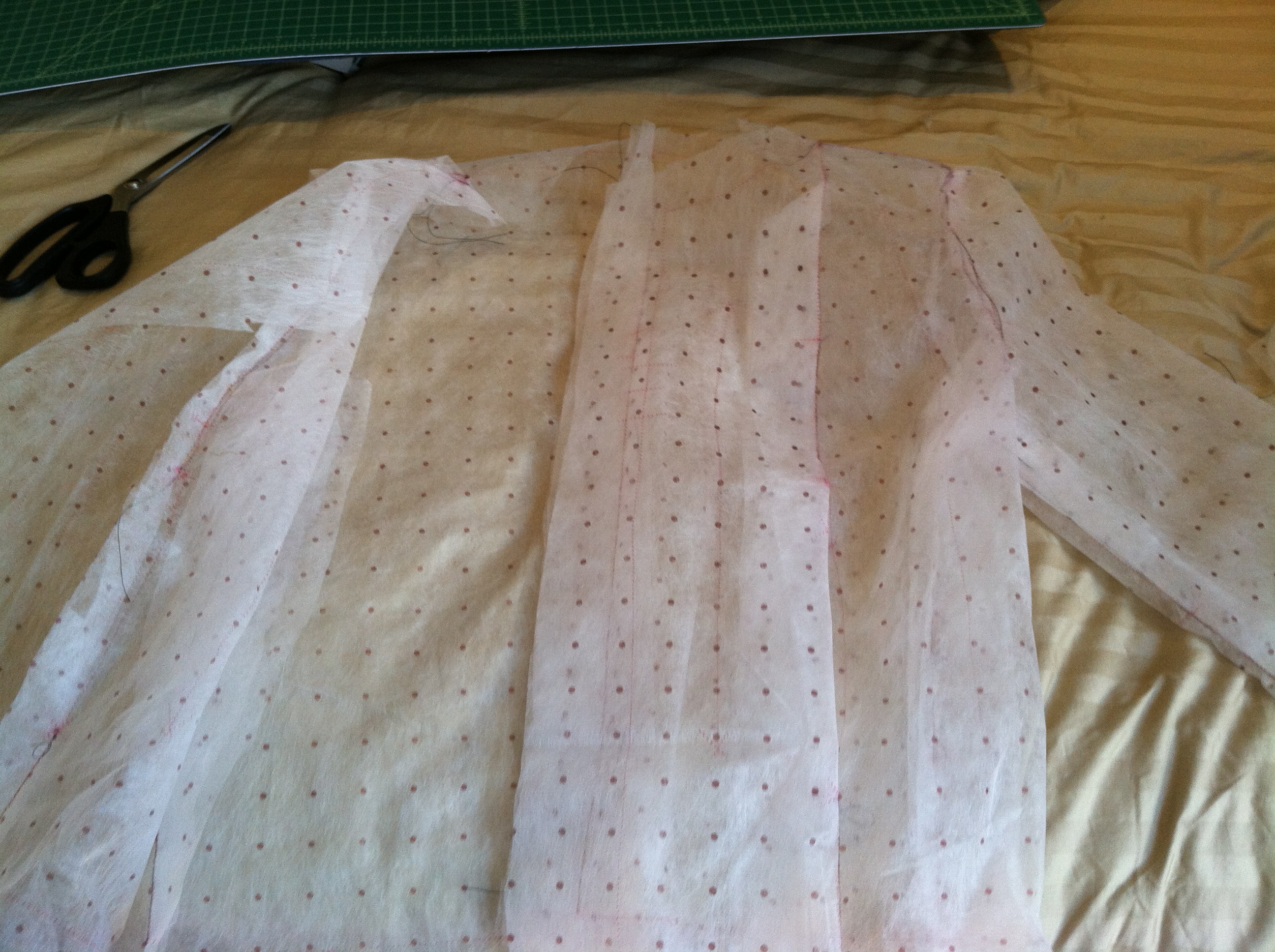
I cut out the pieces and constructed the muslin loosely using the method outlined in Susan Khalje’s “Couture Dress” course on Craftsy. (Okay, I skipped a few steps, but you get the idea.) I’ve recommended that course in previous posts, and it really helps with vintage projects like this. http://www.craftsy.com/class/The-Couture-Dress/53?_ct=sbqii-sqjuweho-qbb&_ctp=53,1

Once I tweaked the fit, I marked any changes on the Kwik Trace with a sharpie and took the “muslin” apart. Those pieces now became my pattern. At this point I wrote the pattern number and name on each piece and indicated that it had been fitted for me, in case I wanted to reuse it.

Cutting the fabric with large seam allowances

Cutting the fabric with large seam allowances

I pinned the pattern pieces on my fabric and then cut loosely around them to leave plenty of seam allowance. Boucle like this unravels in a huge hurry, and by the time you’re ready to finish the seams, you may have already lost more than 1/2 an inch.

Thread tracing the seam line

Thread tracing the seam line

At this point, if you follow Susan’s Khalje’s instructions in the Couture Dress course, you are supposed to “thread trace” (loosely baste with contrasting silk thread) around all of the seam lines to mark the seams on the front and back. This is a great idea! But I can’t face it at this point in the construction! (Because I’m lazy.) So, despite the fact that Susan warns against this, I marked both sides of my fabric with tracing paper, which I then could not get out of the fabric. Fortunately my fit was pretty good, so I just stitched inside the line and the marks ended up inside the seam allowance. I did thread trace the armscye and sleevecap as it makes it a million times easier to line up.

How about you? Have you ever worked with an unprinted pattern? How did it go? Leave me a comment, and a link if you have one. I’d love to see your projects.

Till next time… (I used to work in TV so I feel like I need a sign-off line) “May your bobbins be full and your tension even?”

Claire Schaeffer: Godmother of Haute Couture Sewing #2

7

photo (12)
If Susan Khalje is the hands-on “Godmother of Haute Couture”, who learned her craft making confections for Bridezilla, then Claire Schaeffer is the historian, whose in-depth study of haute couture techniques have made her books a must-have for my sewing library.

Her “Couture Sewing Techniques” book, in particular, describes just about every haute couture technique that a sewing enthusiast will encounter in a lifetime (or the half-life of your fabric stash, which is 9 million years…). Fitting, sleeve-setting, hems, buttonholes, pockets, jacket tailoring (including Chanel-style jackets), fabrics, pressing etc. are all covered in painstaking detail. Here’s where you can find it on Amazon:

http://www.amazon.com/Couture-Sewing-Techniques-Revised-Updated/dp/1600853358/ref=pd_bxgy_b_img_z

If you go to the Threads Magazine website, there is a series of videos by Claire Schaeffer illustrating the techniques from the book, which I highly recommend. The hand-stitching tutorial in particular I found very useful. If your hand-sewing skills are not that strong, it’s worth it for you to watch this video and practice before you undertake sewing a Chanel-style jacket. You need to subscribe to the Threads website for access to the videos, or buy the DVD:

http://www.threadsmagazine.com/item/23016/couture-techniques-workshop-basics-with-claire-shaeffer

Claire Schaeffer just published a comprehensive book on the history and making of the Chanel-style jacket, entitled “The Couture Cardigan Jacket: Sewing Secrets from a Chanel Collector.” The enclosed DVD walks you through every step of her method of making a jacket. Here it is on Amazon:

http://www.amazon.com/Couture-Sewing-Cardigan-secrets-Collector/dp/1600859550/ref=sr_1_1?s=books&ie=UTF8&qid=1384778985&sr=1-1&keywords=claire+schaeffer

(I have a confession to make at this point. I love Claire Schaeffer’s books, but just looking at the zillions of steps she outlines in her Chanel-style jacket method gives me so much anxiety that I want to go bake cookies instead.) Fortunately, Lizzie of The Vintage Traveler, a favorite blog of mine, has written a nice rundown of the book and video, which you can find here:

http://thevintagetraveler.wordpress.com/2013/10/11/currently-reading-and-viewing-the-couture-cardigan-jacket-by-claire-shaeffer/

One person who made a very pretty jacket using Claire’s pattern is seamstress Ann Rowley. During construction, she took a series of very helpful photos illustrating every step:

http://www.flickr.com/photos/7370831@N07/sets/72157630204914658/

And here’s a link to reviews from patternreview.com by people who have completed jackets from this pattern.

Vogue 8804 http://sewing.patternreview.com/patterns/54069

If you are someone who can fathom spending the time it takes to hand-sew a couple of intricate quilts and fashion them into a tiny jacket, then Claire’s method may be for you. There’s a lot of basting involved, and people who have made the pattern say it takes more than 100 hours start to finish. The result is a meticulous and authentic jacket that’s a little conservative for my tastes, but may be just what you’re looking for.

Why Chanel lining is like lingerie…

2
Chanel/Spadea jacket lining

Chanel/Spadea jacket lining

A quick look at the interior of the finished jacket. The lining is a silk crepe de chine by Carolina Herrera, found on emmaonesock.com, a website that offers, among other things, leftover yardage from high-end designers. After I finished the interior steps outlined in the previous post, I constructed the lining and fell-stitched it to the front facing, neckline, center front and hems, enclosing all of the busy work inside.

I always like the “surprise” of the bright linings stitched into these vintage Chanel jackets, which remind me of how chic, put-together French women have their look thought out down to their meticulously chosen, gorgeous (and mostly hand-wash only) lingerie.

I personally witnessed the French ritual of selecting lingerie one Saturday afternoon in the tiny, tony Eres shop on Paris’ rue de Cherche Midi. While I was attempting to squeeze my American behind into the largest size of their minimalistic beachwear, the saleswoman, in typical French fashion, would periodically throw the curtain wide open and loudly give her unvarnished opinion of how each style was or wasn’t working on me.

The scene was different in the neighboring dressing rooms, though, which all had men stationed outside. I finally realized that the French women in the changing rooms were all trying on various 200 Euro bras made of about 20 centimeters of tulle, then getting the yay or nay from their lovers outside the curtain, who were standing all of 3 feet away from me while participating in this discreet form of foreplay.

Um, where was I? The chain weight on the hem of the jacket is just the best cheat, which I found at Mood Fabrics’ new locale in L.A. It’s a chain that is cleverly woven into a twill tape.  So rather than the oh-so-laborious hours sewing on of the traditional Chanel chain weight, when you are so over making the jacket, you just machine the twill tape on about 1/2 below the unfinished hemline, then turn up the hem and catch-stitch it in place before fell-stitching on the lining right above the chain. It’s worth putting on the chain to counterbalance the lightness of the jacket, and this method makes it much easier.

All that’s left is a row of hooks and eyes down the front, then the joy of wearing it.

Jacket interior–hidden luxury

4

Image

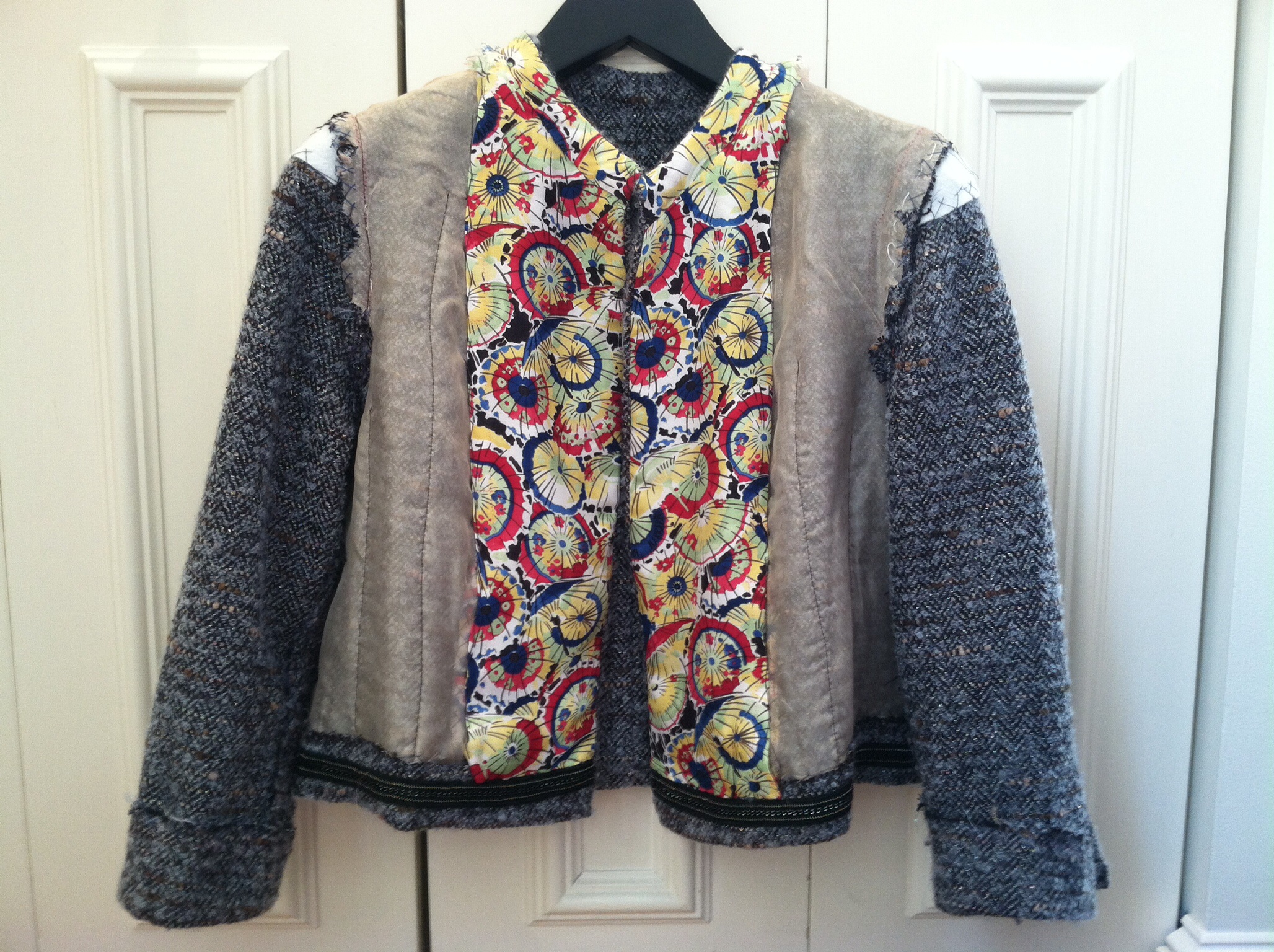
Here’s a closer look at the interior of the jacket, before it was fully lined with silk crepe de chine. The blue/gray fabric is the exterior “fashion” fabric, and the colorful fabric is the silk lining front facing. The beige fabric is the hidden luxury of this method. Rather than using modern fusible interfacing, the jacket is underlined and quilted with silk organza, a soft, sturdy secret weapon that gives the jacket shape without stiffness. The white crescents on the top of the sleeves are a soft wool “sleevehead” that give the sleevecap that “couture pop” without shoulder pads. (Although in this 60s version, the sleeve fits pretty tightly in the armhole, without the modern “poof” I’m not that into.)

To avoid having any topstitching visible on the exterior, which to me looks mass-market, I catch-stitched all of the hems and seam allowances down by hand. This highly-tedious process is tempting to skip, and yet I believe it’s the most important thing you can do to give it that haute couture je ne sais quoi. It’s hard to describe, but this secure and highly elastic stitch gives the jacket a soft movement, making it look like it’s held together without thread. Yet it controls the interior, so the seams never roll or unravel.

Traditionally, haute couture Chanel jackets have the colorful silk lining quilted directly onto the fashion fabric, without an underlining, but not all of them were made that way over the years. Personally I prefer this method because the organza underlining gives you a stronger jacket that’s still soft and light. And your last step, which is to tightly fell-stitch the colorful lining all around the interior edge of the jacket, completely covers the organza, the quilting, the seam finishes, and a multitude of sins.