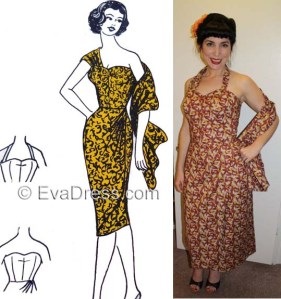
Chanel 2.55 “Tribute” bag: stunt or status sewing?

15

Let’s talk about fashion and status. And making yourself a Chanel(ish) bag. I just did.

Chanel 2.55 style bag

You can’t walk half a block down tony Newbury Street in Boston without practically getting hit by a Chanel 2.55. 

Chanel 2.55 leather bag

In the U.S., our culture is less “melting pot” and more cheerleading pyramid.
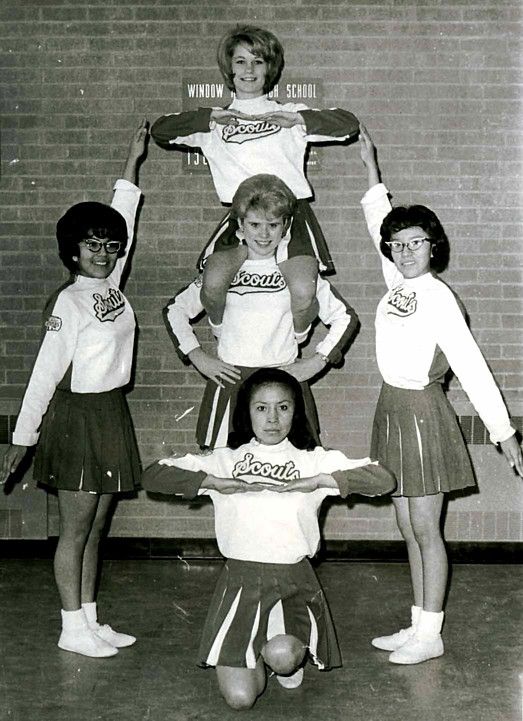
Vintage Cheerleading

You know that blonde’s going to get thrown off of the top of the heap at some point. They always are.

For those who came here via Ellis Island, or in my great-great grandfather’s case, on a “coffin ship” from the Irish potato famine to the east coast of Canada, then somehow, without a cent, to Detroit, the U.S. was a place to completely reinvent yourself.

If you grew up in Michigan in the 50s and 60s, as my husband and I did, the wealth of the auto industry made it possible for whole generations to elevate their status in giant leaps, so that my grandfather, son of blacksmith, could send my mother to college by selling wall-to-wall carpeting to soldiers returning from WWII.

C & C Carol's Grad Jan 44 - 005 My gorgeous Mom and handsome Dad in the 40s.

In these culturally shifting sands, the things that were signifiers of wealth and class in the old countries were completely out the window, so everybody had to grab onto new ones. I think this created a herd mentality when it comes to style that has gripped the U.S. for a lot of years. Having recognizable products that people know the cost of (a Cartier Tank watch would be a current upper-middle class example) demonstrates where you stand in the U.S. social system.

Cartier Tank Watch

You have no idea how many of these I see at the beach in Martha’s Vineyard. (Meanwhile, I’ve been running around wearing a Timex from Target because I like the style.)

The only problem with status dressing is that everyone’s style gets really boring, because people will buy something highly recognizable to show off their wealth (like a Chanel bag) or to fit in with their clan (earth mama, power-suiter, goth chick) instead of picking out something really interesting and different. So then the stuff in the stores is boring.

I was tired of boring, so I started sewing again. Now my closet’s pretty zesty.

My Closet

So anyway, I was looking Chanel ads, and even though I’m not a fan of their bags (because, let’s face it, they are pretty repetitive and boring and “rich chick at the country club”) I noticed that lately they’ve been made of festive things like painted canvas with unfinished seams.

Chanel canvas bag For $5,000.

I saw this one in particular and thought, “I could totally make that.”

Chanel 2.55 bag original

I was making a Breton shirt anyway, from the frankenpattern muslin (Muslin Madness) for the crushed bateau-neck I just made (Bateau-neck Top, fait accompli). Speaking of boring style statements, I have a tendency to default to Breton shirts and jeans about 90% of the time when I’m kicking around, as I’m in the “boomer gal who likes France” clan. So I figured I’d ought to start making my own. If you want to see a lot of old Hollywood types in Breton shirts, as well as some good Breton shirt sewing patterns, check out my pinterest page (Breton Shirt Pinterest Page).

I ordered some fabric made by the French brand St. James, who make and export the traditional Breton shirts, or Marinieres, to groovy middle-aged Americans like me. I’ve had a bunch of St. James shirts and they last for years. I found the fabric at Hart Fabrics (hartfabrics.com) . This fabric is medium weight viscose/poly, and though it’s not the typical heavy cotton jersey, it’s easy to wash and sew.

I thought making the shirt would be a breeze. Then I remembered that I had to match all of those stripes.

image

I got a little obsessive, but it worked. You can match the stripes part way up the sleeve cap, but when you get to the top half, forget it.

image

I think that’s why a number of these shirts have white at the top instead of stripes.

For those of you who expressed interest in how the shoulder tuck is constructed in the crushed bateau-neck design, here’s a look at the inside:

image

and the outside. image

You make the front shoulder seam about an inch longer than the back seam, and make a tuck in the middle of the front shoulder. Then the neckline goes straight across from one shoulder seam to the other. (If you add an extension of about 1 1/2 inches to the top of the neckline, it folds inside to become a self-facing.)

I also decided to try “tailors’ tacks” on this project, a vintage method of marking fabrics without chalk or tracing paper. I thought it would be a pain, but it was fast and easy.

I doubled a long thread on a needle (do you have one of these automatic needle-threaders from Clover? I’d be blind without mine…)
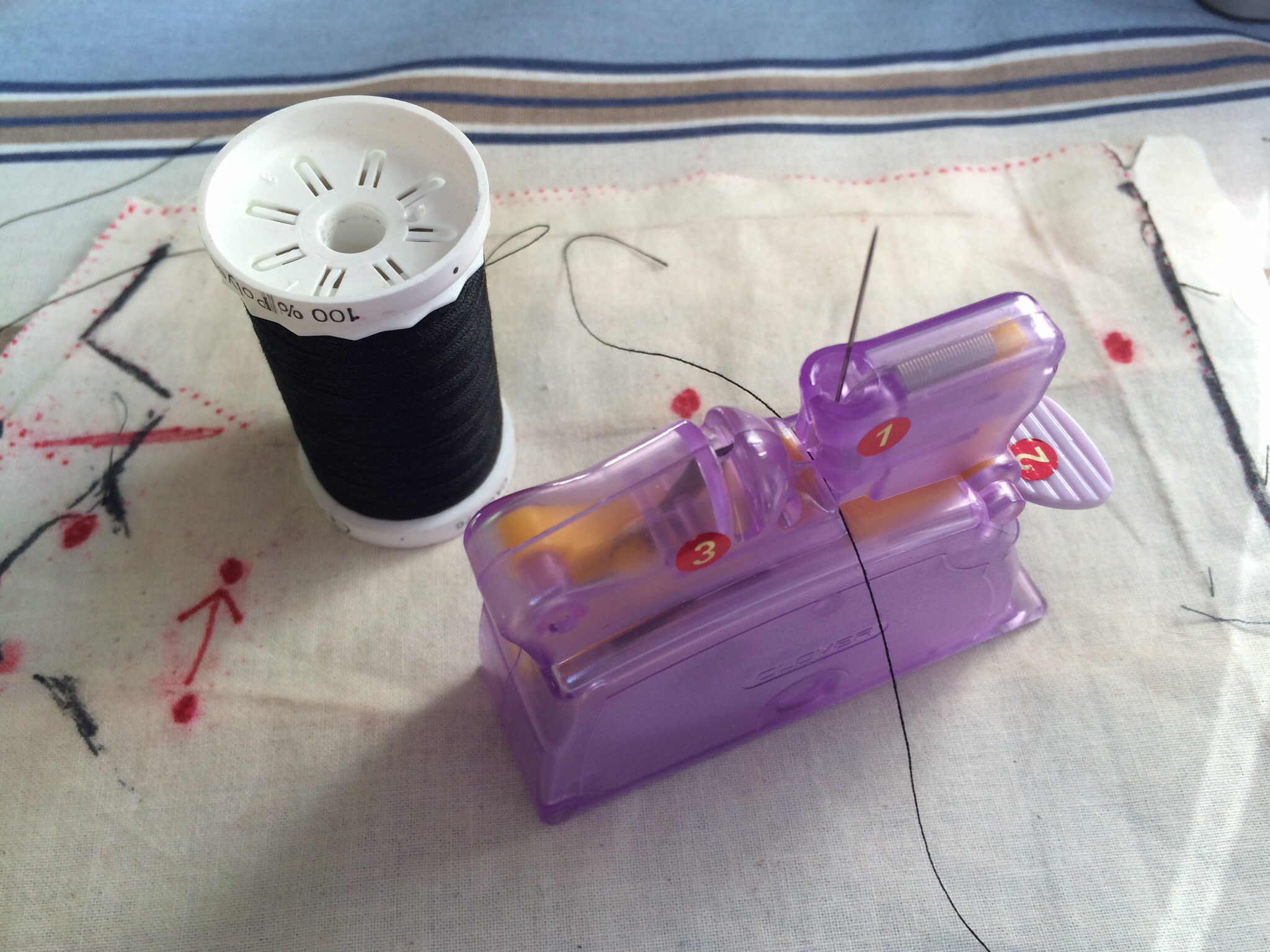
image

I sewed large thread loops through the muslin pattern and both layers of fabric, at places that I had to mark things like gathers and dart points:
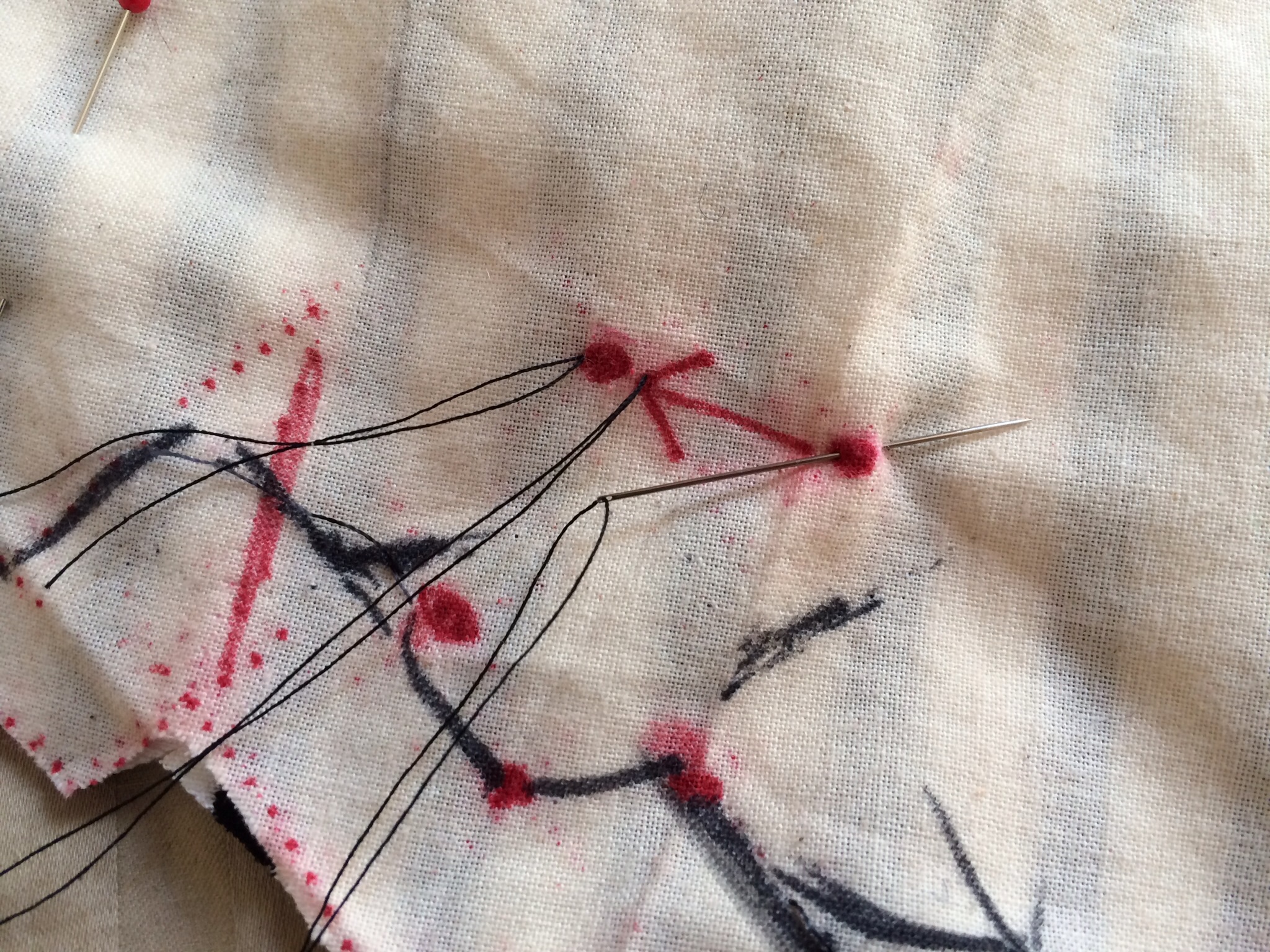
image

Then I gently separated the layers of fabric and clipped.

image

Now I had precise markings on both sides of the fabric, but didn’t have to worry about the fabric being discolored.
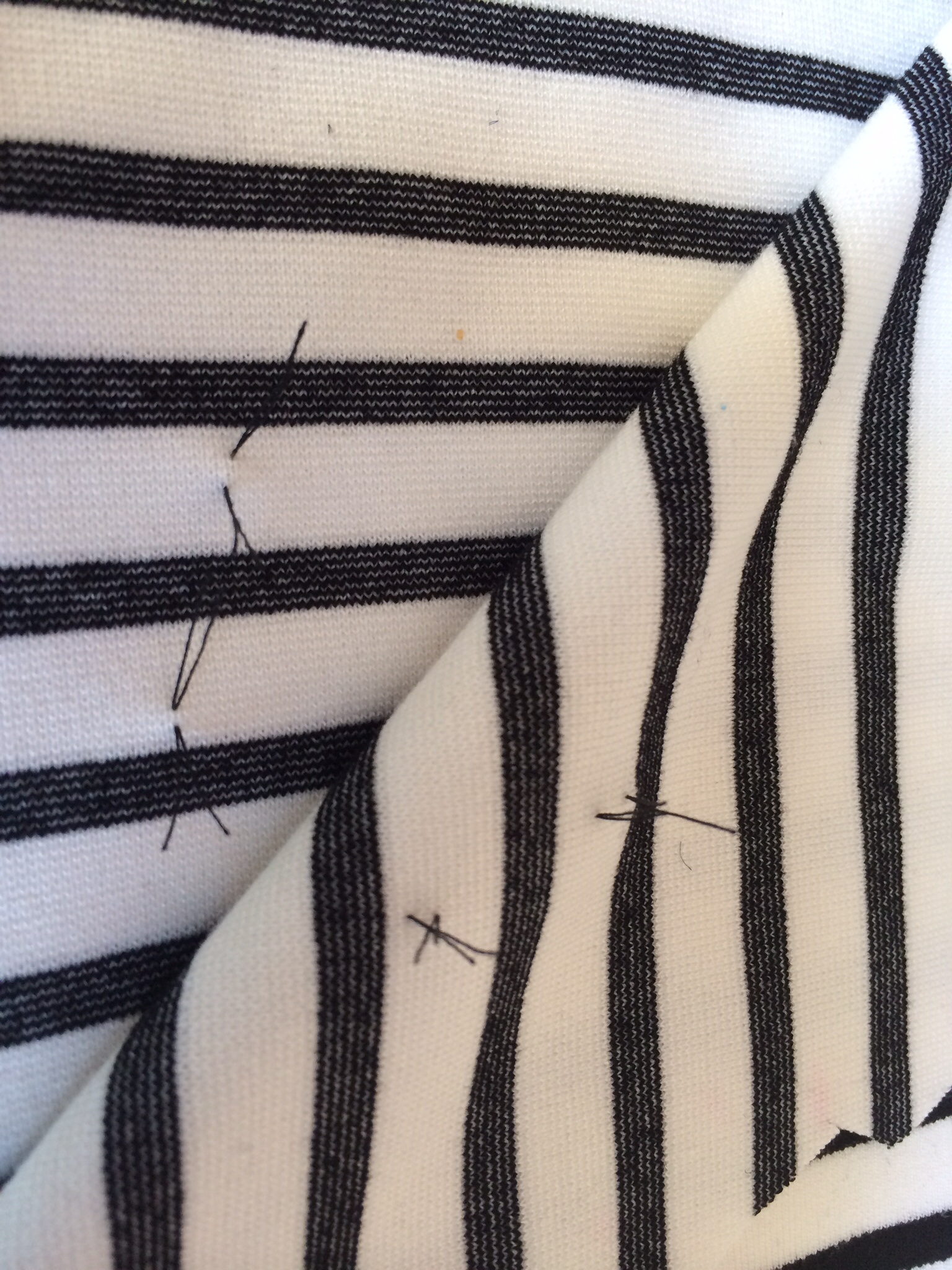
image

To finish the seams, I decided it was time to get out of the 50s and use the stretch stitch on my Bernette 20. It worked fine and didn’t pucker, so I made another row of the stitches 1/4 away and then trimmed the seam.
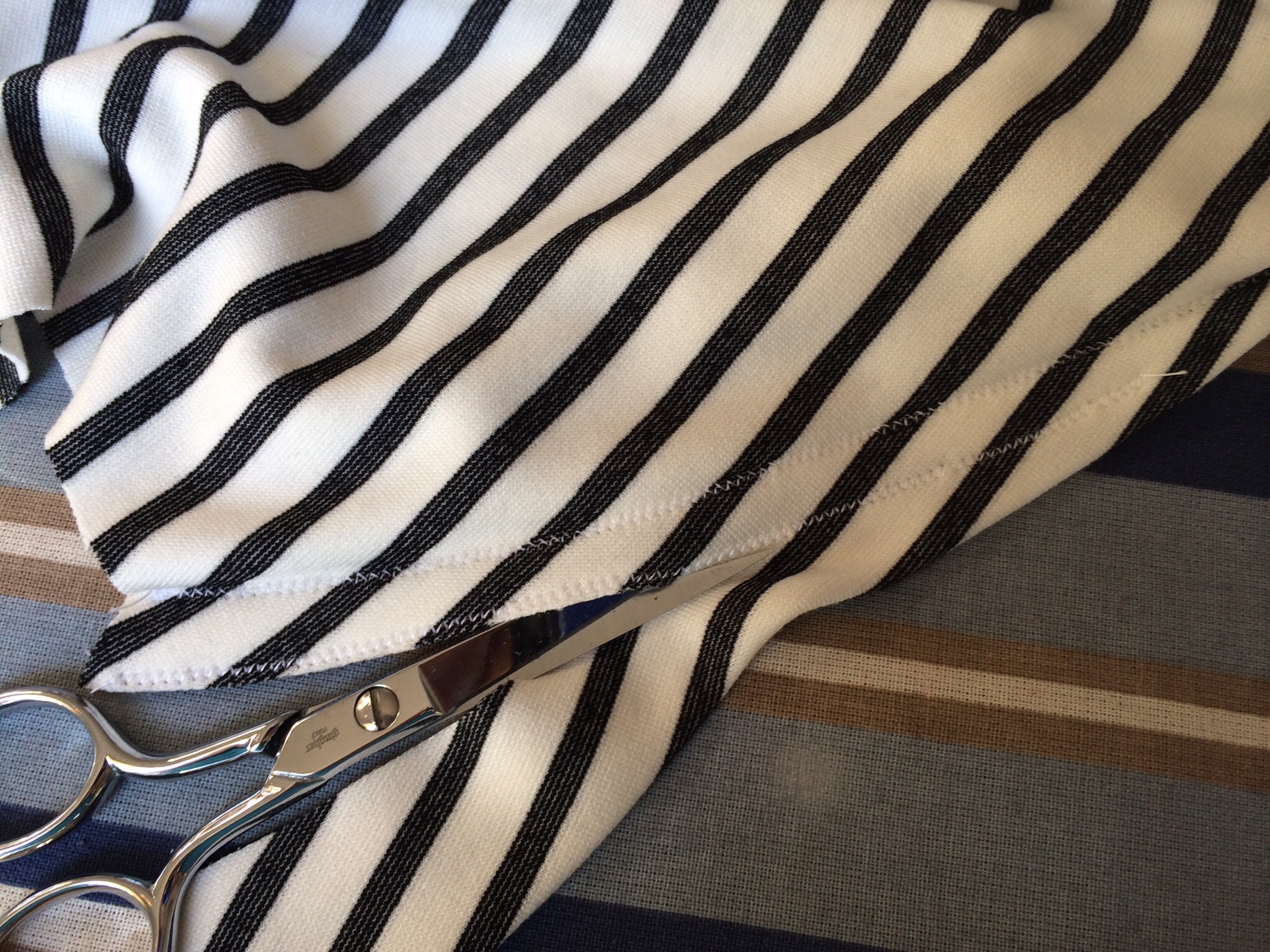
image

So I had enough fabric left over to make a bag, and this crazy pattern that Vogue released for about two seconds in the early 2000s.

image

Make your own Chanel 2.55, Hermes Kelly or Birkin? We’ll show you how! (I love the notes I get from sellers when I buy patterns on Ebay.)

I measured out the pattern pieces and saw that they were the exact dimensions of the Chanel 2.55’s I saw online. So did the Vogue pattern editor put a Chanel, Kelly and Birkin bag in her budget to draft the pattern? Somebody get legal on the phone!

I thought that it would be a lark to make a knock-off, and put on the chain and hardware and blog about it, and how hard would it be to make a bag, right?

So I headed down to Winmil Fabrics in Boston’s Chinatown to get the “fusible fleece” required, and ordered hardware on Ebay to look like the rectangular “Mademoiselle” toggle closure that was on the bags before Karl tarted them up in the 80s with the tacky double “C”s. I even got a grommet-setter so the chain could go through grommets.

Chanel Bag Elements I was pumped!

There are all sorts of design legends surrounding this bag, which I read about in this blog: (history of the Chanel 2.55 bag); that the chain handle was inspired by the key chains carried by the nuns at the orphanage where Chanel lived as a child, that the garnet color of the lining was the same as her school uniform, that the zipper pocket was where she kept her love letters, that the interlaced “double C’s” of the logo were taken from a church window, and blah-dee-blah-dee-blah. For more on the Chanel mystique and why it’s creepy, check out my recent post: Chanel/Vionnet Smackdown! My only pattern modification was to bring the edges of the front flap down on either side to look more like a 2.55 bag.

An hour or two into cutting fabric, lining, fusible fleece, and an interlining of fusible hair canvas, I started thinking maybe this wouldn’t be so easy.

You’re supposed to fuse the fleece onto a 26″ x 26″ square of fabric, and then quilt it into diamond shapes, coming up with perfectly spaced 45 degree lines that cross. But they don’t tell you how to mark the lines. I couldn’t use tracing paper or chalk, because it would show. So I cut out the pieces, and used this quilter’s ruler and painter’s tape to mark the lines and then quilt them.

imageimage

This was tedious, but I’d already cut the stuff out and fused it, so I wasn’t quitting. When it came time to quilt the sides, I decided to go in parallel lines in the style of the quilting on a Chanel jacket, because there was no way I was marking off any more diamonds.

As I quilted, I thought a lot about the people in off-shore factories who sew the same seam on a “fast fashion” hoodie or bag, day after day, twelve hours a day, for maybe $35 a month. A lot of them are scarcely older than my 12-year-old. Apparently factories that make black market bag knock-offs are even worse.

I got the fusing and quilting done, and stuck fusible hair canvas on the back of the fleece.

image

Then I realized that I had to match the stripes to put it all together. AAAyyyyyeeeeeiiiiii! First of all, the fusible fleece, which is one of the most disgusting and artificial things known to man, was completely gumming up my needle and making my machine skip stitches. And I wouldn’t be able to see the stripes to match them as I sewed anyway. And I was completely over the whole thing.

Reader…I resorted Steam-a-Seam. That’s right, I glued my Chanel bag together. I was turned on to Steam-a-Seam Lite 2 watching a craftsy.com class with Sandra Betzina, which had a lot of helpful hints about sewing on the bias that I’ll be using in my constantly upcoming Claire McCardell projects.

As I was watching her throw stuff together and thinking “she’s the laziest gal in town” I also thought, “I should get me some of that Steam-a-Seam.” It’s a fusible webbing that you can use to line up your seams, then glue them for good with a steam iron. It works well to secure bias hems without puckering, and in this case, those stripes matched up like a dream. I stitched through after that to reinforce the seams, stopping frequently to scrape the fusible crud off my needle as I went.

Chanel Bag Construction

At that point, I started thinking, “this looks kind of good,” so I decided that rather than go full jokey knock-off, I would make the bag into something I wouldn’t be embarrassed to use. I lined it with quilting cotton, and rather than the Ebay hardware, put on a vintage label (with Steam-a-Seam).

The bag turned out pretty well, don’t you think? (Please note the matching stripes in this lousy picture taken by my crabby husband.)

Chanel Bag and Breton Top

I’m never doing THAT again.

I still can’t see spending $5,000 for a bag that’s made from jersey or canvas (or leather, for that matter), but you can make your own for about, oh, thirty bucks. I have some gold Tyvek in my stash…maybe a Birkin?

After I first posted this, I heard from fellow blogger Karin of “Karin’s Chamber” about her own “re-make” of the Chanel 2.55. Take a look; she did a great job and managed to figure out the design and pockets through internet research. (Karin’s Chanel 2.55 Bag)

And lastly, here’s a take on the whole Chanel international marketing juggernaut, from designer Jeremy Scott’s Autumn/Winter collection for Moschino:

moschino-jeremy-scott-fall-winter-2014-collection-10-560x840

Big Mac, anyone?
Crushed Bateau-neck Top, fait accompli

34

It’s all over but the shoutin’ as they say, but first, the big reveal:
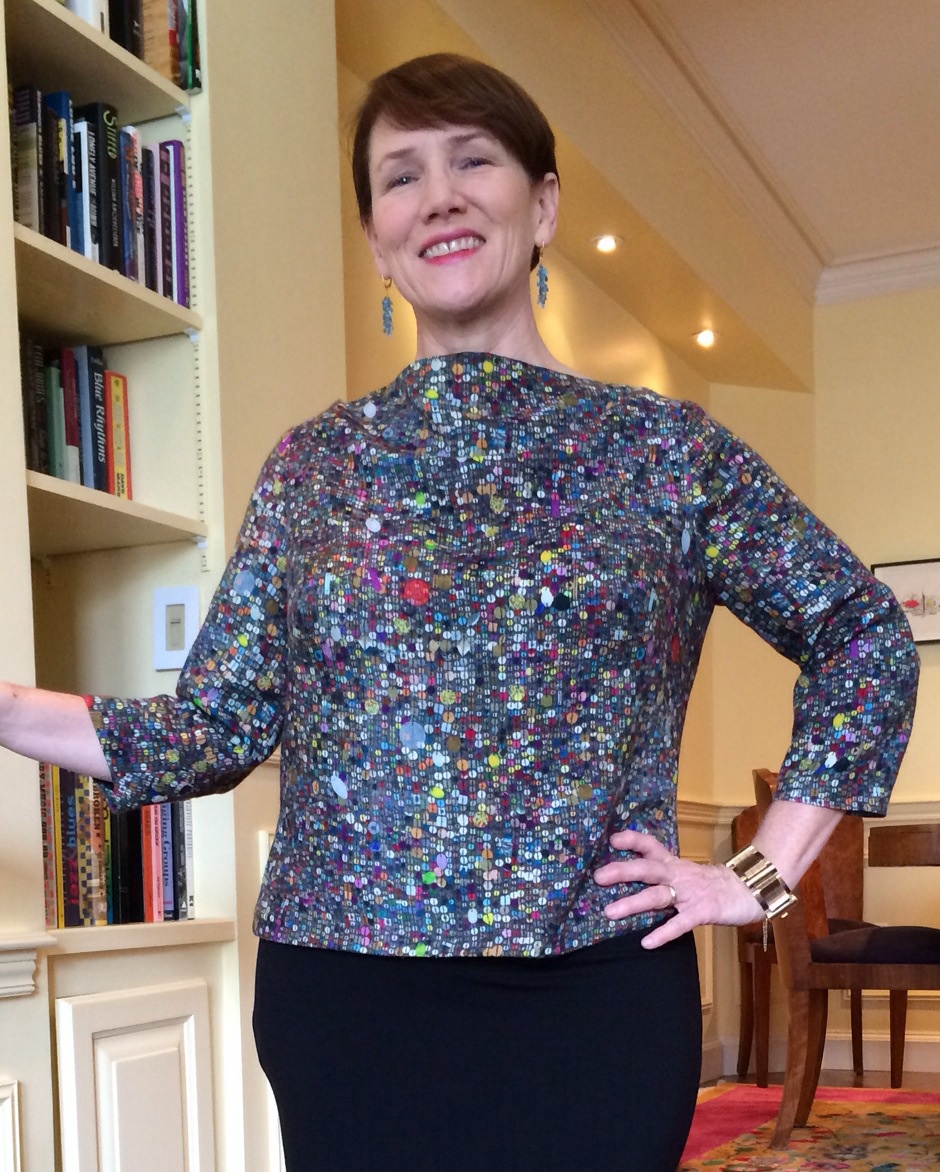
image
I would have gotten a picture up sooner, but it took days for me to get in the mood to put on makeup.

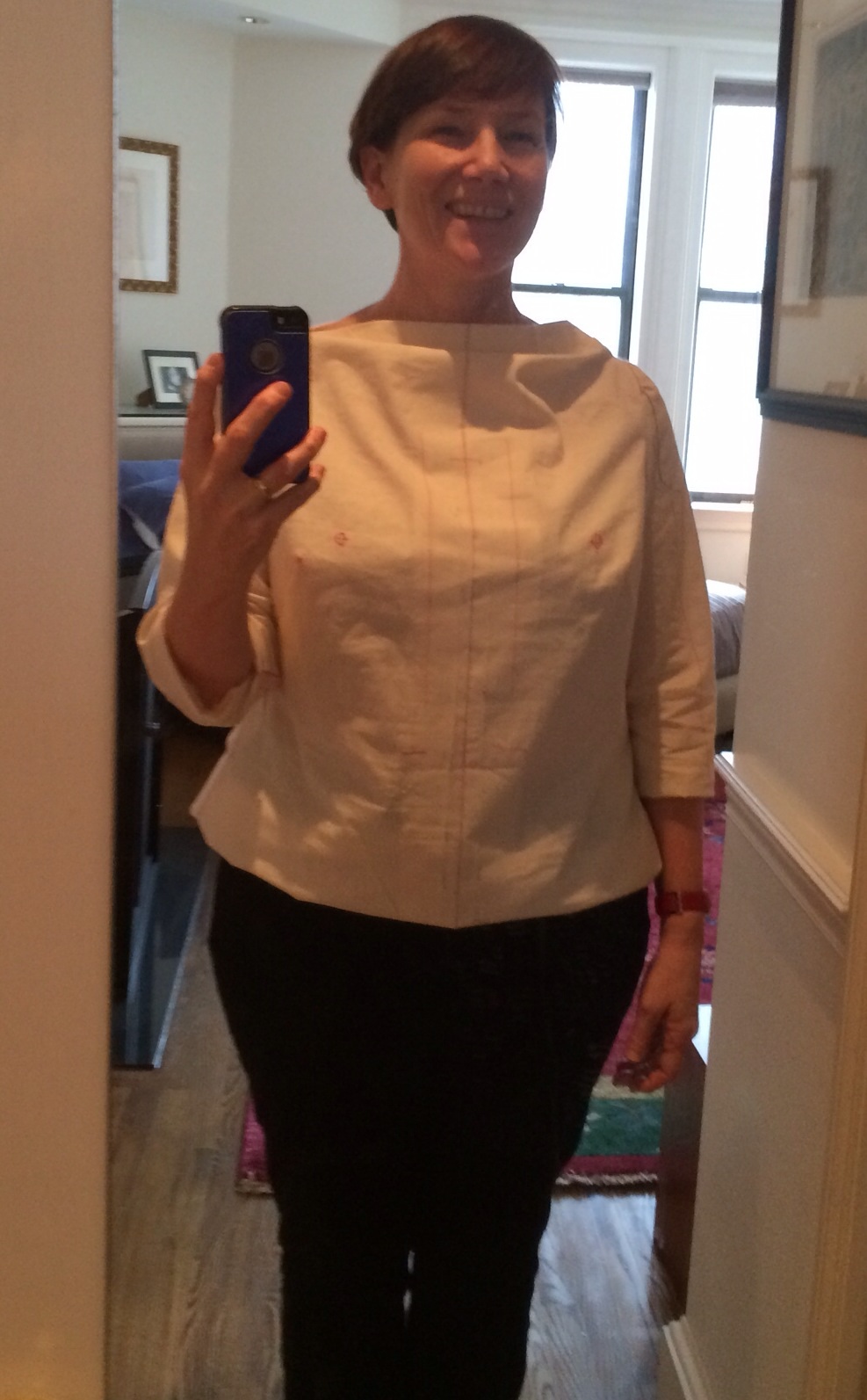
When we last left Julie, the project was in this state: (for details on how I made this muslin from a three-part frankenpattern, check out this post.)
image

I was extremely nervous about cutting this beautiful wool from Janssens et Janssens in Paris. It is soft and light like cashmere, and stretchy like a knit, even though it’s woven.
image

I eventually got up the guts, and did a layout like this to suit the one-sided, one-way print. It may look wasteful, but actually it leaves a big swath at the fold on the right to make a scarf.
image

The construction went smoothly, and I thought I was going to be revealing this wonderful way to insert sleeves by stretching a bias strip of fabric over the sleeve cap to shape it before you insert the sleeve. I learned about it on this tutorial:

(When I saw how fast that woman sews, I knew I had a lot to learn…)
image
The sleeve cap turned out like this, but when I went to put it in the sleeve, the cap wasn’t tight enough and the gathering was uneven, so I had to put in a row of basting to tighten it anyway. I tried it for both sleeves in the exterior and the lining, and really didn’t get the hang of it. I think I’ll go back to Susan Khalje’s method of putting three rows of basting in the seam allowance and then gathering, which gives you a nice even cap to insert.

At this point, my project looked like this:

image

Boy, did I want to just finish those seams and forget about making the lining. But I knew it was a mistake, because the lining would elevate it from home-sewing to haute couture(ish). Then this happened:
image
And I did not want to cut that lining. So I started blogging about every little thing I could think of. I went to two events where I had planned to wear the top, wearing Chanel jacket #2 by default instead. (The Boston Symphony playing Ravel on a Friday afternoon, the perfect antidote to the snow. And Brian Stokes Mitchell absolutely nailing about 30 Broadway show-stoppers in a row at Harvard’s legendary Sanders Theater. Here’s a link to Mitchell’s new album: (Brian Stokes Mitchell’s “Simply Broadway” album). Get it, and you can belt out “The Impossible Dream” during your next frustrating sewing project.

But I finally got over it, and cut and assembled the lining out of black silk crepe de chine, which is the way to go if you can swing it. Actually I found this fabric for maybe $4/yard on the silk table of “Sew-fisticated” in Cambridge, one of those old-school sewing shops with really good prices and nice, knowledgeable staff.
image
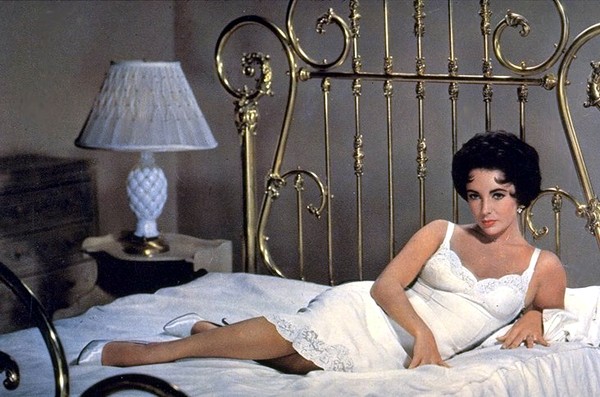
I put together the lining, and finished the seams with my super-sharp Kai pinking shears. I’ve been looking at vintage retail garments, and have seen that on many of them the only finish on the seams is pinking, like this, and sometimes a line of straight stitching on the seam allowance as well. It made me remember that instead of having a lining in our clothing in the 50s and 60s, we always wore full slips like this:
Liz Taylor
Unfortunately, none of us looked like Elizabeth Taylor in “Cat on a Hot Tin Roof.” But the slips kept the scratchy seams off of our bodies and made the dresses more opaque.

My mom also had to wear a girdle, stockings, pointy bra and heels as she stood in front of a blackboard teaching high school English all day long. I think her happiest time was when she embraced feminism, put on a pantsuit with low heels, and chopped off her high-maintenance hair-do.

Where was I? I had catch-stitched down the neckline, sleeve edges and hem of the exterior fabric, so I attached the lining to those edges using small fell-stitches. It was so worth taking the time to do that part by hand.
image
Here’s a look at the back, where I used shoulder darts and back darts to give it some shape. Even though I wanted a loose 60s-style fit, I didn’t want it to look like a box. The muslin process helped me fit it for my short waist and sway back. There are French darts in the front and two darts in each sleeve, which really help when you work with a woven. And lastly, I like the smaller armscye from this pattern. I think that the large armscye has ruined the fit of modern American fashion, and it’s a pet peeve of mine.
image
This is a close up of the little tuck that’s in each shoulder seam. It gives the neckline some drape, but doesn’t make it hang down like a cowl-neck top. You could probably fake this by taking a bateau-neck pattern, extending the front shoulder seam, and then making a tuck.
image
When I finished, I had spent 35-40 hours on the project, and probably close to $200 on the fabric and patterns. But where would I find something as high-end as this in a store, that fit me? Max Mara boxy bateau tops made from Italian wool are more than $600. Loro Piana sweaters are $1,800. It was definitely worth investing the time and money into this top, as I will probably wear it for 10 years at least, then hand it down to someone else. And I’ll reuse the pattern a lot, too.
What are you working on? Clothes for spring? (Or fall, if you’re “Down Under”?). I’ll be heading to Southern California next week, where I hope to take you all on a trip through the L.A. Mood Fabrics mega-store! (And wear my new top, finally, out to dinner with friends.)

Too Cool for School: Patterns for The Varsity Jacket and Duffle Coat

10

Recently the New York Times featured some new designer takes on an American classic style, known as the bomber jacket or varsity jacket. Here’s Elletra Weidemann sporting what the Times calls a “statement piece” (no kidding–look at all of that beading) by Giambattista Valli, with jackets by other designers such as Alexander Wang and Phillip Lim:

Elletra WeidemannNY Times Style Article

Talk about someone who’s hit the genetic lottery; her mother is Isabella Rossellini and her grandmother is Ingrid Bergman. (Love her short bob.)

Suddenly I’m seeing these jacket everywhere. At J. Crew (an American mall brand) I saw what looked like a sweatshirt-meets neoprene version, and then later I had to restrain myself from ordering this silk crepe de chine homage from the UK’s Pure Collection:

Silk jacketSilk Jacket

If you’re a certain age in the U.S., you’ll remember when this jacket was a “varsity jacket” with a wool body and leather sleeves, and ribbing on the cuffs and hem. When you borrowed your boyfriend’s jacket in high school, the oversized fit made a statement that you and the guy were a couple. They were warm, comfy and cute.

Here’s a picture from the 40s:

varsity-jacket-1946

I cadged that picture from this blog full of Made in America stuff: (Check out the nice leather goods in this blog)

In the 80s this style morphed into a “tour jacket” which was the hot thing you got to wear if you were working on a rock and roll tour.

Michael_Jackson_Smooth_Criminal_Roadie_Tour_Jacket(If you’re really into Michael Jackson collectibles…)

The logo of the artist would be embroidered on the back, and if you were really cool, your name would be embroidered on the front, a kitch-y reference to 50s bowling team shirts. After awhile, this style moved from rock tours to TV crews, and then everybody had them.

Here’s an Oscars jacket in my personal collection, from more than 20 years ago:

image

As to how I got it, well, as the old Rodgers and Hart song says, “if they asked me, I could write a book…”

Now that I’ve recovered from thumb tendonitis from hand-stitching Chanel jacket #4, I’m thinking that this kind of jacket might be a nice change of pace.

To make one, I’m looking at the recently released pattern created by Kathleen Fasanella, whose popular blog, Fashion Incubator, has a wealth of deep and broad information for the fledgling designer and serious home-sewing nut. Her book, The Entrepreneur’s Guide to Sewn Product Manufacturing has gotten great reviews on Amazon. (Kathleen Fasanella’s Book)

This jacket pattern may look simple in the prototype, yet her instructions and construction photos are a whopping 59 pages long. Though sized for men, the pattern could be used by a woman as the base for making an oversized designer-inspired version.

Bomber jacket patternBomber Jacket Pattern link

Here’s another classic design many of us grew up with: the duffle coat. In one of the earliest examples of dressing “vintage,” the Beat Generation writers and artists embraced this style, getting the coats from the Army/Navy surplus.

Beats-in-Duffle-coats

In a recent post from the Vintage Traveler, I saw that one element of the Canadian Olympic uniform is the duffle, designed by the Hudson Bay company:

Sochi-2014-Uniforms-Team-Canada

And the upscale skiwear manufacturer Bogner came up with this rockin’ version for the Germans: Sochi-2014-Uniforms-Germany

You would never get lost in a white-out skiing in that thing.

Somehow in the past 50 years in the US, duffle coats have become preppy, and now preppy has become a parody of itself (thanks a lot Ralph Lauren and you “Official Preppy Handbook” people…(Review of the book “True Prep” by Lisa Birnbach and Chip Kidd), but the duffle coat remains cool. Hipster cool.

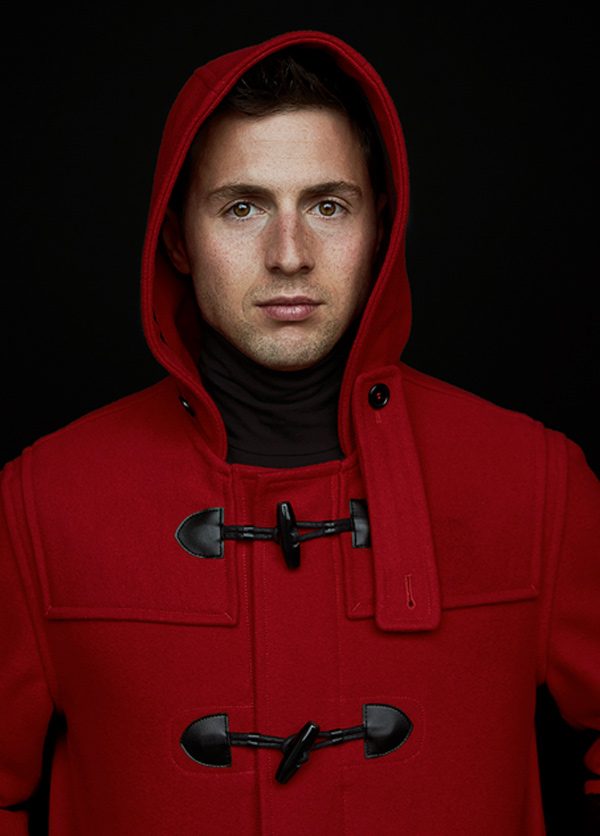
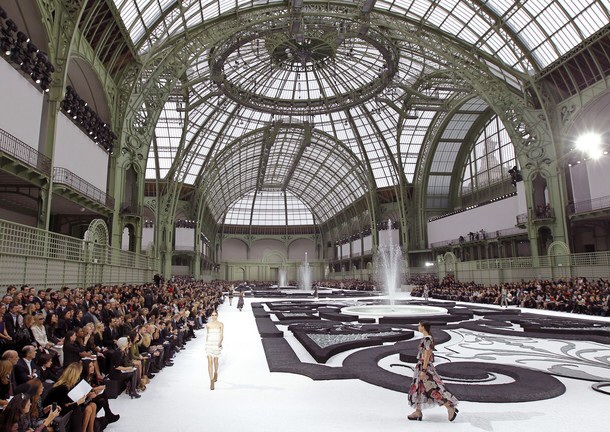
Here’s a couple of modern hipsters, Bob and Betty Walden, wandering about what appears to be the woods outside of “Portlandia,” modeling coats from Colette Patterns’ new “Walden” line.

albion-62240eca32ee9bf80908b5af71e940df

(The last time I drove by the turn-off to the real Walden Pond, outside of Boston, it was near a mini-mart and state prison.) Here’s a link to the original hipster/hippy go-back-to-the-land-and-gaze-at-your-navel book, Thoreau’s Walden: (Or Life in the Woods) If you like it, let me know. As a college freshman during the disco era, I read the Cliff Notes for American Lit because I was far too busy to get through it.

Kidding aside, this duffle coat pattern looks authentic and well-drafted. (Albion Duffle Coat Pattern)

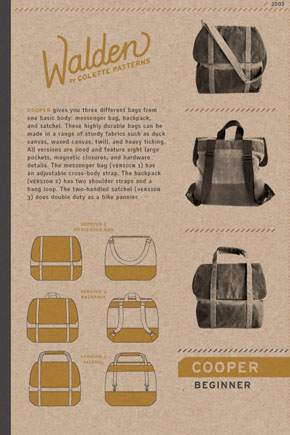
The line also has a pattern for three vintage-style satchel/backpack-type bags that I’ve been coveting:

Cooper Bag Pattern(Cooper Bag Pattern)

You can also buy an in-depth construction guide for this pattern, with more than 400 photos, so this would be a good project for a beginner. Gentlemen, start your sewing machine engines.

As for the rest of you kids, I’ll meet you in the woods after school for a ciggie.

Vintage, Schmintage; faking vintage looks with modern patterns

16

I love vintage sewing. It’s the high-maintenance aspect of using the original patterns that gives me a pain. Fortunately, there are a number of vintage pattern reproductions and homages in current release that can keep you busy without the hassle of working with an old pattern.

Surprisingly, many of my favorite vintage-style patterns are not from the “vintage” or “retro” collections. Those can turn out looking costume-y or kitsch, and I’m just too old to pull it off without looking dotty. And pattern reviewers often find that the fit of these patterns has been modernized and made too roomy.

The patterns I like tend to be from the main collections of Big-4 or small commercial companies, or from indy companies that re-release vintage patterns.

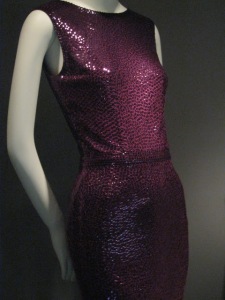
Here’s one example. If I wanted to reproduce a Norman Norell “Mermaid Dress” seen here:

norell-mermaid-sheathNorell Mermaid Dress

I could modify this Vogue Badgley Mischka pattern that’s currently in release.

Mermaid Dress PatternVogue 1374

(First thing I’d do is take up that armscye.) The sequins on the original Norells were each hand-sewn on twice to make them lay flat, so I’m not going to be taking on that project on anytime soon.

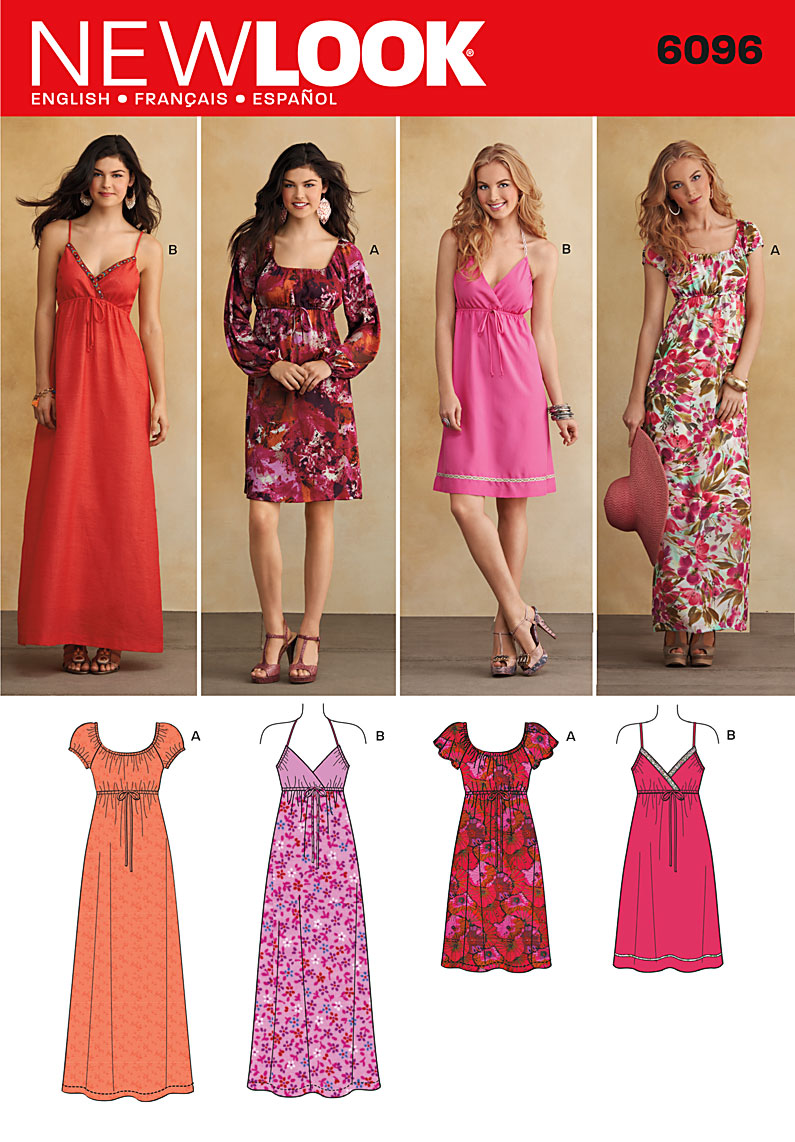
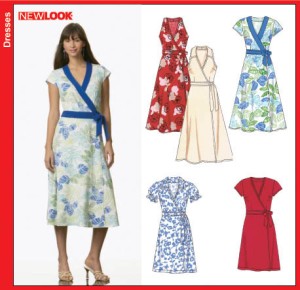
With any of these patterns, you need to look beyond the photos and use your imagination to see how they can be modified for a vintage look. For example, View A (right photo) of this typical boho pattern can be easily modified to create this 40s Claire McCardell “Hostess Dress”, made of wool jersey. She basically invented the peasant dress we all wore in the 70s.

New Look 6096McCardell Hostess Dress FIT

New Look 6096McCardell Hostess Dress at FIT

Here are a few pattern suggestions for my favorite bloggers, chosen from patterns that are commercially available now. You can see details on my Pinterest page: Favorite Vintage Re-releases.

Many of these patterns come in a range of sizes, with modern instructions, and can be easier to deal with than actual vintage patterns.

For Carrie from Apricot Adventure blog, who looks like Megan from Mad Men, adjusts the fit on her dresses perfectly, and is a scientist to boot, I’m seeing this Burda repro of a late 60s glam girl dress: Burda Glam Dress. What do you think, Carrie? Maybe for your bachelorette party?
burda pattern

Put some chiffon sleeves on it, and you can do your own version of “Zou Bisou Bisou.”

Megan Zou Bisou Bisou

For Lizzie of The Vintage Traveler, who just did a post on Winter Olympic Uniforms through the years, featuring the Unfortunate Christmas Sweater:

Unfortunate Christmas Sweaterand the Awesome Peacoat: Ralph Lauren Peacoat

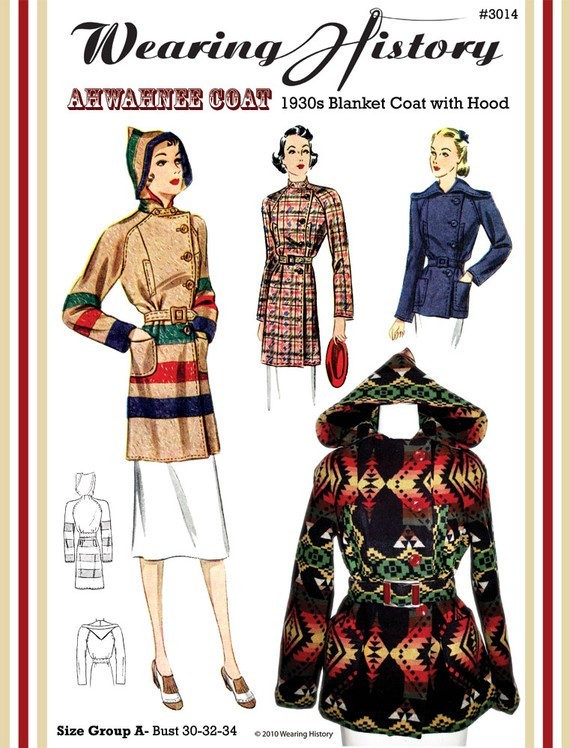
how about this fab 30s blanket coat from Wearing History?

Blanket Coat blanket coat pattern

For Red Point Taylor, who stitches up lovely jackets (see her beautiful French Jacket here), a cropped jacket for her next Chanel adventure:

Cropped JacketButterick 5859.

I like the 30s-style high-waist pants and “naughty secretary” blouse in the pattern, too.

And for Carmen, of the Carmencitab blog, who whipped up this fab Yves St. Laurent Mondrian Dress from an original 60s Vogue pattern:

mondrian dress

Maybe a Schiaparelli Wrap from Decades of Style for chilly nights in Paris?

5006-web-picHere’s my review of that pattern: Schiaparelli Wrap Review

Then there’s Peter of Male Pattern Boldness, who’s making us all jealous recounting his experiences studying menswear at FIT. He could really get his Gable on with this 40s pattern from Eva Dress:

Robe

There’s also a shorter “Smoking Jacket” version in the pattern, to wear when he gets those vintage sewing machines of his smokin’. The shorter jacket won’t get in the way of the knee lift.

For Patricia of Notes from High Road blog, who enjoys projects from Japanese pattern books and international magazines, how about a Vietnamese Ao Dai from Folkwear, a company that carries patterns for traditional ethnic garb from around the world, as well as a number of vintage styles.

Vietnamese drawing

For Lynn of American Age Fashion, a blog that chronicles how older women have dressed throughout the years, and who just wrote this hilarious post about what Coco Chanel wore to a Texas Barbeque:

Coco at a Barbeque

(Fur at a barbeque?), I’m thinking that this vintage pattern repro from Decades of Style would have been a better choice for Coco:

Rodeo shirt pattern

After some pulled pork and a few drinks, who knows? Coco might have gotten up and performed Agnes DeMille’s ballet “Rodeo”. Then she would have gone home with this guy:

Negroni Mr. Negroni from Colette Patterns.

And for the rest of you, how about a 40s film noir nighty?

Film Noir Nighty Film Noir Nighty from Eva Dress

60s Laura Petrie Capris?

Laura Petrie PhotoLaura Petrie CaprisVogue 8886

An “American Hustle” 70s wrap dress?

American Hustle WrapWrap dress70s Wrap Dress Pattern

A 40s sarong?

Dorothy_Lam_3Bombshell SarongBombshell Sarong

I know there are many other favorites I’m missing, particularly from indy pattern companies. If you have suggestions, please jump in!

Bride of Frankenpattern and Muslin Madness

6

Back home and settled in, my January project was to make a top that recreates the type of 1960s high “crushed boatneck” shown in the pattern on the left:

image

Boy, I remember that “puffy bodice/straight skirt” look from the 60s. Yecch. But what I liked about the pattern was the high boatneck with small folds on the side, the French darts that start low on the side, and the 3/4 sleeves with two darts. Sleeve darts are something that need to make a comeback; they give woven sleeves such a nice shape.

I bought the pattern on Ebay to use with this gorgeous Italian wool that I picked up at Janssens et Janssens in Paris. I wish I could send you a swatch; it’s like buttah.

image

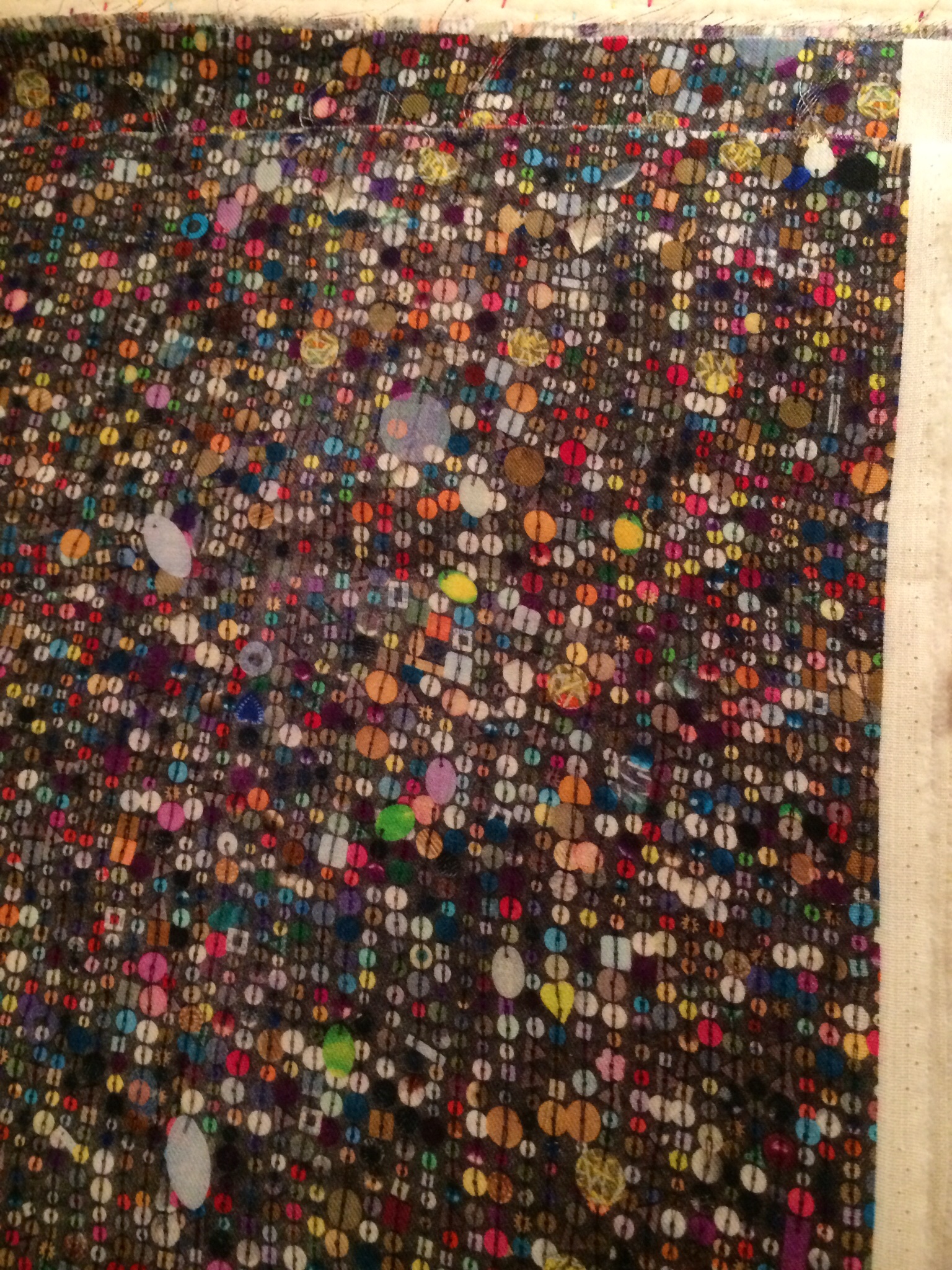
The sequins are printed on, so it’s trompe l’oeil, which is French for either “fool the eye” or “impossible for Americans to pronounce”. Due to the one-sided, one-directional nature of the print, I knew I’d have to lay out and cut the pattern very carefully.

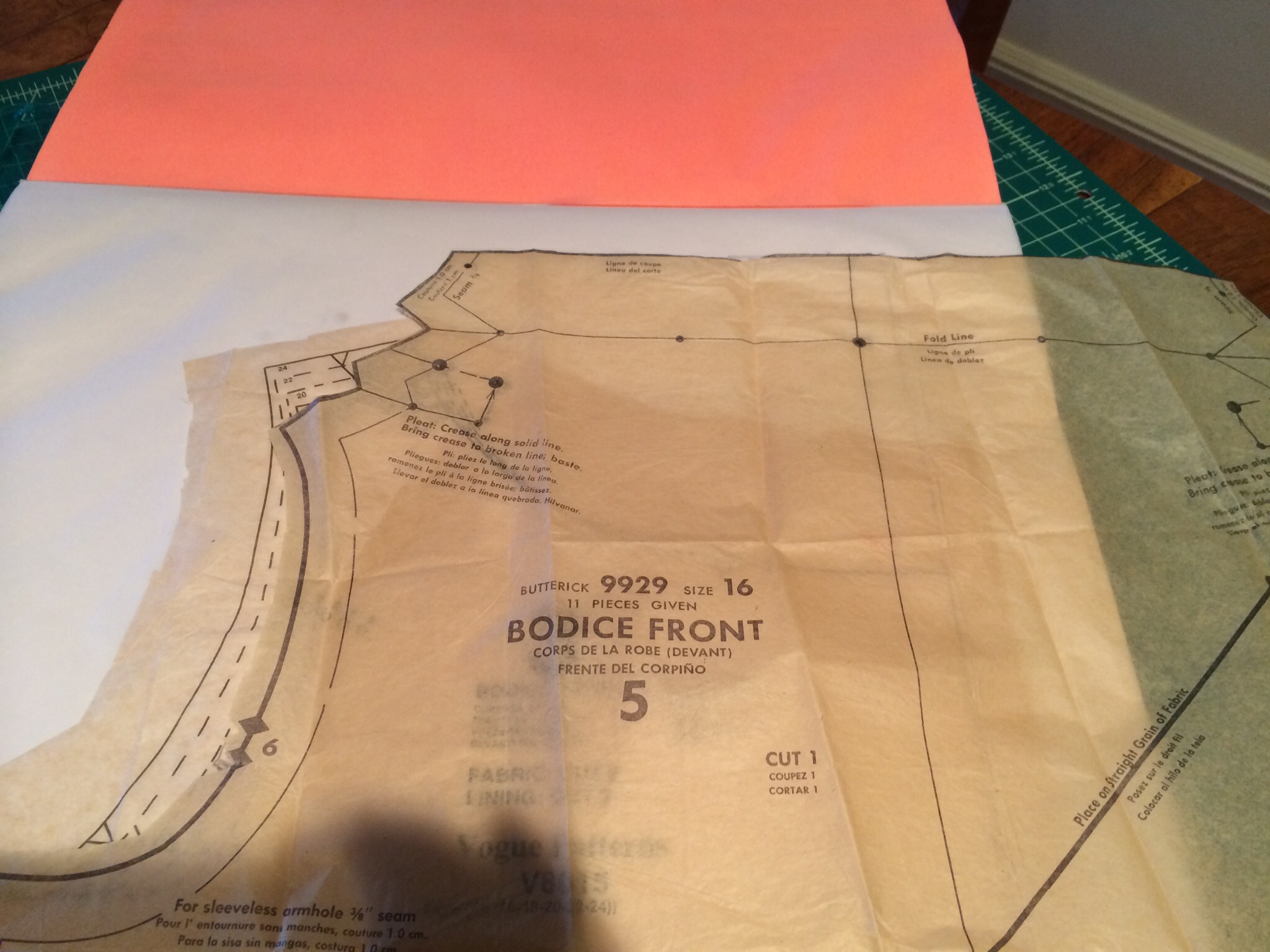
The pattern was too small for me, so I decided to use the bodice of the modern Vogue pattern 8615 (on the left of the photo above) as my “fitting shell.” That pattern has French darts as well (and not the dreaded princess seams), and it includes bodice pieces for different bust sizes. It also has a relatively small armscye and narrow sleeve, which is rare for modern patterns. It has received good reviews on patternreview.com (Reviews of Vogue 8615), and it makes a very cute retro-style dress.

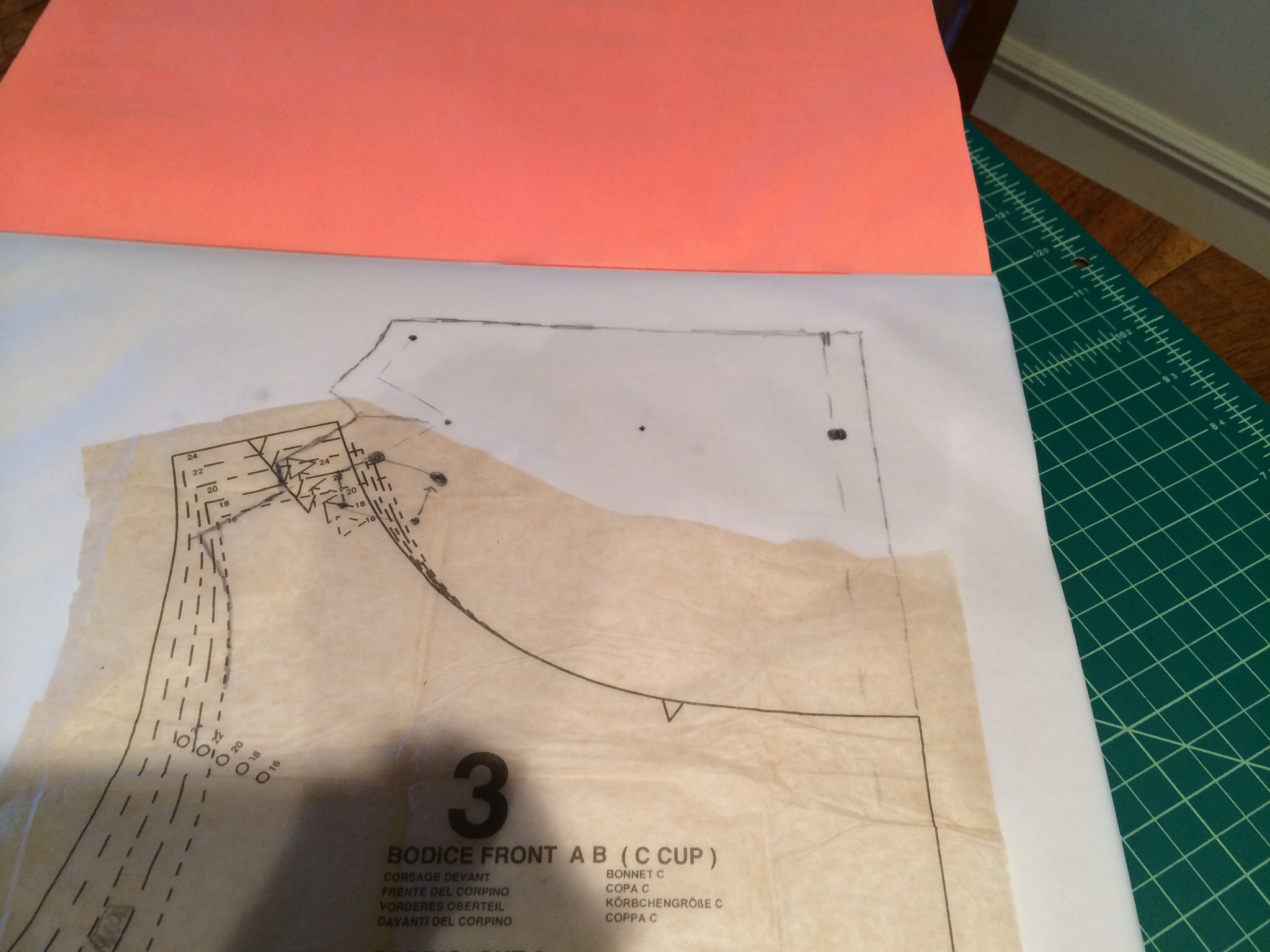
I taped the Vogue pattern to some tracing paper, then put the vintage Butterick boatneck pattern on top to trace the neckline.

image

After I was done tracing, it looked like this:

image

Then I realized that since I was making a top, and not a dress, that I needed the pattern to extend below my waist. So I dragged out a muslin I made last year, when I was going through vintage Lutterloh hysteria. The weird world of Lutterloh deserves its own post, so I’ll elaborate in the future. But in the meantime, here’s a review of the Lutterloh top I made last year: (50s Lutterloh Top review)

So I put the Lutterloh muslin on top of the Frankenpattern I was creating and traced around the bottom, also adding the bottom of the dart.

image

A heads up: when you’ve gone this far into pattern combining, you will lose all track of the notches and have to fake it.

I don’t have a picture of it, but when I made the Frankenpattern of the back, I added two waistline darts in the rear, and kept a couple of small shoulder darts from the original Butterick. Rear darts are another thing that should make a comeback; they really improve the fit.

For the sleeve, I used the top of the modern Vogue pattern, so the sleevecap would fit in the armscye, and then drew on the bottom of the sleeve from the vintage Butterick pattern, so I would get the curved shape and two darts.

image

This is the point in my projects where I start wondering if I’ve bitten off more than I can chew.

Since the fabric I was using was so expensive and nervous-making, I did a full-out muslin at this point. I also wanted to have a muslin to use as a pattern in the future, since I adore the unique neckline and shaped sleeves.

Once again I used the technique outlined in Susan Khalje’s “Couture Dress” course on craftsy.com. I laid out the muslin on a large sheet of tracing paper, put the frankenpattern pieces on top, and marked the muslin with a tracing wheel.

image

I hate doing muslins, hate ’em, until the very moment I put them on and think “boy, that has some fit issues…”

image

I saw right away that I had constructed the two sides of the neckline differently (hard to tell without notches) and that the bust was tight. At that point I was so happy that I was only picking out the basted seams on a muslin and not messing with my delicate fabric. I adjusted the fit and liked what I saw.

image

I really need to put on lipstick before I take these muslin selfies.

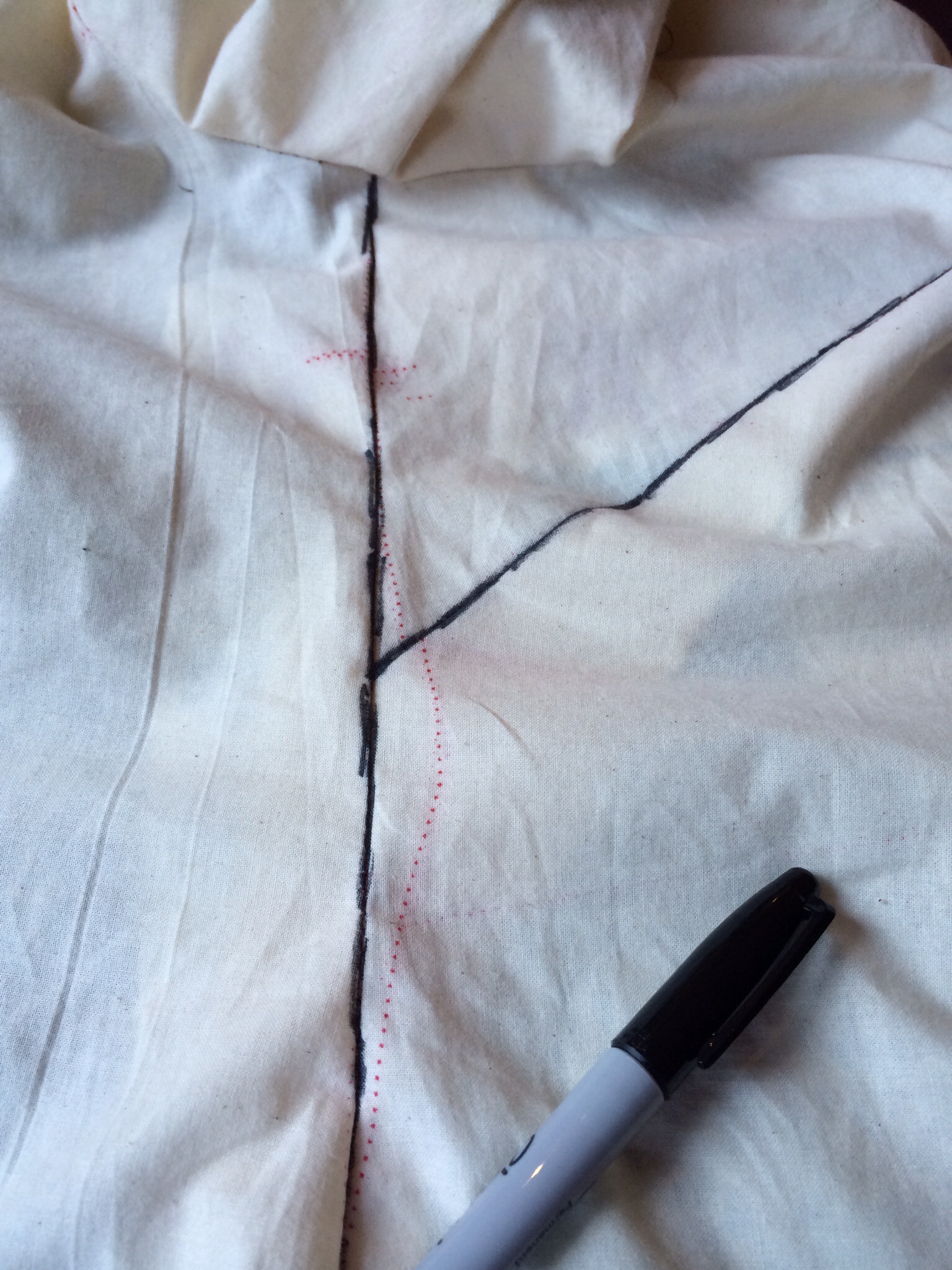
The last thing I do when I’m done fitting a muslin is to take a magic marker pen and mark both sides of each seamline and dart seam. That way when I take the muslin apart, I know exactly where the final seamline is.

imageimage

Now I felt so much better about cutting that fine, fine fabric. And I had a nice project for a snowy day in Boston.

image

I’ll let you know how the top’s turning out in my next post. How’s your new year’s sewing going?


The Making of Chanel Jacket #2: Blood, Sweat and Tears

23

A couple of posts ago, I promised details about how I constructed Chanel jacket #2.

image

Even though I was working on this project a year ago, it’s alllll coming back to me. The ill-fated muslins, the horrendous plaid matching, the pricked fingers and blood on my white lining, the furry fabric that felt like a shedding lapdog as I did hour after hour of hand sewing. No wonder it was sitting in my closet for a year!

Here’s the story: while in the thrall of creating Chanel jacket #1, which I made as a project for Susan Khalje’s “Couture Dress” course on craftsy.com, I started obsessively researching all things related to sewing a Chanel jacket. Looking at the Elliott Berman Textiles website one day, I noticed a listing for actual Chanel tweed fabric for $55 a yard. Not knowing at the time that that was a bargain for this type of fabric, I waited for a sale and got a couple of yards at 20% off.

Soon after, I completed Chanel jacket #1, then won a blue ribbon for it at the Martha’s Vineyard Agricultural Fair, which is a blood-sport crafting competition between rural crafters, hippy artsy folk, and overeducated gentleman/women farmers, with a few summer residents like me jumping in. Filled with hubris, and my $5 Fair winnings, I embarked on Chanel #2.

image

Embracing sewing has helped me get in touch with a scary competitive side of myself I didn’t know I had.

My plan was to use Vogue pattern 7975, (Vogue pattern 7975) which at that time was a favorite of Susan Khalje’s during her Chanel boot camps, though apparently she helps her students change the sleeve pattern into 3-part sleeves (Susan Khalje’s week-long Chanel Jacket class). So I started obsessing about the sleeve and decided to do a “frankenpattern” of that pattern with the sleeve from the Claire Shaeffer’s Vogue 8804 jacket pattern, which had just been released (Claire Shaeffer’s Chanel jacket pattern).

image  As I muslined 7579, which is a fairly conservative pattern with curving princess seams, I kept thinking, “I look lousy in princess seams,” and “this is too dowdy for me.” Undeterred and in denial, I finished the muslin and hated it. If you’re built like me, with boobs, a short waist, and hips, a fitted Chanel-style jacket is not your finest look to begin with, and it can easily turn you into a dumpy “pepper pot” (as the guys from Monty Python used to call themselves when they played middle-aged women in drag).

7975 muslin

I hate the way I look in muslins, but I’m always glad I did them.

In the end I selected a Simplicity pattern (Simplicity 2154) with kimono sleeves and side panels, which I reasoned would be easier for plaid matching and construction. I had convinced myself that I could throw this jacket together. I have no idea why! I have seen photos of Chanel jackets using this cut, so it is an authentic look.

Chanel jacket with kimono sleeves

I muslined the Simplicity pattern and liked it a lot better–it had a much more retro 60s vibe, and it looked better on me. Also, I saw that I could create a vent on the top sleeve seam, which would save me the hassle of creating a three-part sleeve.

After taking about 2″ off the top shoulder/arm seam, raising the side panel to make the underarm higher, and cutting lengthwise rectangles at the cuff of the top sleeve seams to make the vent, the muslin was fitted and good to go.

IMG_0428

I took apart the muslin and trimmed it to the stitching line to make the pattern pieces. I laid out the front pieces on one layer of fabric, side by side, so that the plaids would match up. Ditto for the back. The side pieces I thought would match pretty closely. I cut around the pieces, leaving a large seam allowance. At this point, you’re supposed to thread-trace (hand baste) around the pattern pieces to mark the seamline, but I think I used tracing paper instead. As I noted in the construction of Chanel #4, this is a bad idea because the tracing lines can permanently mark the fabric. But thread tracing is so boring!

image

Then the fun started. The fabric I selected has a subtle, very tricky, plaid repeat that is about 6″ long. So when you think you’ve got it lined up properly, you’re really about 2″ off. By the time I got into the serious matching and construction I got so obsessive that I spent hours trying to ensure that the large black thread was matching the other large black thread, and not the small black thread, which would completely throw off all of the fuchsia and grass green threads. It made me nuts.

For lining, I used a double silk georgette from Emma One Sock (emmaonesock.com), which, though lovely, I realized during construction was not all that sturdy for the amount of hand-work required.  And even though I really liked the style of the kimono sleeves (because the bodice starts on the grain and then the sleeves dip down on the bias), when it came to attaching the bottom of the sleeve/bodice pieces to the two small side panels that go under the arms, it was such a pain. Such a pain! It requires a weird pivot on your machine that I botched and then ended up doing by hand. Set-in sleeves would have been a hundred times easier. But it was worth it, as it gives this jacket a non-traditional look.

For instructions, I used an old article by Susan Khalje from Threads Magazine (Threads Magazine article), outlining the steps she uses to make a traditional Chanel-style jacket, where, prior to construction, the lining pieces are quilted directly onto the exterior “fashion” fabric pieces. The exterior pieces are machined together, and then the interior seams allowances are finished by catch-stitching them down to keep them from rolling up. Finally, the lining seams are hand-sewn closed to cover the fashion-fabric seams.

So I machine-quilted the pieces of lining to the pieces of fashion fabric, using a walking foot. Then I attempted to put the exterior together, with the attached lining pieces flapping around the seams. No fun at all. I had convinced myself that I would close the lining seams by folding them over one another and machine top-stitching the whole thing, but it looked awful. So it was back to hand-stitching. Everything.

Here you can see my haphazard machine quilting, with the hand-stitched line where the lining was connected over the exterior seam. So much flippin’ hand sewing! If you look closely you can see a small dot of blood on the lining from when I pricked my finger. I can’t believe that some people do the quilting by hand, too.

image

I also watched a video from the Chanel atelier showing the construction of a modern “little black jacket” and saw that they were using fusibles to support the neckline, center front and sleeve cuffs. I decided that if it’s okay by Karl, it’s okay by me! (Video of the making of a Chanel “little black jacket”.)

What you’re looking at below, on the left, is the center front of the right bodice, with the edge reinforced by sewing on a piece of selvedge from some silk organza (I learned that trick from Susan Khalje’s Craftsy course) and stabilized with lightweight knit fusible. I did this around the neckline and cuffs as well. You can see that the lining was already quilted on so I have to fold it back to put on the fusible. The lining was constantly getting caught in the stitching during the exterior construction. Yiiii!

image

I turned in the center-front edge, hand catch-stitched it down, then turned under the lining and fell-stitched it down. Here’s the finished center front, after I had put on the chain and hooks and eyes.

image

I basically jerry-rigged some vents on the upper sleeves by cutting a rectangle, about 3″ long and 2″ wide, on the cuff end of the sleeve back piece. I turned the rectangle in by 1″ (self-facing it), catch-stitched it down, and then attached the lining.

image At that point, nearing the freak-out zone, I remembered that I hadn’t done buttonholes in 30 years. We didn’t have a buttonholer when I was a kid, so I just went at them by hand. I like to think of the buttonholes on this jacket as “funky.” Note: you can avoid funky buttonholes and other pitfalls by consulting Claire Shaeffer’s book with DVD: The Couture Cardigan Jacket.

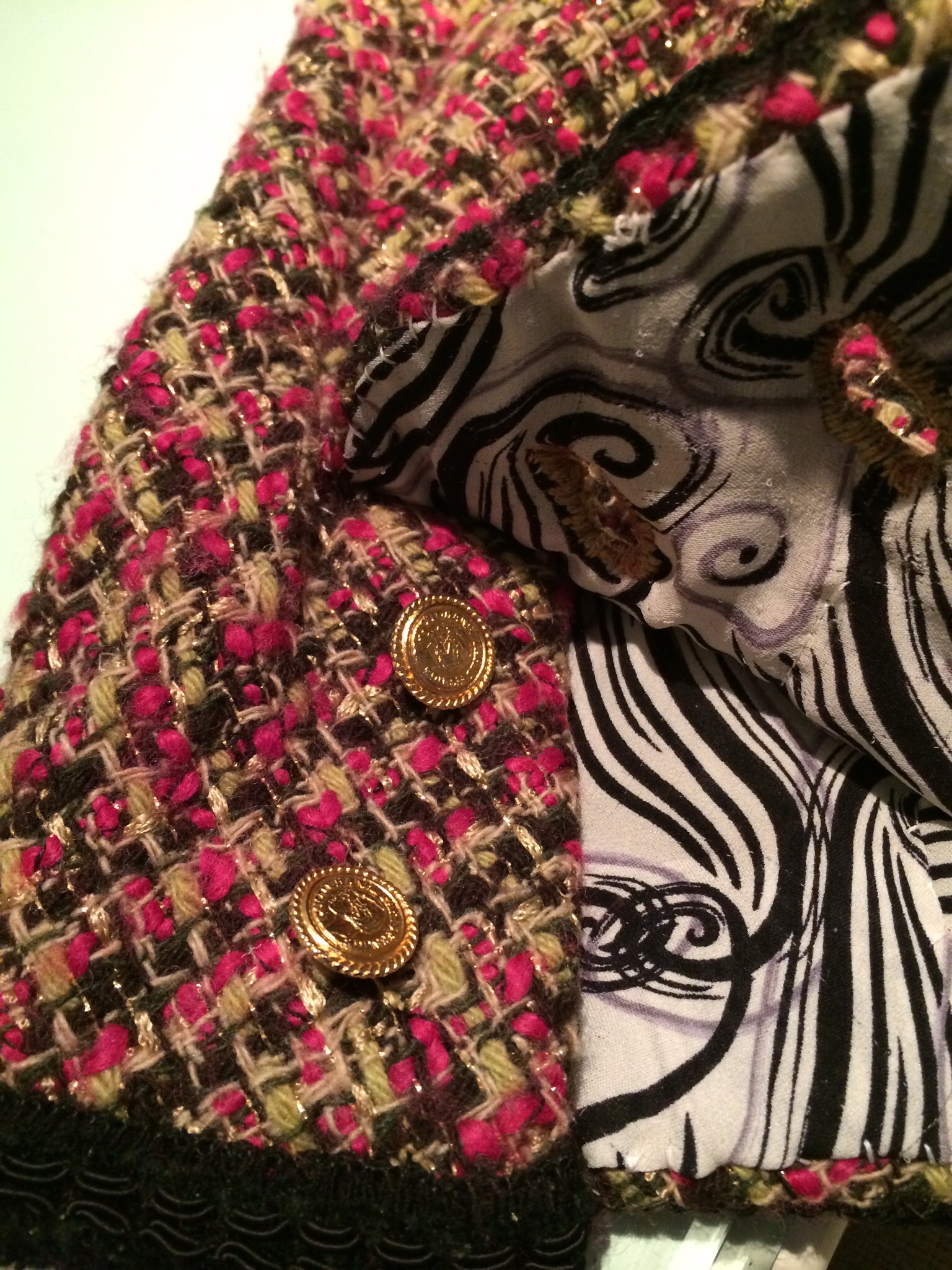
imageYes, that is a picture of Coco Chanel on those buttons. I bought a trashed Chanel blouse on Ebay, cut the buttons off and sewed them on the jacket. Now when I wear this jacket, stupid Coco’s always giving me that look.

I wanted to make the jacket look 60s, so rather than the jewel neck, I made the neckline more bateau. However, I had to close up the ends of the neckline, as the bateau shape made the front hang in a weird way. I still like it, though.

image

I found a roll of those vintage “La Cote d’Azur” clothing labels on etsy. Now they’re my “private label”.

For pockets, I was inspired by this 60s jacket:

Chanel best look

but since I’m short-waisted, I didn’t want to do the upper set of pockets, which I assumed were for Coco’s ciggies anyway. More dastardly plaid-matching ensued while I created and lined two patch pockets and hand-sewed them on. (Basically cut a rectangle of fabric and one of lining, sew three sides right sides together, turn them right-side out, turn under the raw ends and hand-stitch, hand-sew on the trim, stick the pocket on the jacket and hand-stitch it on, repeat.)

Meanwhile, the exterior fabric was getting fuzzier and more played-out looking the more I stitched away, and the silk was getting tiny pulls all around the edge.

But as frustrating as it all was, I could see for myself why Chanel had added various design elements. The trim goes around the neck and center front to reinforce and stabilize that area without heavy tailoring. It keeps the neckline from flopping open, and it keeps the simple design from being too blocky and boring. Though I wasn’t using upper pockets, I could see how they would be useful on a princess-seamed jacket, to cover the place where the plaids don’t match at the bust point. The chain helps to keep the lightweight fabric hanging well so it won’t ride up, and the weight can counter-balance heavy buttons. The brilliant simplicity and wearability of this design has kept these jackets in vogue for more than 60 years.

I finally hand-sewed on the chain (time-consuming because you’ve got to get the needle around and through the metal loops) and hand-sewed on the trim and hooks and eyes. Then I put it in my closet until I recovered from the trauma ten months later.

Chaneljacket

American Hustle and Wrap Dress Patterns

20

Have you seen the movie American Hustle? Oh honey, in the 70s, I was there. The knit dresses cut down to there. The men with hair everywhere. The whole feeling of “Vietnam’s over, the feminist movement’s started, and we have birth control.  Let’s dress up and have a party!” We would go to the disco and dance for hours. The scene with the two leads in the Studio 54 bathroom stall? Totally could have happened anywhere in the US during that time.

I’m not sure how American Hustle will translate into other eras and cultures, but everything in it resonated with me, particularly the wardrobe.

American Hustle StillAmerican Hustle Wrap

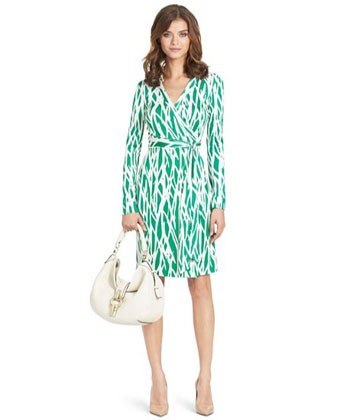
In one scene, Amy Adams tries on an instantly recognizable Diane Von Furstenberg silk jersey wrap dress, which looks like this:

DVF Wrap

DVF’s wrap dress design is now celebrating it’s 40th anniversary. http://www.harpersbazaar.com/fashion/fashion-designers/dvf-wrap-dress-0214  I was happy to see that the reissue of this dress is made of the original silk jersey, which makes these dresses a cut above the countless polyester knock-offs we’ve seen since.

Seeing that wrap dress reminded me that DVF did a number of patterns for Vogue in that era. So people like me who were living on a shoestring could make their own. That led me to Etsy, where I bought this pattern last night.

DVF Wrap PatternI like how they show the dress as reversible.

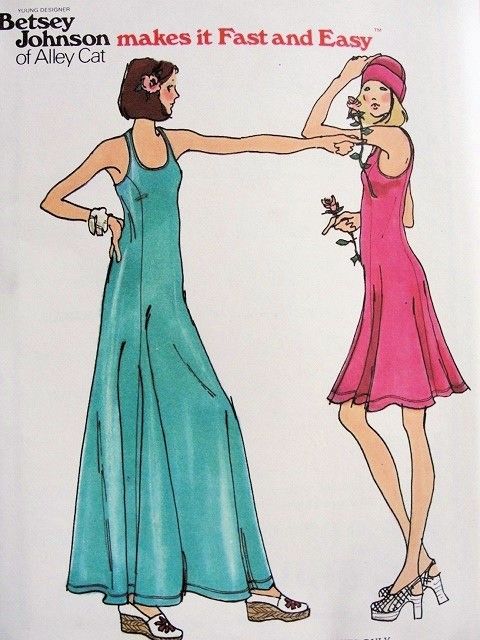
A lot of people make fun of 70s, but it was a great time for design and for sewing. In the early 70s, Butterick’s “Young Designer” pattern series allowed teens like me, living in the midwest, to make dresses by new designers like Betsy Johnson, whose clothes we’d only seen in Seventeen magazine.

Betsy Johson pattern

Trust me, no one had done slinky tank dresses like this, and there certainly weren’t patterns for them. I had spent all of my grade-school years in uncomfortable dresses with crinolines and smocking, then freezing cold, constricting mini shift dresses. In junior high, I made this dress out of Quiana polyester with pale roses on it. I LOVED it! The Young Designers line also had patterns by new youthful designers such as Kenzo, Mary Quant, Clovis Ruffin, and Willi Smith. The clothes were fun and comfortable.

By the late 70s, everyone in the country had heard about Studio 54, and what a fabulous, hedonistic place it was. Though in reality, it was probably more like this:

Studio 54

That’s the designer Halston on the left, Bianca Jagger in some odd hoodie next, some other guy, Liza Minelli, and yes, PREPPY Michael Jackson. Were they really having fun? I don’t know. The whole era got to be too much after awhile.

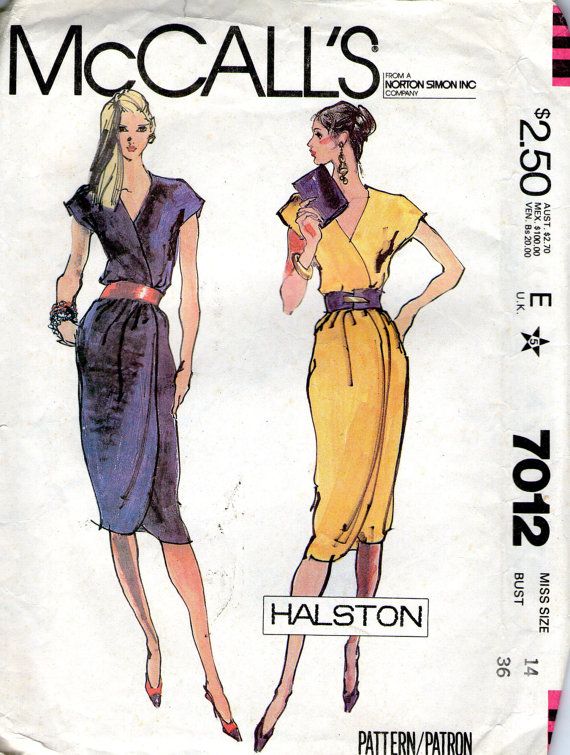
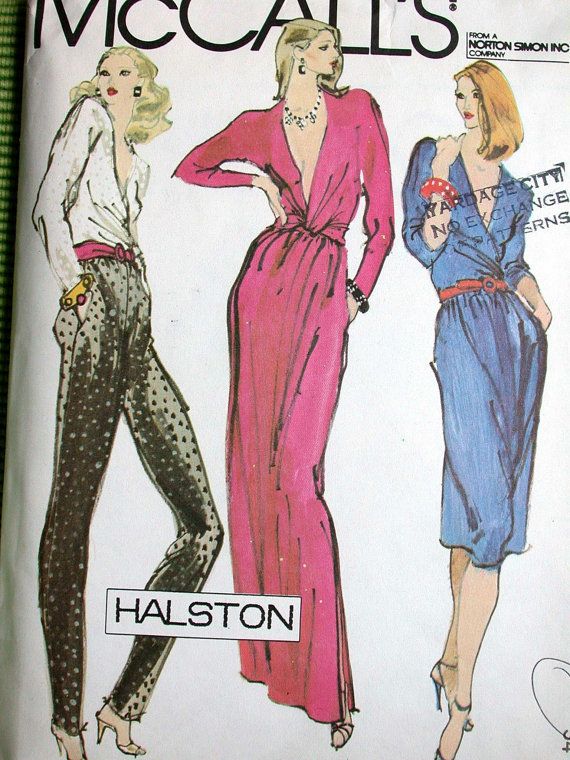
Speaking of Halston, in the late 70s and early 80s, he designed some great patterns for McCalls:

Halston pattern #1Halston pattern #2 Very Amy Adams in American Hustle.

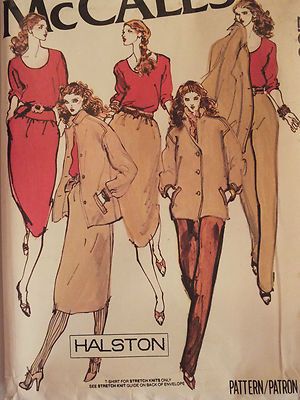
I remember making this knit top and skirt in the early 80s, when I was first working as a television producer:

Halston pattern #3

I wore it on a field shoot, one thing led to another, and the guy I was interviewing and I ended up at the Plaza. Those were the days, my friend.

You can see more Halston patterns on my pinterest page: Make Your Own Vintage Halston. The patterns are not too hard to find on Ebay and etsy.com.

Let’s get back to the wrap dress. Diane Von Furstenberg is known for “inventing” it, but it was around for a long time before that:

McCardell Popover

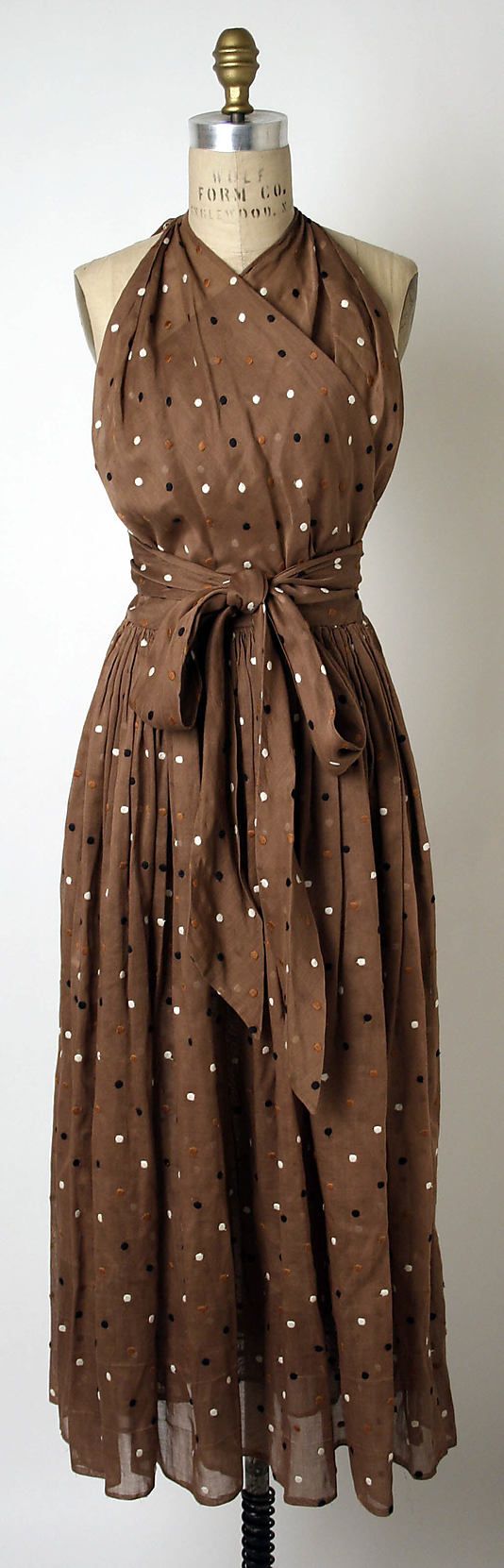
This rare early 50s Claire McCardell pattern, released by Spadea, was drafted from a retail McCardell dress, like this:

McCardell Popover DressMcCardell Popover in the Metropolitan Museum Collection

The bodice is cut on the bias, a technique McCardell learned by deconstructing Vionnet dresses while she was a student in 1920’s Paris. She had wrap dresses in her line from the 40s through her death in the late 50s, though she called them “popover” dresses. More on this design later.

These dresses never really go out of style. Just today, I spotted this new Vogue pattern from Donna Karan:

Donna Karan Wrap Pattern

Bias cut, very nice. Here’s the link: Donna Karan Vogue Wrap Pattern. Many of Donna Karan’s early sewing patterns (including the ones she did for Anne Klein) were influenced by Claire McCardell’s designs.

Hm, I think I have some wrap dresses in my sewing future…after all, when Mad Men returns it will be in the full-on 70s.

What do you think of 70s fashion? Thumbs up or down? Any fashion memories, good or bad?

France wrap up

15

Here’s the France style/sewing wrap up before I expire from aesthetic overload:

1. What would a trip to France be without a pointless pilgrimage? Recognize this staircase?

image

Yeah it’s this one!

Chanel on Staircase chanel-on-the-stairs-5

It’s Chanel’s atelier at 31 rue Cambon. Last time it I walked by it was locked, but this time the guard let me come right in and take some pictures. Wowza. Why didn’t I do a selfie?

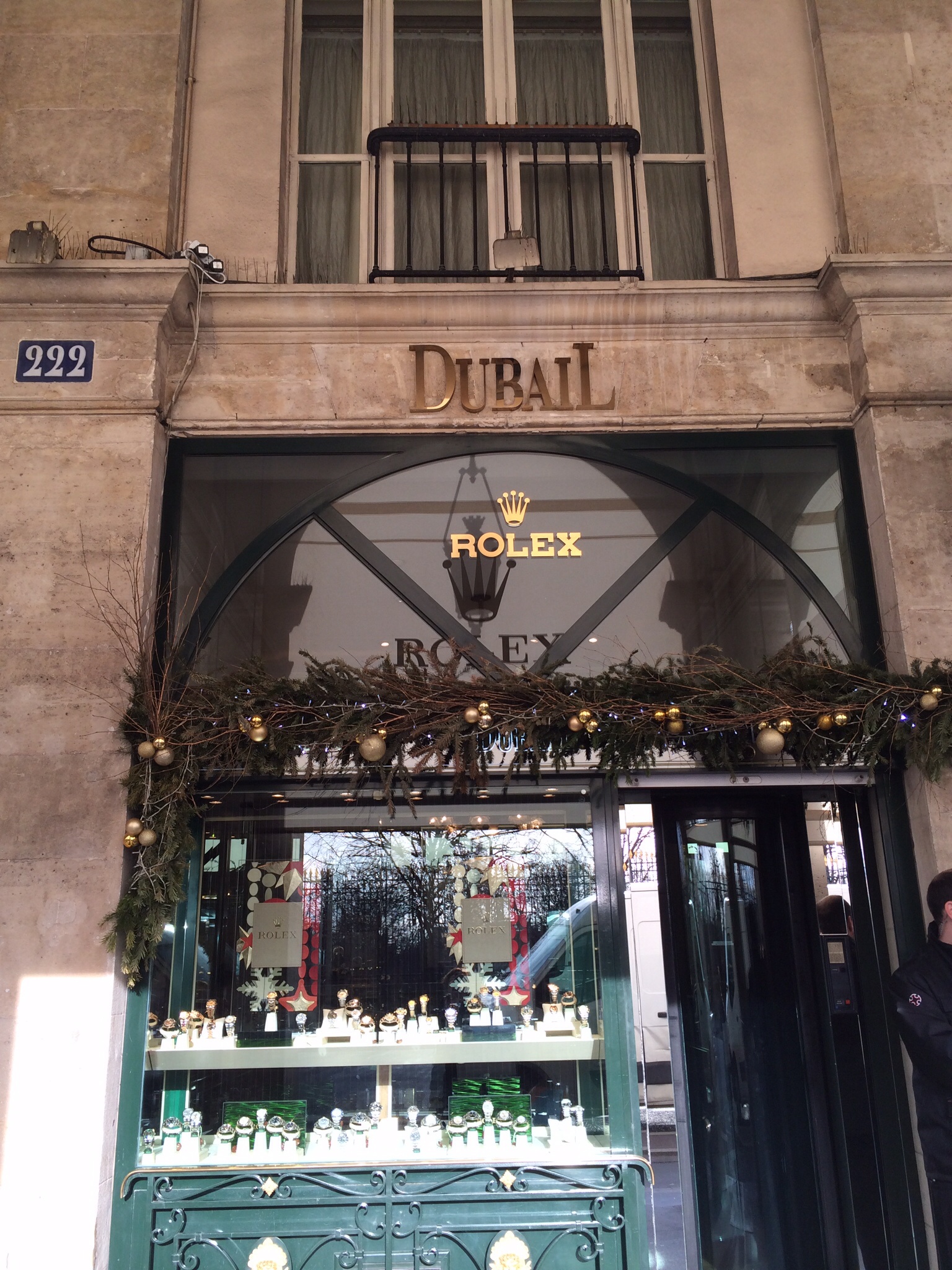
But since Madeleine Vionnet won the Chanel/Vionnet Smackdown post, I also had to pay homage Vionnet’s first atelier, at 222 rue de Rivoli.

image

Kind of touristy now, but the view of the Tuileries across the rue de Rivoli remains the same.

image

2. A lot of formerly hot French guys are walking around wearing Wranglers. Wranglers! You don’t look like a cowboy, you look like Uncle Buck. Stop it. You’re bringing down Western civilization.

image

3. Though this looks like a picture of me eating lunch, drinking wine, and wishing that a magic carpet would transport me to my hotel so I wouldn’t have to ski down an entire Alp to get there, I’m actually testing a design by American Look creator Claire McCardell. She was a skier as well, and in the 40s she developed a wool jersey top with what was then called a “Superman hood” to keep her ears warm.

McCardell hoodie
This was back in the days when the concept of “separates” was very new, and jersey was just beginning to be used for “sportswear,” as before that women didn’t do sports because they were walking around in corsets trying not to get the vapors. (Okay, I’m skipping a few parts of fashion history, but you get the idea.) McCardell, on the other hand, was one of a new breed of sporty, independent women, so she created designs to fit that lifestyle.
You can see this example of McCardell’s Superman hoodie in the online archive of the Metropolitan Museum of Art’s Costume Institute. http://www.metmuseum.org/Collections/search-the-collections/157132?rpp=20&pg=1&ao=on&ft=claire+mccardell&pos=2 That archive is such a good time-waster.
The black Patagonia top I’m wearing in the picture (from their fall 2013 “collection” http://www.patagonia.com/us/product/womens-merino-3-midweight-hoody?p=37145-0&pcc=1147) is made of merino wool jersey, and has a hood that is virtually the same cut as McCardell’s. It’s easy to wear, not too hot, not too cold, and the hood works fine under my ski helmet. It’s ironic that merino wool jersey is now being touted as the miracle fabric for sports, (Insulating! Stink-free!) when McCardell was talking retailers into the same thing more than 75 years ago.

image

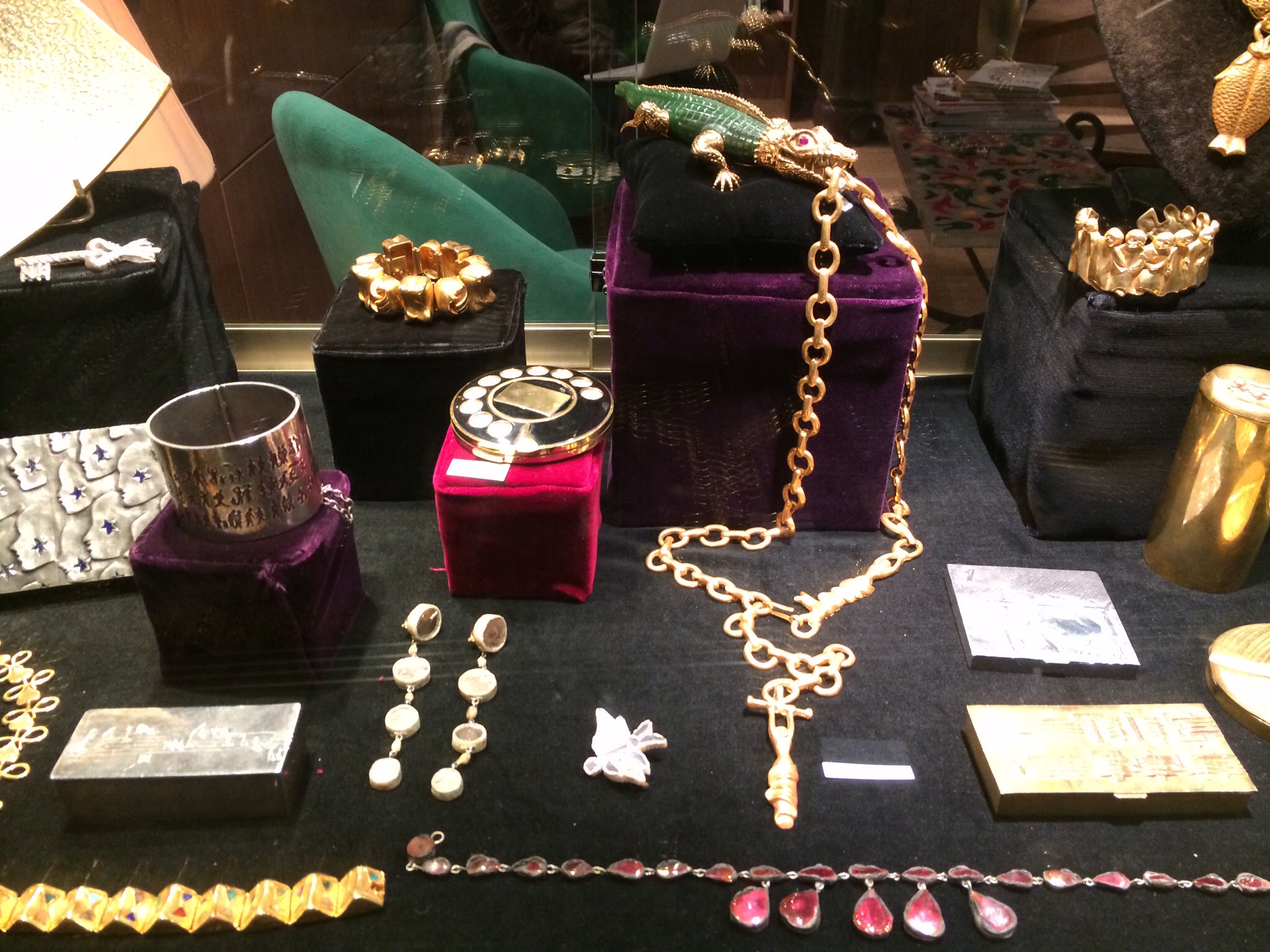
4. More bling from rue de Seine. The round compact that looks like a telephone dial is credited to the Surrealist Artist Salvador Dali, but it was from a 1935 collaboration with designer Elsa Schiaparelli. According to the New York Times, one of these compacts was recently listed on the website 1st dibs for $50,000.

At some point I’ll get around to writing about the single-sleeved Schiaparelli wrap I whipped up last winter, which I’m worn a lot more than my Chanel jackets. Something about it really wows people.My Spring Wrap

It’s a fun project, and the reissue of the pattern is available from Decades of Style http://www.decadesofstyle.com/vintage-patterns-1950s/5006-1950s-stole. Last spring, I won a Threads Magazine competition by creating this Pinterest page about the project http://www.pinterest.com/juleseclectic/make-your-own-schiaparelli-wrap/. For my prize, Threads sent me a Bernina Swiss Army “Ladies Knife,” full of sewing tools, which thrilled me beyond words, no joke.

Bernina Ladies Knife

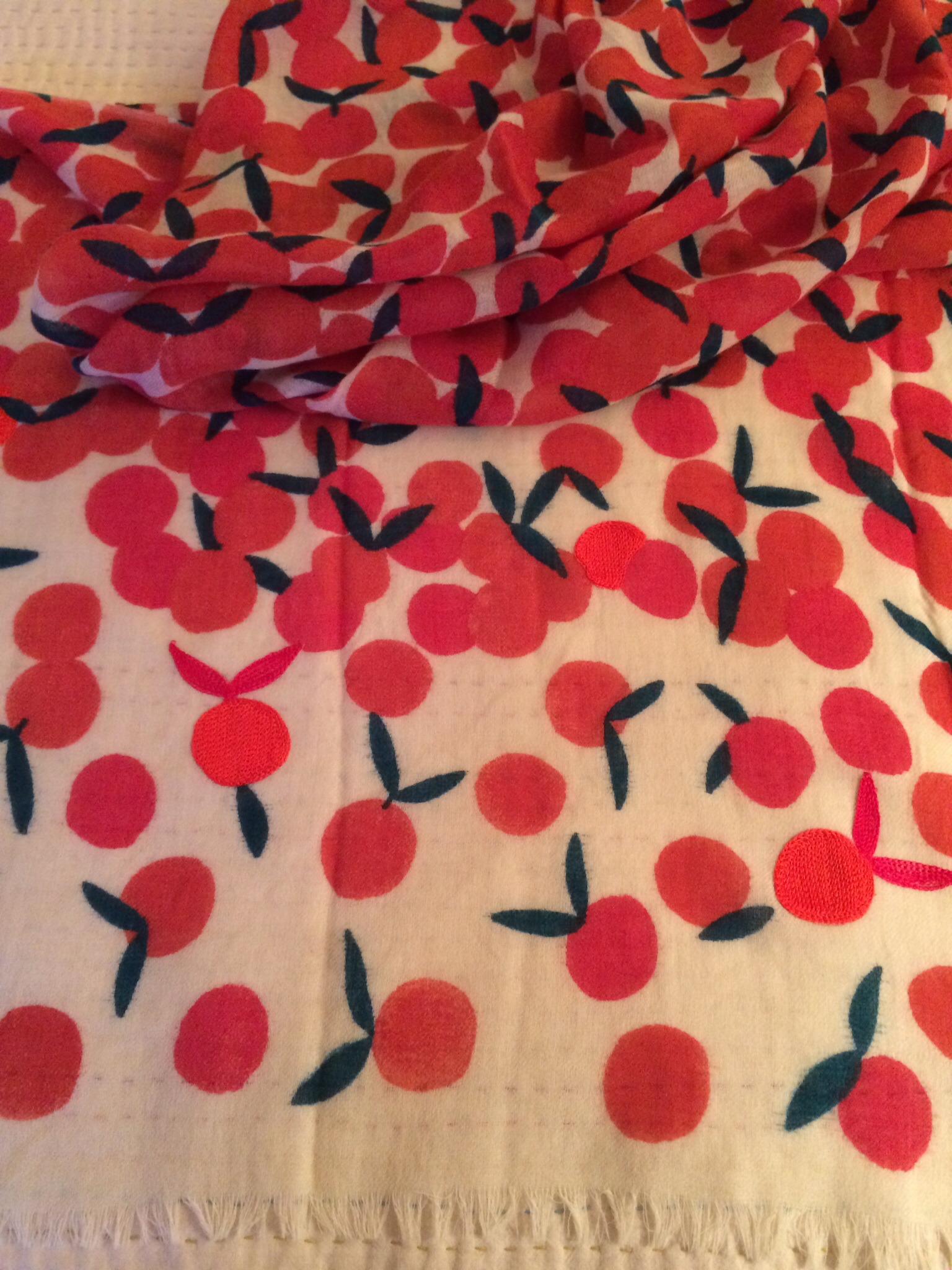
5. Love the printed pattern on this light all-wool scarf from Ventilo.

imageimageEvery year when we come to Paris, the boxes of clementines in the outdoor markets are a bright spot in the winter gray. Thanks Santa.

6. Here’s what was in vintage dealer Didier Ludot’s shop window (in the Palais Royal, just north of the Louvre):

image After I go on my gluten, dairy and food-free diet, I’m going back for that ivory beaded Balenciaga with sleeves in the back.

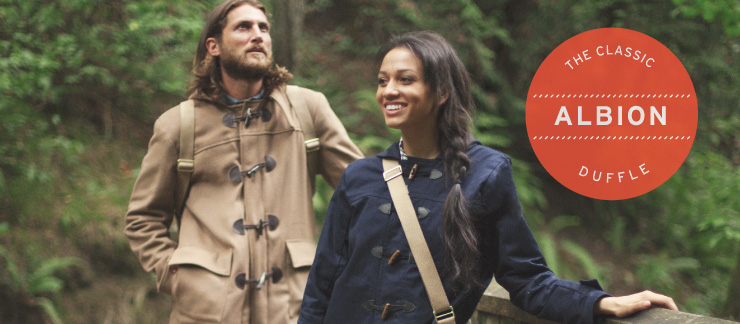
7. You may recognize Paris’ Grand Palais from Chanel’s last few collections, when the giant hall, built for the 1900 World’s Fair, looked like this:

image For the holidays, the French set up an indoor amusement park inside this Beaux Arts wonder.

imageFifteen Euros covered admission and all the rides! My 12-year-old was in heaven. They also set up a temporary champagne bar in the hall with a chanteuse singing Piaf. So much better than Disneyland Paris.

8. Here’s American ballet star David Hallberg, (from South Dakota!) doing his curtain call for Nureyev’s version of Sleeping Beauty at the Paris Opera Ballet, with Svetlana Zakharova, prima ballerina with the Bolshoi.imageNo words for his perfectly executed and interpreted solo in Act 2. In the last act, the chorus’ costumes were all in a dusty palette of pink, yellow, peach and ochre, like the set, so that the soloists’ jewel-toned costumes popped out in front of them. Yes, I am a dance nerd, too.

9. And lastly, thanks to the egging on of a number of readers, I did fulfill my threat to go back to Janssens et Janssens and look for black tweed for Chanel #5, the punk meets steampunk little black jacket. I was the only one in there, and in the midst of a long French conversation with the unfailingly friendly saleswoman, I went into some kind of fabric trance, leading me to walk out with some lightweight, all-wool Italian tweed with subtle houndstooth texture (but dark enough that you don’t have to match it, um, I hope), black trim with gray flecks and leather(ette) tubes running lengthwise (punky!), and a black chain sewn onto black satin ribbon to speed up the boring chain application part (and it’s steampunk, really, or clockpunk. One of those). Lining TBA.image
Word up about Janssens, they hate doing the paperwork for tax-free shopping, so if you ask for the “detaxe” they’ll tell you it’s a problem (for whatever reason), but because you’re so “nice” they’ll give you a discount.
I’ve dubbed this project “The Kaiser” because that’s what people call Karl Lagerfeld, though probably not to his face. I’ll be working on Chanel jacket #5 in the fall, although at this rate it could end up being fall 2020 after my son graduates.

But now that I’m back from Paris when it drizzles to Boston when it’s a slush heap, I’m thinking about projects for my next trip, an early March long weekend in Los Angeles. This light Italian wool with printed sequins that I got at Janssens will be just right for LA’s “winter” weather.

image And I need to bust my fabric stash before I go to LA’s newish mega Mood Fabrics store and the third floor vintage fabrics room of International Silks and Woolens.

Less blabbing on my blog, more sewing!
What are you working on in your part of the world?

Chanel Jacket #2 comes out of the closet.

10

I’ve had a love/hate relationship with Chanel Jacket #2 since I started making it over a year ago. Even in this picture I look iffy about it.

image

Originally I was planning to wear it in Paris last Christmas, and it did come with me–but it was still in pieces. At that point I was in denial about whether the fabric was “me”. Though it was authentic Chanel Tweed from Elliot Berman Textiles (Chanel Tweed)  it was made of fuchsia (fuchsia!), grass green and black wool, with very sparkly gold mylar threads through the whole thing. So then  I found some black trim with more sparkles from Janssens et Janssens on that trip. Viva Las Vegas!

Though I finally finished the jacket last February, since then it has been hanging in my closet  unworn for months, basically saying “you’re never really going to wear me, right? Too glitzy?”

I live in Boston nowadays, which to me is the US’s most European of cities. Boston is small and walkable, with old (for the US) buildings and well-maintained parks, and it’s cosmopolitan. It has a couple of the best universities in the US, a number of research medical centers, and thriving tech and financial industries, so it’s filled with upscale grad students and smart employed people, with a lot of foreign ex-pats. The symphony and ballet are world-class, and a number of movies are shot here, including the recently released “American Hustle.” It’s a classy, well-mannered city.

Here’s Boston’s Public Garden, a half a block from us. So lovely.

Boston's Public Garden

Though Boston style has a dusty reputation for preppy J. Crew meets “Love Story” duffle coats and weejun loafers, in reality the look is mostly understated yet sophisticated fashion, that goes from the black-clad urban boomers like me, to the glossy-brunette students in skinnies and Uggs, to the sharp suits of the North End Italian, uh, I won’t say “mobster” look, though there is a bit of a reputation for that, to the Michelle O sheath and boots many women wear to work.

The look you don’t have around Boston, over the age of 4, is “pink and sparkly”, and that’s how Chanel jacket #2 looked to me. When I finished the jacket, I was happy and relieved, since 100+ hours had gone into it, and I’d learned so much making it.

But after I took the pictures and submitted my reviews of it (Chanel #2 Review) ,    I didn’t wear it. It seems too fancy for movie night and too out there for dinner with friends. Spring was around the corner and then fall was balmy. Thanksgiving with family was too casual.

Packing for Paris, I knew I needed to travel light to cram in city and ski stuff, so in went four pairs of black pants and a stack of black tees and sweaters. But it was the holidays, and Paris. I needed something unique and distinctive.

On a whim, I pulled out jacket #2, and tried it on over my ubiquitous black jeans and tee. I’d forgotten how softly it fell and fit. It looked funky and festive. And it wasn’t perfect (just look at the buttonholes), which is key to the current French Jane Birkin/Boho look. I threw the jacket in my carry-on and headed to Logan Airport. They don’t wrinkle, people!

image

When I got to Paris, I realized that the problem wasn’t with the jacket, it was with the city. I had made this jacket to wear in Paris during the holidays and that’s where it worked. The jacket fit right in with the festive but not-too-dressy atmosphere of Le Vaudeville, the 30s Art Deco brasserie where we had dinner on Christmas Eve. That’s where I wore it for the first time, with black waxed jeans.

image

As they say in Boston, now I look “wicked” happy.

In an upcoming post, I’ll give details about how this jacket was constructed. Happy new year! Any new projects in the hopper?

Fabric shopping in Paris and…Steampunk Chanel?

11

Hello again, friends. Having been forcibly removed from Paris by train and coerced by family members into days of sliding down an Alp on a couple of laminated boards, which was then followed by slumber-inducing 5-course French meals, I haven’t had the opportunity to update you about the Paris sewing outpost that puts the FAB! in “fabric”.

image

In a previous post, I wrote about last year’s visit to Janssens et Janssens during which I pounced on the remnant table and then attempted to move into the place permanently, as I had basically spent the mortgage before I left.image

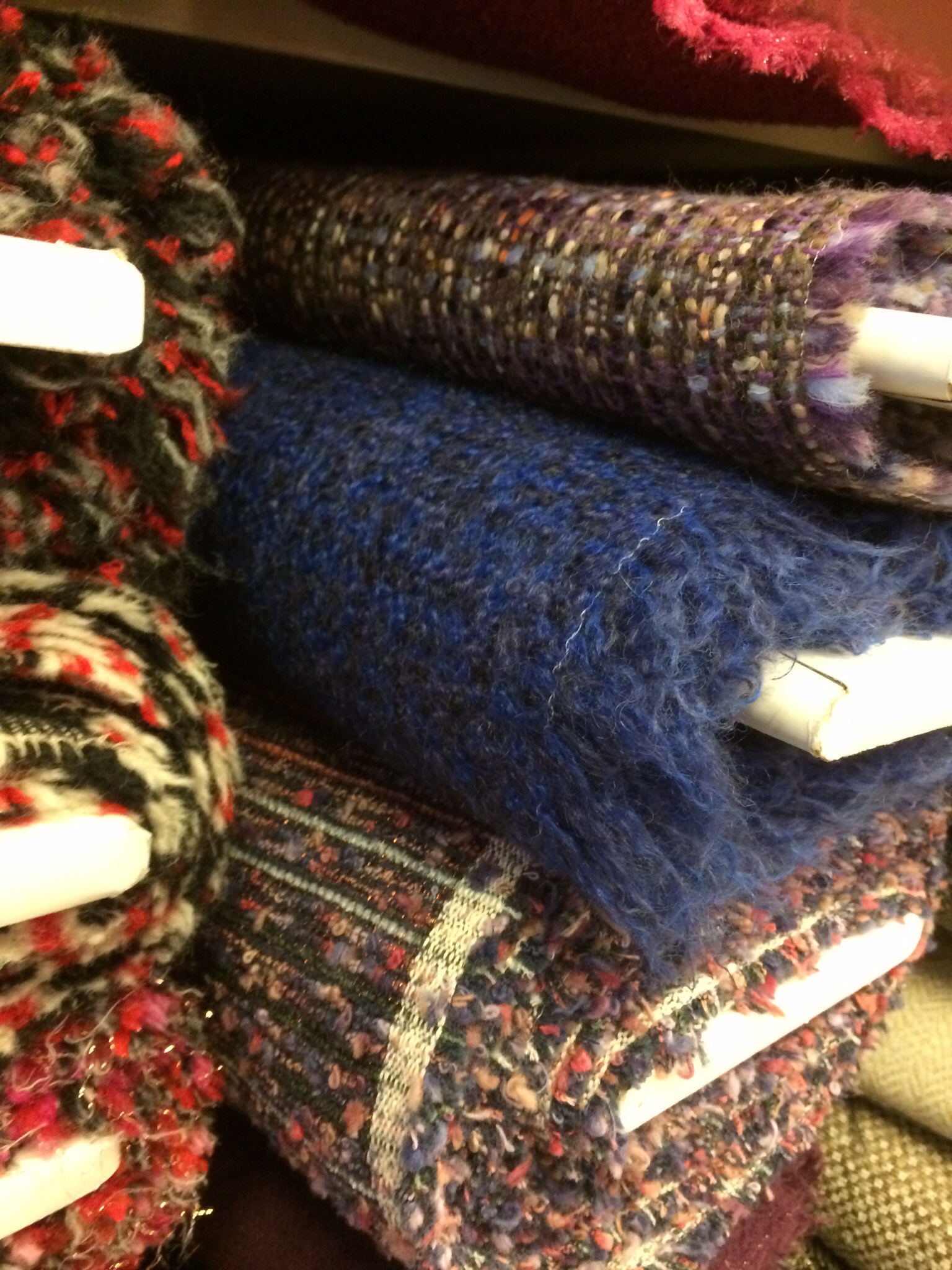
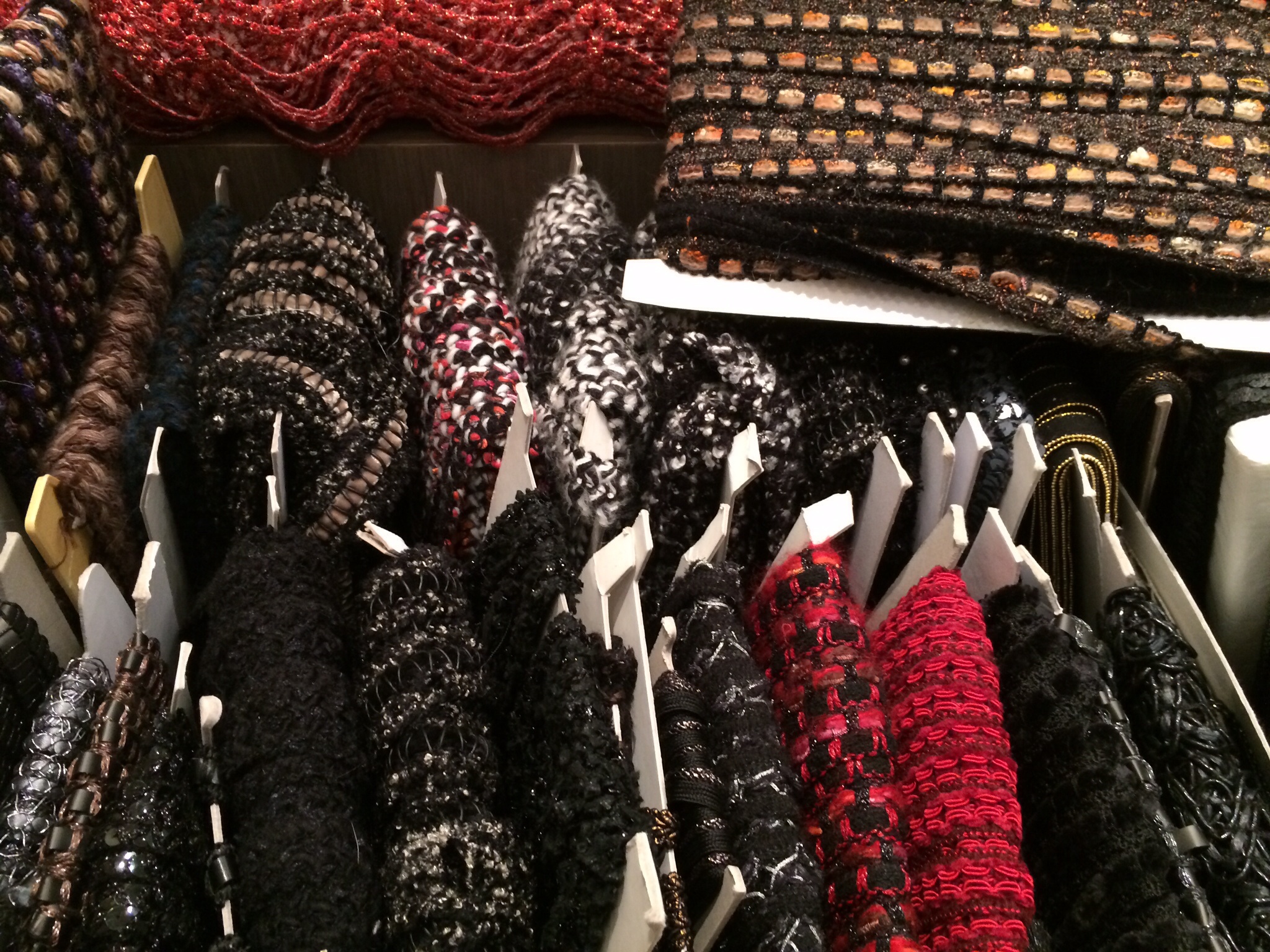
Like mecca, I had to return. Feast your eyes on those delicious tweeds.imageimageimage

Silks and Italian wools:

image

The fancy stuff’s in the basement.image

And the trims!image

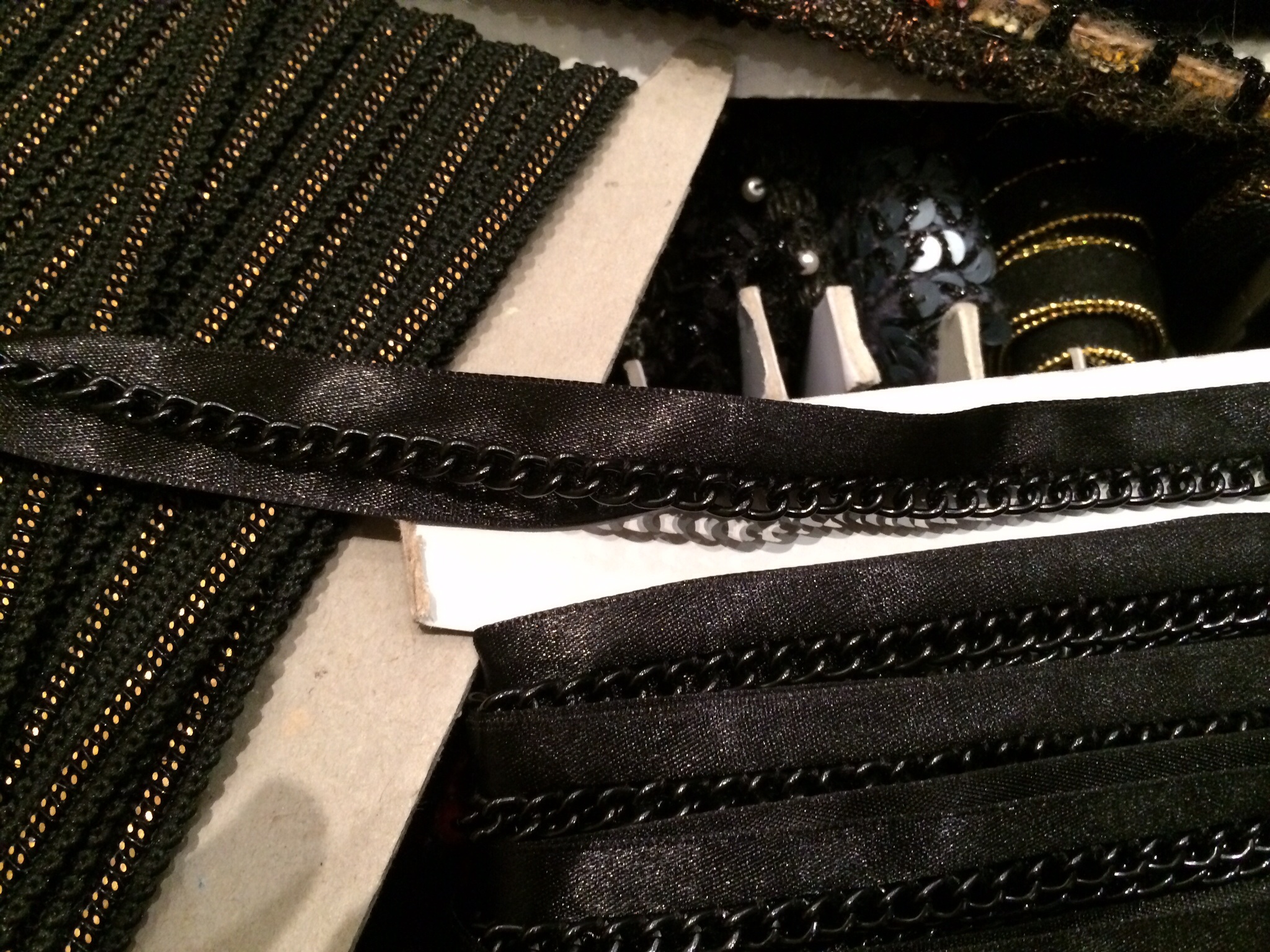
I found a couple of trims that have chains woven into them. So much easier to sew on if you’re making a French jacket:

image


All of these things pictured can be found at Janssens et Janssens, at 3-5 rue d’Anjou, at the corner of rue Faubourg St. Honore (janssensparis.com). While I was there, I bumped into another American blogger and fellow Chanel jacket obsessor, Mary, of the blog “Cloning Couture.” She’s already whipped up a pretty spiffy tweed jacket, and I’ll be watching her blog to see what she makes from her Janssens haul.

So now after my nightly couple three glasses of wine, I’ve had time to reflect on the year ahead. I’m going to move on to American Look designers! I’m going to make things that are easy and fun! I’m going to endeavor to make a dent in my massive fabric stash, and in the meantime, not buy anymore!

But really what I’m thinking is…the minute my feet hit the ground back in Paris, I am running to Janssens et Janssens, to get me some black tweed. See, I bought some antique brass snap tape at Bon Marche, and the grosgrain with brass chain imbedded in it at Janssens (above), and well, I think it’s time to bring the funk to Chanel.

I’m talking a Steampunk Chanel jacket. Steampunk is a look cooked up by people who got tired of being punk or goth or anime or whatever and came up with this Buck Rogers meets Wild Wild West (60s TV show that’s impossible to explain) look where they dress like Edwardian aviators or motorists and decorate their iPads with antique watch  parts. It’s a great look for the guys, though the women tend to look more like Liza Doolittle (pre-makeover), “Little House” schoolmarms or Miss Kitty, the saloon girl from Gunsmoke, and I say this knowing I’m going to get in trouble with the entire Steampunk community for this post. Just google it. I’ve got to hand it to the Steampunk people, though, they really get their sewing on.

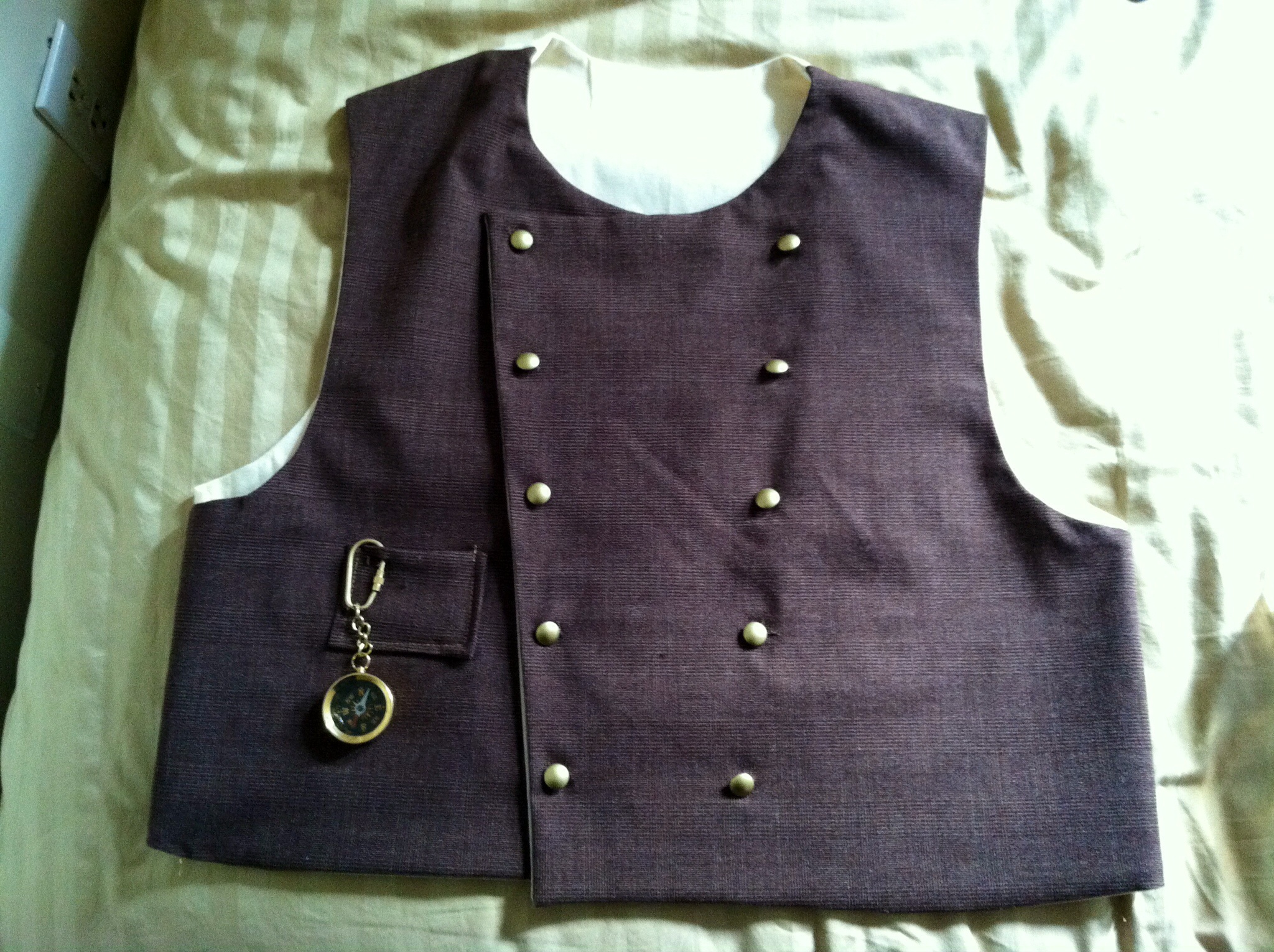
As a vintage sewing hack I was thrilled when my son wanted to be Steampunk for Halloween, and in the midst of cranking through Chanel jacket #4, I powered down and made him a Steampunk vest, in the course of which, I learned to bag a lining. From a Big Four costume pattern!

image

Chanel herself was plenty Steampunk, what with the Liza Doolittle hats and layers of hardware. And Lagerfeld, well, all you have to do is make his outfit sepia-toned and he’s good to go.

So the jacket of my reverie is going to be black, with antique brass snap tape to hold it together, and a brass chain tape at the bottom. It will need a lining that’s either Beaux Arts flowery or maybe 20s Singapore Chinoise. Will I try to bag it and then quilt it? Or stitch the whole thing together wrong sides together and fringe the raw seams then quilt it? (like I did in Chanel jacket #3, my “fake it till you make it” Astronaut Wives Club raw silk job) And the trim, the trim, hmmmmm… this is how I get in fabric trouble.

Was I dreaming? I believe that if you’re in your mid-fifties and still doing vintage (and honey, I was a 40s pin-up in the 70s, when old clothes first became “vintage”, and young Bette Midler was singing “Company B”), vintage needs to be a) wearable in public, and b) not too costumey. And it can’t look like it’s still in your closet from way back when.

And when you make a Chanel jacket repro, you do run the risk of looking like granny having brunch at the country club. So you’ve got to funk it up.

Steampunk Chanel. Of course! All of those chains and faux baubles, so Machine Age. Another glass of wine and I’ll have figured out that trim. What do you think; should I go for it?