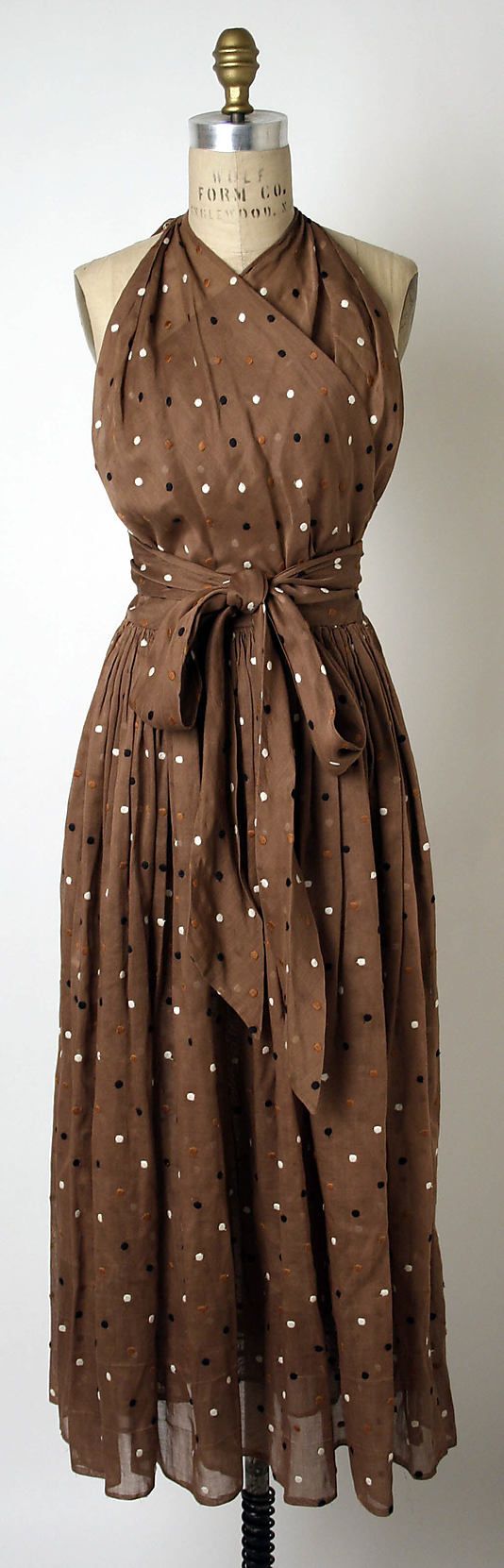
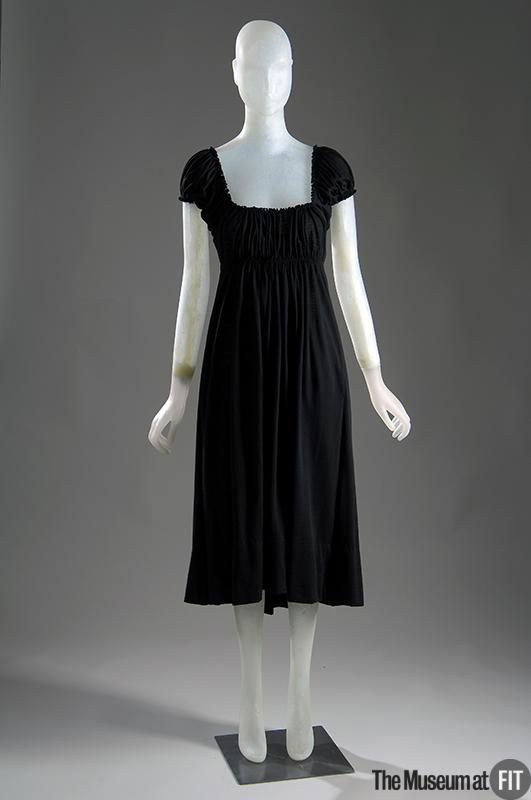
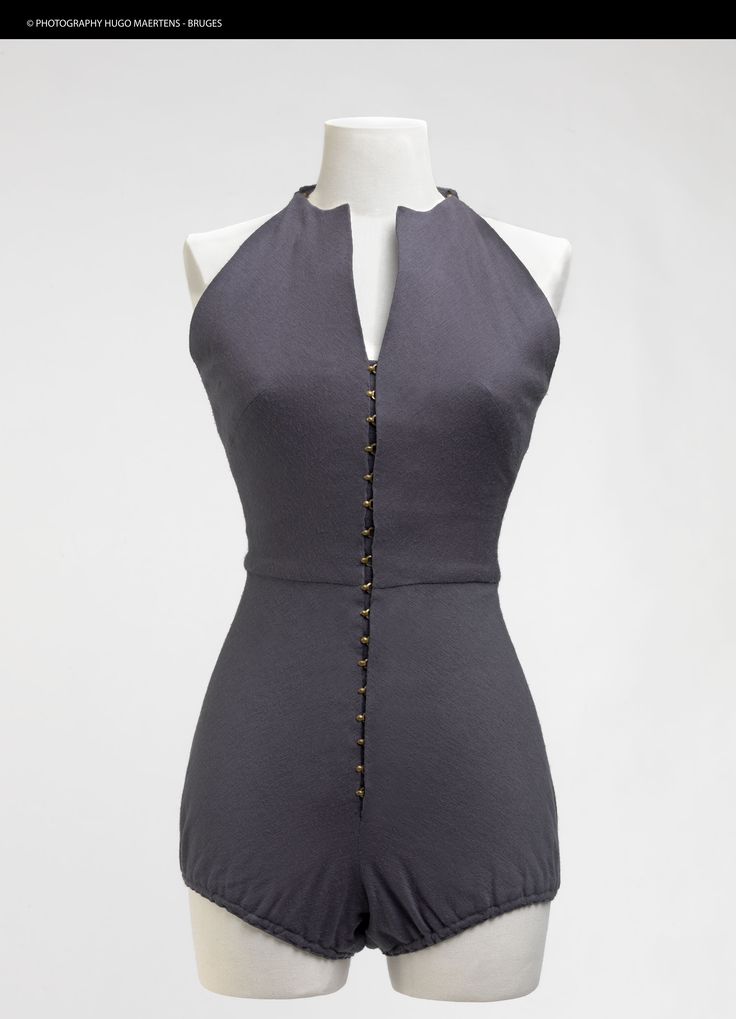
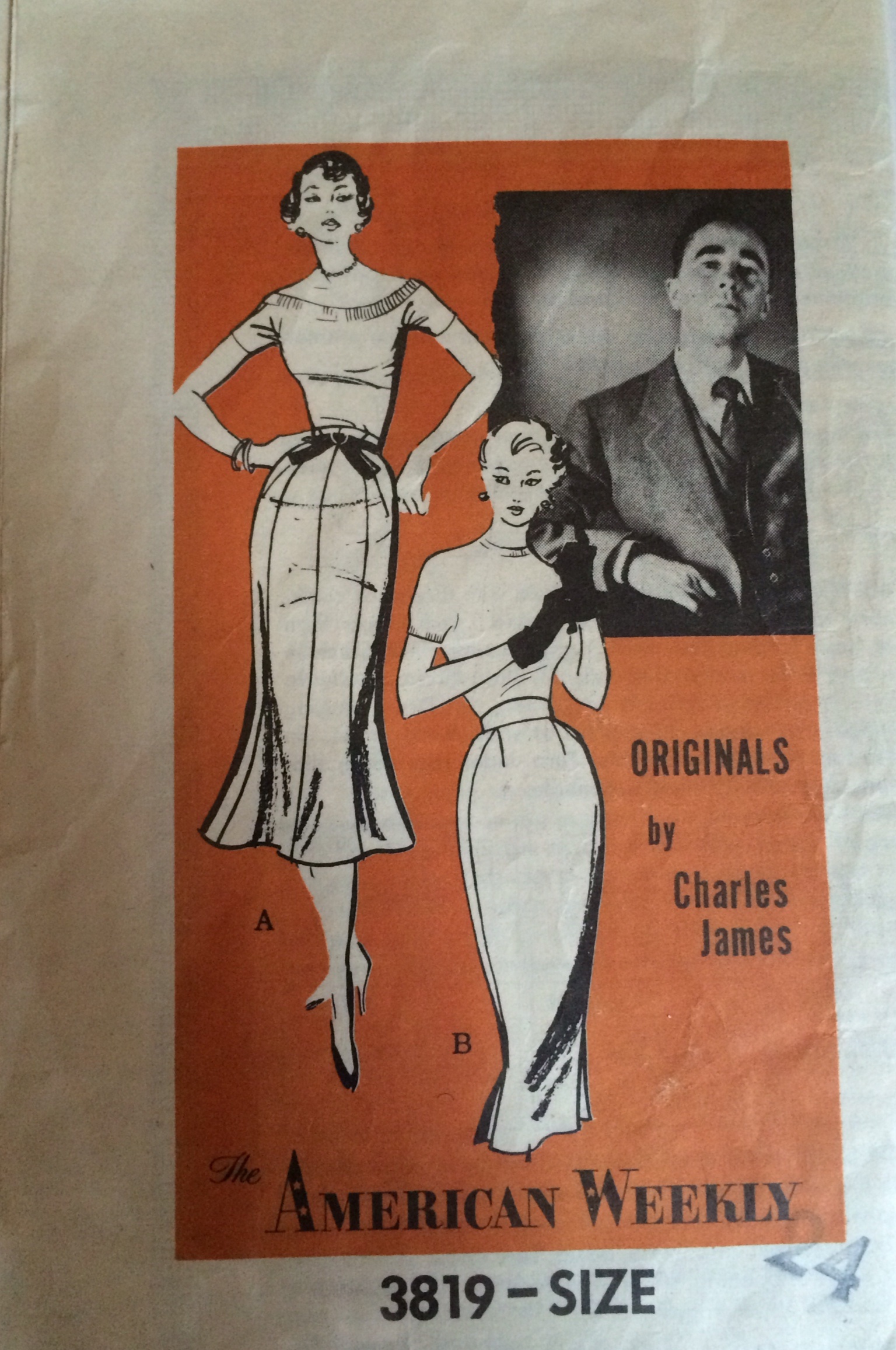
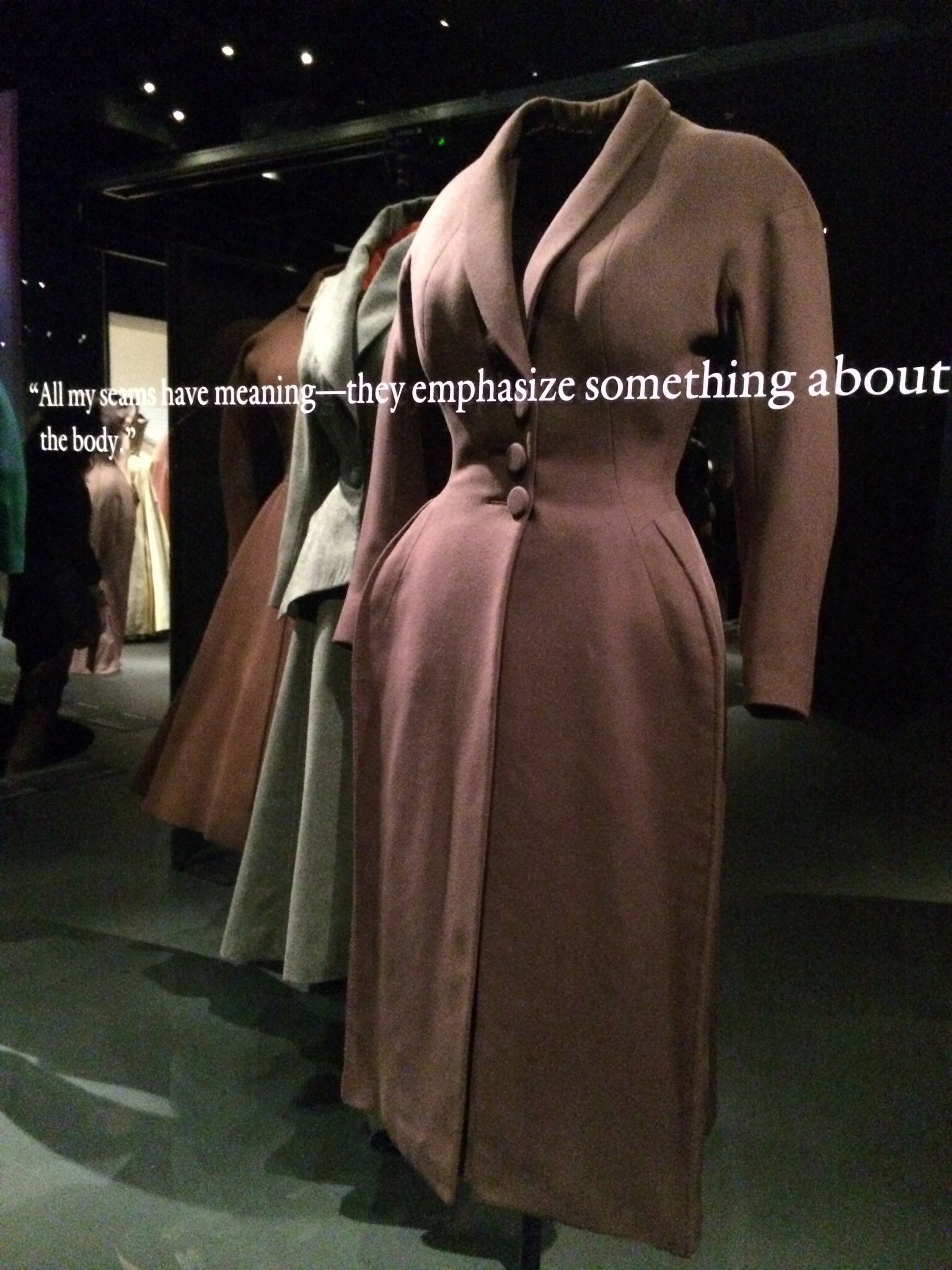
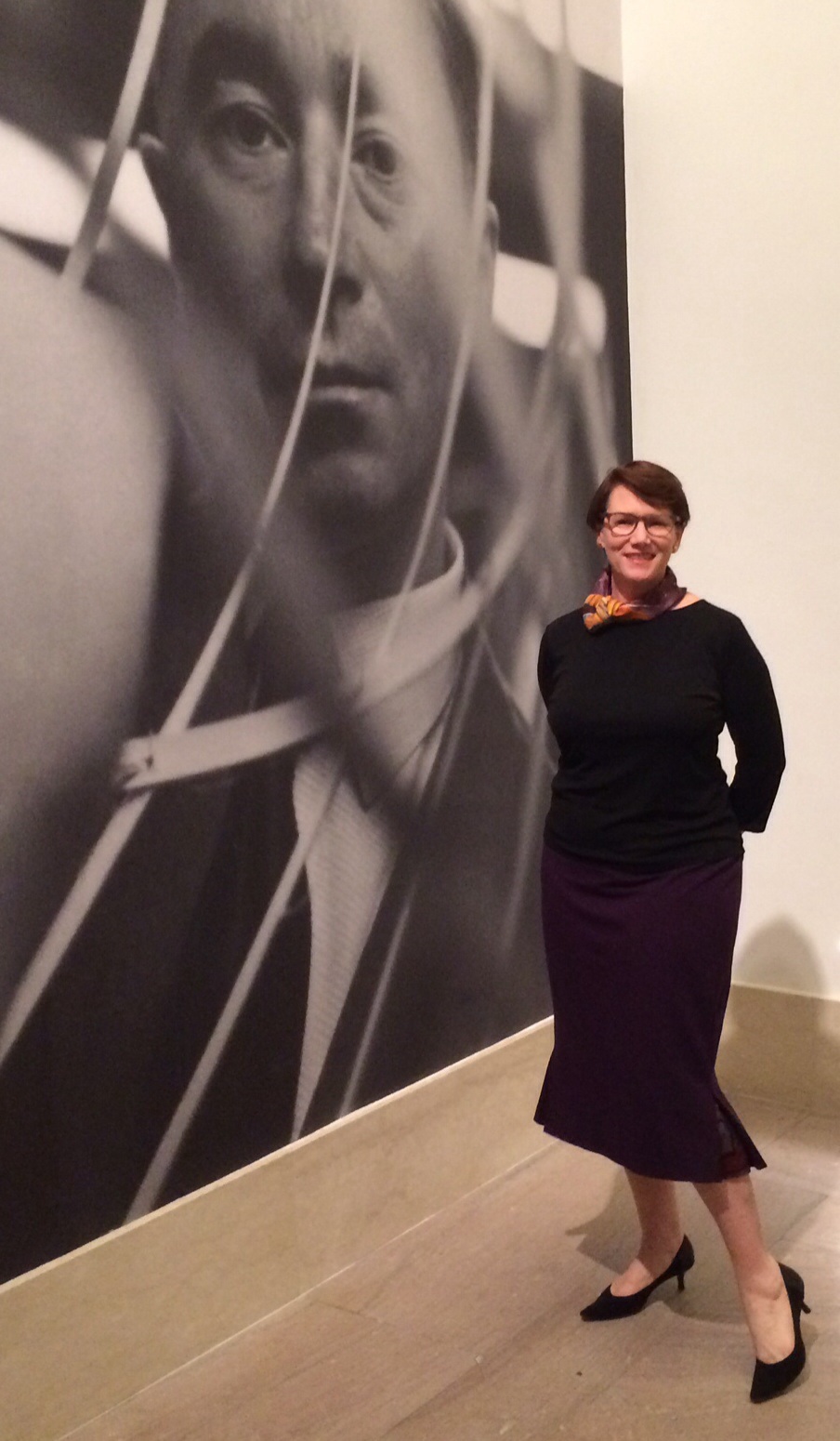
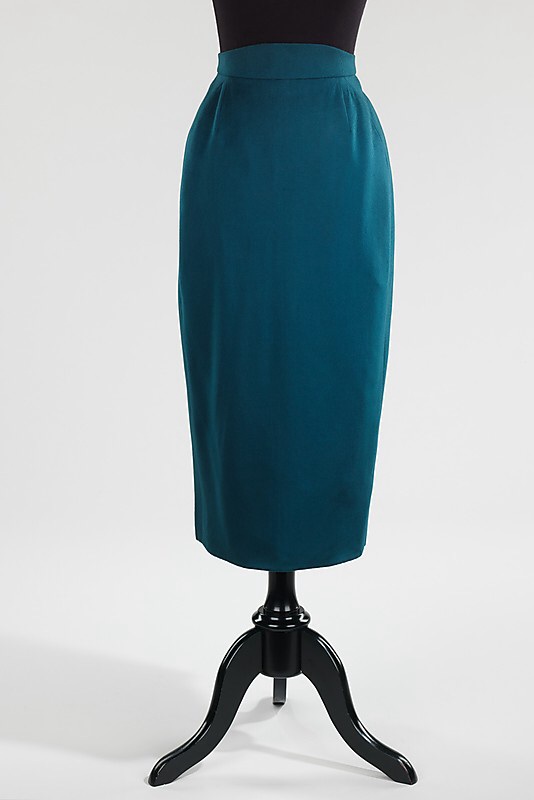
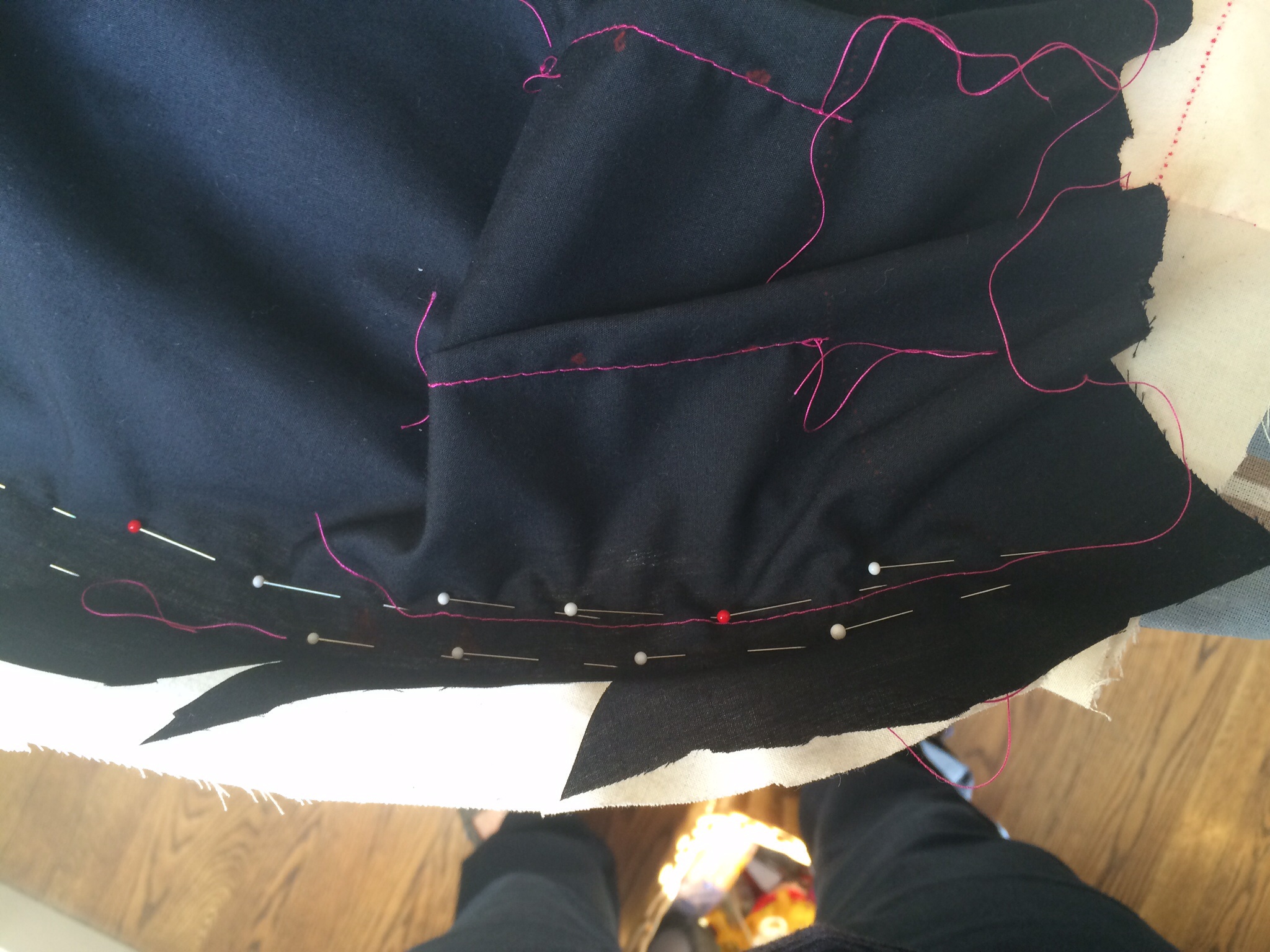
Charles James, meet Claire McCardell

20

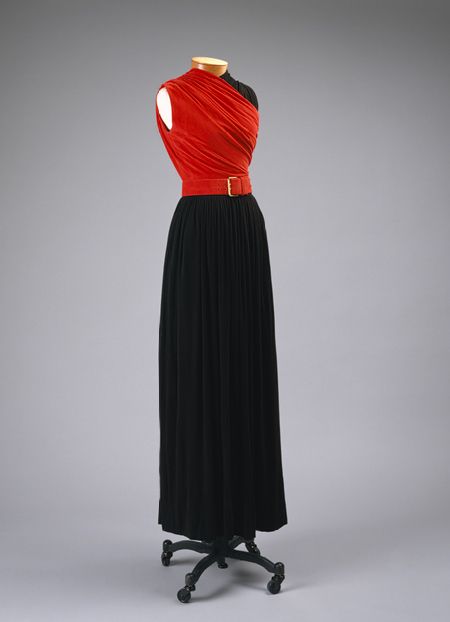
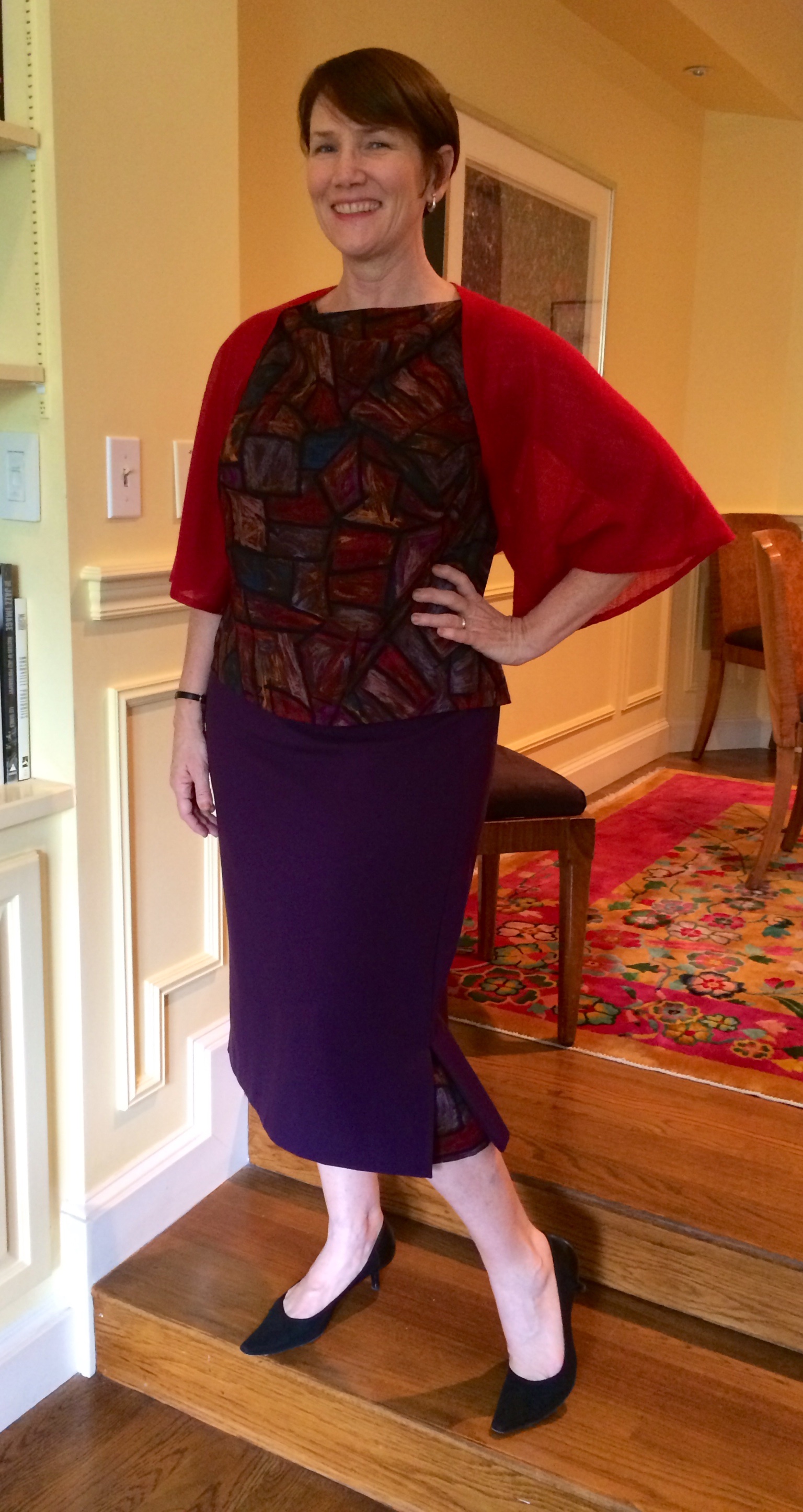
Okay, I’ve had my fling with Charles James, paid homage to Madame Vionnet and gotten in a catfight with Coco Chanel. Now it’s time to give Claire McCardell her due. This red shrug is one of her designs.
image

As a wrap-up to all of the Charles James hyperventilation going on at Jet Set Sewing this month, some details of the completed outfit: with the 50s wool challis I used to line the kick pleats on the Charles James skirt (seen here), I made yet another version of the crushed boatneck frankenpattern I came up with this winter. (Details of that pattern are here and here). This time I made it sleeveless and lined it with silk crepe de chine ordered online from Mood.com.

Since I was getting bored with this project the third time around, I researched how to line a tank top by machine, so I wouldn’t have to hand-stitch the lining to the neckline and armholes. I’ve learned the hard way that your tank will quickly turn into a twisted mobius strip if you don’t do it right.

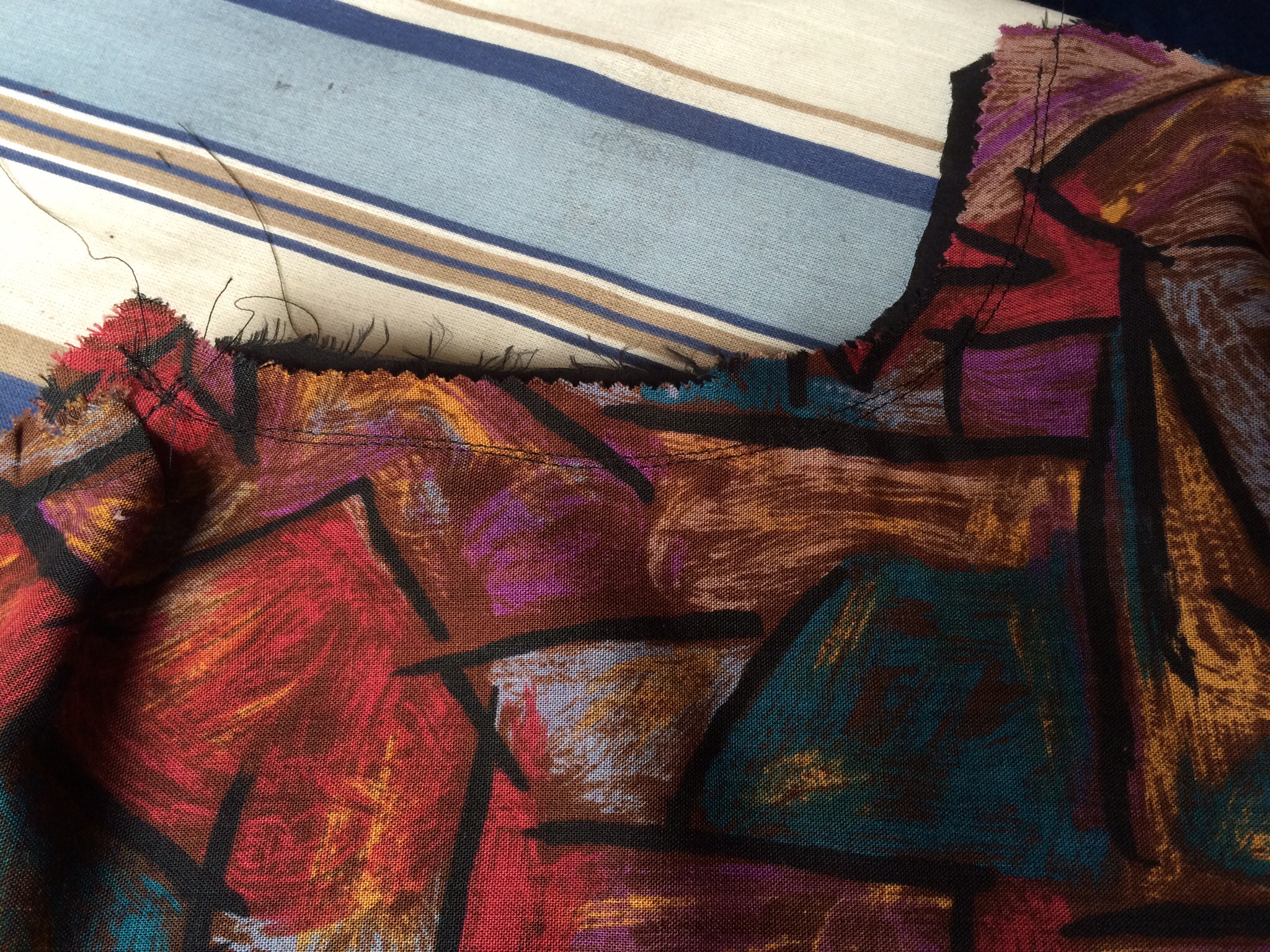
I decided to go with this method: rather than construct the exterior and the lining and stick them together, you sew the front piece of the fashion (exterior) fabric to the front piece of the lining, right sides together, at the armhole and neckline only. Before you stitch, fold back the lining seam allowance at the shoulder seams by 5/8″. Leave the shoulder seams, side seams, and hem unstitched.

Here’s the front of the armscye (armhole) sewn to the front of the lining armscye.
image

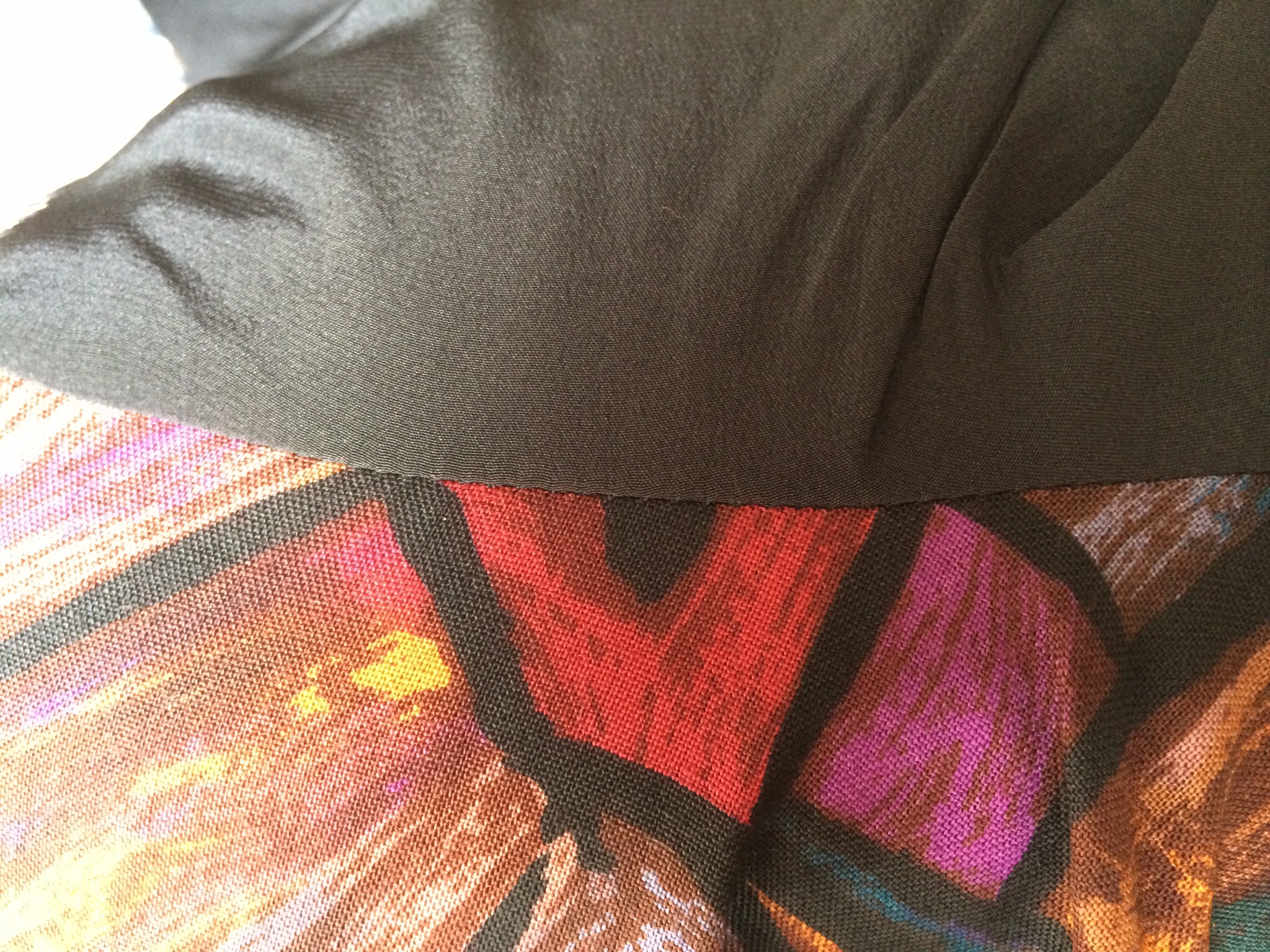
Trim the seams, clip the curves, sandwich press (press as is) then open it up and press the seam allowance toward the lining.
image

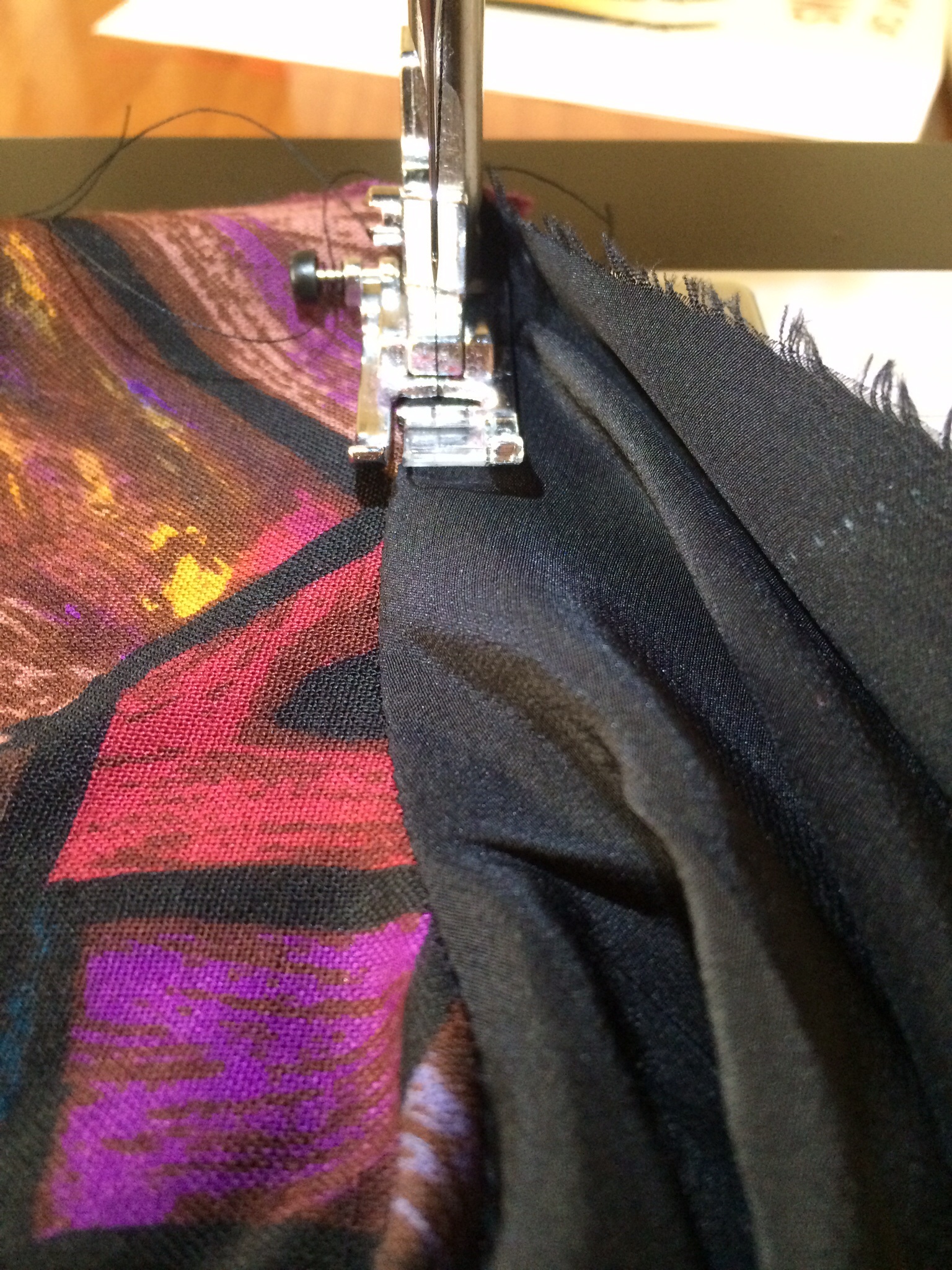
“Understitch” about 1/8 inch away from the seamline, on top of the lining, catching the seam allowance in the stitching.
image

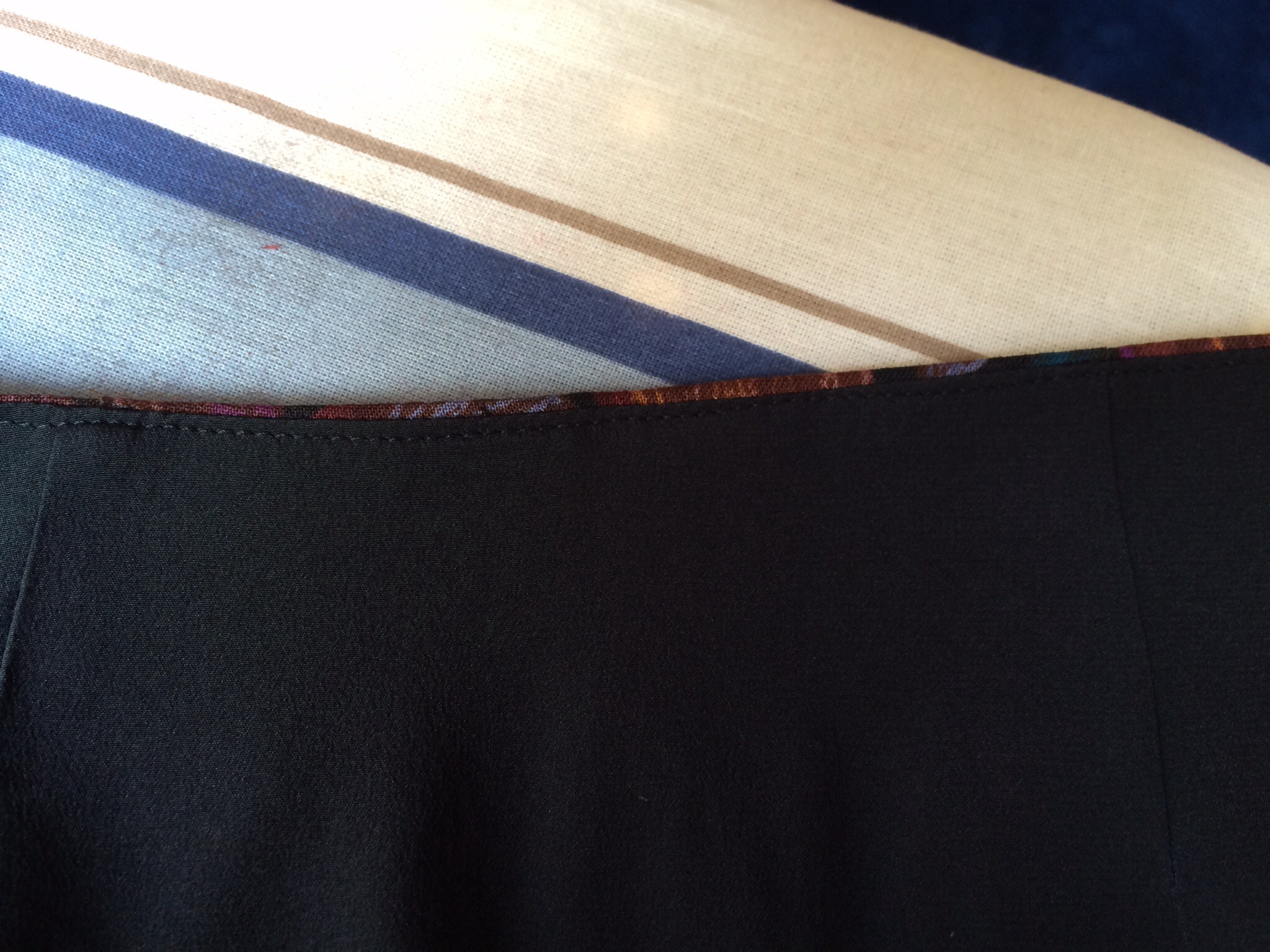
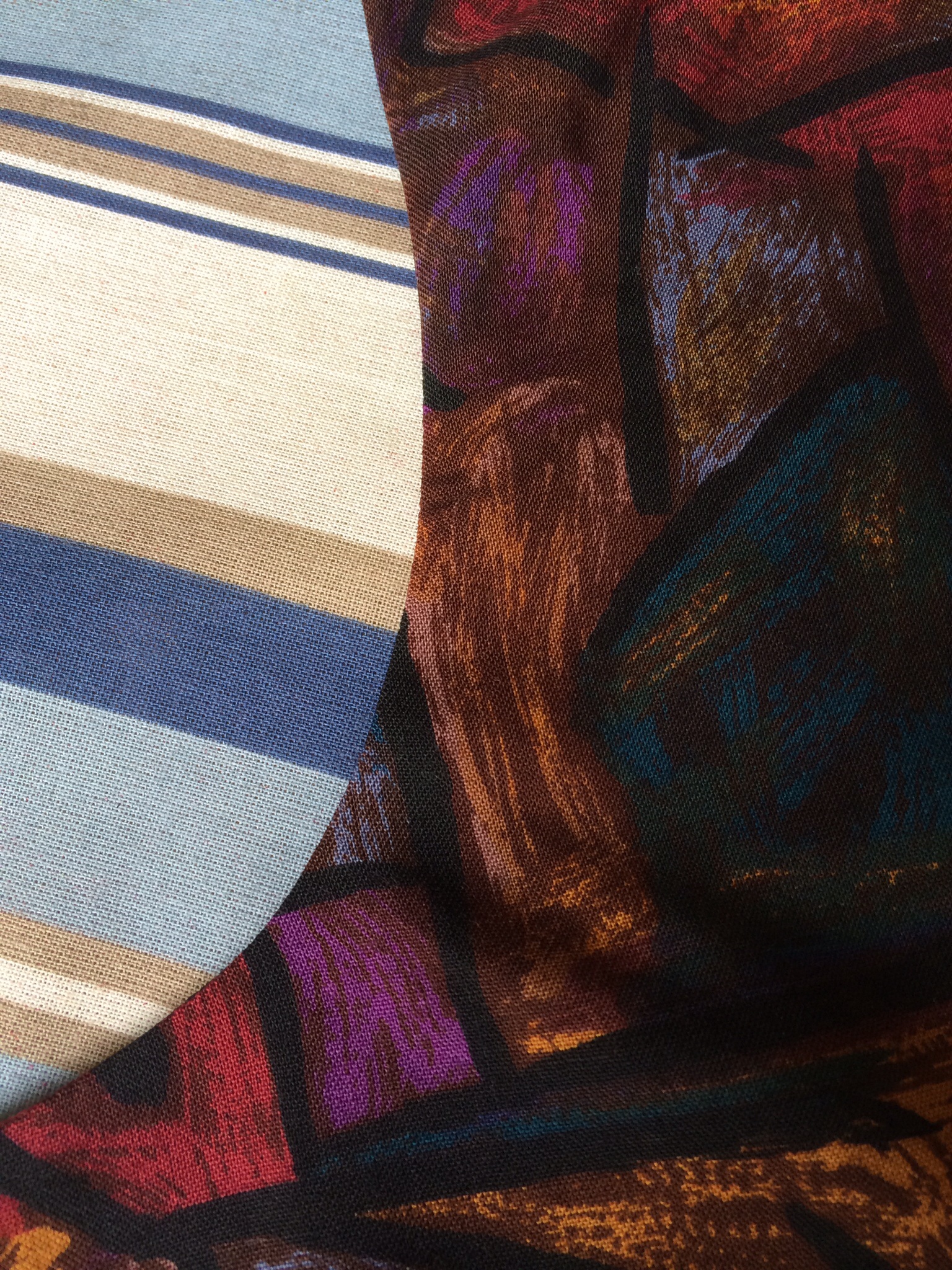
Turn the lining under and press, a little back from the edge.
image

Oh yeah! Nice and clean without the dreaded topstitching.
image

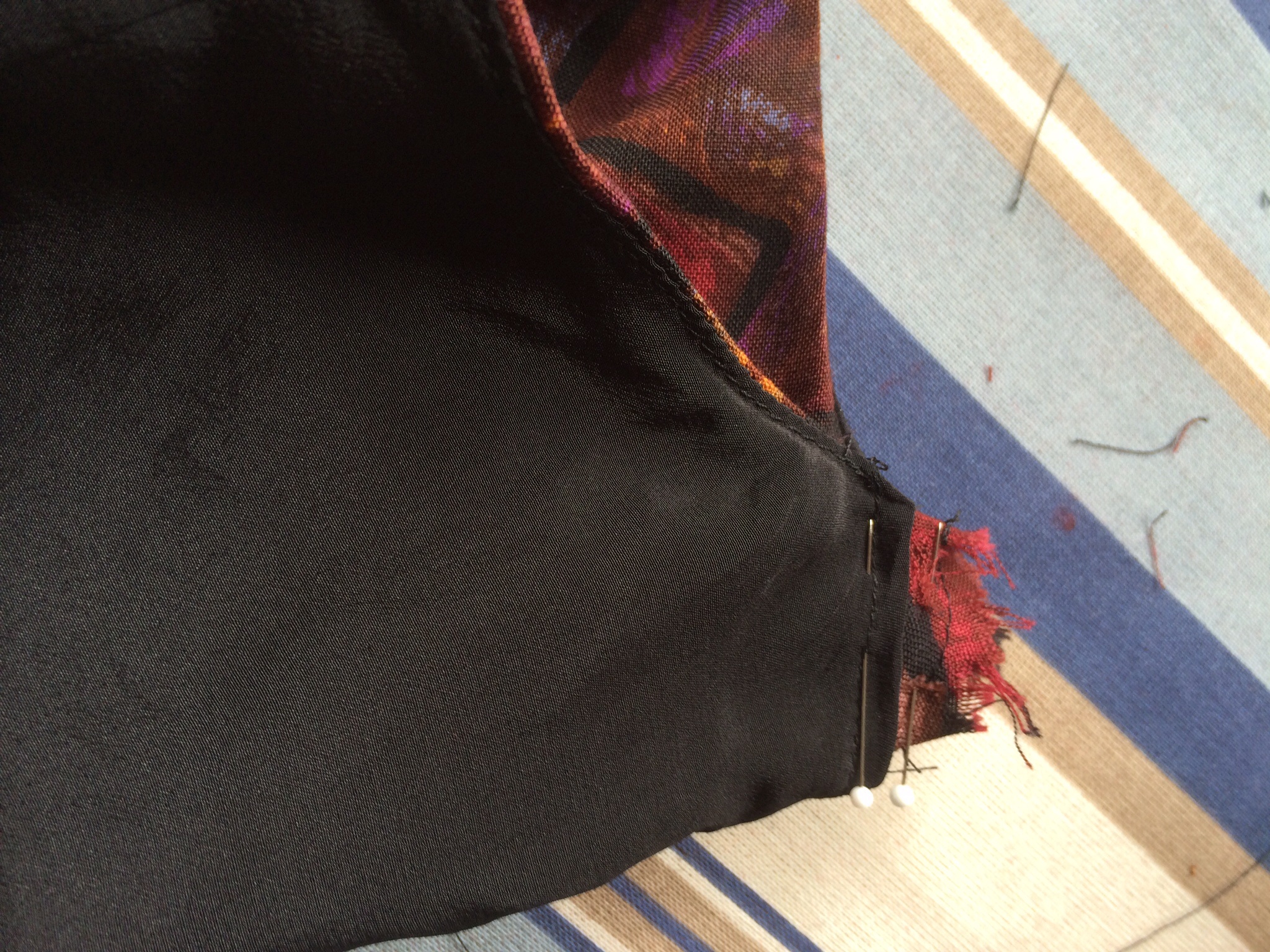
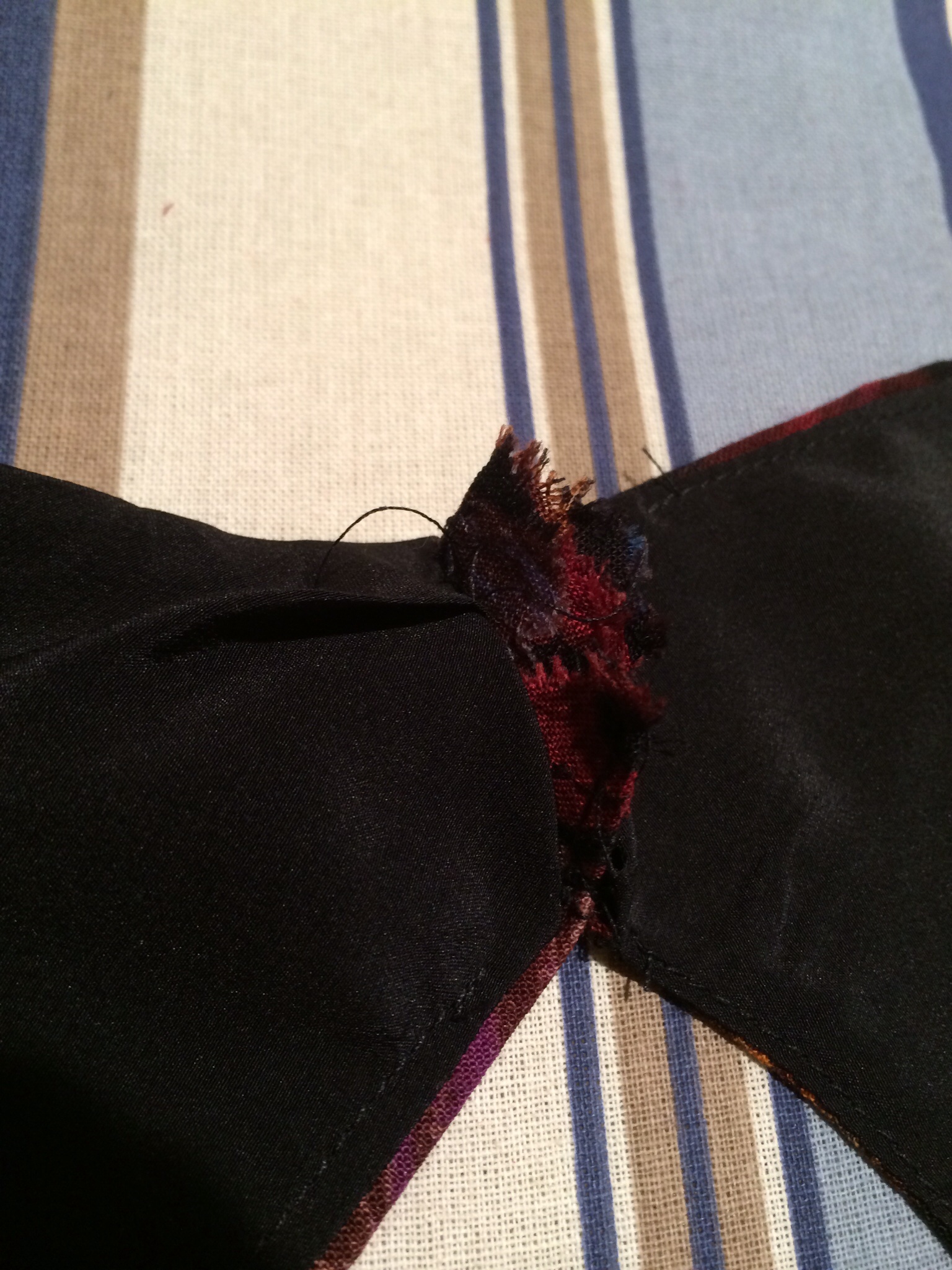
You do the same with the back fashion fabric and lining. Then, turn both the front and back pieces right side out and stitch the shoulder seams of the fashion fabric right sides together. (You can see that the lining seam allowance is folded under so you don’t catch it in the stitching.)
imageimage

Clip and press the seam you just stitched, and tuck the seam allowance inside the lining. Then slipstitch the lining together at each shoulder seam.

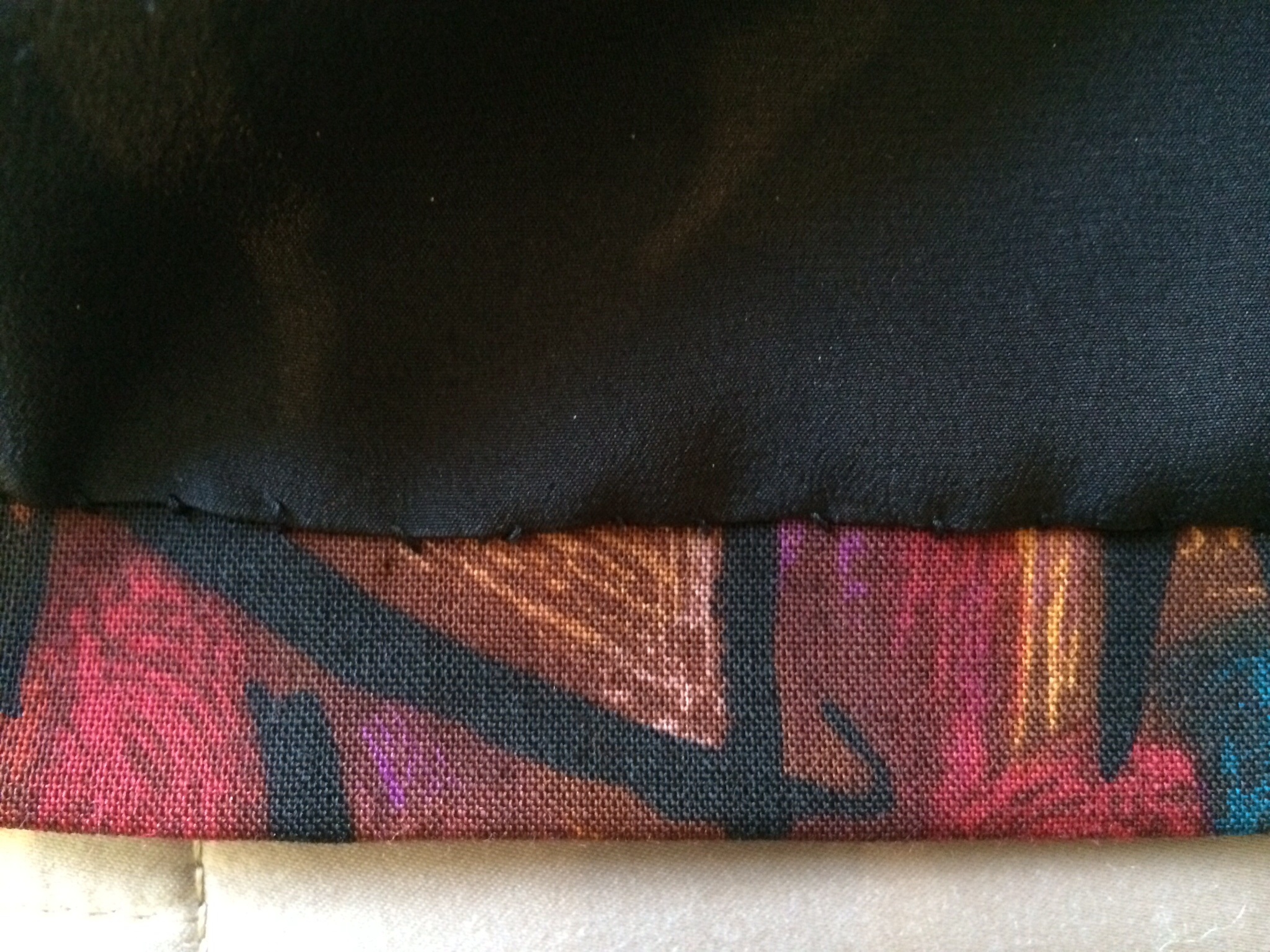
I wish I had a picture of the rest of the method, but I was in a hurry so of course I forgot. But basically you do the side seams one at a time, sewing the back and front fashion fabric side seam right sides together, passing the underarm seam, and then sewing the back and front lining side seam right sides together, all in one long sew. Then you do the other side the same way. Flip the whole thing right side out and do whatever hem floats your boat. I decided to hand catch-stitch up the fashion fabric hem, then slip stitch the lining over it, leaving a little room in the lining so it wouldn’t pull up the hem.
image

Silk crepe de chine is the best, most decadent lining, and worth every penny.

And now to my fashion girlcrush, Claire McCardell.
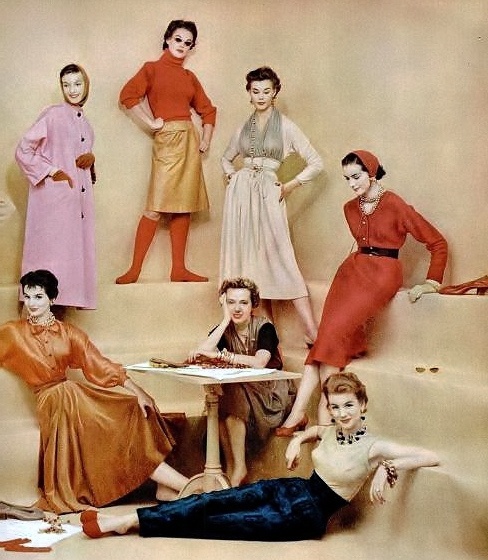
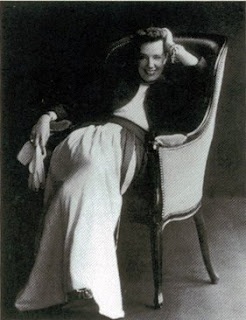
McCardell with modelsMcCardell in Chair

Though McCardell is no longer a familiar name in fashion (due to her untimely death in the late 50s), she was one of the top American designers of the 40s and 50s, and the primary inventor of the style known as the “American Look.” Her spare, sporty, architectural clothes were designed so the modern woman could move around and have a life while wearing them.
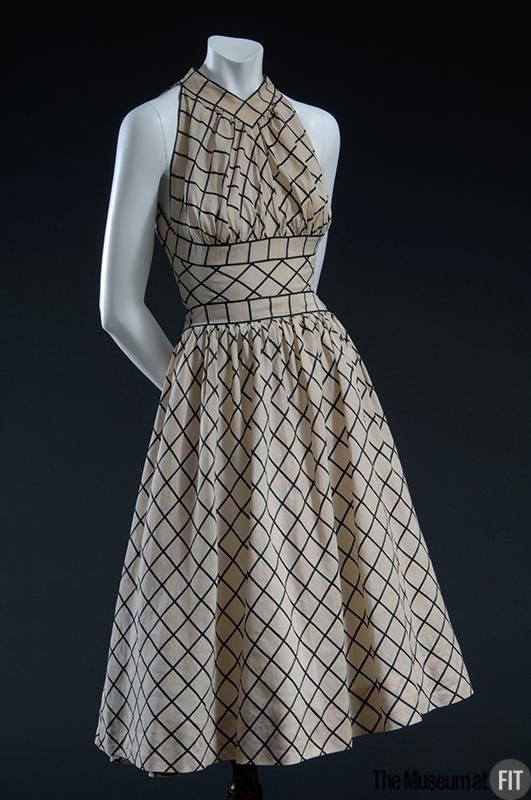

McCardell windowpane dress Claire McCardell SundressClaire McCardell evening dress

If you’ve worn any of the following items recently, you have Claire McCardell to thank for either designing or popularizing them:

ballet flats,
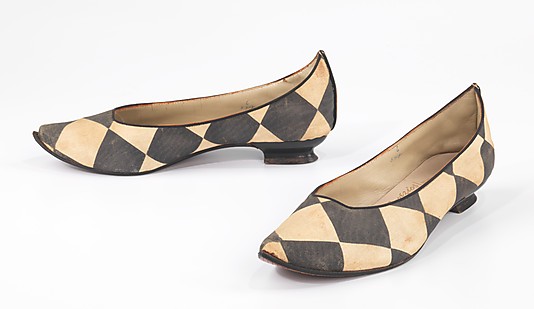
McCardell ballet flats

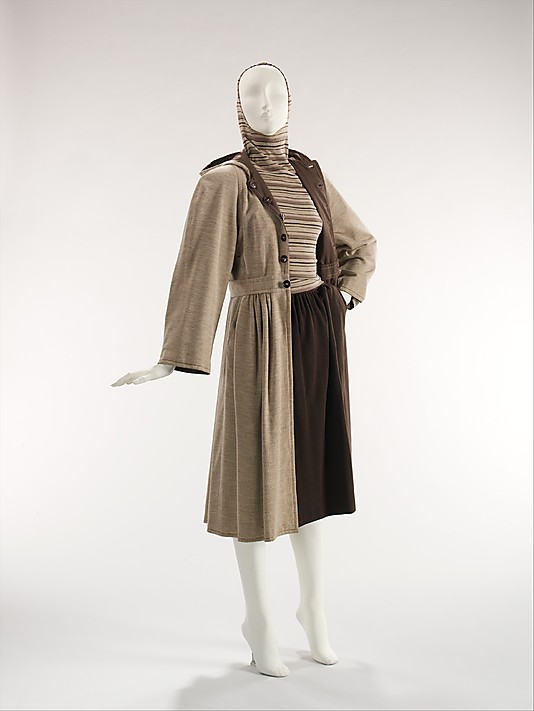
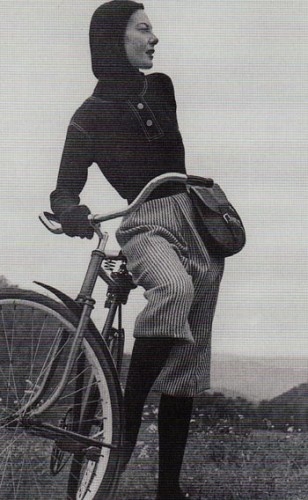
jersey hoodies,

McCardell hoodieMcCardell hoodie bike

wrap dresses,

McCardell Popover Dress

peasant dresses,

McCardell Hostess Dress FIT

fitted bathing suits,

McCardell bathing suit

fashion sunglasses…

McCardell sunspecs

The real appeal, for me, is how incredibly modern and wearable many of her designs remain.

Here’s a brief bio of Claire McCardell from “Voguepedia”: Claire McCardell bio

And a bunch of McCardell eye-candy from the Metropolitan Museum Costume Institute’s online collection: (Met Museum McCardell collection)

I’ll get into more of McCardell’s history in upcoming posts, but long story short: it was my desire to make myself a Claire McCardell that got me into this crazed vintage re-creation jag.

The shrug is taken from this 1951 Spadea pattern:
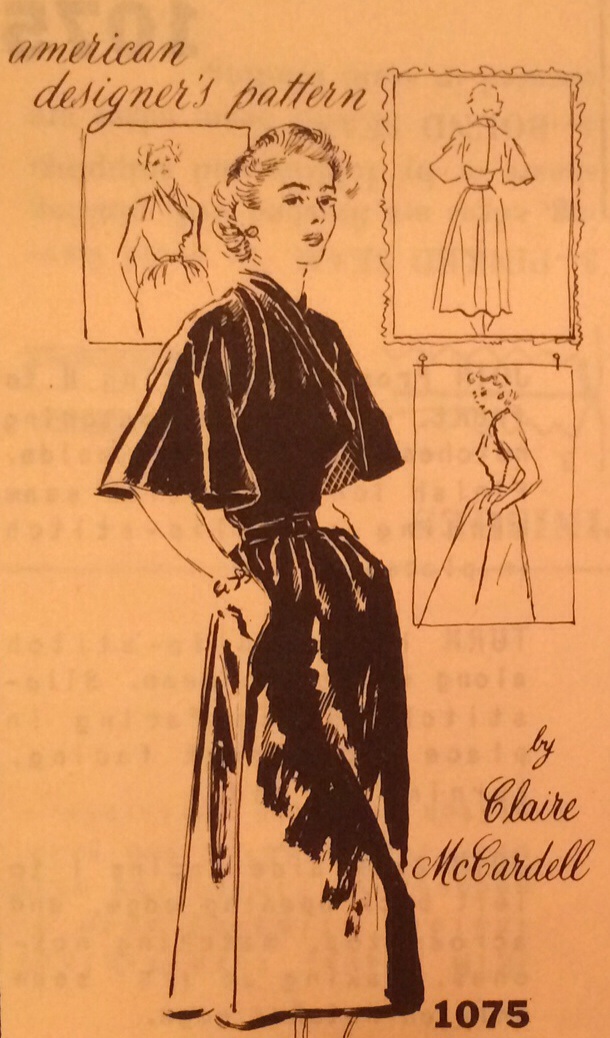
image

featuring one of McCardell’s famous wrap “popover” dresses, which was designed for ease of donning and wear. Since this is a halter version of the dress, the shrug covers the bare back.

Though we’re accustomed to seeing shrugs like this nowadays, this simple design was revolutionary in it’s time, as it’s made from one pattern piece (doubled) with one center back seam and two short seams under the arms creating the sleeves.
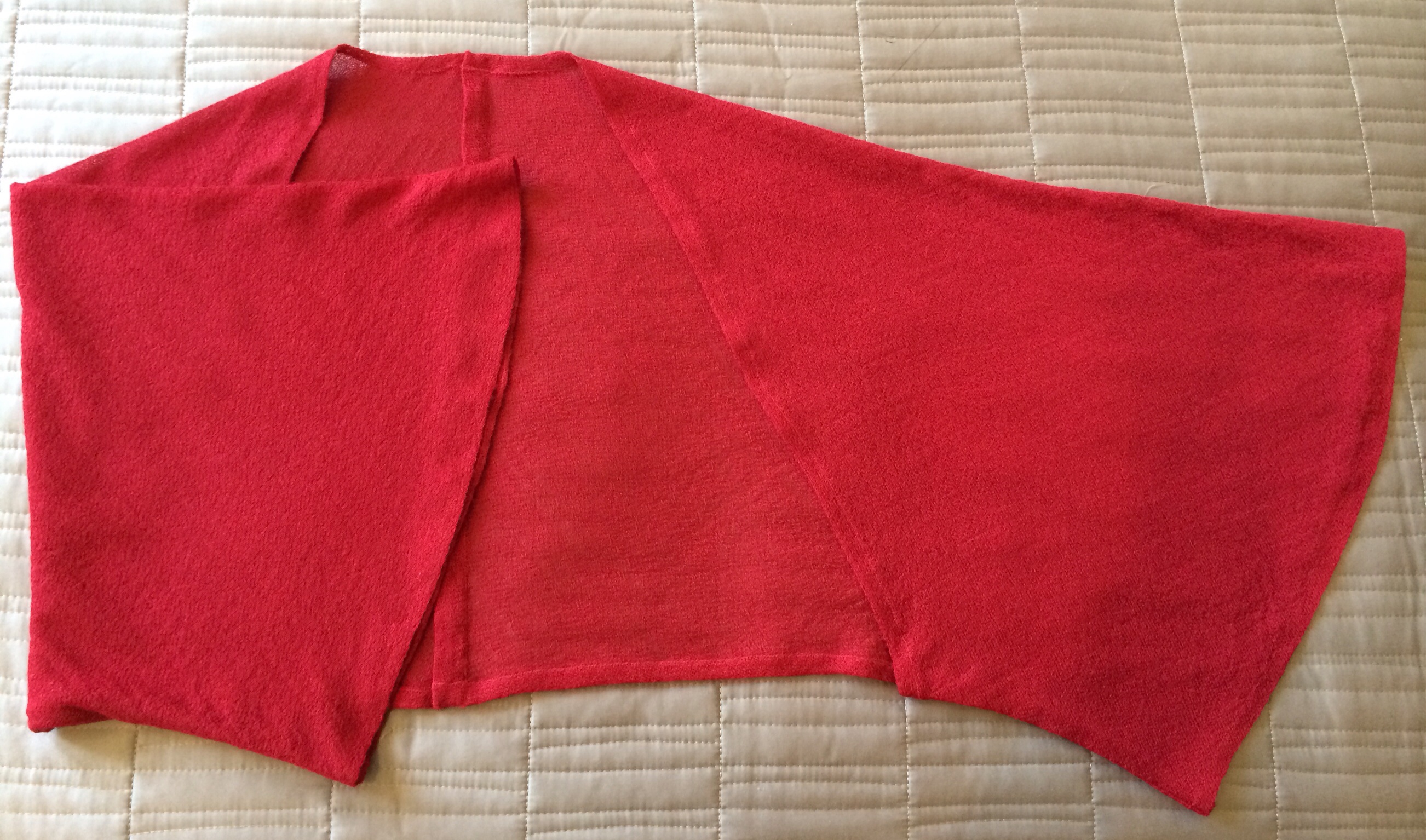
image

McCardell was the first American designer to use jersey to make dresses and separates, so I used lightweight wool jersey, again from Mood.com, to make the shrug.

After cutting the jersey on the bias (and giving my thumb a nice slice with those Kai shears I’m always raving about) I stabilized the seam allowances using stretch stitch #9, which gives you a seam that almost looks like a straight stitch, but still has some give:
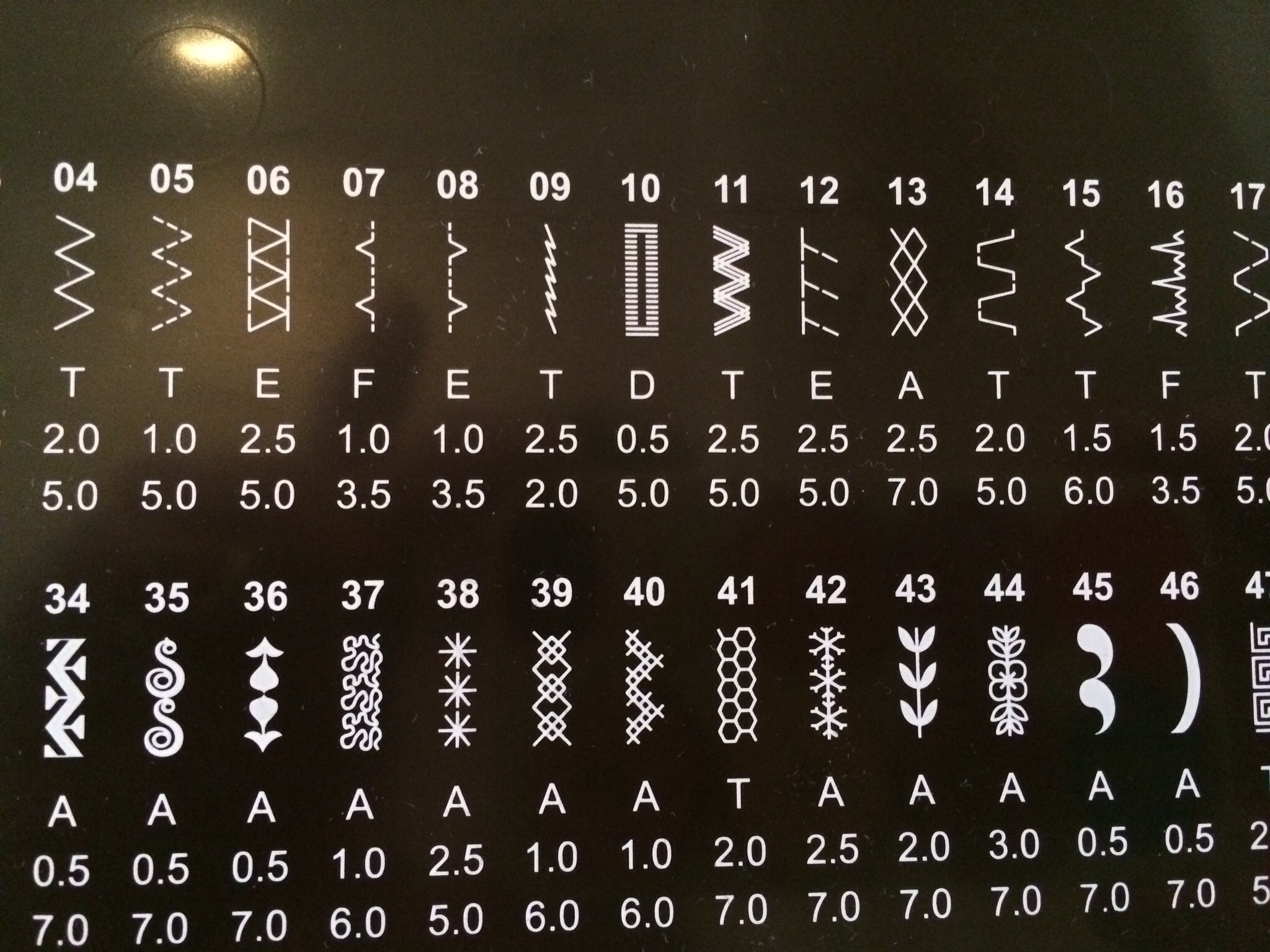
image

Here’s how the stay-stitching turned out:
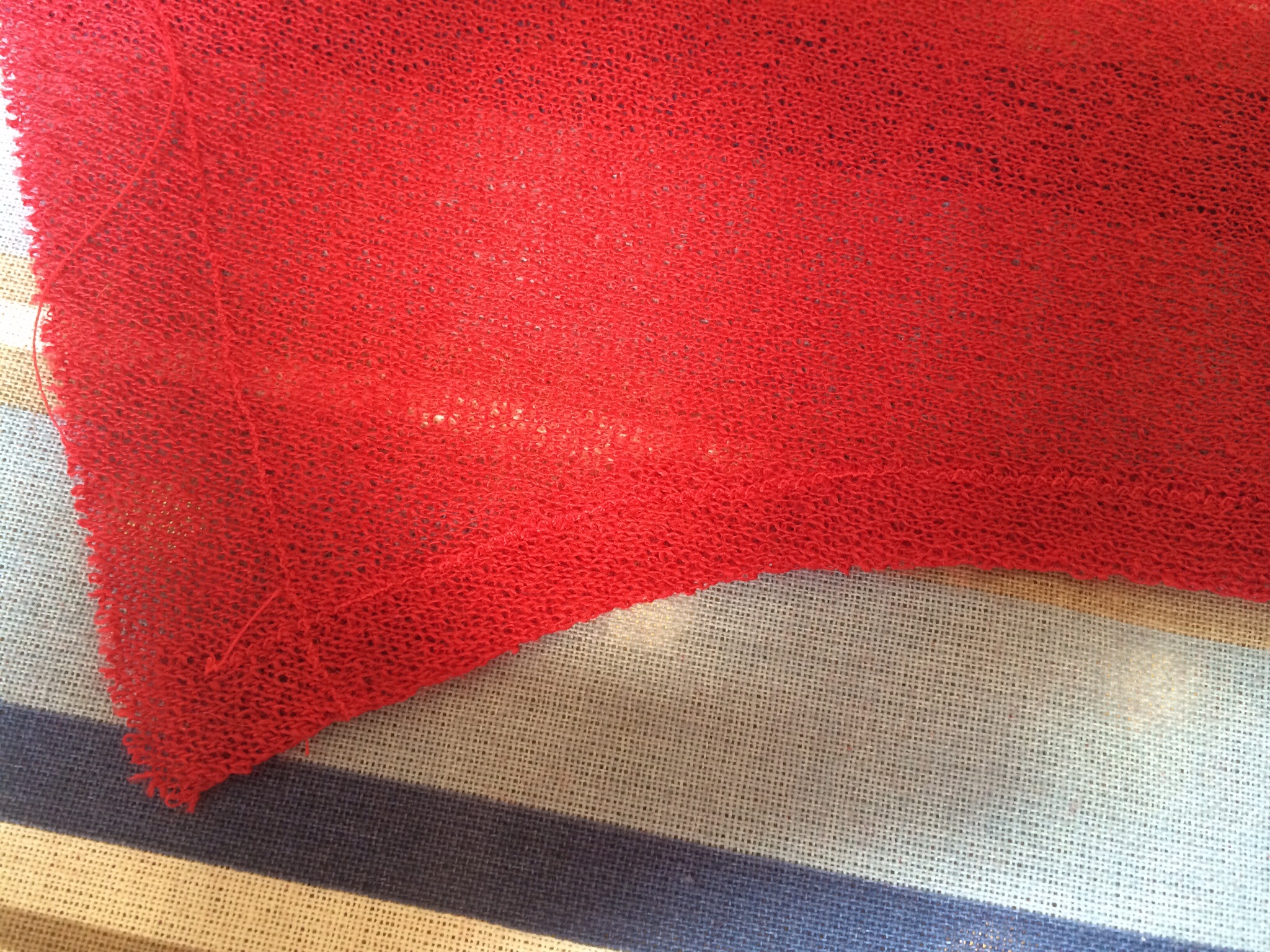
image

Where the edge would be exposed, I folded it under and stitched again to finish it:
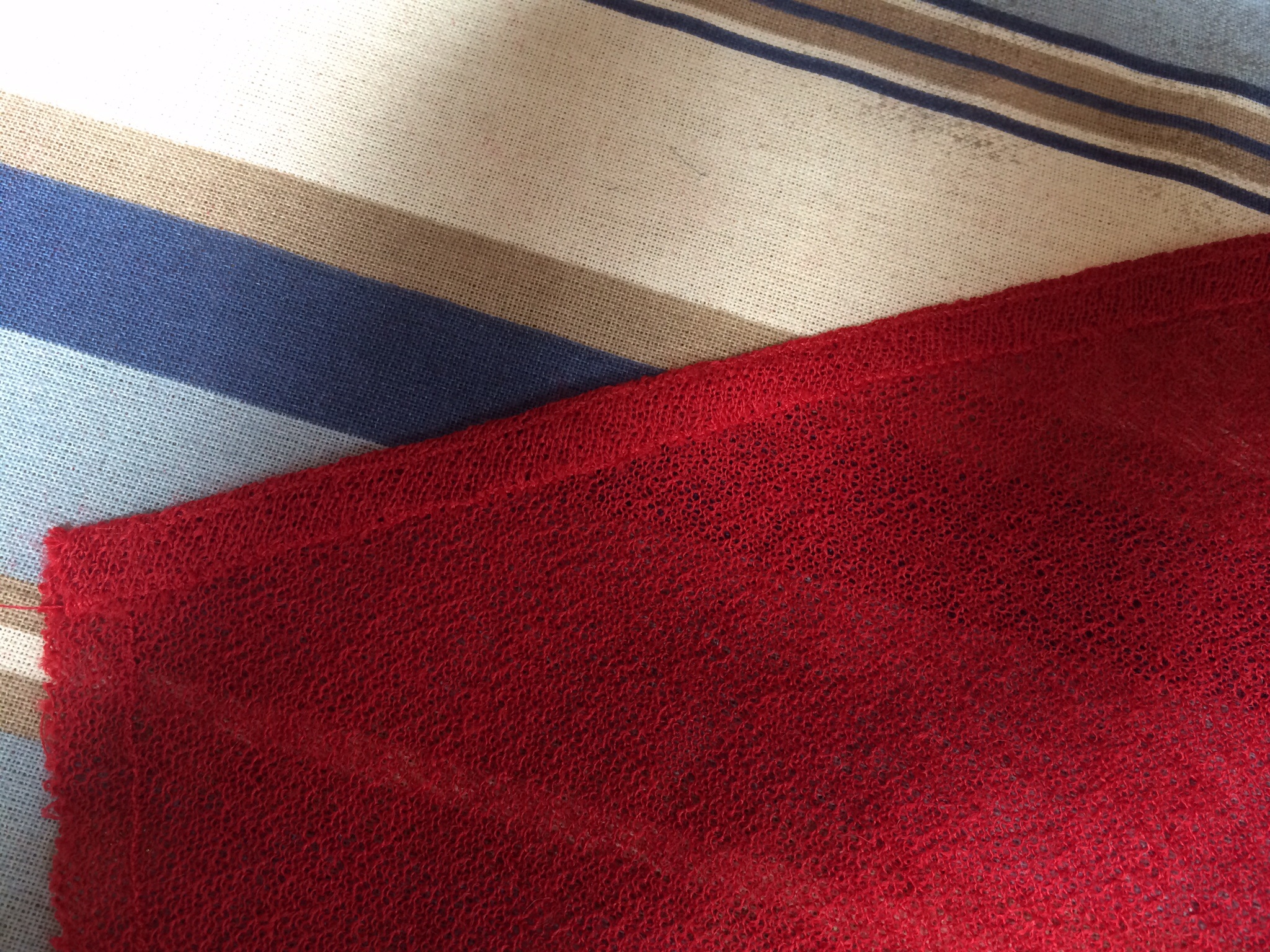
image

I decided to use old school French seams to finish the interior seams, since the fabric is so lightweight.

I started out by sewing the seam wrong side together, then trimmed the seam allowances.
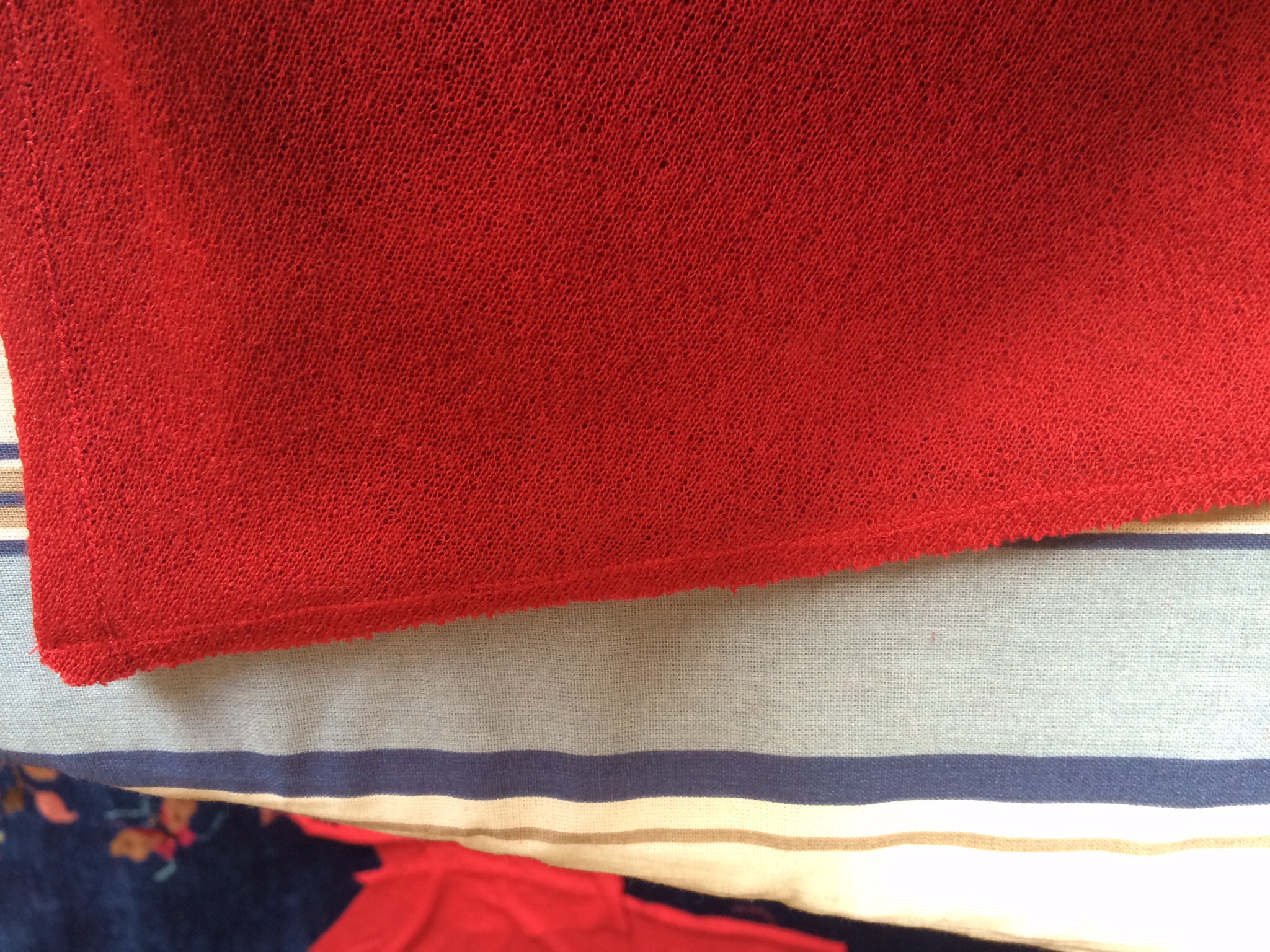
image

I pressed open the seam, turned it so the pieces were right side together, then stitched the seam again, enclosing the raw edge of the first seam.
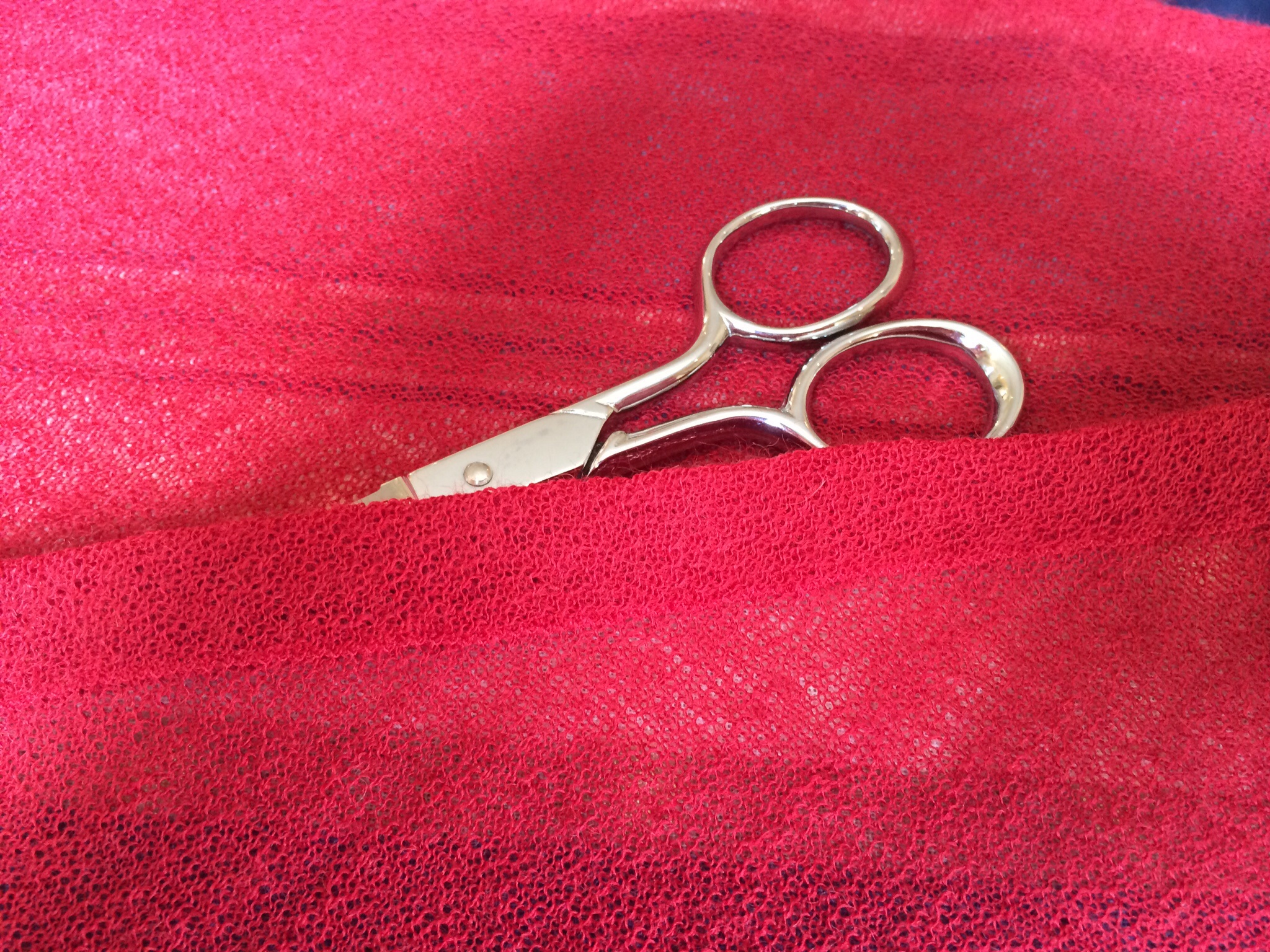
image

A nice clean finish for a nice clean design.

More to come on Claire McCardell, but right now I have to start packing up my sewing projects, tools and machine to decamp for Martha’s Vineyard for the summer.  I hope you’ll join me there for some stitching at the beach!

Charles James skirt details and a walk through Boston’s Back Bay

25

Well, now that I’ve recovered from what was apparently a hot flash brought on by the gowns at the Charles James exhibit, I’d like to share the details of making this skirt:

image

from this Charles James pattern,

Charles James sewing pattern

which I had to pull off in three days. Cue the stunt sewing music!
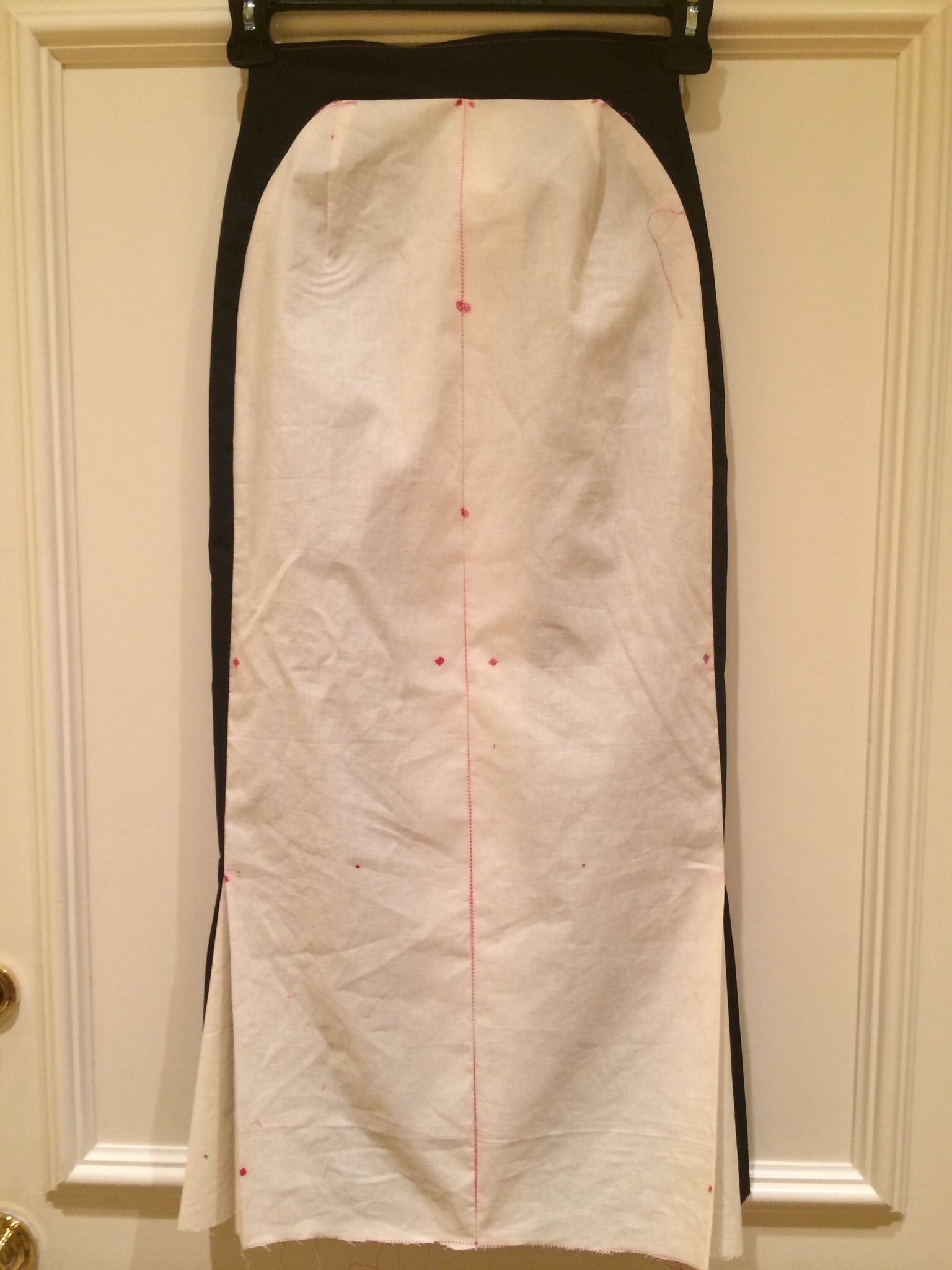
I’ve talked about making the muslin for the skirt in this post  and how versions of this skirt are in the MetMuseum.org online collection. Here’s how the completed muslin looked:

image

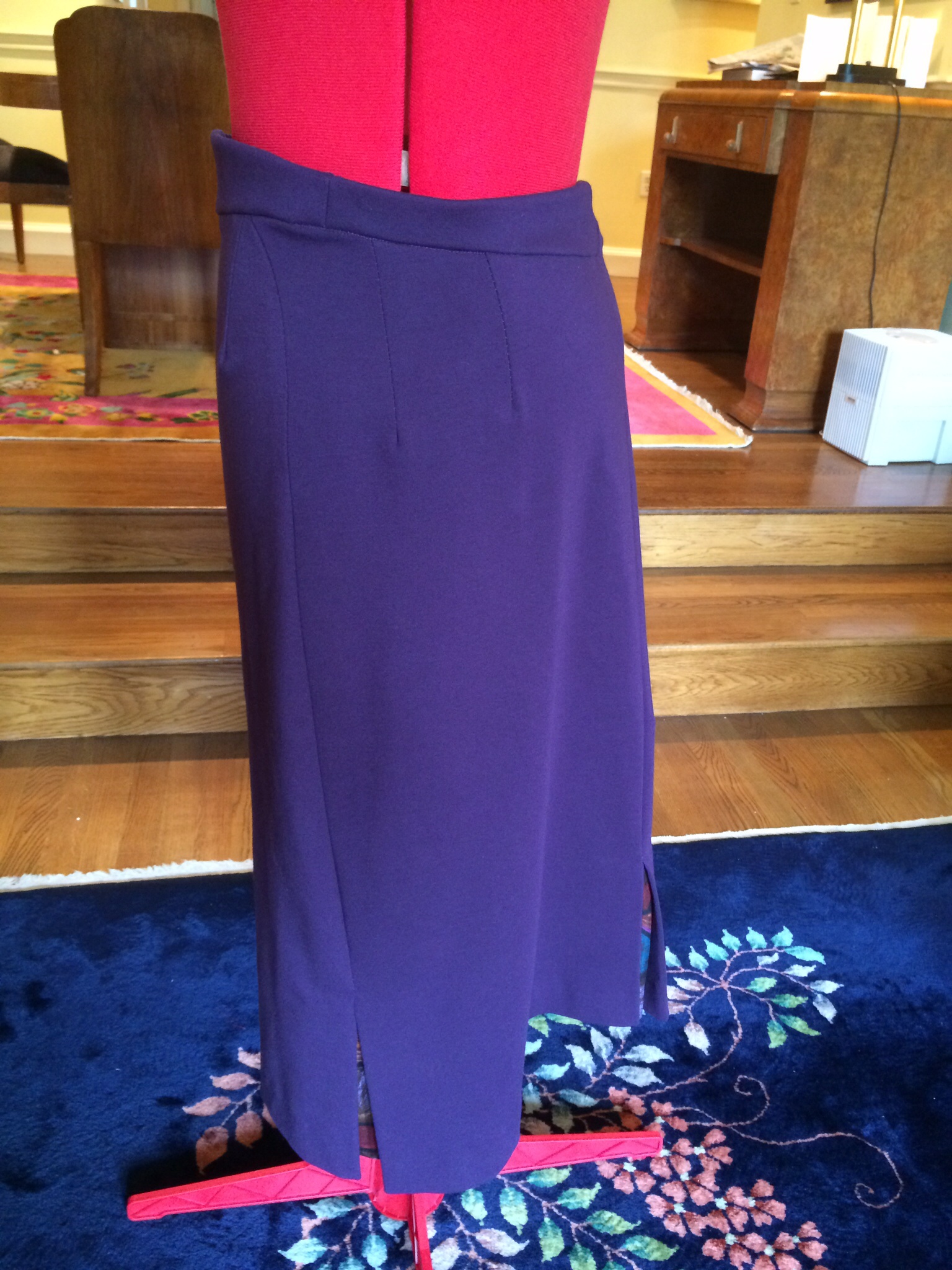
Knowing that I had three sewing days to complete a wearable version (interrupted by a weekend of grandchildren invading our home like Cossacks), and that the skirt had to be widened by a whopping eight inches, I had to choose a forgiving fabric that didn’t need lining.
Tucked in my stash were two yards of high-quality stable knit ponte in aubergine (from Eileen Fisher) that fit the bill. Since I spent my 20s sewing Diane Von Furstenberg knock-offs out of a slippery knit called “Quiana” on a straight-stitch Singer 15-91, I have no fear of knits.
I basically chopped the center front and two parts of the back of the muslin open lengthwise, stuck in swaths measuring a total of 8″ straight up and down in both, fitted it quickly and got ready for the “Hail Mary” pass. (For those of you visiting from other cultures, the “Hail Mary” is any last minute desperate play a losing sports team will use to try to win a game in the final seconds.) Rah rah rah!

image

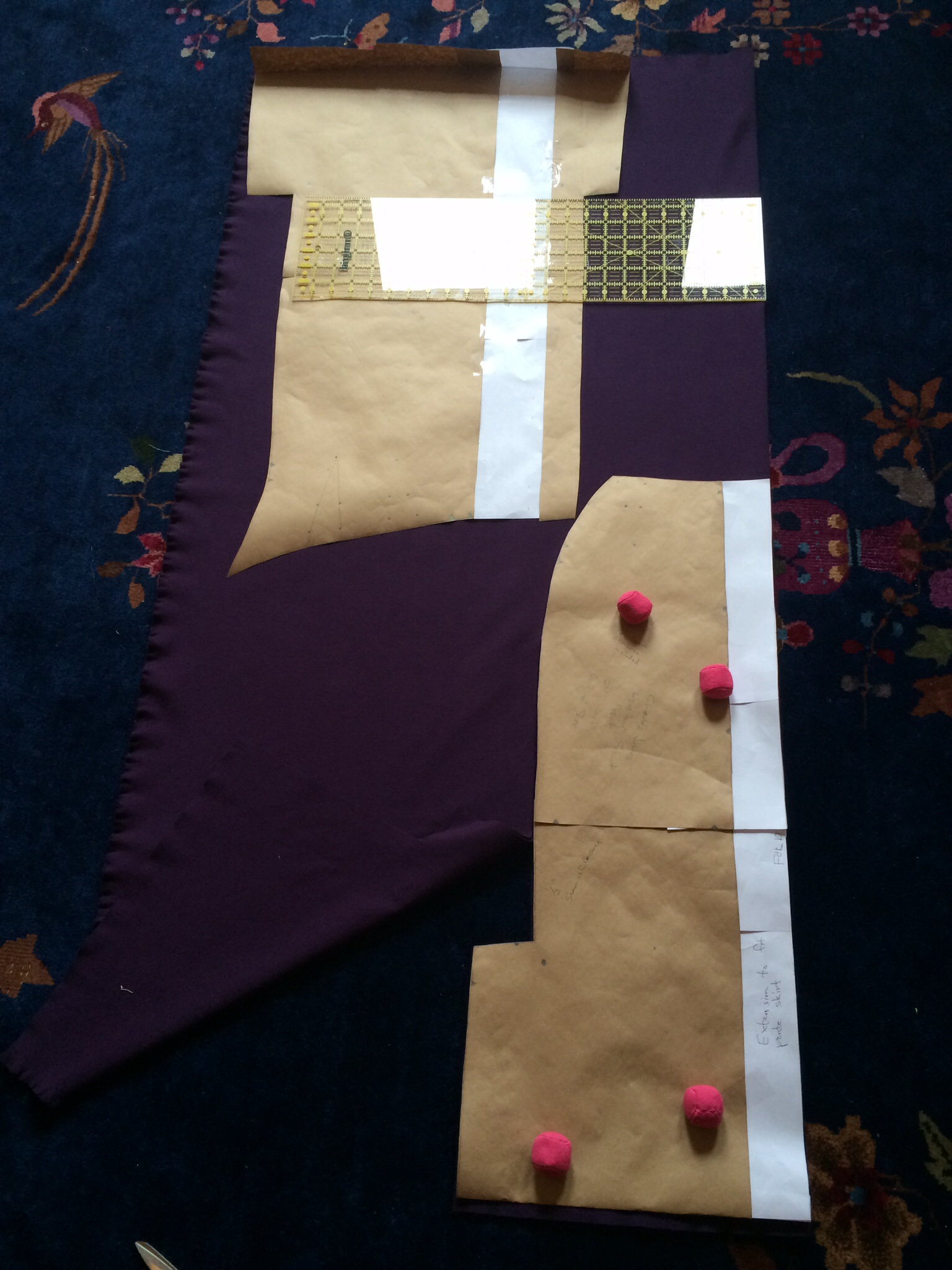
Two yards of wide ponte should work for a pencil skirt, right? Er, not when the pattern has odd protrusions and three kick pleats. So I quickly took up the pattern by about 4″ in length and as you can see, it just squeaked by.

I started constructing the skirt using a very narrow zigzag, as I wanted a stitch that was easy to pick out if I got in trouble. (No sergers around these parts). Constructing the body of the skirt went smoothly as I had already worked the bugs out on the muslin. With no time to finish the seams, I trimmed them with Kai pinking shears to give them a vintage look. As a reader once commented, super-sharp Kai shears are “all that and a cup of coffee.”

This particular ponte has excellent stretch and recovery, so I was reasonably sure that I wouldn’t need a zipper. But the waistband has an elegant yet tricky shape that arcs up in the front and dips down toward the back, which is critical to the design. I was stumped as to how I could reinforce it enough to hold the shape while having it be stretchy enough to get over my head.
Friends, this is the kind of thing that keeps me up nights.

Cue the cute grandchildren!

image

Whew, that was exhausting.

When time came to make the waistband, I rooted through my bag ‘o interfacing looking for that knit fusible I thought I might have (desperate times call for desperate measures), and spotted a yard of corset mesh stashed away. Corset mesh is like bathing suit liner meets Spanx on steroids. It’s constructed like mesh, so it’s breathable, but it’s stiff as granny’s girdle. Apparently the designer Roland Mouret used a similar fabric, power mesh, to line his famous “Galaxy” dresses of a few years ago.

image

I think I once had a notion to knock off a Galaxy dress using Vogue pattern 8280,

image

so I think I ordered both power mesh and corset mesh (which is stiffer, and I need all the help I can get), and that’s how the stuff got buried in my stash. You can find here: (Corset mesh from EmmaOneSock.com), and they have power mesh as well.

I carefully cut the corset mesh and sewed it into the exterior pieces of the waistband. Then I drew the curved seamline of the waistband onto the pieces and, barely breathing, sewed the exterior pieces to the lining along the curve, which starts down, arcs up, gets flat, and arcs back down again.

image

I attached the waistband front piece to the back piece, anxiously lining up the seamlines.

imageimage
I trimmed the corset mesh and seams, then got the waistband aligned and sewed onto the body of the skirt.

image

I flipped the whole thing over, pressed the lining inside, and lacking time to hand-sew the lining down, took a deep breath and “stitched in the ditch” (top-stitched right on the seamline) where the waistband met the skirt body.

imageimage

Goalllll!
That corset mesh holds the waistband up and holds me in, and now I want to put it in everything I own.

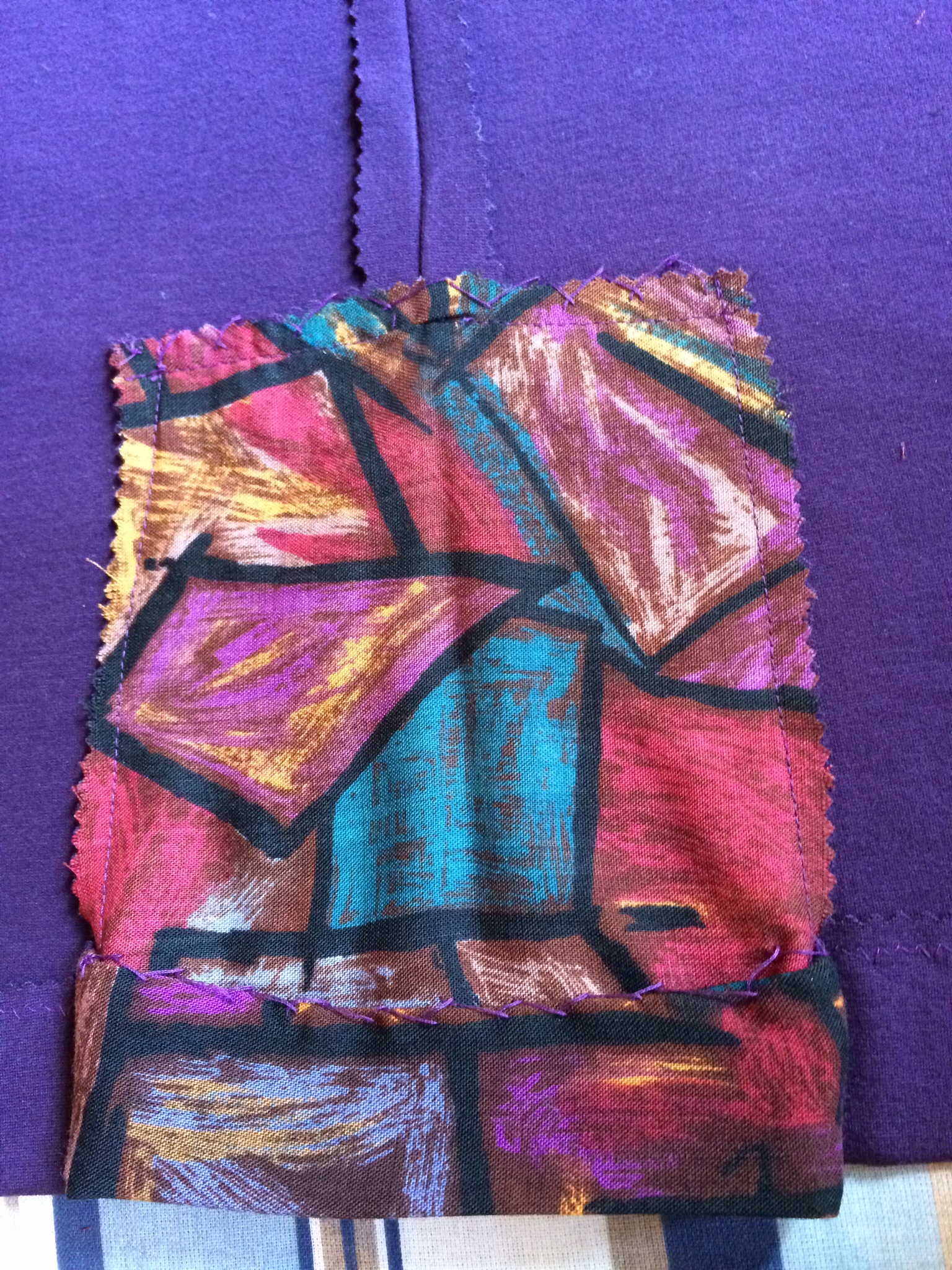
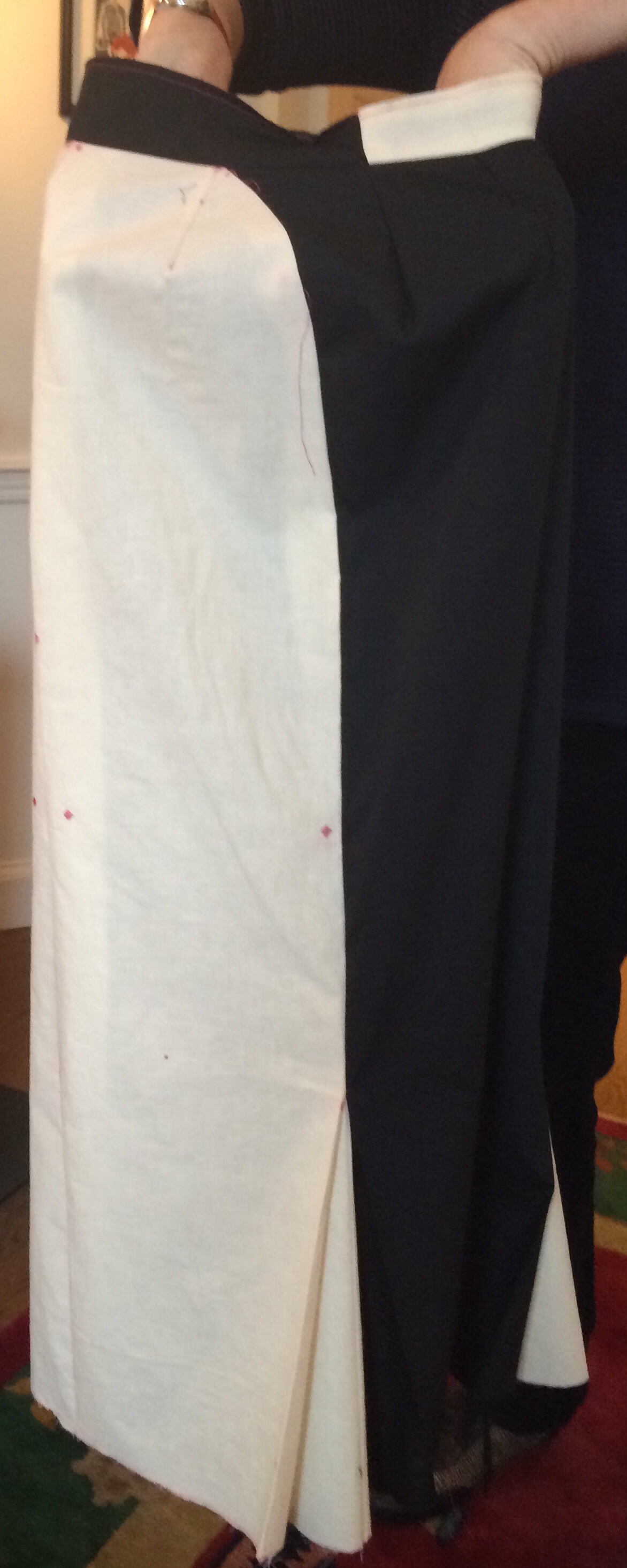
There are three kick pleats (two on the side and one in the back) and rather than lining them with the ponte, I decided to use a vintage wool challis from the 50s that I bought in the third floor vintage fabric room at International Silk and Woolens in Los Angeles. I’m using the rest of the fabric to make a top to go with the skirt. I’m busting so much of my stash this month!
Following the original pattern directions from the 50s, I folded back the “pleat” part of the main skirt pieces and attached the lining rectangle to the two sides. Then I catch-stitched the whole thing to the skirt itself at the top.

image

Phew, just enough time to give the skirt a blind hem and pack for New York! And you know the rest.

“And what about Me-Made-May?” I’m sure you didn’t ask…
I’m not participating officially, because my projects come along so slowly that most days I’d be running around in a Chanel jacket and my underwear if I had to wear my “makes” for a month. But spring has bust out so beautifully I thought I’d share some photos from around the neighborhood in Boston. Most were taken one morning after I met a friend for coffee on Newbury Street, wearing a version of the crushed boatneck frankenpattern top I wrote about here (when I also attempted to knock off a matching Chanel 2.55 bag).

imageChanel 2.55 style bag

image
This is the long “mall” of walkways, statues and trees that goes between the two sides of my street, Commonwealth Ave., for about a mile. This part of town is called the Back Bay, because the bay it was built over was filled in and developed in the mid-1800s. A number of the wealthy Bostonians who moved in had been on what was called “The Grand Tour” of Europe, so the area was developed to look like France.

image image image
At the beginning of Commonwealth Ave. is Boston’s famous park “The Public Garden” which is always well-kept and beautiful, but particularly in spring.

image
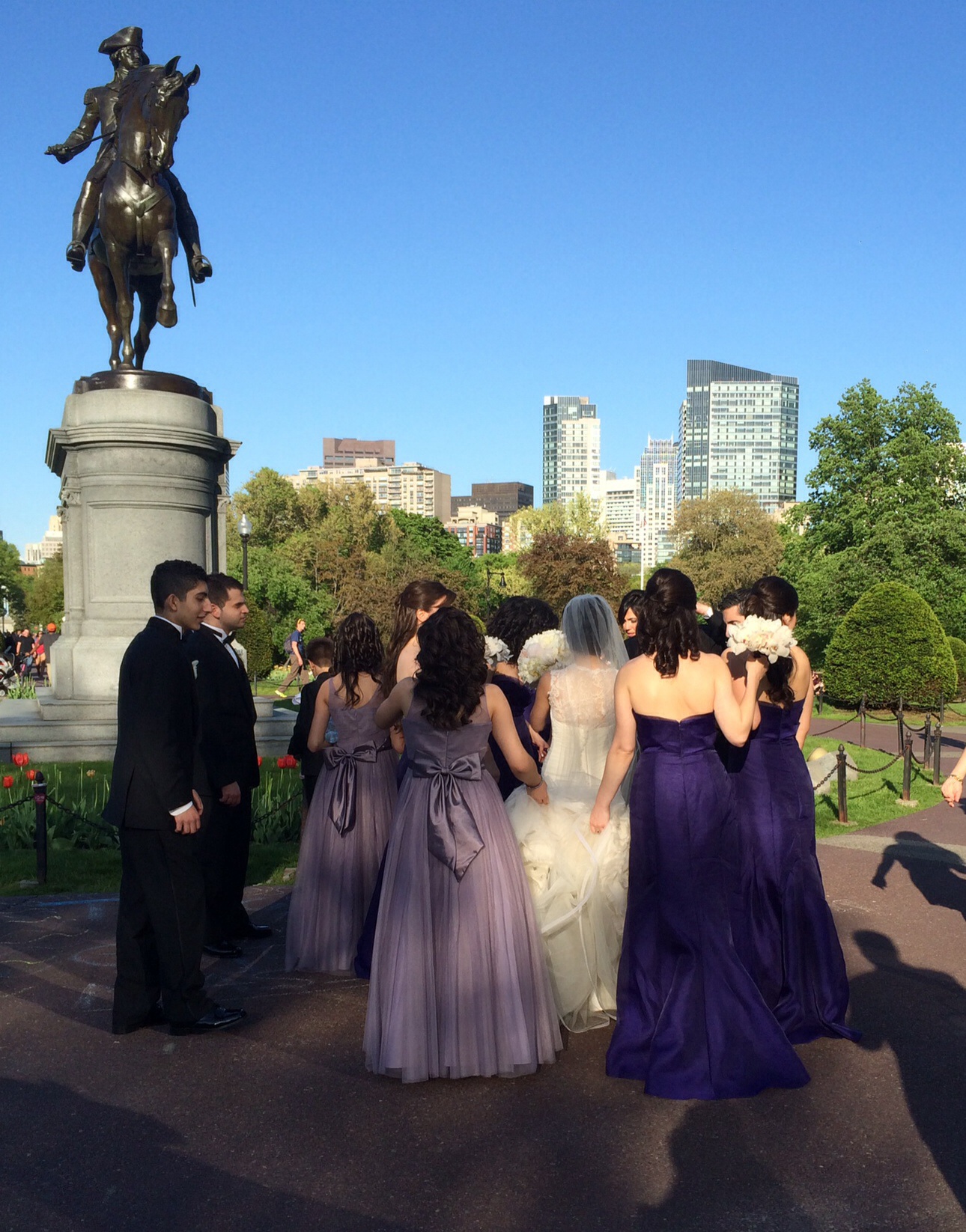
In the warmer months, the famous Swan Boats are pedaled like bicycles around the pond, just as they were in the much-loved 1940s children’s book “Make Way for Ducklings.” If you walk through the Public Garden on a warm Saturday, you often see two or three wedding parties having their photos taken.

image
One day my son and I encountered an unusual wedding party there, where the groomsmen were hanging back cooling their heels, the bridesmaids were hovering around in a concerned tizzy, while the bride was lying prone on her back on a bench, clutching her bouquet on her chest, and bawling her eyes out in what appeared to be a full-on anxiety attack. There’s so much pressure put on brides in U.S. culture now to be skinny and be the star of the show, I figure she hadn’t eaten in weeks. I’ve often wondered what happened to that marriage.
Around the corner is Newbury St., where you can get your Chanel on. It’s fun for window-shopping or grabbing a bite.

image image image image

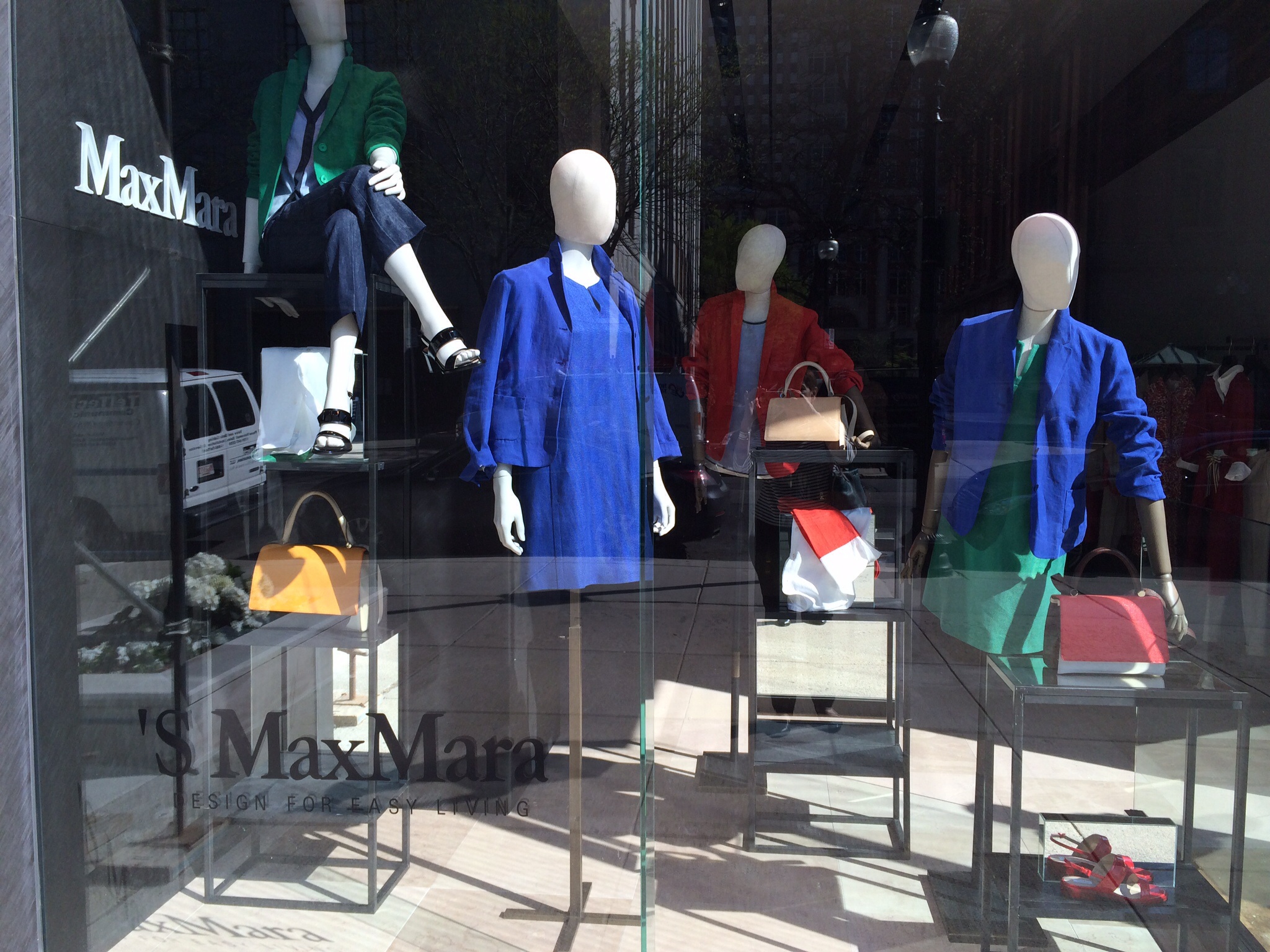
I like those candy-colored linens and bags in the Max Mara window. I my next life I’m going to be an Italian contessa and dress like that 24/7.

I have been celebrating “Me-Made-My” by stitching up some things to wear with the Charles James skirt, including a Claire McCardell shrug that I’ll share next time. I hope your sewing is going well, too!

More from the Charles James Exhibit

18

Now I want to share the second part of the Charles James exhibit at the Met Museum in New York, which celebrates James’ most famous works: his ballgowns.

image

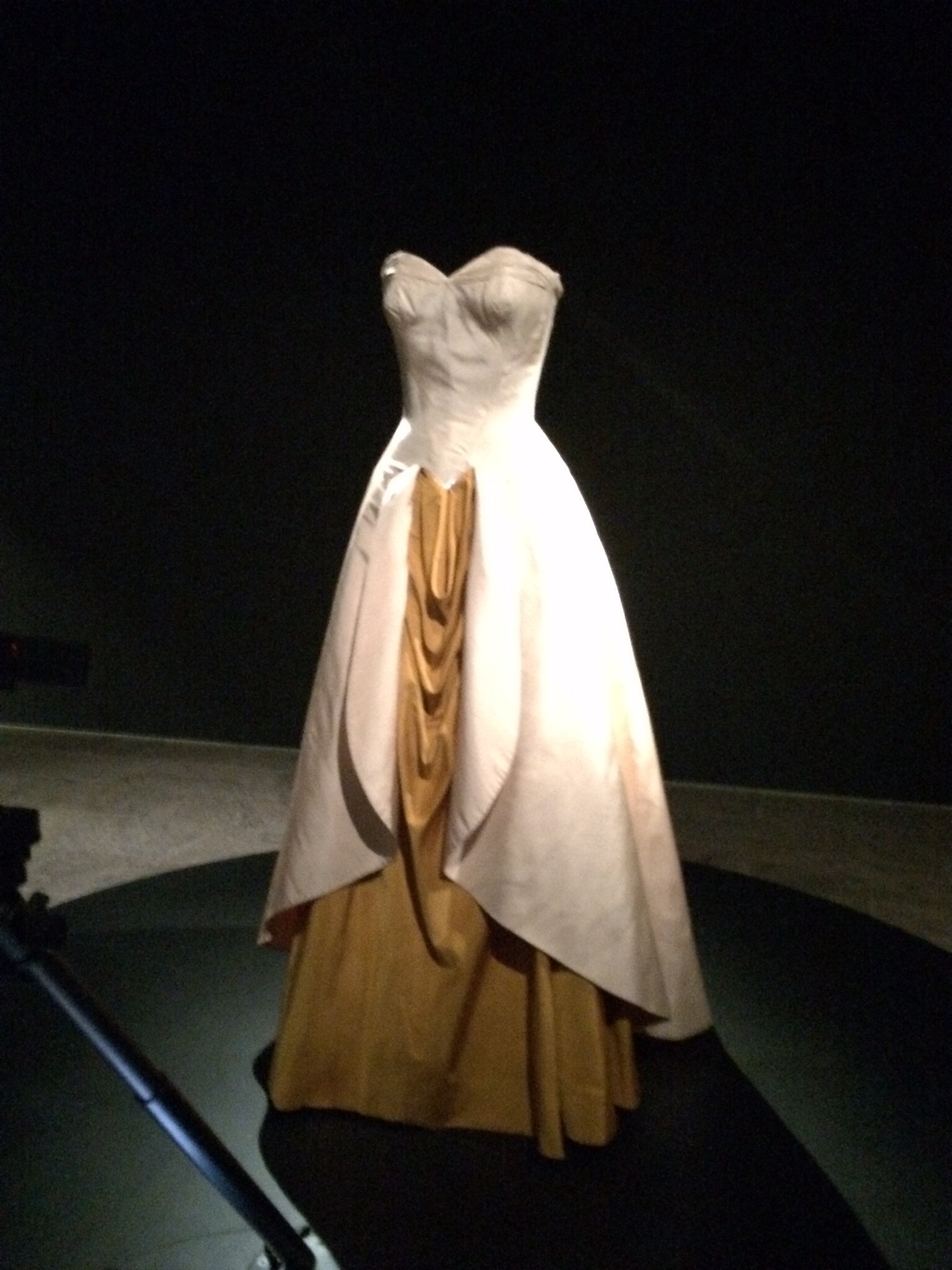
Fifteen of his gowns are displayed like sculpture, each on separate “islands” which allow visitors to circle the gowns and see all sides from up close.

Charles James dress

A number of the displays are equipped with “cameras” moving around the dresses and pointing a crosshatch of light on different areas of the gowns. Then, on a video screen, you see an animated Xray of that part of the dress from the interior, with an explanation of the boning, tulle and other supports holding up the gown from the inside.

Charles James Tulip dress

I noticed that the “Tulip Gown” above had the same triangular piece wrapping forward at the waist as the pattern for Charles James skirt I just made. (Details are in this post (Charles James skirt muslin).

Some videos start by displaying the pattern pieces that make up the gown, then via animation, the pieces assemble themselves to construct the dress.

Charles James naughty dress patternCharles James exhibit digital display

If dress engineering and patternmaking are your thing, you may faint at this point. The architectural firm of Diller Scofidio and Renfro was brought in to design the exhibit, and they did a masterful job.

Here’s an example of one of the pattern animations, from the New York Times’ website: (Charles James animation)

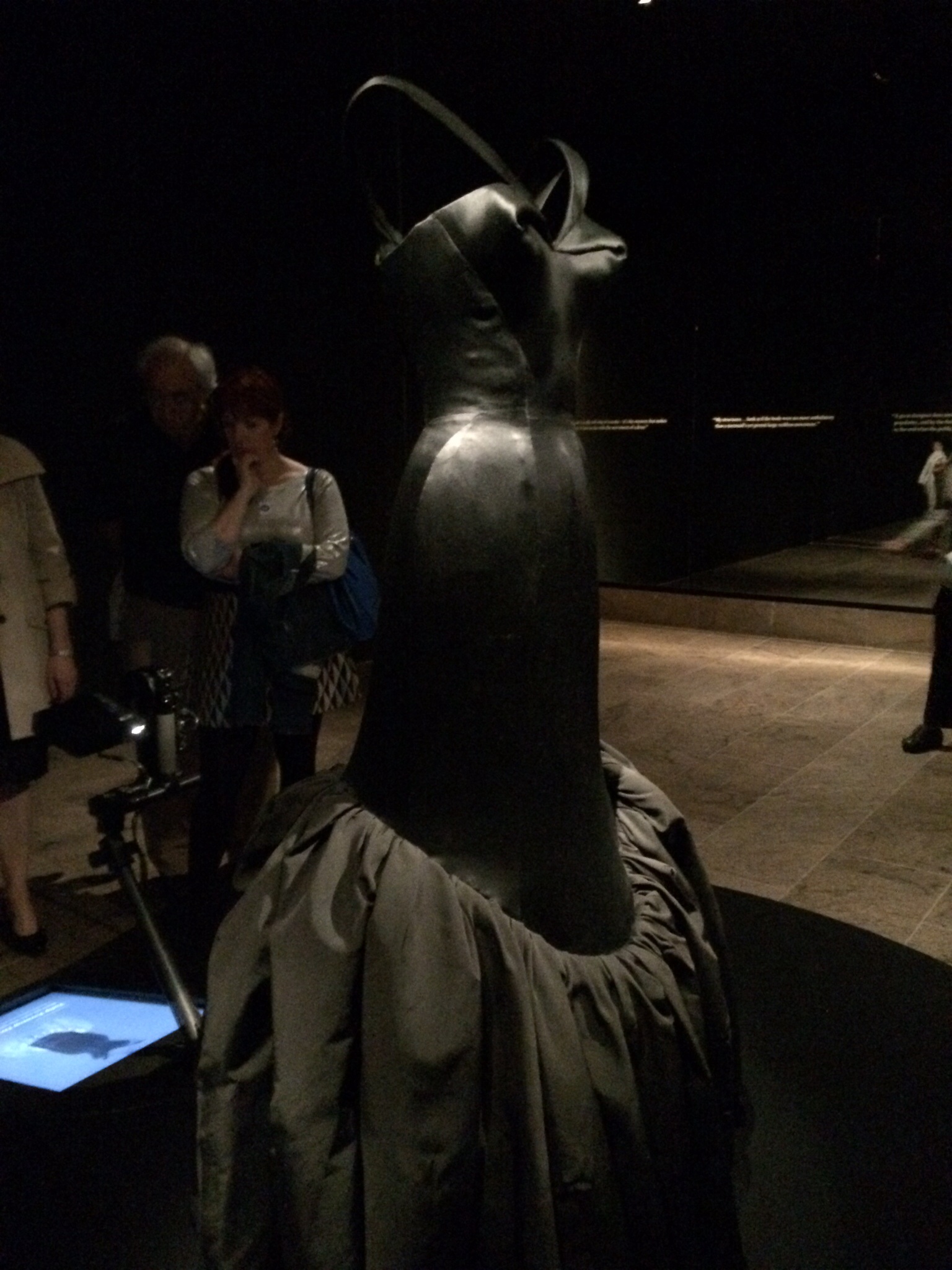
The gowns themselves are stretched onto dressforms, playing up the sculptural and frankly erotic aspects. As my sister helpfully pointed out, “that one looks like a giant (expletive deleted).” Watch your language, sis!

image

It’s true that many of them look, well, phallic, and this next one in particular is, erm…what’s the opposite? Vulvic?

Charles James naughty dressMillicent Rogers in Charles James

What do you think people said to the socialite wearing this? “Excuse me, Mrs. Rogers, but your dress, it looks like a giant…ummm… Say! Refill on your cosmopolitan?”

Oh my goodness, what has gotten into me?

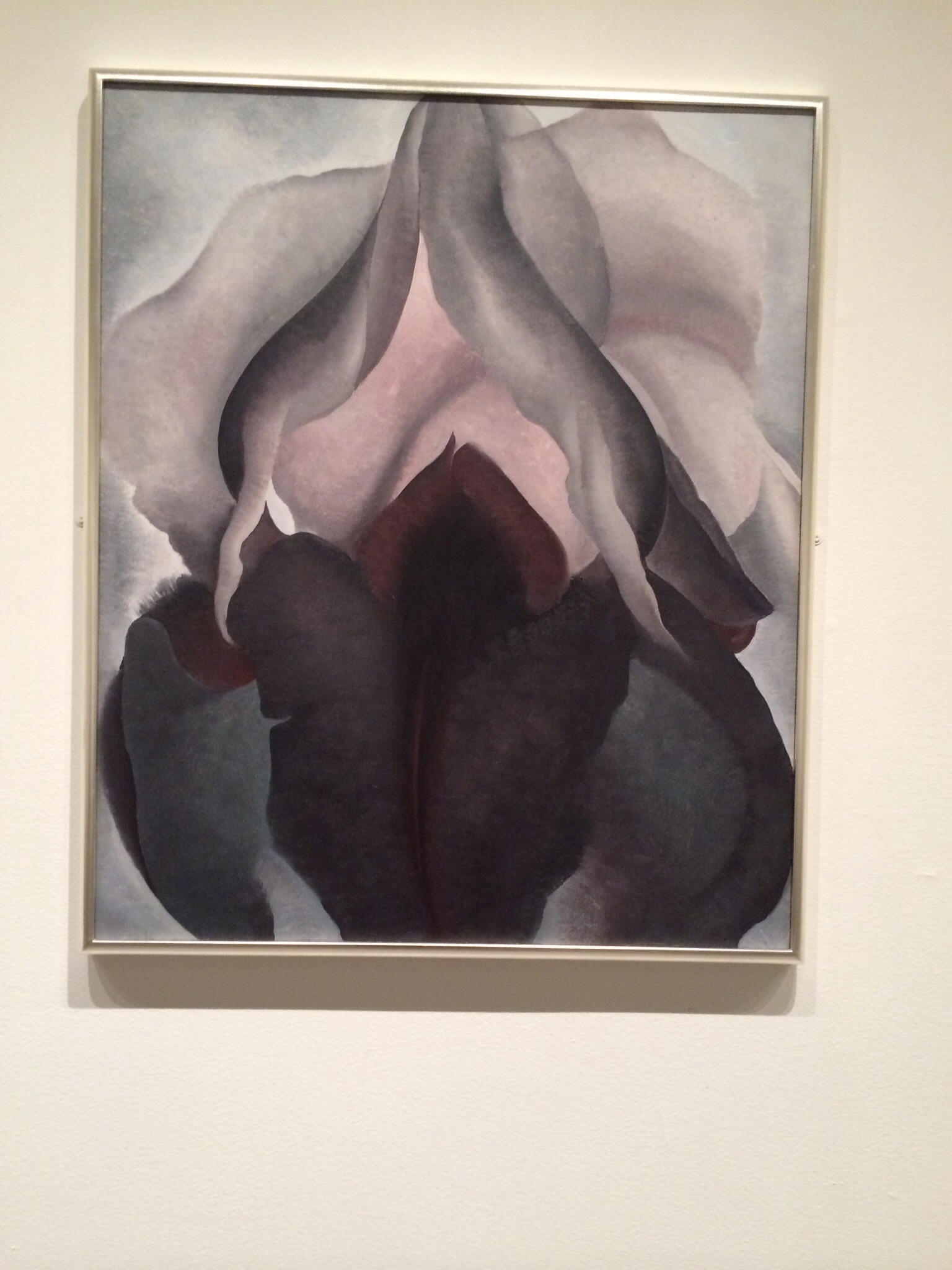
But of course it’s the Met, so they started to wax poetic about Georgia O’Keeffe’s erotic flowers paintings being a big influence on the gown and blah-dee, blah-dee, blah…

Then as I was walking around the museum, looking for a place to change from heels to flats and put on the knit pants I’d stuffed in my bag (because I like to dress up, but I have my limits), I stumbled on the “American Art from 1905 – 1940” room. This is one of my favorite periods in art, so as I wandered among the Hoppers and other “guy” paintings, I spotted those O’Keeffe’s.

Georgia O'KeeffeGeorgia O'Keeffe

Hmmm.

Unfortunately I was too agog by the whole thing to take many photos of the gowns, so if you’d like to see more of the exhibit, the Met has posted this video on their website, showing a number of the gowns and dresses. It’s in high-definition video, and includes commentary from the exhibit’s curators. I highly recommend it.  (Met Museum Charles James Exhibit Video)

Also Bill Cunningham’s exhibit and Met Ball photos from the New York Times are here: (Bill Cunningham photos)

As for me, clearly it was time to get out of “haughty, naughty, spawty, gaudy” New York and back to Boston proper to calm down. But what a show!

Charles James Exhibit: Fashion! Art! Tailoring! And, of course, the gift shop.

34

Well, well. That Charles James is something. Train, auto, DC-3, oceanliner, dirigible…just get on it and go!

At this point, you can read plenty of elegant musings about the architectural, sculptural, sexual and haute coutur-al aspects of the Charles James garments on display right now at the Metropolitan Museum in New York, including this comprehensive article by Roberta Smith in the New York Times Arts section today: (Article on Charles James).

I want to take you on the sewing-nut tour. Let’s go!

Charles James Met Exhibit

If you read the articles, there’s a big focus on the design and construction of 15 of Charles James’ most famous ballgowns, which are being showcased in the special-exhibition galleries on the Met’s main floor. But personally, it was the day dresses, cocktail dresses, and archival materials displayed in the galleries of the Anna Wintour Costume Center downstairs that gave me a better feel for the Charles James who worked with fabric.

When you walk in the dark, hushed space, lit by pools of light, your first encounter is with this amazing piece:

Charles James cloakCharles James quote

Thank you for that new mantra, Charles. Next to it was his “Ribbon Dressing Gown”: Charles James dresses

…hard to imagine swanning around the house in that gorgeous robe with the rows of subtly-shaded satin molding the gown to the body. Would you need a maid to sweep the floor in front of you anywhere you walked?

The dresses, suits and coats are arrayed on “islands” that the viewer can circle around, allowing you to see them from all sides. It’s a very smart layout, as all of the garments have surprising seams, contours and closures on the fronts, sides and backs. You can get within 3 to 6 feet of many of the designs, making it easy to see the details through the plexiglass. Here are a few examples of Charles James’ masterful tailoring, which, as we sewing enthusiasts know, is something that’s very difficult to do right, and very easy to screw up. On his designs, the seams are never where you expect them to be.

Charles James coatCharles James CoatCharles James coatsCharles James suit

I want that green suit.

I took two trips through this part of the exhibit the day I was there, and good thing, because I almost missed this small bright room (the Carl and Iris Barrel Apfel Gallery) displaying items from Charles James’ archives. The custom dressforms he designed:

Charles James dressforms

Scrapbooks and sketches, like this one of his famous “Taxi Dress”:

Charles James sketch

Some of the hats he designed early in his career:

Charles James hats

And this famous wowza piece, a 1937 satin evening jacket, filled with down:

Charles James Down JacketCharles James Down Jacket

There was also a film showing clips of Charles James in the 1970s, prepping young models to wear his classic designs for a retrospective. I generally think of Charles James as an effete, tailored man of the 40s and 50s, but here he looked like so many of those aging lotharios I used to bump into in 80s New York, with the chin-length swept-back hair and groovy attire, trying to hang out with the club kids. That was an eye-opener.

Heading back into the main room, I saw a number of Charles James futurist 50s dinner dresses, like these:

Charles James dresses Charles James dress

And two versions of his La Sirene dresses from the 40s and 50s, with horizontal release tucks shaping the front.

Charles James Sirene dresses

Some of my personal favorites were his 1930s cocktail dresses, including this prototype of his “Taxi Dress,” so named because a girl could put it on in a taxi…

Charles James Taxi Dress

A precursor to “fast fashion,” the Taxi Dress was available in two sizes in the accessories department of Best and Co., wrapped in cellophane packaging. Now I’m thinking that Diane Von Furstenberg didn’t just come up with her wrap-dress idea out of the blue by looking a ballerina sweaters. Here’s a version of the Taxi Dress with a zipper spiraling around the side:

Charles JamesCharles James dress with spiral zipper

You can see the Madeleine Vionnet influence in those designs.

His ballgowns are works of art, but these garments, without the layers of tulle and boning, truly showcase Charles James’ legendary draping prowess.

I’ll talk more about the ballgown part of the exhibit in an upcoming post, but in the meantime I wanted to report that, yes, the skirt I was making from this 1950s Charles James home sewing pattern:

Charles James sewing pattern

did get completed in time to make it into my case for the train trip to New York, with a few minutes to spare to clean up my ragged sewing nails. I wrote about making the muslin for this skirt in this post.

I’ll admit I was beginning to waver about wearing it, thinking that walking around New York in a pencil skirt and heels would be uncomfortable and hurt my feet and a whole bunch of other lazy middle-aged excuses. Then I read this post by Laura Mae of the blog Lilacs and Lace, a sewing enthusiast who makes and wears gorgeous mid-century confections, giving her readers a pep talk about the importance of dressing up and wearing our beautiful, stylish “makes” out to events, concerts and exhibits. (Lilacs and Lace “Classic Glamour” post)

By the time I was through reading that call-to-arms, I felt like it would be darn un-American not to wear that skirt, and that I should be tap dancing around like Vera Ellen tossing flaming batons to boot!

Wearing the Charles James skirt at the Met Exhibit

Wearing the Charles James skirt at the Met Exhibit

Laura Mae, you were SO right! Without that skirt I would have felt underdressed around all of that fine, fine Charles James design. The thing I love about this skirt is that it’s shaped inward down toward the knee to look like a pencil skirt, then it flares out below the knee in a very flirty way at the side pleats (like a “mermaid” skirt), but the back is not clingy at all, so it’s very easy to walk in.

I’m wearing the skirt with the vintage Hermes scarf every gal should have in her travel bag.

My excellent sister, whom I mentioned before as having invited me to this shindig, played hooky from work to see the exhibit and fill in as the Jet Set Sewing staff photographer, then she managed to bumped into someone she knew from work…oops! Thanks again, Janet!

Of course, all good things must end at the gift shop, where I picked up this gorgeous commemorative of the exhibit: a silk scarf with sketches by Charles James.

I’ve also been gifted the book from the exhibit, “Charles James Beyond Fashion” by Harold Koda and Jan Glier Reeder. I highly recommend it if you can’t attend the exhibit. It’s filled with large, detailed photos showing the dresses, coats, gowns, and archival materials.

Charles James Koda-Reeder book

It’s so big, once it arrives, you may need to purchase a separate coffee table to hold it.

For those of you who can’t make it to New York to see the exhibition, most of the Met’s Charles James collection is on their website here.

More to come on the Charles James exhibit. I would go back in a heartbeat.

Charles James skirt muslin (apparently for Amazon Barbie)

11

So I started making a version of this:

Charles James “Dorothy” Skirt in the Metropolitan Museum

image

from this 1950s mail-order sewing pattern:

image


I just read an article in this month’s U.S. Vogue (May 2014) by Hamish Bowles, talking about the life and work of Charles James, and my guess is that this skirt pattern (and another Charles James dress pattern) were released during a time in the 50s when James was married to heiress Nancy Lee Gregory (the former wife of one of James’ lovers, oh by the way…) who was trying to help him expand his business. But artists are rarely good at business or marriage, and both were pretty much over by the early 60s. (As usual, I felt a jealous frisson at the quality of Hamish Bowles’ writing in the article.)

Here’s a video of Hamish Bowles visiting two iconic Charles James dresses in James’ birthplace of Chicago. Having seen some of Charles James’ erotic drawings, Bowles posits that many of his creations may have been inspired by a certain appendage of the male anatomy: (Video about Charles James)

And here’s an article from the New York Times about the Met’s reconstruction of the “Four Leaf Clover” dress, which will demonstrates the architectural elements of James’ designs: (Charles James New York Times Article)

Since I’d like to have the skirt done by the time I leave on Tuesday for the Charles James exhibit in New York, I’d better do less blabbing and more sewing. So here’s the progress so far:

As with all of the vintage unprinted patterns I use, when I first take them out of the package, I need to label them:

image

That’s when I discovered that two of the pattern pieces were missing. AAAyyyiiiii!

Curse you, lazy 50s housewife, who made this skirt and then neglected to put back all of the pieces! So what if you had four kids and were probably in the midst of a pre-feminist Betty Draper psychotic episode, it’s Charles James for pity sake!

So after that little meltdown, I realized that it wouldn’t be too hard to re-create the pattern pieces for the back of the waistband and lining for the pleats.

I traced the pattern onto craft paper and put the original away to preserve it. Then I compared the pattern to my recently completed fitting shell pattern. Since the Charles James pattern was cut for a 24″ waist, I knew I would have to size it up considerably to fit me.

image

The brown is the Charles James skirt pattern and the white is my fitting shell pattern. At this point, I could tell that the front piece (on the right) was far smaller than my fitting shell, while the back piece (left) was close to the same size. So the skirt was designed for the back piece to wrap around the side to meet the front piece in the front. Also, there’s a complex triangular part at the top that extends even further toward the front.

I decided that trying to size up the pattern in the flat pattern state was foolish, and that I should just make the thing up as is, then see what I could do to make it bigger.

I cut the muslin pieces for the test version of the pattern out of two different color fabrics, to better show you the design of the skirt in photos (and I’d like to thank you readers for inspiring me to move forward on the boring parts of projects like this).

image

This is why it’s worth doing a muslin. You’re looking at the top of the skirt’s side seam, where ordinarily on a pencil skirt the two seams would match, and you would just sew them together on a curve. But on this pattern, the triangular part on the back (in black) wraps forward to meet the front (in white), and the pieces curve away from each other in the opposite direction. When I started to pin them, it reminded me of setting in a sleeve, so I added some basting and gathered the back piece to curve it around.

Here’s how it looked pinned:

image

You can see I had to ease the back piece around to meet the hip curve of the front piece.

And here’s how the exterior looked after it was sewn:

image

It’s not just curved, it’s molded. And that’s what made Charles James such a great designer, even with something as simple as a pencil skirt.

Here’s a look at the front of the completed muslin version:

imageimage

The back (in black) wraps around to the front to make an arch shape in the front. It’s hard to see, but that same shape is mirrored in a subtle arch on the waistband front. At the bottom of each side of the front piece are two lined pleats. (There’s no seam in the center front. I just messed up when I cut it, which is another reason you do a muslin.)

Here’s how the skirt looks from the side:

image


The seam between the front and back of the waistband meets at the actual side of the waist, over a dart, rather than where the front and the back pieces meet.

And here’s the rear, where there is another pleat in the center back:

image

The waist on the skirt is a petite 25″, and the hips max out at 37″. The whole thing’s so tiny it won’t fit on my dress form. But the length of the skirt, after hemming, is 32″, and on my 5’6″ long-legged frame, comes just 4″ above my ankle. That’s why I think this original is fitted for Amazon Barbie.

Clearly I’m not going to need to make it any longer, so I’m just going to attempt a massive “slash and spread” revision in the middle to get the skirt to fit me. There’s no way I’m touching the engineering on the sides.

And I hope that Charles James, somewhere in the great beyond, will forgive me for messing with his elegant design. But I can’t imagine that he would.


Charles James, Charles JAMES, CHARLES JAMES!

19

A couple of great messages popped in my in-box this week.

The first had “Charles James” in the subject and was from my apparently psychic sister inviting me to be her guest at the members-only preview of the “Charles James: Beyond Fashion” exhibit at the Metropolitan Museum of Art’s Costume Institute, opening in May. Here’s a short bio of Charles James from the Met Museum’s website: (Charles James Biography)

After jumping around going “woo hoo!” and informing certain high-maintenance family members that they would have to live without me for two whole days, I got out this American Weekly mail-order pattern from the 50s:

image

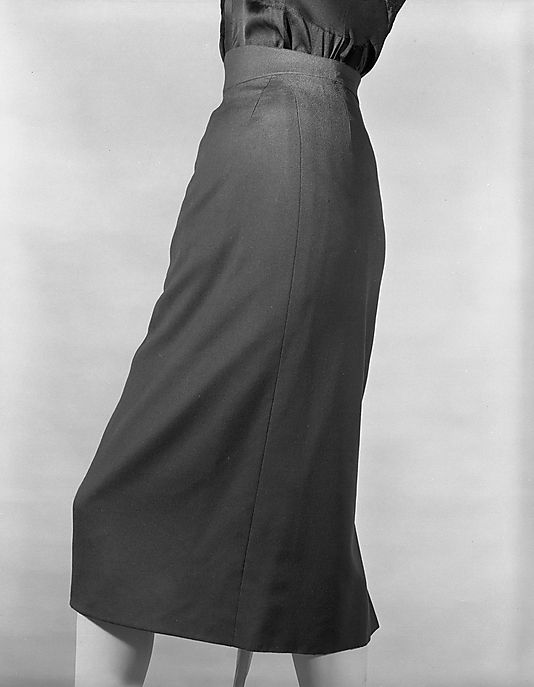
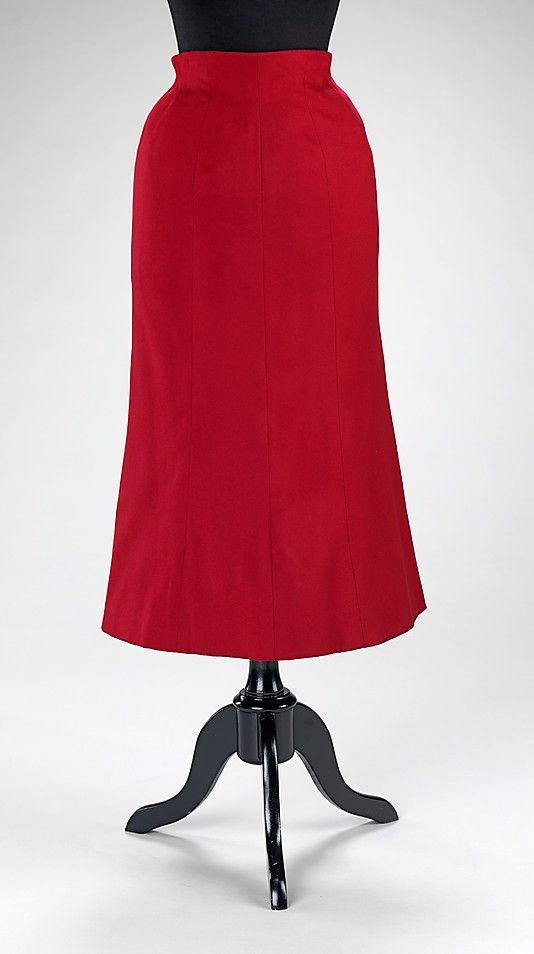
I decided to get cracking on view “B”, a version of the Charles James “Dorothy” skirt, which is in the Costume Institute’s collection:

Charles James Dorothy Skirt Charles James “Dorothy” Skirt

If you look closely at the top, you’ll see that the back piece has a triangular extension at the waist that wraps toward the front, and my pattern has that as well. The pattern also has three vents, which are actually low pleats, at the two sides and the back.

View A of this pattern is his “Tulip” Skirt, also in the Metropolitan Museum:

Charles James Tulip Skirt(Charles James “Tulip” Skirt)

It’s on my wishlist to make as well, though I’m more of a “Dorothy” than a “Tulip.” This pattern has small sewn-in interfacing panels all around the bottom to make the hem flare out.

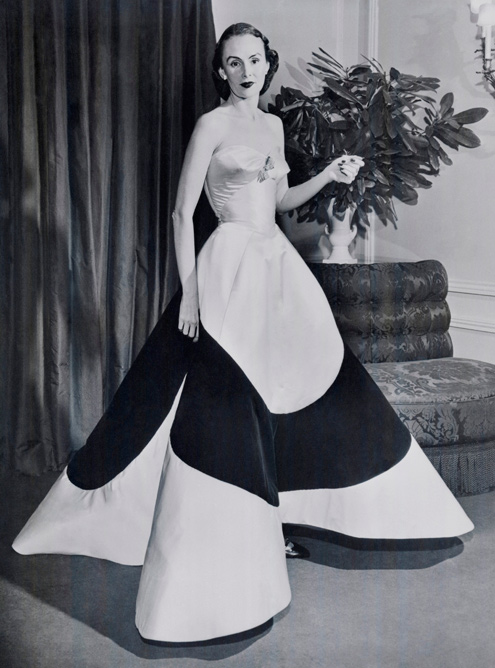
Charles James was a draping and design genius who made iconic gowns for many of the British and U.S. society “Swans” from the 30s until the 70s. This is probably his most famous dress:

Charles James Four Leaf Clover Gown Charles James “Four Leaf Clover” Gown on Austine Hearst

Like many true artists though, his perfectionism ultimately did him in, and he ended his days working with a single patternmaker in New York’s famous artists’ fleabag, the Chelsea hotel.

There’s a great article in the New York Times today by writer Elaine Louie, who describes knowing Charles James in the 70s, and wearing one of his gowns to an exhibit: (“Charles James and Me” article) It’s a fun read.

I better get going on grading (sizing) up that pattern–it’s cut for a 24″ waist!

And thanks again to my sister…Janet, I’m so looking forward to you taking a day off from running the Martha Graham dance company to be the photographic intern for Jet Set Sewing. What a gal!

The second fun thing that popped up in my in-box was a nomination for a “Liebster Award” from Carrie of Crafted By Carrie. Carrie is a scientist by day and sewist by night, who is putting together her trousseau and gifts for her wedding party and a bunch of other stuff while I’m sitting around across town procrastinating about tracing my vintage patterns.

The Liebster Award is bestowed by bloggers onto other bloggers to help spread the word about new blogs. I really appreciate being nominated and Carrie, you are a Liebchen for sending me the Liebster.

I learned from working in TV to always accept a nomination, because it often comes with free dinner. But this one comes with questions to answer (provided by Carrie) so here goes:
What is your favorite garment you’ve made?

Do you think the answer is one of my Chanel jackets? Au contraire, it’s this one-sleeve Schiaparelli wrap I made from Decades of Style pattern #5006 and printed wool fabric from Janssens et Janssens (lined in silk). It’s so unique, lightweight and wearable:

My Spring Wrap

Do your friends and family know about your blog?

Yes, I won’t shut up about it.

What’s your biggest pet peeve?

Somebody asked me this once in a job interview for the Metropolitan Life Insurance Audio/Visual Department, and I said “inefficiency.” Wasn’t that a great answer? (I could only stand nine months in that job.)

Share five things about yourself that others don’t know:

You know, at this age, discretion is the better part of valor.

What is your favorite period in fashion, and why?

Well, I could write a blog about this, and that’s what I’m doing. I’m a fan of 1920s through early 70s designer fashion, though the cuts from 1950s and 60s suit me the best.

What personal accomplishments are you most proud of?

Jeez, I’m been around so long, it’s tough call. Raising a son (in progress) and step-children, staying married 25 years, being successful in a career, learning French well enough to have French people willing to actually speak with me, getting dinner on the table some 5,000 times…

What quality in a friend is most important to you?

We’re all so busy that if they “like” my posts on Facebook it’s pretty exciting.

Carrie, thanks again! And since the word “Liebster” keeps reminding me of Madeleine Kahn’s hilarious performance as the German saloon singer in the classic Mel Brooks comedy “Blazing Saddles,” I’ll leave you with this link of her singing “I’m Tired.”

Madeline Kahn in “Blazing Saddles.”

Happy trails!

More “Faking Vintage Looks with Modern Patterns”

16

To continue my series on “Faking Vintage Looks with Modern Patterns” (Vintage Schmintage), here’s a look at recent pattern releases that could be used to create vintage-style garments without the hassle of working with a vintage pattern. I’ve chosen these from the summer catalogs of the major commercial pattern companies.

You can find all of these patterns, and more, on my pinterest page Vintage Pattern Re-releases.

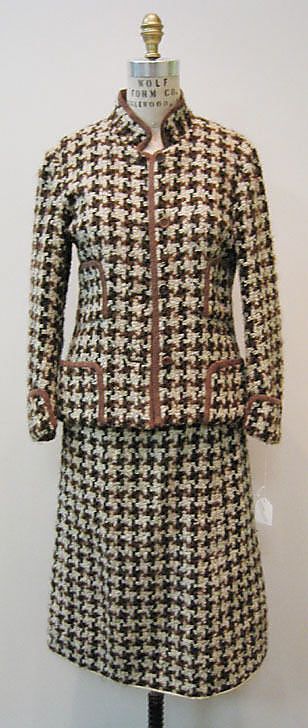
Claire Shaeffer’s new Chanel-style cardigan jacket pattern for Vogue has a nice cut with narrow sleeves that could easily work for a 1950s-60s look.

Shaeffer Chanel Jacket Pattern (Claire Shaeffer jacket pattern)

The mandarin-style collar is similar to the collar on this 60s Chanel pattern in my collection:

Chanel pattern

and you can see a number of similar jackets from this era in the online collection of the Metropolitan Museum’s costume institute.

1958 Chanel Suit 1958 Chanel Suit

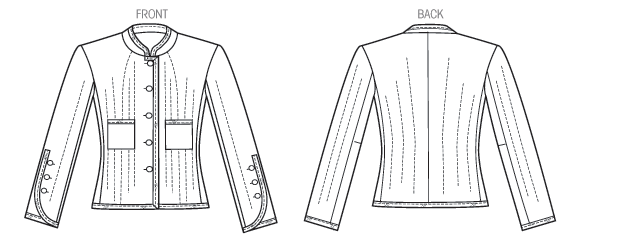
Here are the technical drawings of the pattern:

Shaeffer Technical Drawings

though what they don’t show clearly is that front of the jacket has a center-front panel that curves into the neckline, which may make matching plaids difficult. (If this is your first time at the Chanel jacket rodeo, take my advice and don’t pick a plaid. This post explains why: Chanel Jacket #2: Blood, Sweat and Tears.)

The instructions in the Shaeffer pattern are quite comprehesive, outlining her well-researched and very precise haute couture method. For more information, Claire Shaeffer’s book  The Couture Cardigan Jacket comes with a DVD explaining her style of construction step by step. Just a heads up that her method is extremely labor-intensive with lots of hand-basting and hand-stitching, and this pattern is no exception. Typically it takes more than 70 hours to make a Chanel-style quilted jacket, and in truth 100+ hours is more realistic.

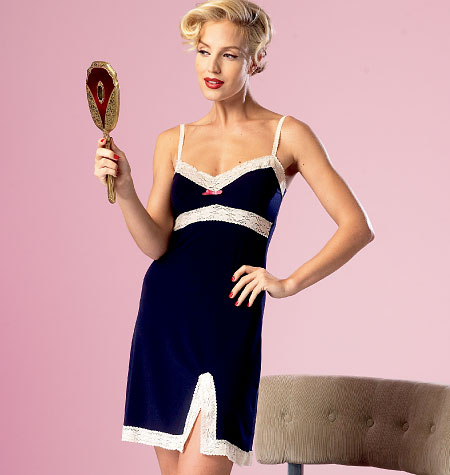
Gretchen Hirsch of “Gertie’s New Blog for Better Sewing” has come up with a new lingerie pattern for Butterick, which is vintage in feel, though it’s drafted for knits, rather than the traditional bias-cut wovens that were used in these kinds of slips from the 20s through the 60s.

Gertie PatternGertie Lingerie

(Butterick Lingerie Pattern)

I don’t necessarily think this is a bad thing, as knits are easier to manage than slippery charmeuse-type fabrics cut on the bias.

Something else that’s nice about the pattern is that it comes with separate bodice bust pieces sized in A through D cups, making it much easier to fit. Gretchen is currently doing a sew-along of this pattern, and in this post she demonstrates how to modify the pattern for an even larger bust: (Sew-along). Since many original vintage patterns are sized for the tiny people who lived several generations ago, having this kind of fit flexibility is one of the benefits of using a modern pattern to make vintage looks.

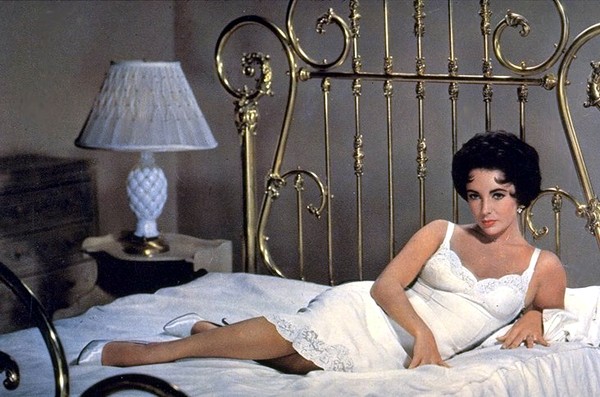
When you’re done, you’ll either have a sexy “Cat on a Hot Tin Roof” full slip:

Liz Taylor (there she is again…)

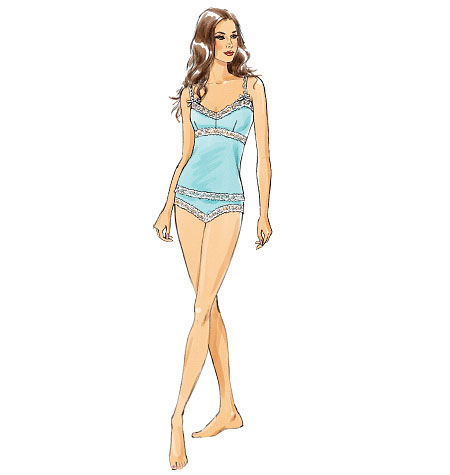
or a more 70s undies and cammie set.

charlies-angels-header

Sort of like that, anyway. The pattern looks cute.

As for true vintage reproductions, I think the companies under the Simplicity umbrella in the U.S. (Simplicity, Burda Style, and New Look) have done the best job lately of re-releasing patterns reflecting the wide range of vintage sewing styles I’m seeing in sewing blogs. Much of current vintage sewing can be lumped into the following groups:

* Medieval through Downton Abbey: costumers who are pretty much in their own high-level sewing time zone;

* Flapper through Film Noir: People who re-create 20s, 30s, and 40s daytime and cabaret-type looks, including the WWII reenactors (many of them women). You can frequently find this style on blogs like We Sew Retro and Lucky Lucille, who’s running a 40s Sew For Victory Sew-along this month.

* 50s/60s Rockabilly meets “I Love Lucy”-style vintage, with crinolines, beehive hairdos and atomic attitude thrown in (Check out Sew Retro Rose); you’ll also see sleek “wiggle” dresses in the style of Joan from “Mad Men.”

* 50s/60s Sweet or Mod Twiggy-style dresses, often with Peter Pan collars and a thick frosting of “Twee.” Several indy companies make patterns for this group, including Colette Patterns.

*A new group of 70s-style boho psychedelic looks, thanks to Mad Men’s latest season;

* Steampunk and Cosplay, which you’re just going to have to google (as I’ve already gotten in enough trouble with my new Steampunk pals thanks to this post (Steampunk Chanel?);

*And finally, a group of sewing and vintage style mavens who are zealously researching and/or sewing particular garments that stand out in fashion history, including The Vintage Traveler, CarmencitaB, American Age Fashion, and patternmaker Studio Faro. And to that group I would add haute couture sewing enthusiasts, such as Cloning Couture, because there’s a lot of crossover between vintage and haute couture.

Now that I’ve completely stereotyped my fellow vintage sewing enthusiasts, I know you’re ALL going to be mad at me!

While you get over it, check out the “Mad Men Challenge” on Julia Bobbin’s blog to see some great takes on style from the 50s through the early 70s: Julia Bobbin’s “Mad Men Challenge”. Excellent job, everyone!

Here are some vintage-style patterns recently released by Simplicity and Burda Style:

Simplicity boatneckBardot in Breton  Simplicity Boatneck Pattern

This basic version of the 60s boatneck top has French darts (starting low on the bodice near the waist then going up toward the bust point) and dropped shoulders, which is very wearable and “Bardot” in my book. I used French darts when I made this similar crushed boatneck top and I liked how they curved the bodice in from the bust to the waist. Though cut for a woven, I think the pattern would work with a stable knit as well. It’s fun to see the “Jiffy” patterns again, and they’re easy to make. (To see more patterns in this style, check out my pinterest page: The Breton Shirt)

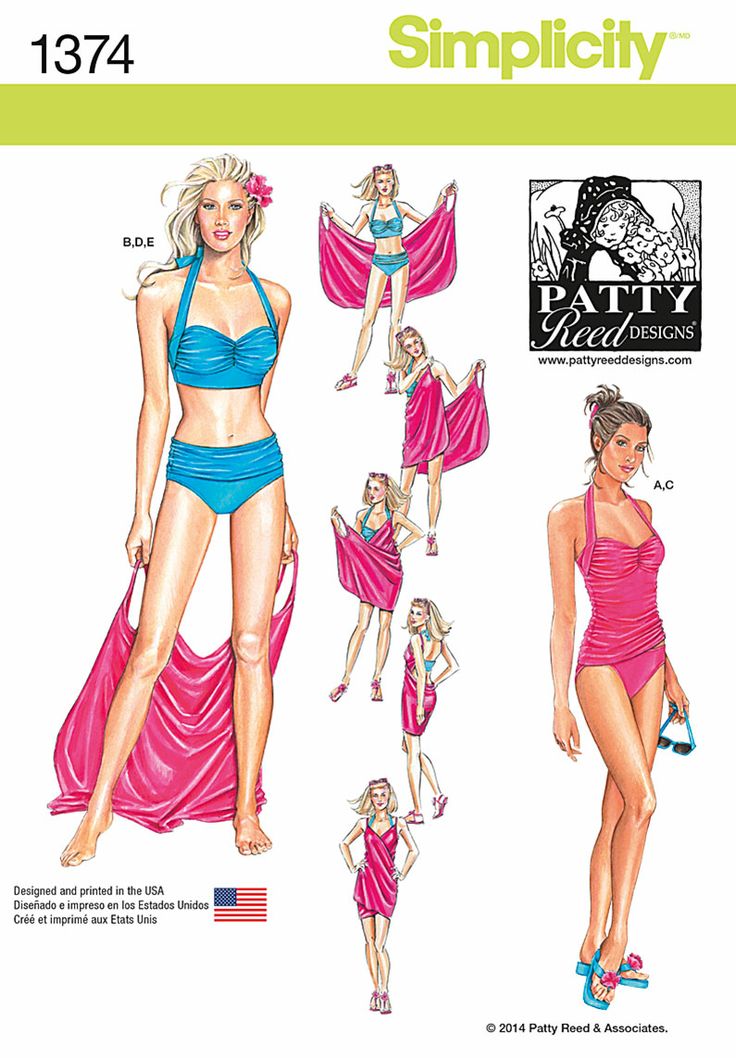
Bombshell suit Monroe in BikiniBombshell suit

I don’t know about the wrap, but the retro suit is cute, particularly the Marilyn Monroe bikini.

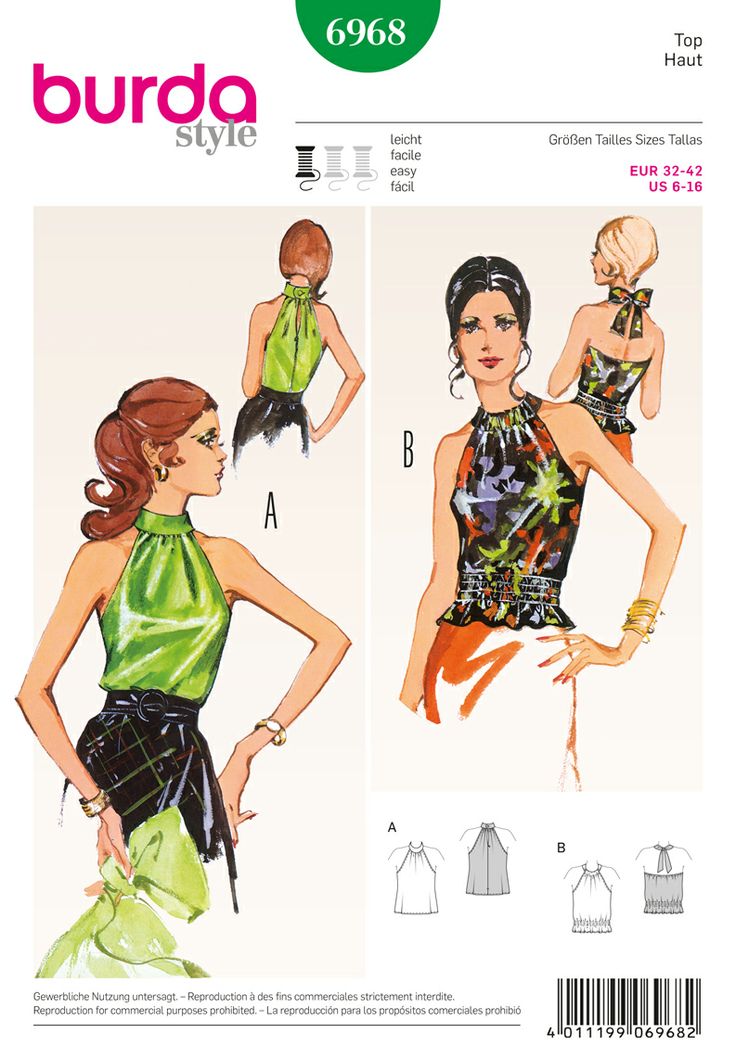
Halter tops 2Kristy-McNichol-kristy-mcnichol-10827210-376-500

I’ll admit I’m guilty of having worn 70s Halter Tops like these back in the day, but I don’t know, too Kristy McNichol?

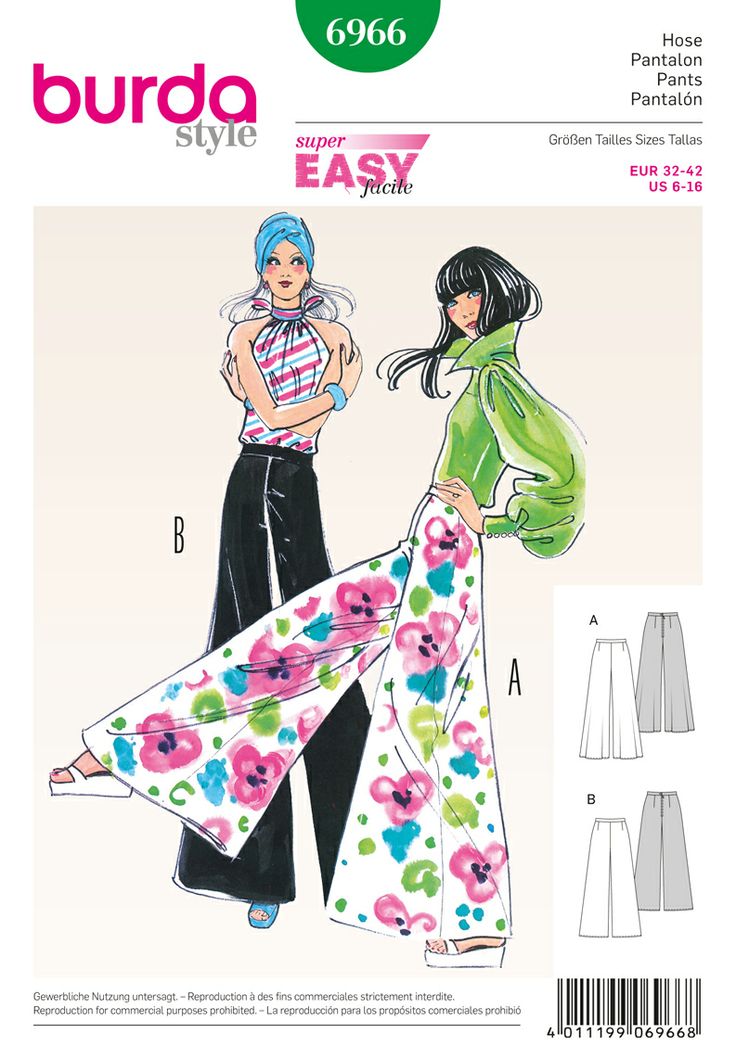
Burda halter Burda palazzo pantsValley-of-the-dolls(Burda Halter pattern) (Burda Palazzo Pants)

I think I could actually pull off this “Valley of the Dolls” style. (Not the hair, though.)

Burda coat patternBrando in bomber jacketBurda coat pattern

For the men, I like this classic coat and bomber jacket. You could be a contender.

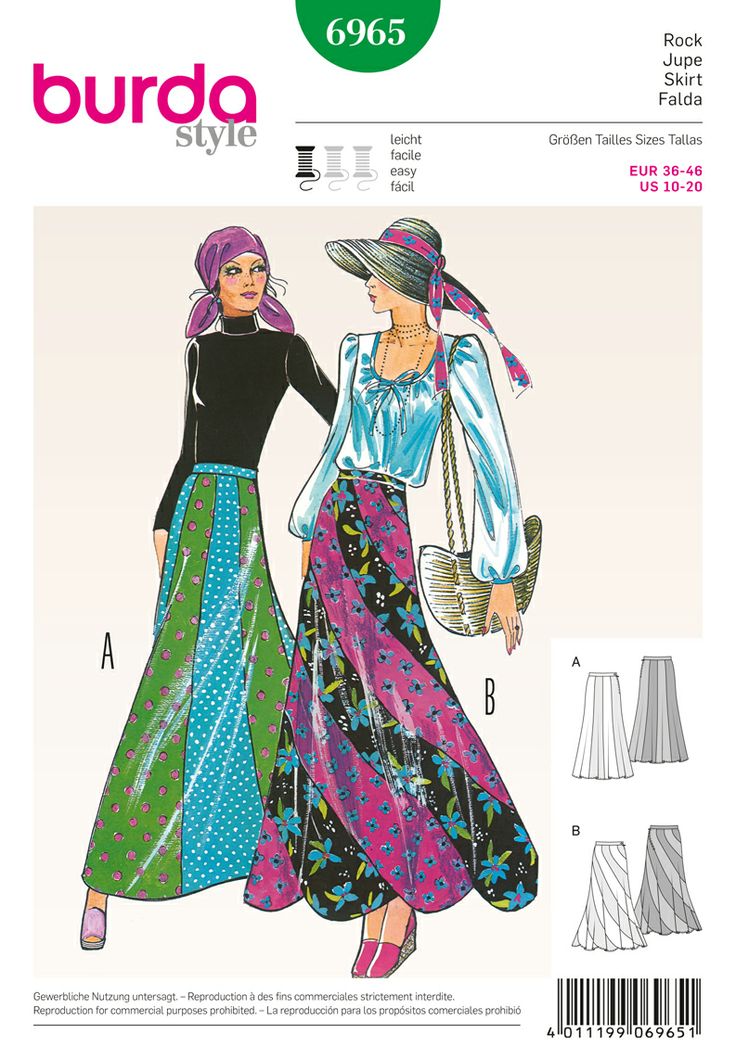
Burda bohoBurda Hippy Skirt(Megan Mad MenBurda hippy-wear)(Burda Style Boho Skirt)

And having grown up in the 60s and 70s, I can’t go back to the Age of Aquarius, but for someone younger, these patterns will give you that Mad Men “Megan” look.

Here’s another place I’m not going again:

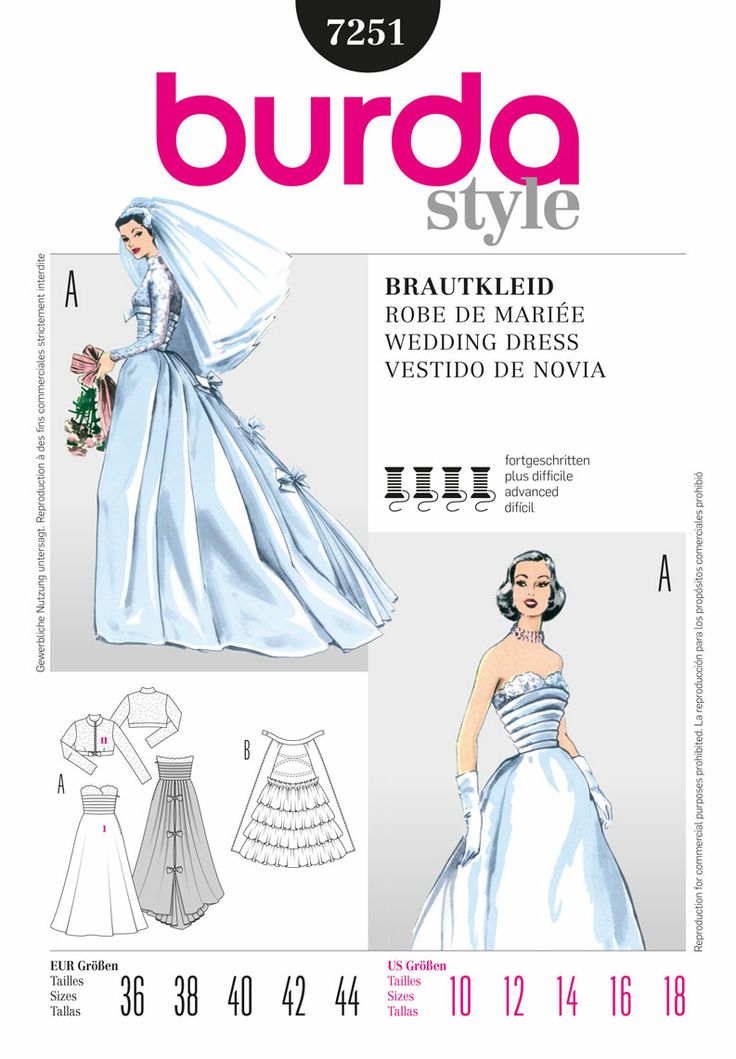
Burda wedding dress (Burda 50s Wedding Dress)

Burda 60s wedding dress (Burda 60s Wedding Dress)

The 60s pattern would make a nice cocktail dress, though, and I like the horizontal pintucks on the 50s gown bodice.

Simplicity has also released some cute retro clothes for baby:

Simplicity babyBooties (Layette and baby booties)

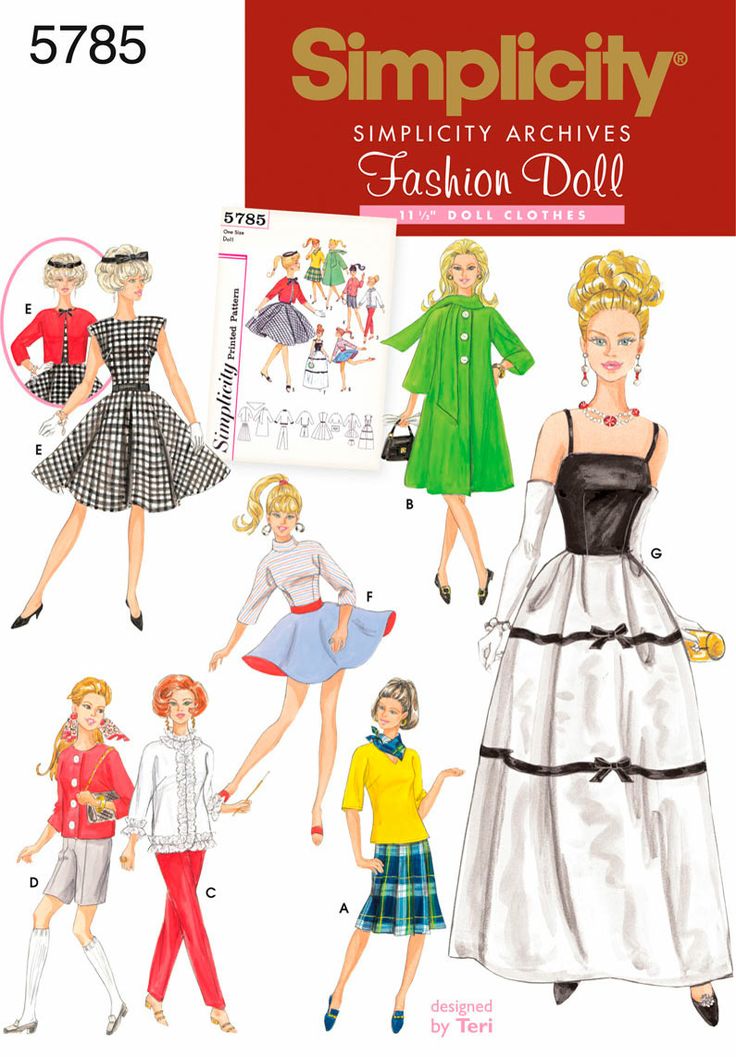
And Barbie…

Barbie (Barbie clothes pattern)

The green coat with scarf collar is pretty great, and you could also make Barbie a Chanel jacket!

All of these major companies have issued so many wonderful patterns over the past 100 years. I would love to see more re-releases of classics like these:

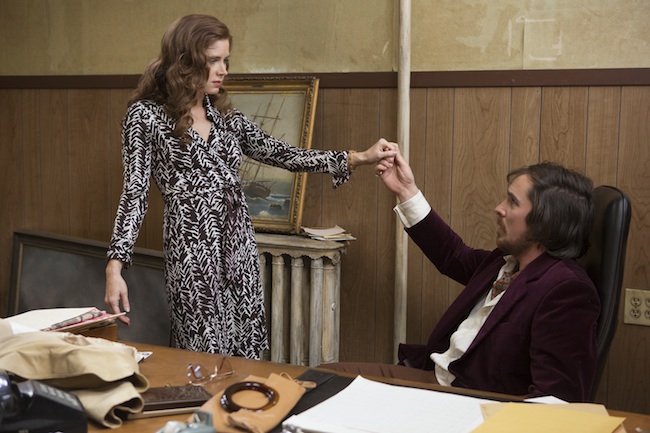
Diane Von Furstenberg’s original wrap dress patterns for Vogue:

DVF Wrap Patternvogue15491976Christian Bale;Amy Adams (Amy Adams wearing one in “American Hustle”)

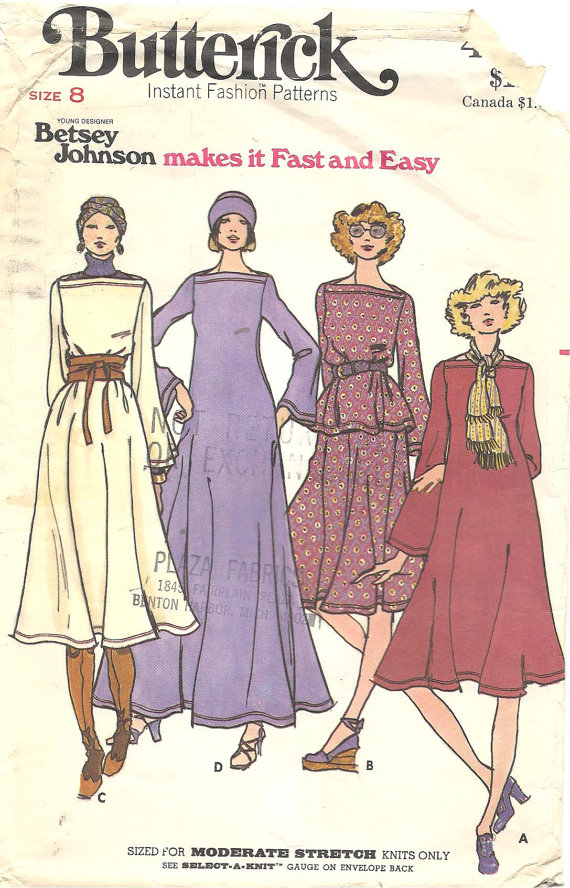
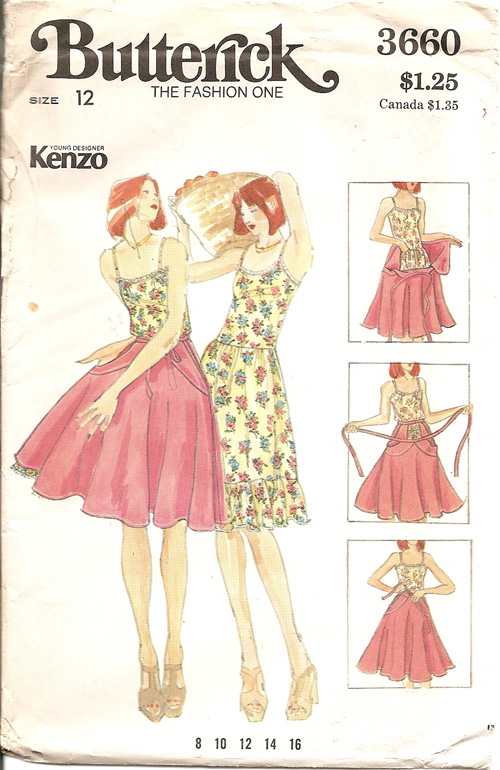
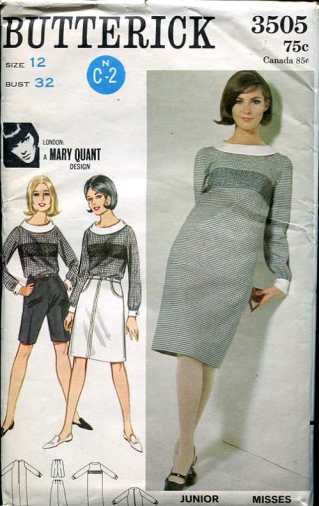
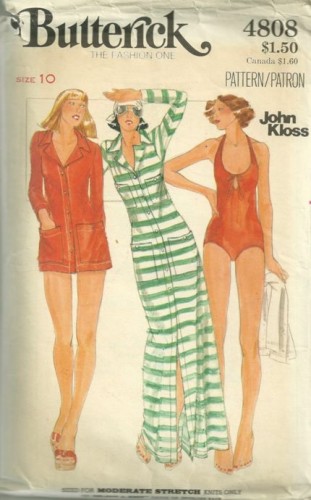
Butterick’s late 60s- early 70s “Young Designer” patterns by Betsey Johnson, Kenzo, Mary Quant, John Kloss, and Willi Smith.

Betsey Johnson Bateau-neck patternKenzo PatternMary Quant patternJohn Kloss PatternWilli Smith

I remember making that Kenzo double-wrap skirt as a teen; it’s very clever design.


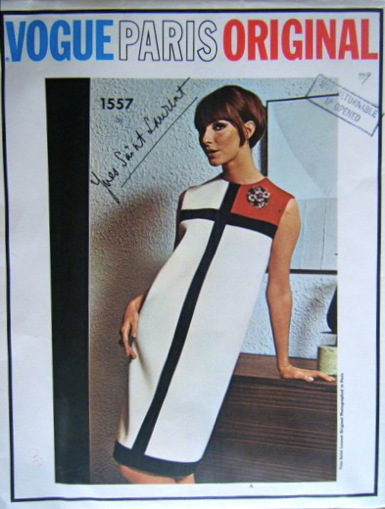
Vogue Paris Original patterns from the 50s and 60s, like these by Schiaparelli and Yves St. Laurent:

imageMondrian dress pattern

50s McCalls “Black Line” patterns by Claire McCardell, Givenchy, and Pauline Trigere…

imageMcCalls GivenchyMcCalls Trigere

How about it, readers, are there any vintage pattern you’d like to see re-released?


Finding a “Fitting Shell” to fit those !$%#! vintage patterns

33

In the past couple of years, I’ve become the proud owner of some pretty fab vintage designer patterns that I’m dying to make up. Here are a few examples:

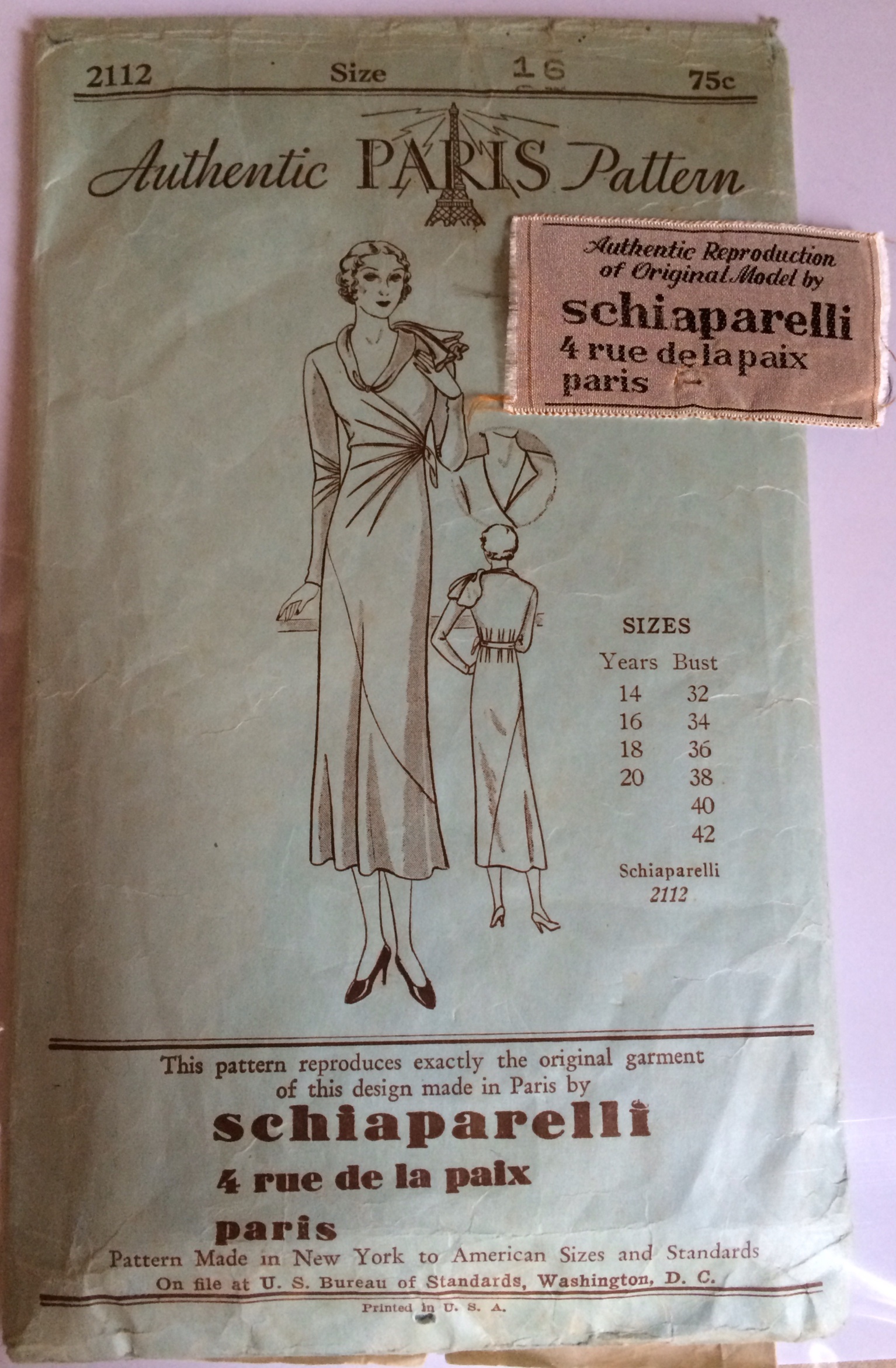
A 1930’s Schiaparelli bias-cut dress pattern with label:

image

A 1962 Officially licensed Chanel Jacket pattern:

Chanel pattern

I did make that one up, and here’s the finished product: (And here are my posts about how I made it.)

10597356983_069525009b_z[1]

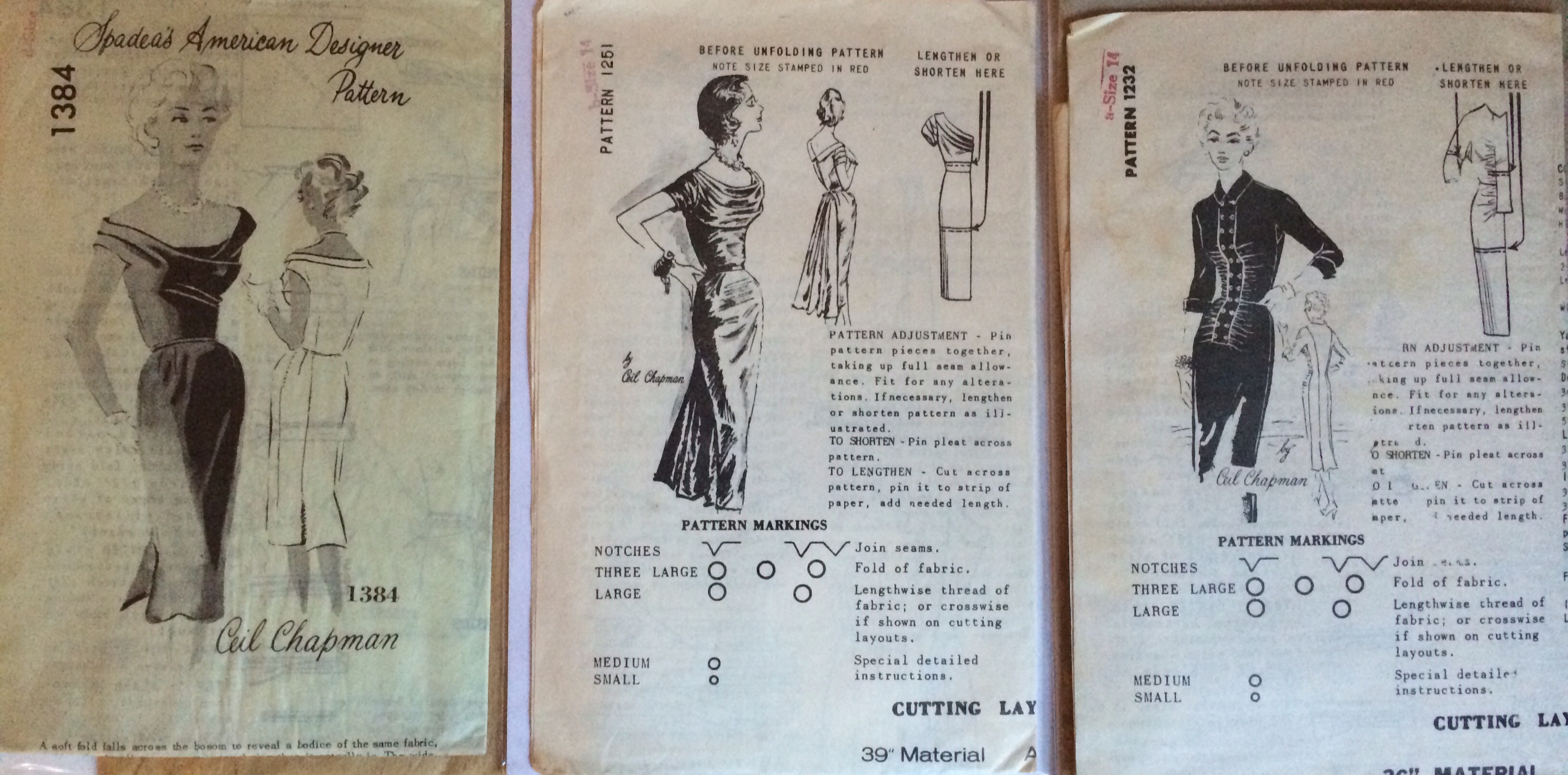
A number of Ceil Chapman patterns by Spadea:

image

Laura Mae from “Lilacs and Lace” has been blogging about making that “Skylark” style pattern in the middle, and it looks mighty tricky. (Lilacs and Lace blog)

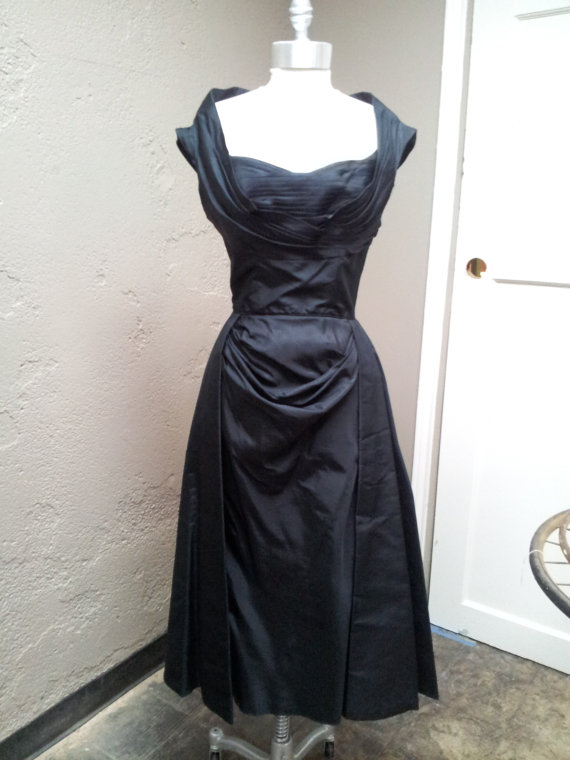
Here’s an example of an original Ceil Chapman “Skylark” dress, with a narrow inner skirt and an over-skirt in the back:

Ceil Chapman Skylark dress

No wonder Chapman was a favorite designer for stars like Marilyn Monroe and Elizabeth Taylor. The dress played up the bust and made the wearer look like a beautiful bird. As an aside, here’s a link to the Hoagy Carmichael/Johnny Mercer tune that was popular in that era: “Skylark” sung by Ella Fitzgerald

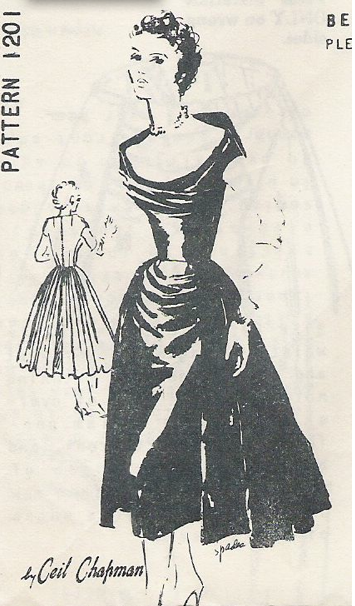
And here’s the true Skylark dress pattern by Spadea, drafted from the dress above (I’d really like to find this one):

Ceil Chapman Spadea Skylark pattern

I’ve also been snapping up patterns designed by Claire McCardell, released by Spadea, McCalls, and Folkwear. Now I have more than a dozen.

image

Here’s a rare Charles James skirt pattern:

image

The inner workings of these skirt patterns show his genius for garment shaping through structure. There’s going to be a Charles James retrospective at New York’s Metropolitan Museum of Art starting this May 2014, which I’m now scheming to attend (waving my pattern…). (Charles James exhibit info)

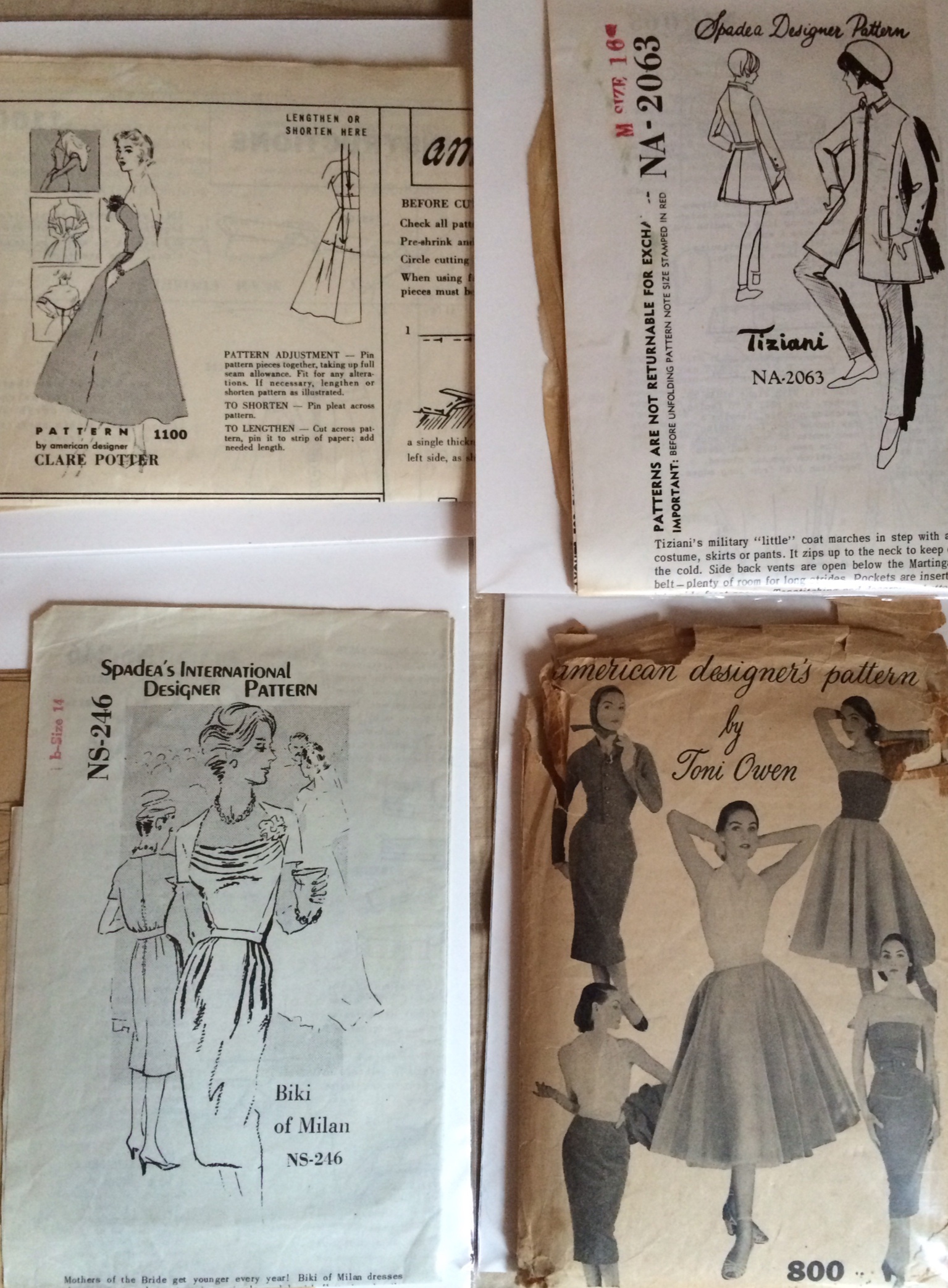
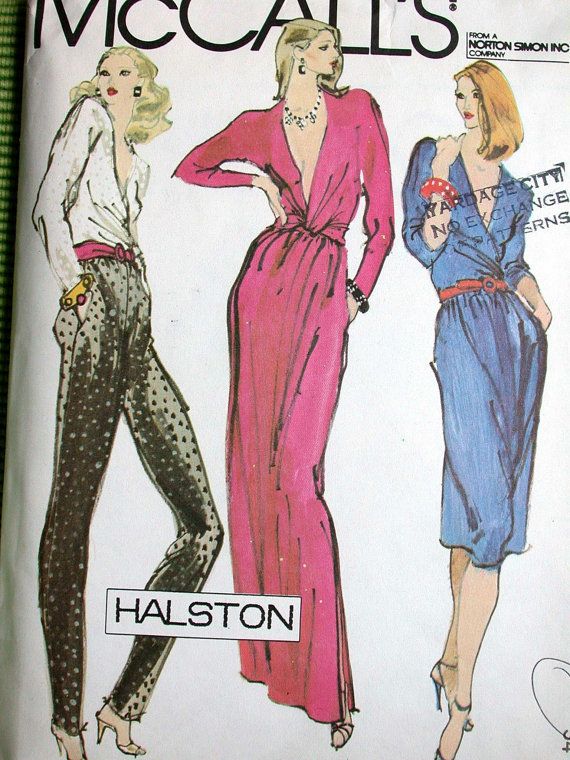
Not to mention several boxes of patterns by Pauline Trigere, YSL, Diane Von Furstenberg, Halston, Kenzo, Tiziani (by Lagerfeld) and a number of more obscure designers from the 50s and 60s such as Claire Potter, Jane Derby, Norman Hartnell (the Queen’s couturier), Tina Leser (the original Boho designer), Joset Walker, Jo Copeland, Vera Maxwell, Biki (friend and designer for Maria Callas), and Toni Owen:

image

Also patterns by Hollywood costumers such as Edith Head, Charles LeMaire, and William Travilla, who designed the iconic pleated dress Marilyn Monroe wore over the grate in “Seven Year Itch.”

image

I’ll be the first to admit that I have a pattern problem, and my husband will be the second to admit it.

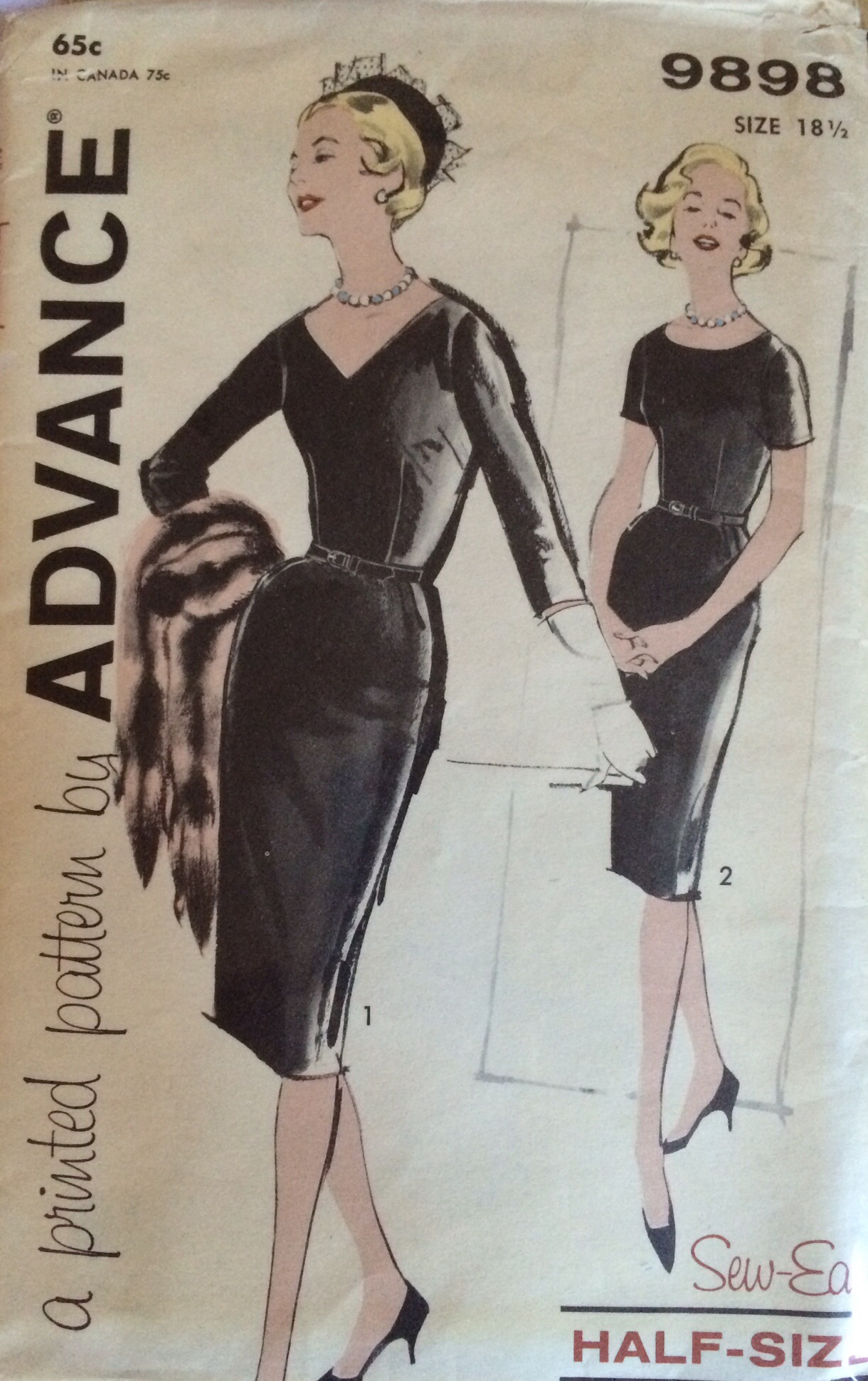
Most of these patterns are way too small for me, and cut for the different body shapes that were popular at the time. For example, many of the 50s patterns assume that you’re wearing a girdle (which was basically Spanx crossed with a Michelin tire) and a bullet bra that raised the bust point by several inches. It was all about boobs and hips with a tiny short waist, like Elizabeth Taylor in the era.

Elizabeth Tayler

In contrast, the 70s DVF and Halston patterns basically assume that you might possibly be wearing slinky bikini underwear but probably not a bra (because you burned it at a feminist rally before you went to the disco), and the look was super-skinny with a small chest and hips, long torso and really long legs. Nobody worked out (it was pre-Jane Fonda aerobics) and a lot of women smoked and did coke, so the ideal was skin and bones. Here’s Lauren Hutton in that era:

Lauren Hutton

In the picture, she’s wearing a dress by Halston that’s very similar to this late 70s pattern:

Halston pattern #2

Of course a woman’s body can’t morph into new shapes to fit the fashions of the times, so we mainly just beat ourselves up over it.

I’ve gotten tired of starting from scratch in terms of fitting every time I take on a vintage pattern, particularly because my middle-aged body has fit issues of it’s own. So I’m going to see if making a “fitting shell” will help.

If you’re obsessively combing the internet for sewing fun facts (as I do to procrastinate about pinning and cutting fabric), you will see the terms “block,” “sloper” and even the haute couture “moulage” (Kenneth King’s Moulage book) bandied about to describe a basic pattern that is used by a designer to create new patterns.

I didn’t want to get my terminology wrong, so I consulted Kathleen Fasanella’s excellent blog about professional design and manufacturing, Fashion Incubator. There, I found out that patterns without seam allowances, called  “slopers” or “blocks” in the sewing enthusiast world, are generally not used in the industry, and if you use those terms in a pro environment, you’ll be snickered at. She refers to the thing I want to make as a “fitting shell,” so that’s what I’m going to call it.

Basic fitting shell patterns have been available from pattern companies as far back as the 40s or 50s from what I’ve found online, and you can still buy them today. The idea behind these patterns is that if you make up the Vogue Patterns Fitting Shell and get it fitted closely to your body, then you can compare the fitting shell pattern pieces to any other Vogue pattern and easily adjust the fit.

Vogue patterns fitting shell

I want to make myself a fitting shell so that I have a basic flat pattern pieces, fitted for me, to compare with the pattern pieces of the vintage patterns I own. That way, I can ballpark how much I need to increase the dimensions of the smaller pattern to fit my shoulders, bust, waist and hips.

Sounds great in theory, we’ll see how it goes in practice.

I looked at the modern fitting shells released by the Big 4 pattern companies, but nowadays modern patterns tend to have more ease built in, particularly in the armscye, and I want those high and tight vintage Chanel armholes.

So I decided to buy some fitting shell patterns from the 50s and 60s, to see if they would work better. Here’s one from the late 60s, judging from the hairdo and squared-off pumps:

image


And here’s one that looks like late 50s:

image

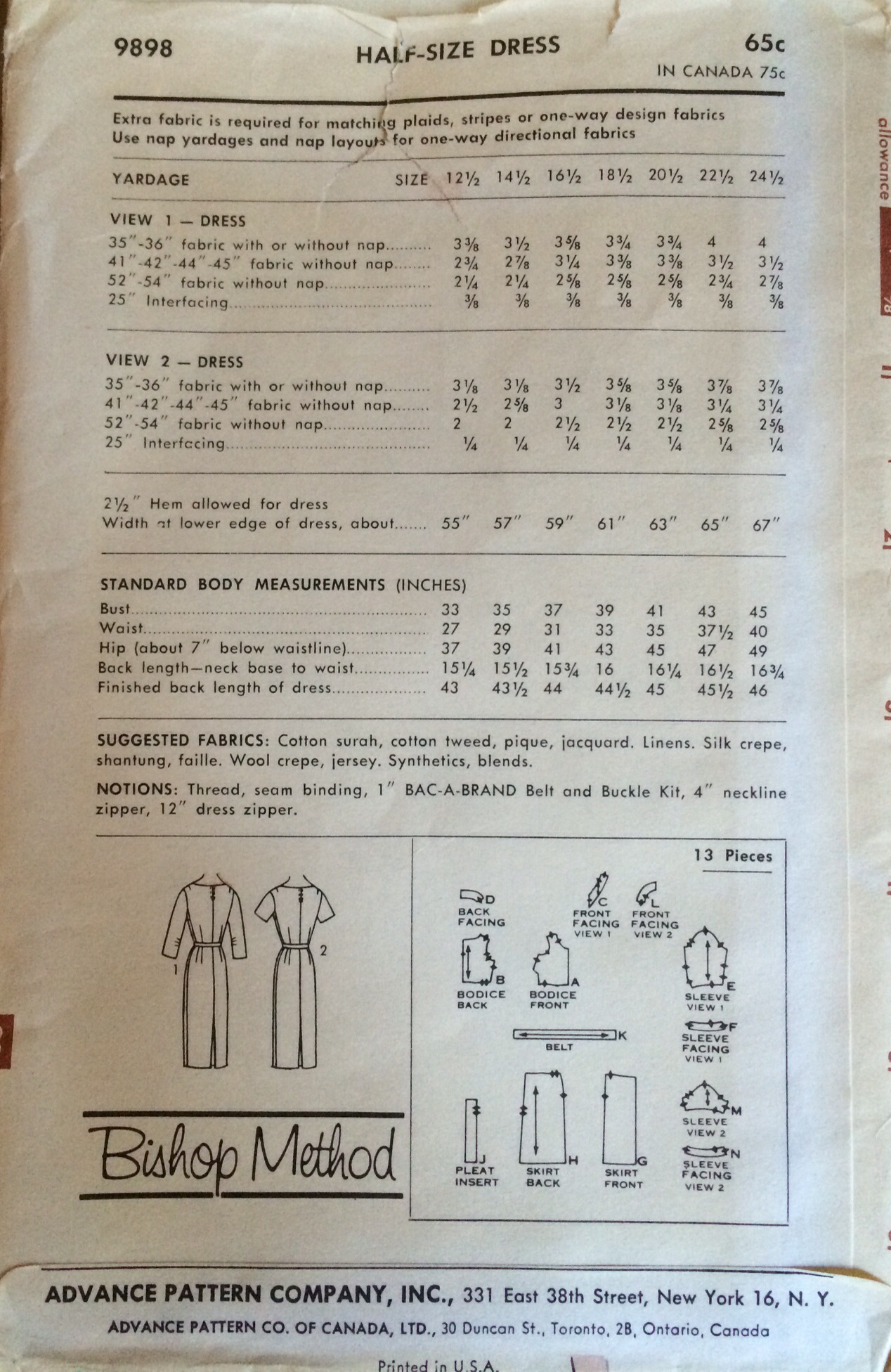
This one in particular is for half-sizes, which nowadays I think would be referred to as “Petite Plus.” The “half-size” range is described in Connie Crawford’s current Grading Workbook as cut for a “more mature, short-waisted woman with a shorter, heavier body-type.” I can’t say I was terribly happy with that description, but at least now I know I have a “half-size” body with “full-size” legs.

And I was very excited to find out what “The Bishop Method” (written on the back of the pattern) might be.

image

I eagerly looked throughout the instructions but was bummed to discover that there was no mention of The Bishop Method inside.

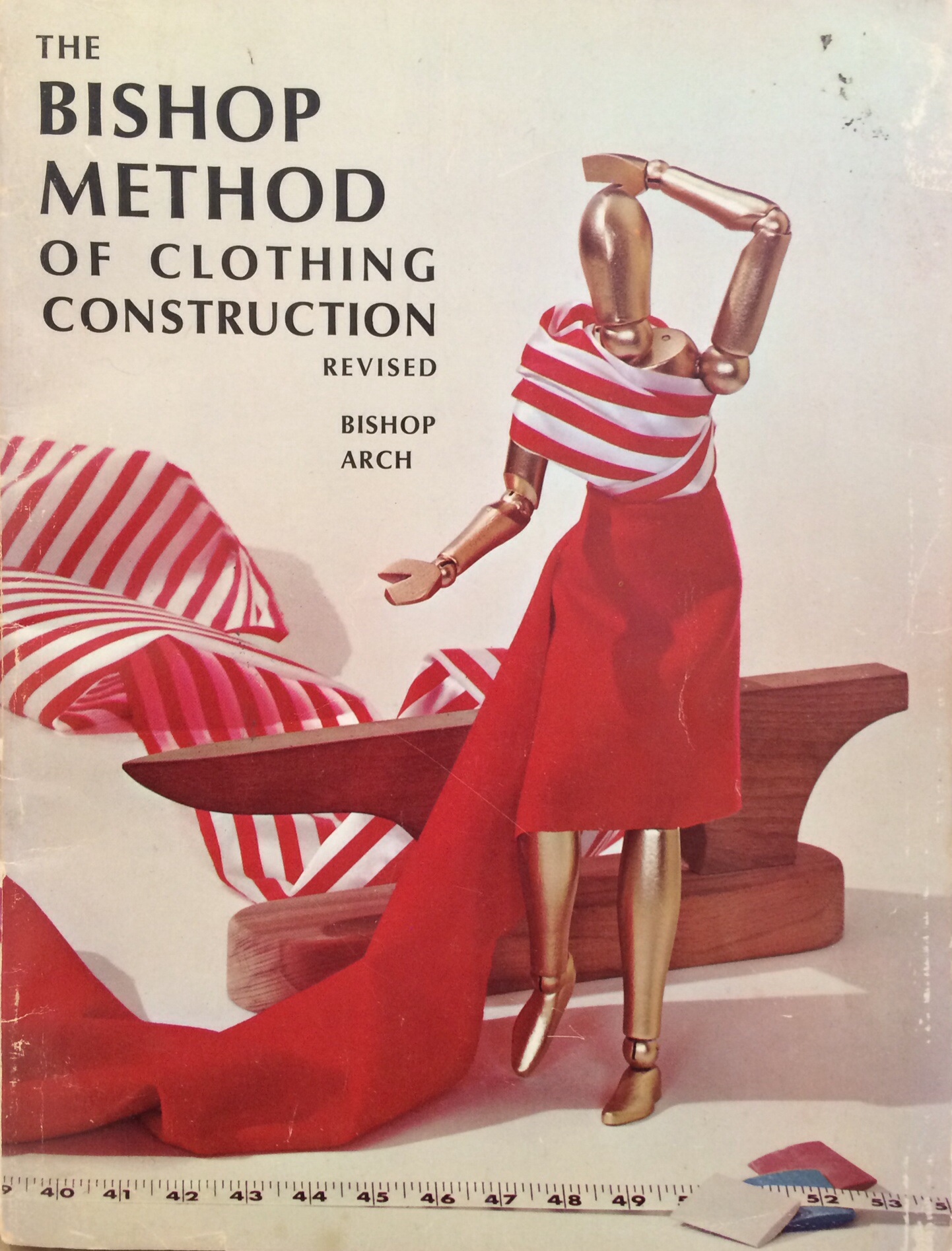
After a quick google, I found “Bishop Method” books all over the internet, and discovered that they were Home Ec manuals from the 50s and 60s. People were raving about them on Amazon! So of course I ordered one, because I need more sewing stuff.

image

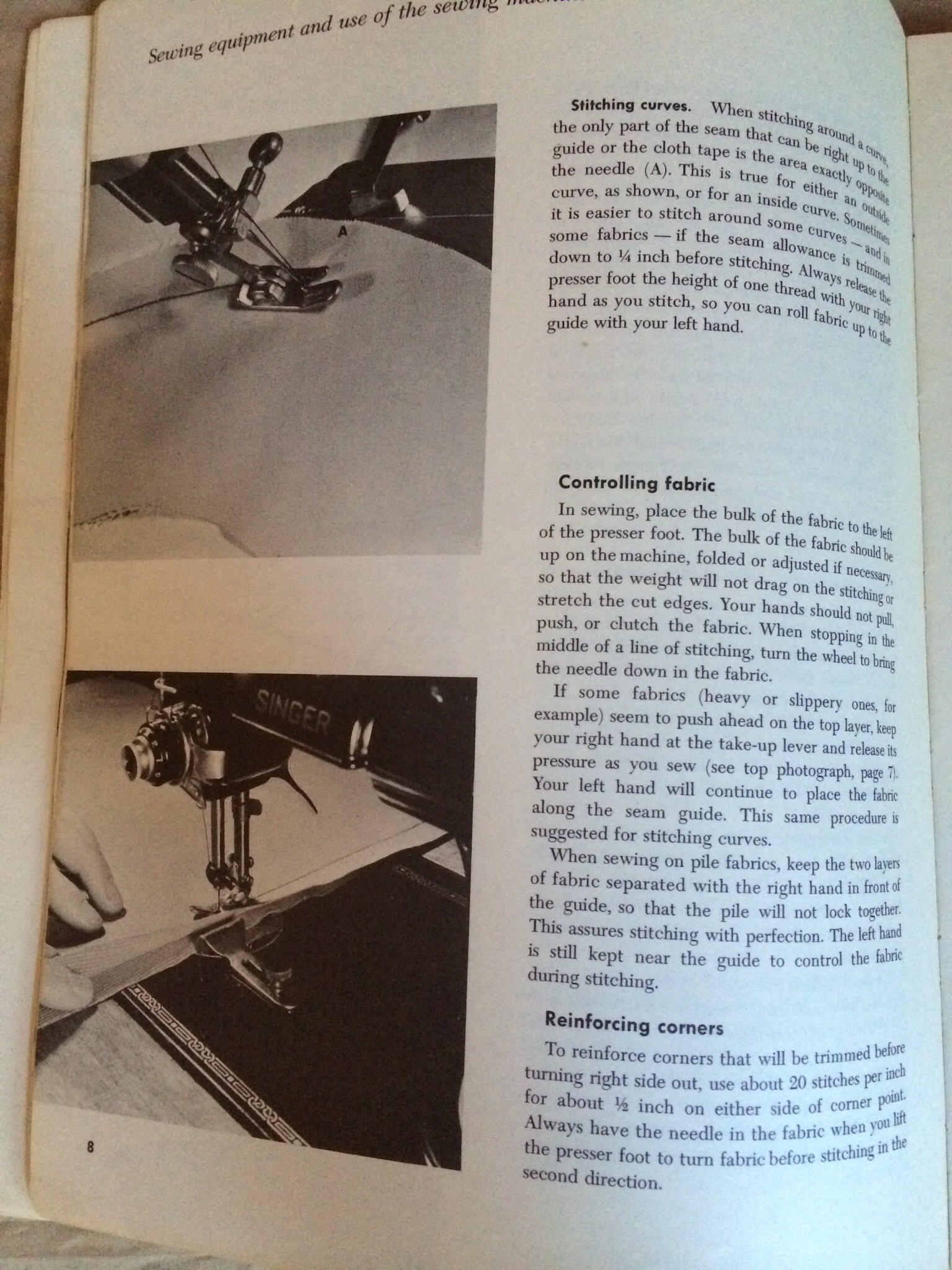
Holy smoke, The Bishop Method is the best flippin’ bible of vintage sewing techniques for the novice that I’ve ever seen! It takes you from square one (learning about the machine and making an apron)…

image

(that looks like the straight-stitch Singer 15 sewing machine I learned on.)

image

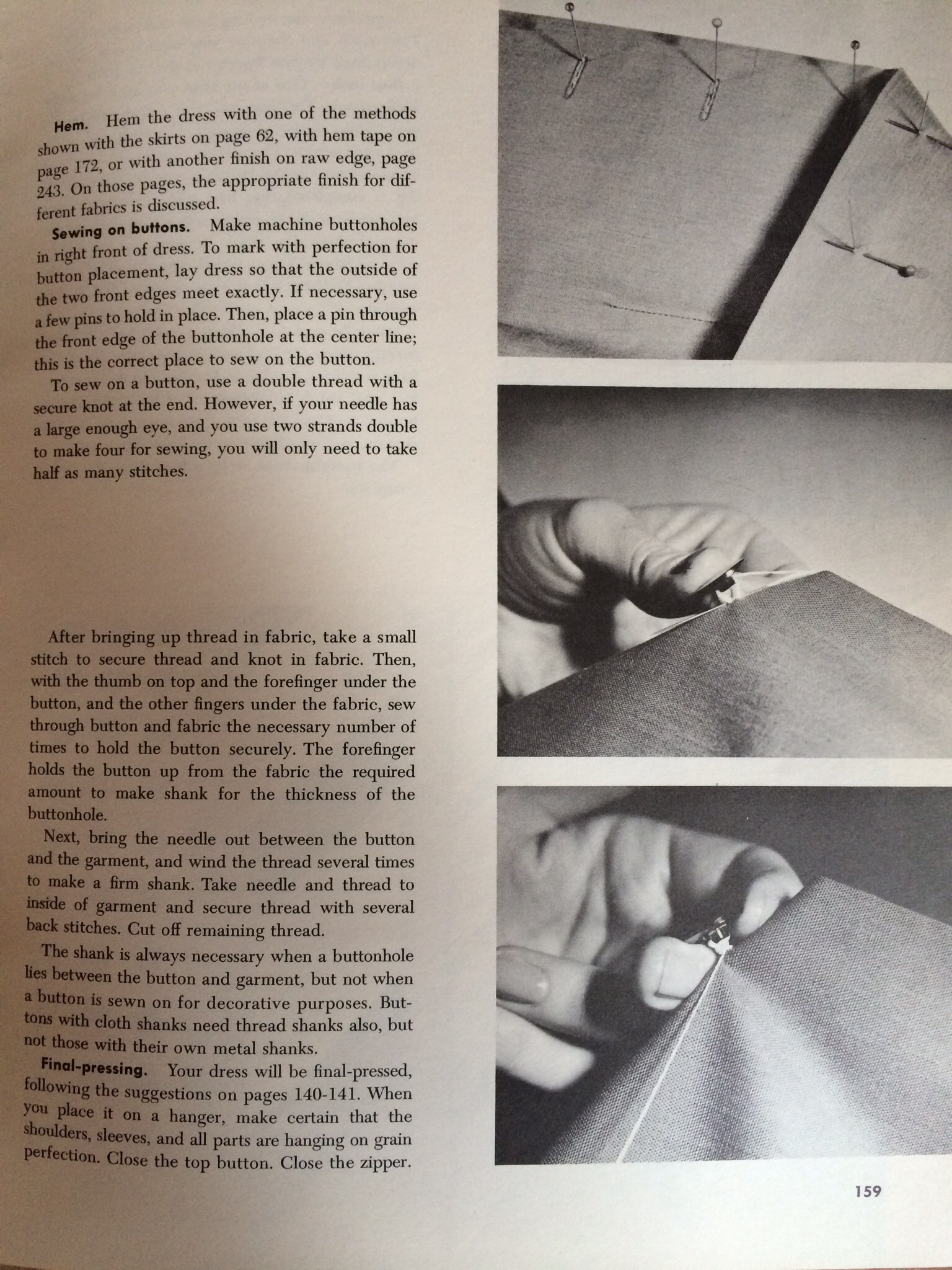
and goes all the way through making a tailored and lined suit with bound buttonholes and a hand-picked, lapped zipper.

imageimage

It’s filled with clear, comprehensive instructions and a whole bunch of pictures. If vintage-style sewing with wovens is your thing, it’s worth getting a copy for your library.

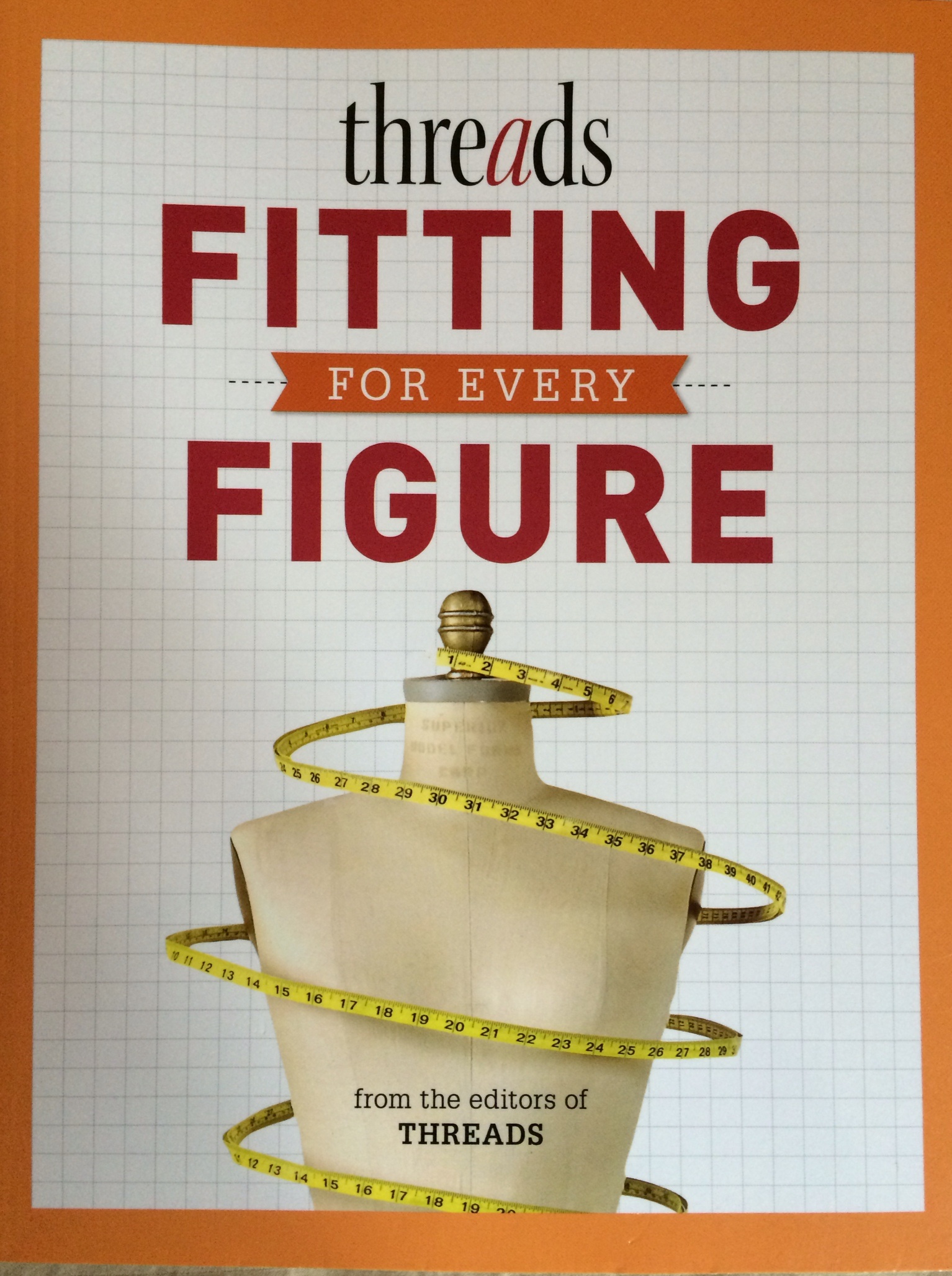
There’s a lot of fitting info in The Bishop Method, and also in modern books like this:

image

(Threads “Fitting for Every Figure” book), which is extremely comprehensive and pretty text-heavy and labor-intensive, if that’s what you’re into, which I’m not.

With all of the schmancy sewing books in circulation right now, I’m kind of embarrassed to admit that my favorite book on basic fitting is this one by Nancy Zieman (of “Sewing with Nancy” fame), as it gets right to the point and illustrates the “pivot and slide” method of pattern fitting, which, though based on solid pattern-grading principles, is easy and fast and doesn’t require you to cut up your pattern.

image

She starts out by explaining the importance of finding a pattern that fits in the shoulders, and gives you the formula you need to figure out the proper size pattern to buy. (This helps if you use vintage patterns because even though the sizing varies, you can choose a pattern by bust measurement.) Then she shows you how to modify that pattern to fit the rest of your body by moving it around and tracing parts of it based on your measurements. There’s also specific fitting info, with illustrations, for dealing with issues such as broad shoulders, sway back, and bust adjustment.

So this is the method I’ve been using to fit paper pattern to muslins, and then I eyeball it from there. Since most commercial patterns are cut for someone with a “B” cup (I’m a “C”) and my waist and hips are a larger size than my shoulders, this method has worked well for me.

I recently read a review of Nancy’s life story, Seams Unlikely, on Gertie’s New Blog For Better Sewing (Review from Gertie’s New Blog…). The book talks about how Nancy embraced sewing in 4-H, and started her business from home back the bad old days when a woman was expected to get her husband to co-sign a business loan for her–even if he wasn’t involved in the business. It’s an inspiring story.  Gretchen, thanks for giving us the heads up on that book.

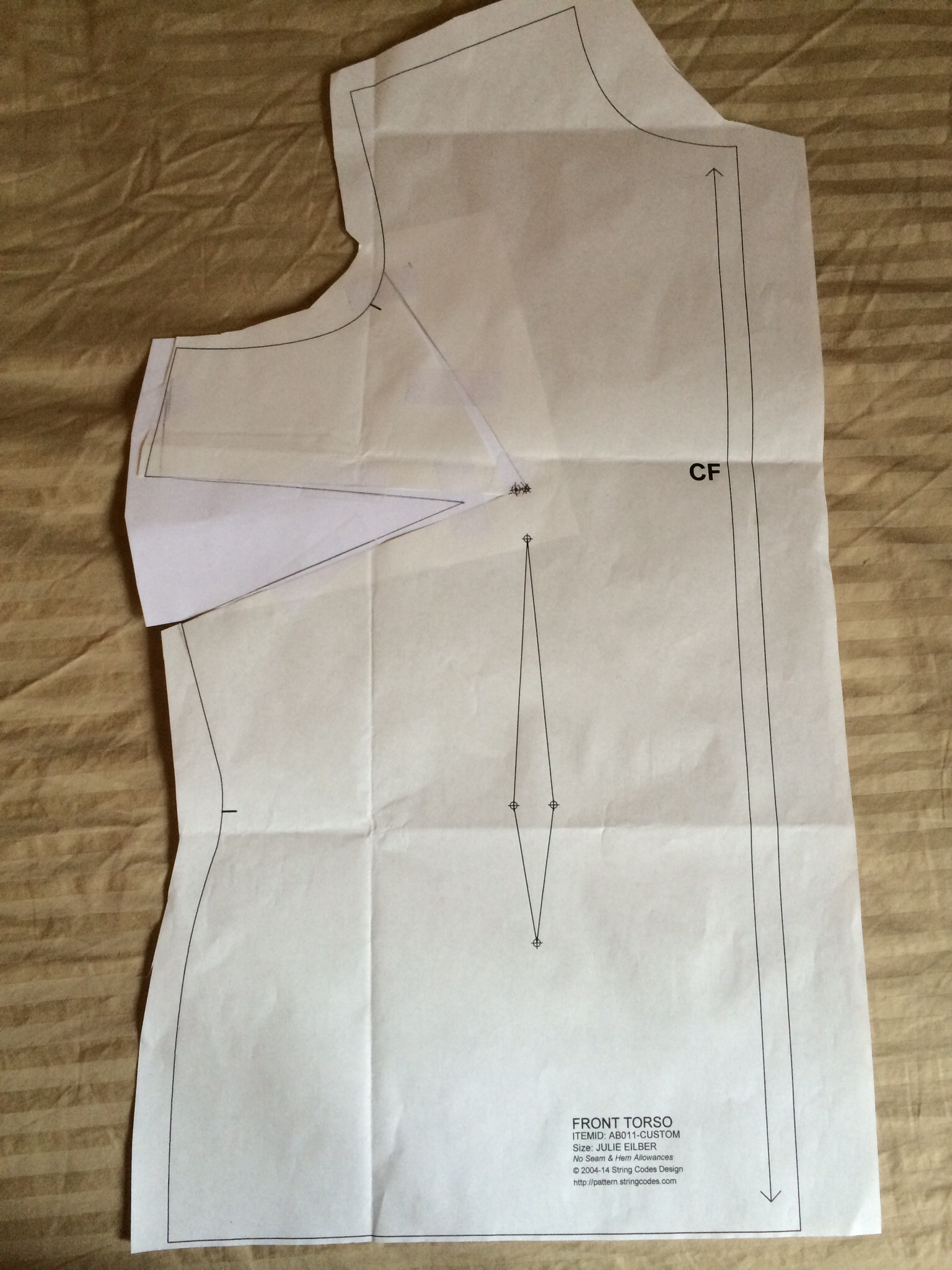
Back to my fitting shell quest. In the end, I got lazy and decided to spring for a pattern drafted directly from my measurements, by String Codes.  They take the five basic measurements you input and a create custom a fitting shell pattern for you.

Seemed easy enough, but when I placed the order and asked them to modify the bust measurement for a “C” cup, I was told that the patterns are only available as a “B” cup and that I would have to do a full bust adjustment myself. They did email me instructions with photos for an FBA, and it was a bit of a hassle, but not a deal-breaker. I’m going to make a muslin of the final pattern, and we’ll see how it fits. The pattern comes without seam allowances, so the exterior line is the seamline. You can see where I put in the bust adjustment below, following the directions from String Codes:

image


I ordered the “torso” pattern with a sleeve with a dart, since I often make jackets and tops, and also ordered the skirt pattern. I can overlap them if I’m making a dress.

As soon as I have it made up, I’ll do a little “show and tell” to let you know how it worked out.

And I’ll try to remember Nancy Zieman’s advice to avoid over-fitting, because “it can be exasperating and can take the joy out of sewing.” Amen, sister!

How’s your sewing going?

Sewing in Paradise? Sign me up!

11

If you were to dream up a sewing business, would it be along the lines of sewing the summer away at the seashore in France, then cruising through the winter selling your wares on a Caribbean island? I’ve seen for myself that it can be done.

Let’s start this story at the spring break way-station that separates the hoi polli from the high cotton, Princess Juliana airport on the Caribbean island of St. Martin.

princess juliana airport st maarten

Here plane loads of Americans, Canadians and French coming off the big jets get sorted into the commuter puddle-jumpers going to the “All-Inclusive” islands (like Antigua), the “Do We Know You?” expensive islands (like Anguilla), and the “We Don’t Care If We Know You or Not, We’re French” island of St. Barthelemy, (or St. Barts to Americans and St. Barth to Euros).

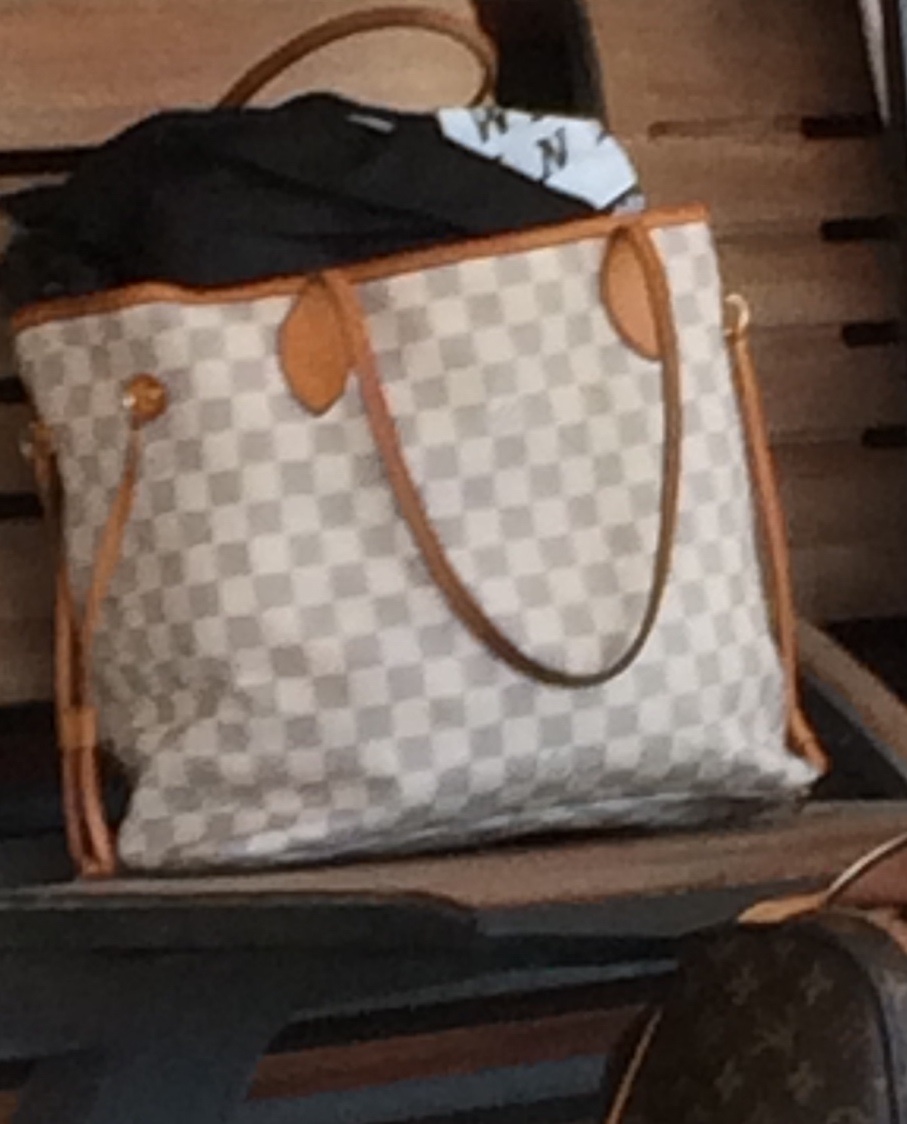
We were on our way to St. Barts, so we got culled from the waiting area filled with Americans sprawled around in day-glo tank tops and white cutoffs, to enter a stairwell holding upscale families leaving for spring vacation, where the reigning multitasking travel/beach bag is apparently the Louis Vuitton tote.

image

Scanning the Americans waiting, I noted style statements ranging from the willowy Upper East Side blonde in a wispy white Calypso St. Barth tunic, high-maintance long cashmere cardi and some boot/sandal contraptions; the “Seven Sisters” gal from the D.C. suburbs with “honest” salt and pepper unkempt hair, mid-calf black skirt, comfort Mary Janes and a Vuitton Speedy bag (you’re not fooling anyone, honey); the 70-something woman whose face was both pulled back and puffed out, with orange hair, white pants and lots of gold on the neck, wrist and ears; and finally me, trying to be the karma chameleon in my default camel jeans, Saint James tee, bag from the Cole Haan outlet near Legoland, and the canvas Toms shoes I knew I’d need to get the Suzuki into first gear on a 45 degree incline in hilly St. Barts.

image

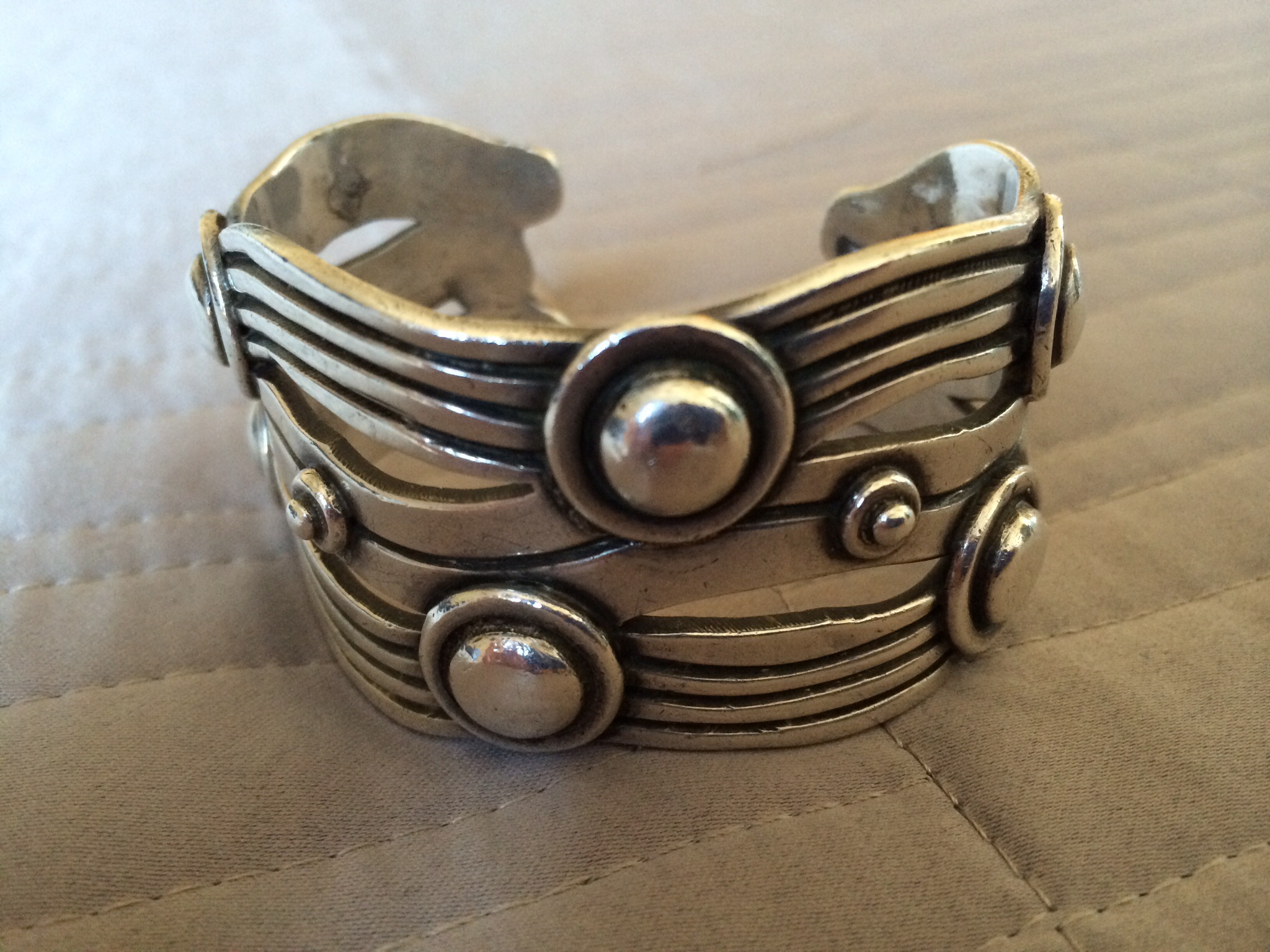
My one retro style statement was a favorite early 40s Mexican silver cuff, known as the “River of Life” design by William Spratling.

William Spratling "River of Life" cuffimage

Oh, how I love that thing.

As we were all sitting on the steps, bags and behinds on the gritty floor, one of the commuter airline workers came in to take a roll-call of people getting on the plane, because even if you have a seat on a specific flight, it’s still pretty much first-come, first-served.  He called out a few names and then said, “Jagger?” Pause. “Jagger, party of four?”

Well, the Jagger party never did arrive, but as we boarded the bus to the plane I caught a glimpse of the most chic woman in the place; a 70-something old-school French grand-mere, a little round in the middle and face unworked, in a classic navy linen shirt-waist dress, Hermes scarf folded expertly at the neck, Frey Wille enamel bracelet on her wrist, and ivory linen beach hat on her head. There was no room left on the bus for her and her party, so the bus driver called out that he’d come back to get them, and soon after the plane left with four empty seats.

I don’t take anything fancy when I go to St. Barts. Despite what you may have seen in the U.S. tabloids about celebrities boat-hopping and partying, that’s pretty much just during the week between Christmas and New Year’s, though here’s a picture of a famous corporate raider’s yacht that pulled up near the Grande Saline beach one morning while we were there:

image


It anchored there for an hour or so with only staff in white polos running around, and I pictured the kingpin owner sitting his cabin on a satellite phone yelling at minions in New York, while his yacht’s guests remained trapped off-shore waiting for him to decide if he wanted to do anything.

After the holidays, most of the celebrities just come here to hide (like the talk show host who looked away as he jogged by us), so the rest of the time it’s boho-casual and (God forbid) not gaudy. A few simple bathing suits, tunics, tops and casual pants or skirts, maybe a dress to go out, and you’re good.

Unlike most of the Caribbean, St. Barts is officially part of mainland France, so when you go in the Super U grocery (or Super Ooo as we refer to it) the place is all French products: great wine, stinky cheese, fermier chicken, chevre-flavored cheese balls, Badoit bubbly water etc. When I went in there looking for the European sewing magazine Burda, I found the crafting journaux intermingled with the nudie magazines.

image

The currency is the Euro and the locals are mostly French nationals. As soon as I get there, I put that French look on my face: pursed lips and raised eyebrows.

The beaches are open and unspoiled, the restaurants and take-out are great, and there’s not much to do, so for the most part we sit on the beach and then eat a lot.

But you can’t sit around looking at this view forever:

image

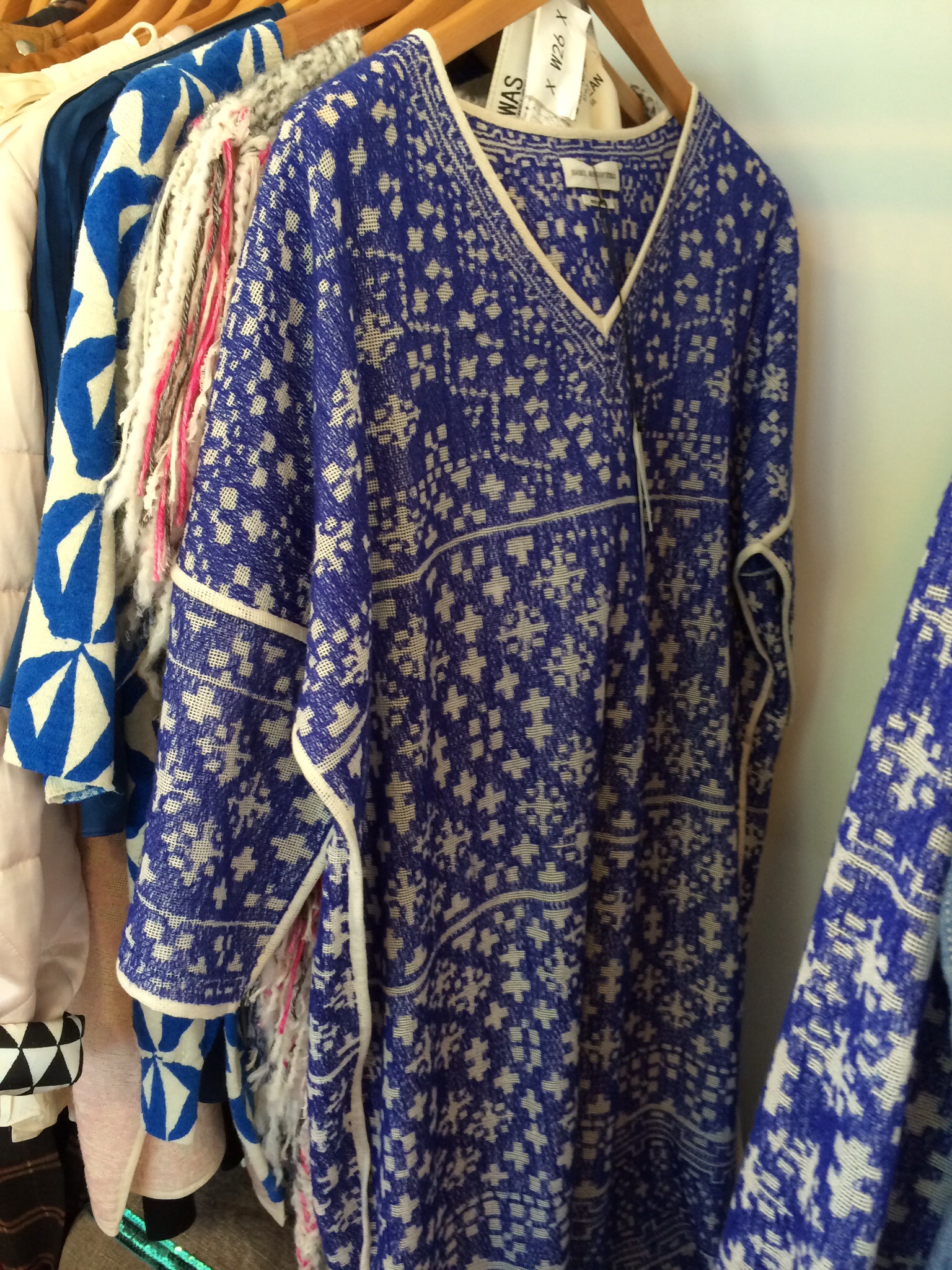
So I decided to do some shopping. Most things in the shops tend to be French beach boho, with a lot of tunics cut for someone “tall and tan and young and lovely,” and apart from occasionally pulling off “lovely,” that doesn’t describe me anymore. Here are a few by French designer Isabel Marant:

imageimage

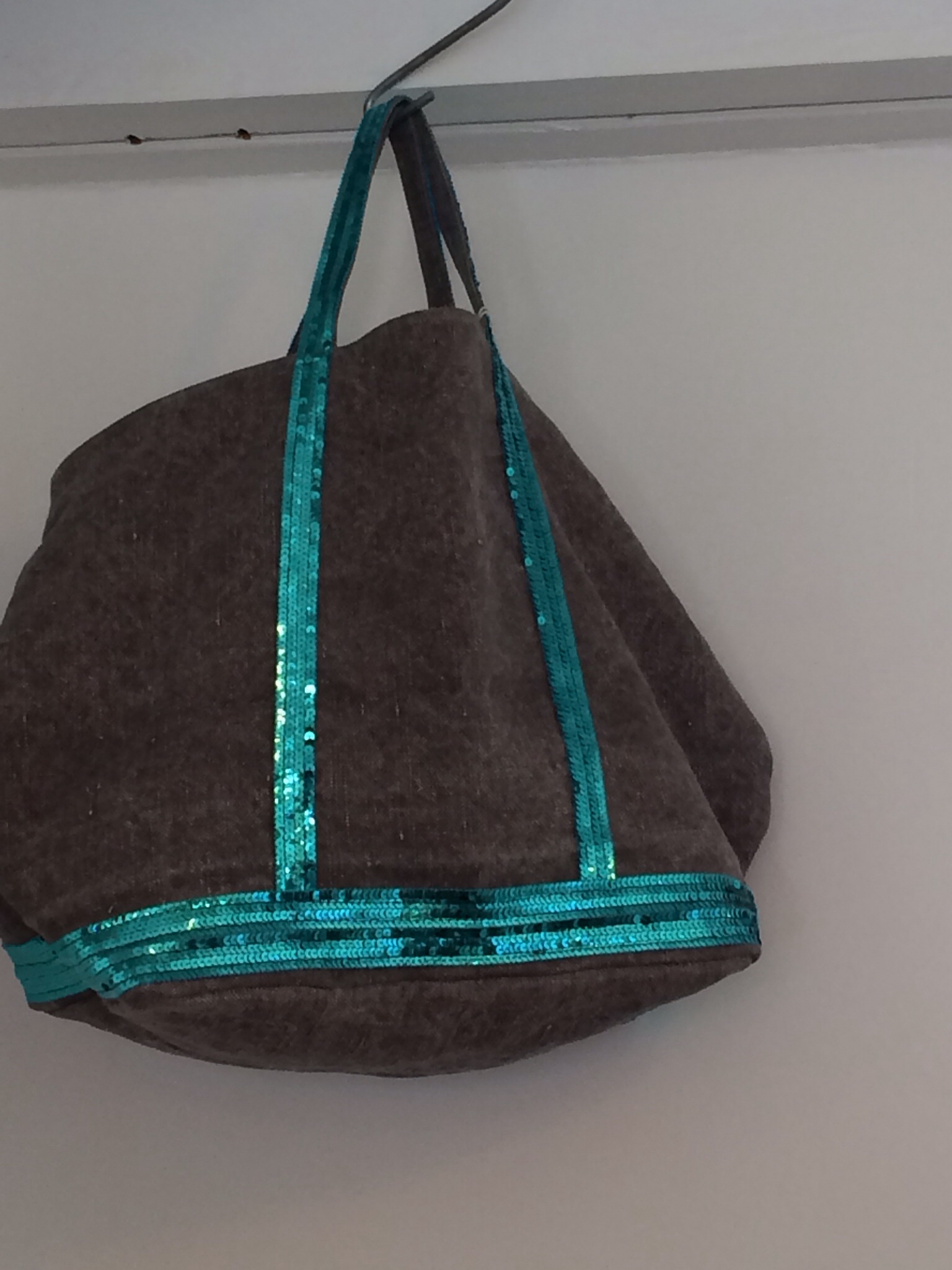
Unfortunately, my return to sewing has ruined shopping for me, because now I walk around thinking, “I’m not paying $250 for something that easy to make.” And I knew my husband would not be happy if I spent $300 on a Vanessa Bruno “Cabas” bag, which is basically an L.L. Bean canvas “Boat and Tote Bag” with sequins.

image

Wandering around the port town of Gustavia, which is duty-free and therefore has an Hermes, Cartier and a number of other high-end stores (though how much you “save” in taxes is relative, considering that luxury accessories can have a mark-up as high as 90%), I stumbled upon this charming shop:

image

And when you spot a shop full of clothes made from Liberty of London and French toile de Jouy fabrics, you need to check it out.

The warm, soft-spoken Popie was sitting outside, and as I looked around at the hundreds of items made of tana lawn cotton, silk prints and French linen, she politely explained that she made them all herself.

image

I have to admit that I did a double-take on that, because the place was jammed with flowy silk tops like this:

image

Liberty cotton tunics and dresses:

image

men’s and boys button-down shirts, and old-fashioned little girl’s dresses. There were bathing suits, big beach bags, hats, hair scrunchies, even thin bracelets made from the scraps. It was pretty impressive.

My photos don’t do justice to how cute these things were, but you can see more on her website: (Popie’s Mode website)

She told me that she lived on the beach in Bordeaux, France, where her house was also her workshop and shop. She has four children, and they live in France from April through October, during which she makes this massive amount of stuff, and then they all decamp for St. Barts to ride out the winter and sell her wares in her shop.

She also sells her items in Cap Ferret on the Mediterranean, which led to more jealous qvelling on my part as that’s the setting of one of my favorite novels about Jazz-Age ex-pats, Fitzgerald’s “Tender Is The Night.” (“Tender Is The Night”) The main characters in that book were loosely based on Sarah and Gerald Murphy, wealthy Americans whose house on the Riviera became party central for the the lost generation in the 1920s. (Sarah and Gerald Murphy biography)

gerald-murphy-genevieve-carpenter-cole-porter-and-sara-murphy-in-venice-1923

If the internet is to be believed, this is a picture of Gerald Murphy, Genevieve Carpenter, Cole Porter, and Sarah Murphy, back in the day. I really want to make that striped outfit, second from the left.

Popie explained that in the spring and summer, she spends the first month developing and making patterns for that year, in all sizes, creating simple styles that are easy to sew. She orders most of her fabrics directly from Liberty of London, using either their silk (which is machine washable) or their tana lawn cotton. She also make items for the Toile de Jouy museum (out of the classic French fabric) which is in the town of Jouy en Josas near Versaille. (Toile de Jouy Museum website)

Toile de jouy bag

After she’s finished making the patterns, she spends the next month cutting out all of the pieces using a laser-cutter, which she said works fast, but if you make a mistake, the thing you’re cutting is trashed.

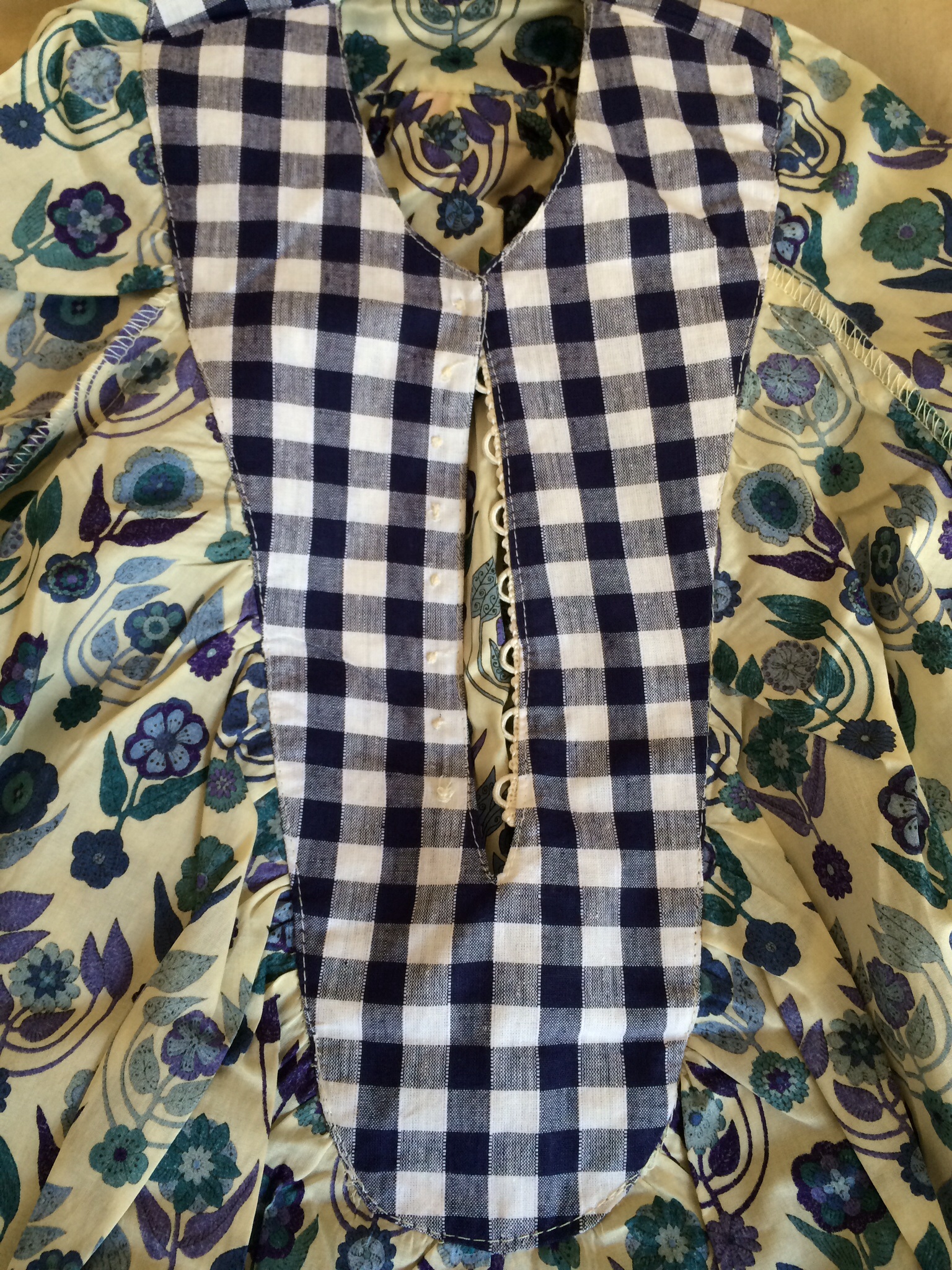
Then she gets going on putting them together using her industrial sewing machine, and during that period she can make up to 50 garments a day. Having looked at the garments inside and out, I’d say that apart from a few threads needing to be clipped, they’re very nicely made, with even top stitching and serged seam finishes. Here’s a look at the interior of a little girl’s dress, which has a contrasting lining on the placket:

image

Popie told me that though she doesn’t have formal design and patternmaking training, her mother was seamstress who taught her eight children to sew, knit and embroider, so she learned her craft there. This whole story reinforced my observation that French women, whom Americans tend to think of as sort of laconic, are actually extremely energetic and productive with domestic arts.

So of course I had to pick up a few things, including this adorable little girl’s dress with fabric-covered buttons (which Popie makes using a press that creates fabric-covered pins):

imageimage

and a man’s shirt for my own beach attire, made from this pretty William Morris Liberty Print:

imageimage

(A note to all of those style-challenged and shlumpy American men, European men will wear a fitted shirt with flowers on it, and not worry that someone will think they’re gay! And they look hot!)

No doubt it’s easier for a mother to start and maintain an entrepreneurial business like this when backed by a social system with easily available healthcare, child care and education. I hope as things go that direction in the U.S., there will be more women like Popie earning a living at their sewing machines on U.S. shores.

When we landed back in Boston, it was freezing cold with more snow in the forecast. I’ve decided that  the only way to bring on spring is to start sewing for it.  If Popie can sew 50 garments a day, I can certainly get a cotton dress done by May, don’t you think?

How’s the sewing going in your part of the world?

In The Mood: L.A. Fabric Stores

24

image

Oooo, let’s go to fabric heaven, shall we?

I know, it’s pretty tough to beat Janssens et Janssens in Paris, (Fabric Shopping in Paris and…Steampunk Chanel?) but the sticker shock of getting there and buying there can only be pulled off once in awhile. I’m still in awe of Mary from the Cloning Couture blog, who took her husband to browse at Chanel first, and then over to Janssens after she’d convinced him how much money she’d save making her own. (Mary, yours is made better anyway.)

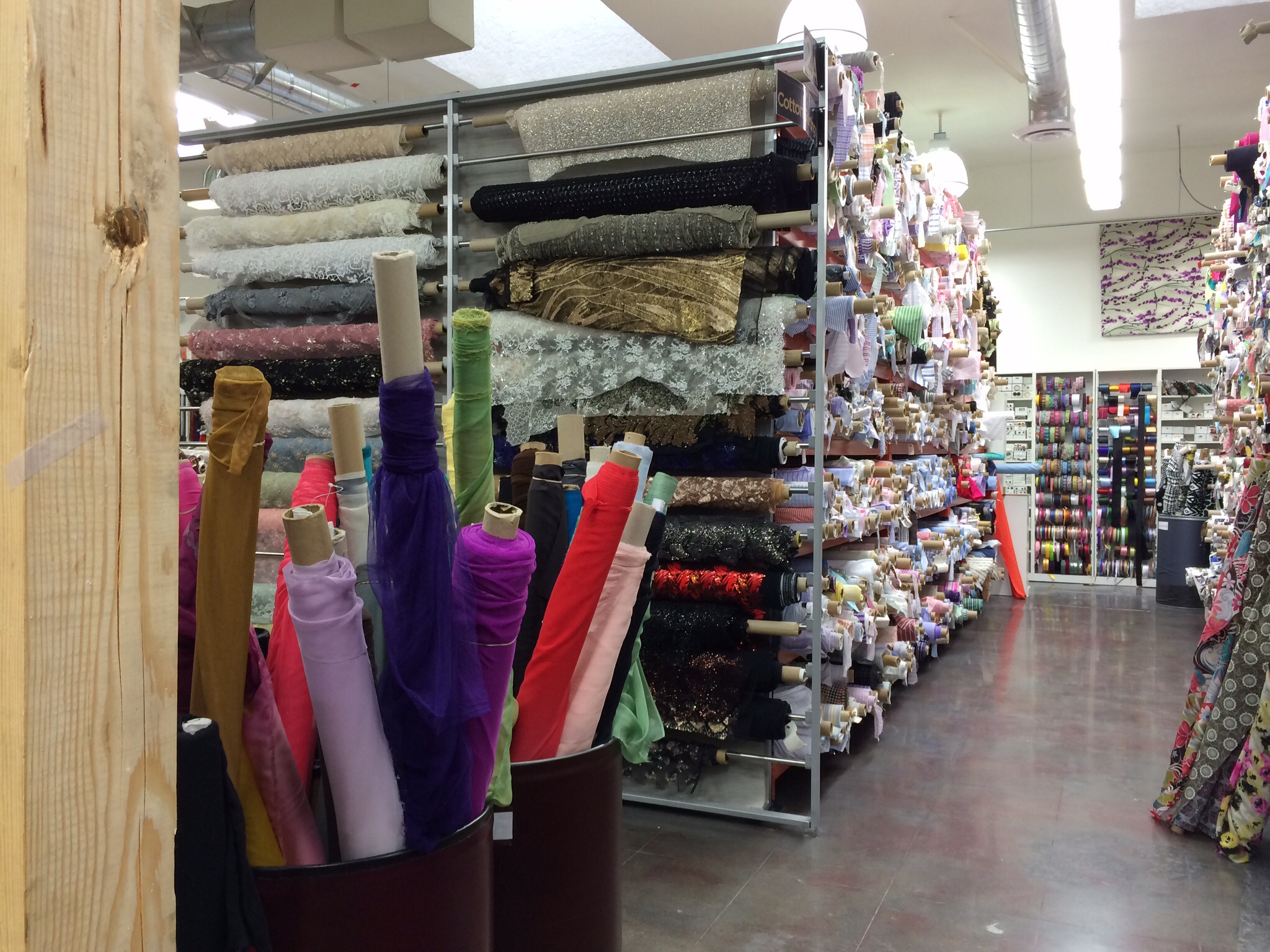
One morning in L.A., I announced to the boys that I was going to the fabric store, and not hearing any response, I grabbed my purse and ran. I drove south on LaBrea to Wilshire to hit the new giganto outpost of Mood Fabrics (645 S. LaBrea Ave.). (Mood Fabrics Website)  I had been to this location a year ago soon after they’d opened, so I knew it was huge, but now they had twice as much stuff.

imageimage

image

image

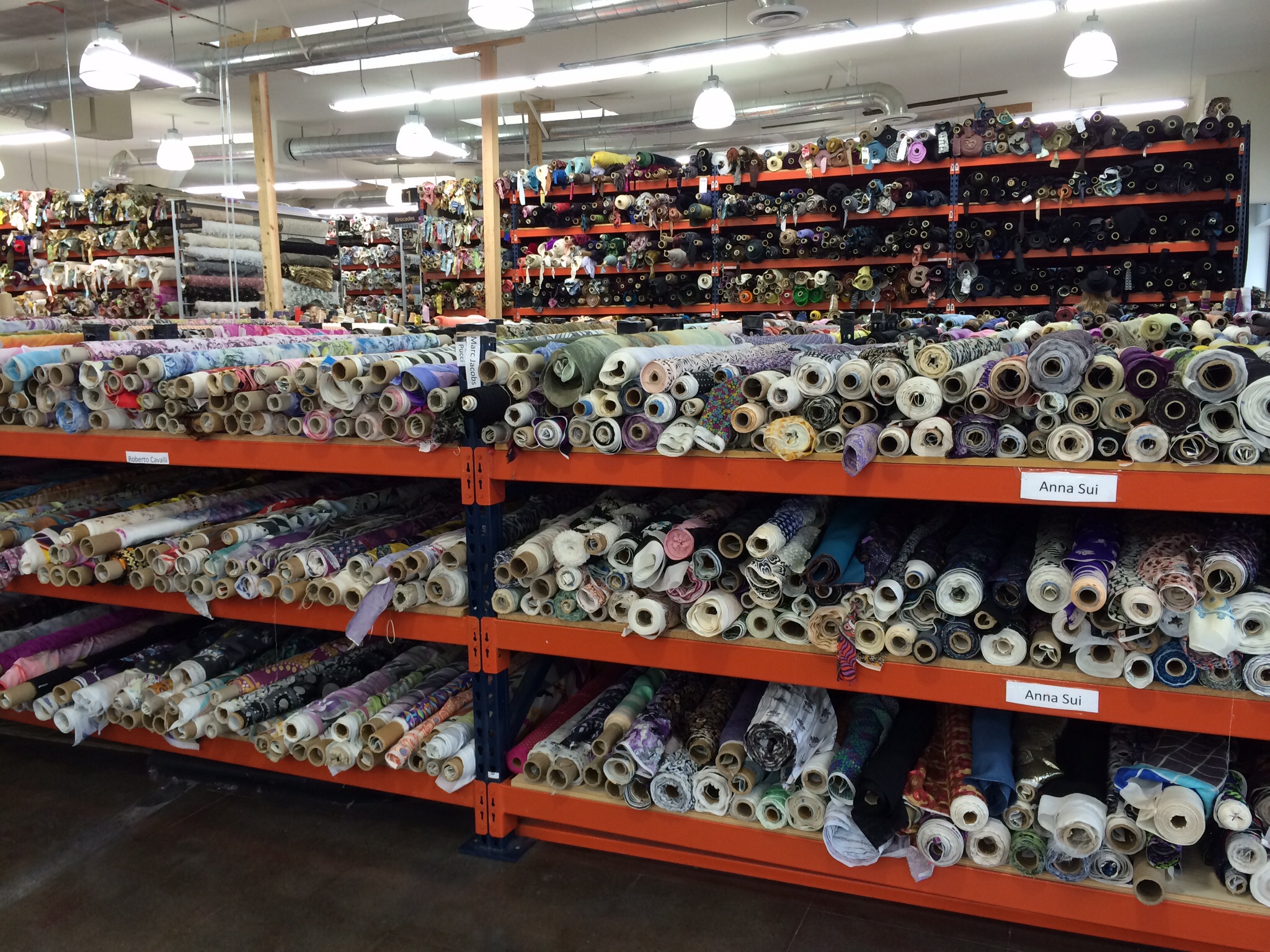
Gianormus.

Fashion fabrics on one side, leather and home dec on the other.

image

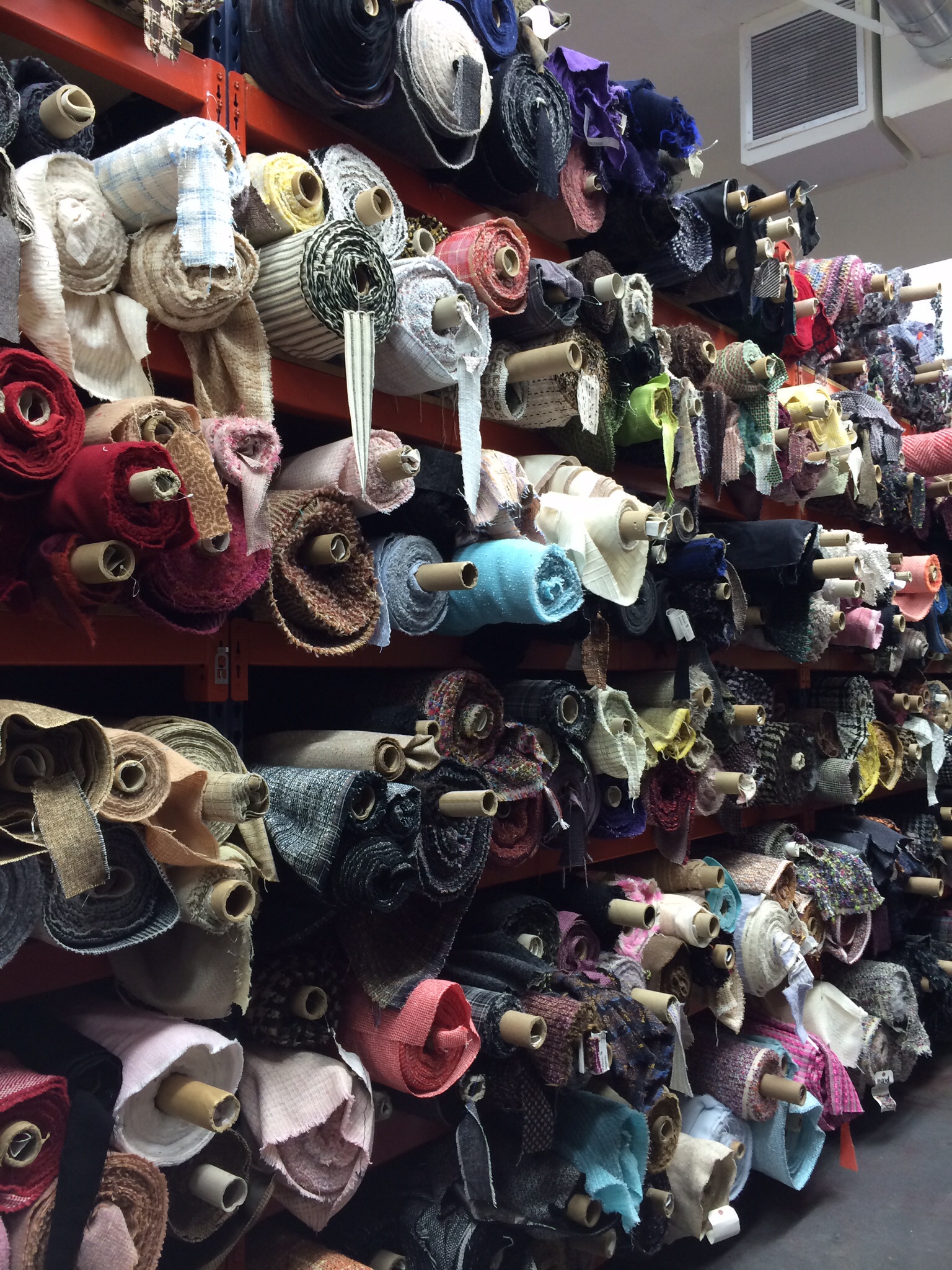
Pretty much anything you’re looking for, they’ve got it. Knits, suiting wools, tweeds…

image

Designer roll-ends, particularly printed silks…

image

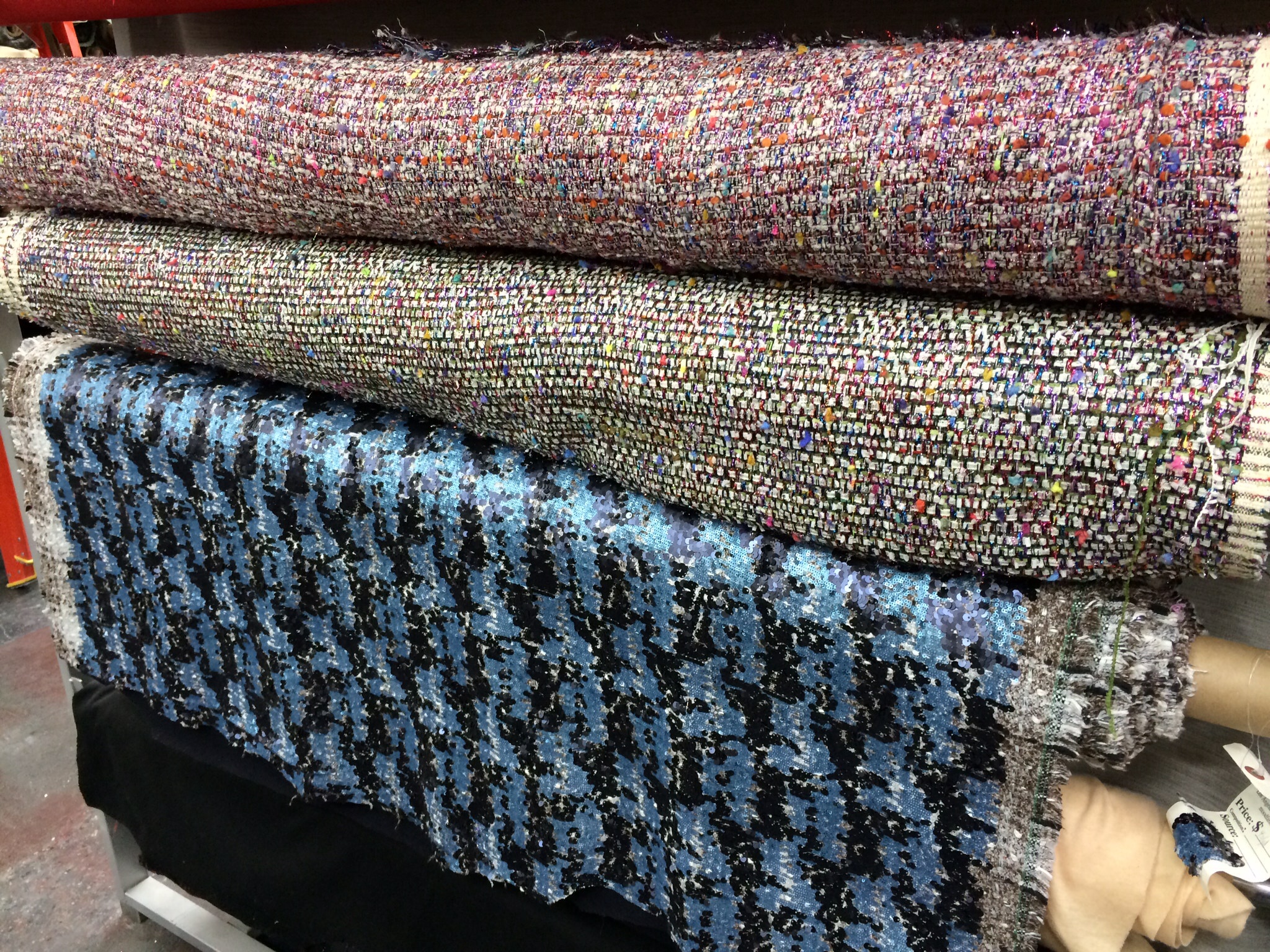
And gorgeous fancy stuff…

image

I had almost convinced myself to get some of that blue and black tweed with sequins (at the bottom), even though I know sequins are a bitch to sew with. But when I came back to get it, it was gone! (I was secretly relieved.)

Here’s what really made me jealous…

image

A bunch of women sitting around in muslins enjoying one of Mood’s FREE sewing classes. (Sewing classes at Mood Fabrics L.A.) Behind that wall of fabric rolls is another class of cute grade-school age kids learning to sew. The L.A. Mood location offers a mind-boggling array of sewing/draping/patternmaking/designing classes for free, often taught by professional designers and costumers. Every time I get one of their emails, I want to immediately decamp for L.A. and make up a little bed for myself among the linens and raw silks.

You know what they say, give someone a fast-fashion T-shirt, they have clothes for three washes…but teach someone to sew, and… (they soon have an overwhelming pile of fabric stash?)

As much great stuff as they had at Mood, the size of my stash was on my mind, so I decided to drive up LaBrea a few blocks to The Fabric Store, which is in a stretch of high-end hipster vintage and home dec stores around 2nd St (136 S. LaBrea Ave.).  I’d read that this New Zealand company had opened their first U.S. location, and wanted to check it out. (The Fabric Store’s U.S. website)

In complete contrast to the “packed to the rafters” feel of Mood, the Fabric Store is in an open-plan store front with wooden tables and shelves, and sedate zen-y music playing.

image

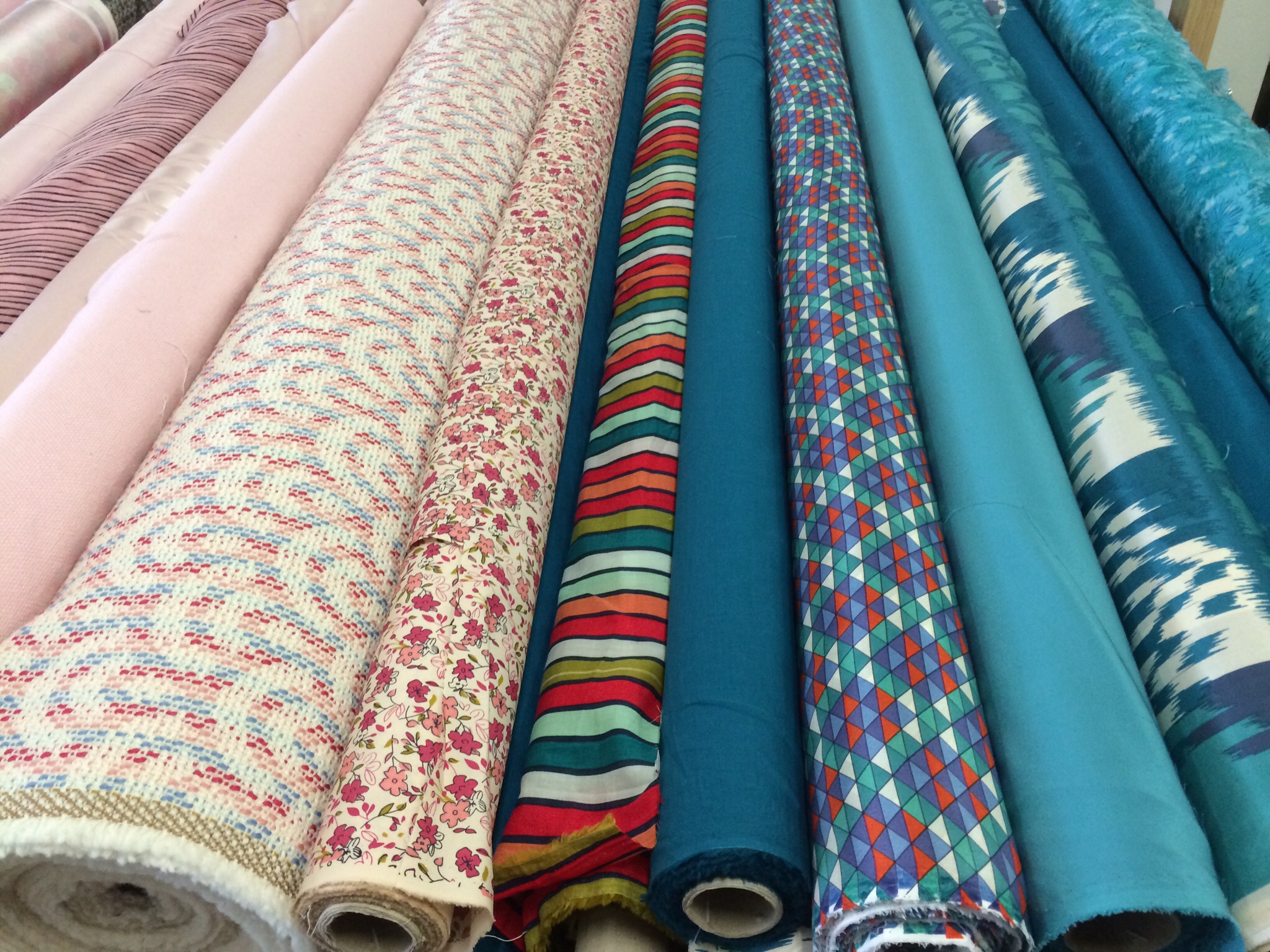
I chatted briefly with the young, hip, soft-spoken manager, who told me that the New Zealand owners source the fabrics from their home office and ship them to L.A. What I found was a beautifully curated selection of mostly natural fabrics, including gorgeous silks and cottons…

imageimage

and tempting linen tweeds…

image

But The Fabric Store’s claim to fame is their high-quality New Zealand merino wool jersey, which come in a range of weights, colors, and designs.

image

image

They were really something, and most were under $20 a yard for a hugely wide swath of jersey (up to 62″ width), all of it smooth, itch-free stuff.

I’m a Claire McCardell freak, and in the past year I’ve managed to track down, outbid, and over-pay for about 12 of her original sewing patterns. So I’m now starting to make them up. McCardell and Chanel were basically the original proponents of using wool jersey for sportswear, so I knew that quality merino jersey like this would work well for my McCardell “makes.”

image

I ended up buying some lightweight black New Zealand 100% merino jersey, a periwinkle/royal blue Italian wool/viscose jersey and some “tie” silk, all pictured above, and believe me, I could have gone home with more. I have since machine washed and air-dried swatches of both wool jerseys and they came out perfectly. I’ll definitely be stopping by The Fabric Store on my next trip to L.A.

The one L.A. store I didn’t get to this time, but highly recommend, is International Silks and Woolens at 8347 Beverly Boulevard, less than a mile from The Fabric Store and Mood. (International Silks and Woolens Website) When I visit, I go straight to the little room on the 3rd floor where they have authentic vintage fabrics that look like they go from the 30s to the 80s. They’re not cheap (usually around $40/yard), but you can find unique retro fabrics like the one I used to make this Madeleine Vionnet bias scarf. If you do buy any vintage fabrics, inspect them carefully as they may be faded at the fold, so you’ll need more yardage.

image

Here’s the post about how I made that scarf:  (How To Make The 30s Madeleine Vionnet Scarf)

There are a number of other great fabric/sewing/costuming stores in L.A., and if you have been to any of them, let us know what you think!

Now to make a dent in my stash so I can go fabric shopping again.