50s Scarf Free Downloadable Pattern, and my nemesis, Edith Head

26

I have some fun news to share! I know it looked like I was just sitting around at the beach for the latter half of the summer, but in truth, I was in my sewing Batcave (occasionally) cooking up a 50s scarf pattern, which is now available as a free download on WeAllSew.com. Here’s where you can find it: Hepburn Scarf Pattern

The pattern’s based on an authentic 50s design, and it holds it’s shape with some little tucks and a big buttonhole that you tuck one end through to make the knot. You can cut the pattern on either the lengthwise or crosswise grain, so it’s easy to make from a remnant.

Here’s the glamour shot:

image

And here’s how the scarf looks laid out:

Scarf Extended #1

It’s quick and easy, so I hope you’ll give it a try! If you’re a beginner, you can make it without the tucks, and it will still look fine. The pattern is part of my collaboration with Bernina USA, and once again I have to thank them for the generous support of my vintage reconstruction projects. I couldn’t do it without you, Karl! (For details, click the “Bernina Collaboration” tab above.)

If you end up trying the pattern, please send a photo my way so I can post it here at Jet Set Sewing. I’d love to see how it turns out.

As for current sewing, I’m still plugging away on this Edith Head bolero:

IMG_0540 (details of the muslin version I made of it are here.)

I was still a little unsure of the fit, so rather than cutting the pattern at the cutting line, or thread tracing (baste loosely to mark the seamline on the fabric, a technique used in haute couture), I went with a method known in France as “Le Rig de Jerry” (or jerry-rig in English, probably named after Jerry Lewis), which is to say I faked it.

I was inspired by this recent post by sewing penpal Carmen of the CarmencitaB blog, about how there’s no absolutely “right” way to sew any given thing. Carmen is currently competing in the French sewing bee show called “Cousu Main,” which I’ve been watching on the sly here in the States (via an internet jerry-rig). Go Carmen!

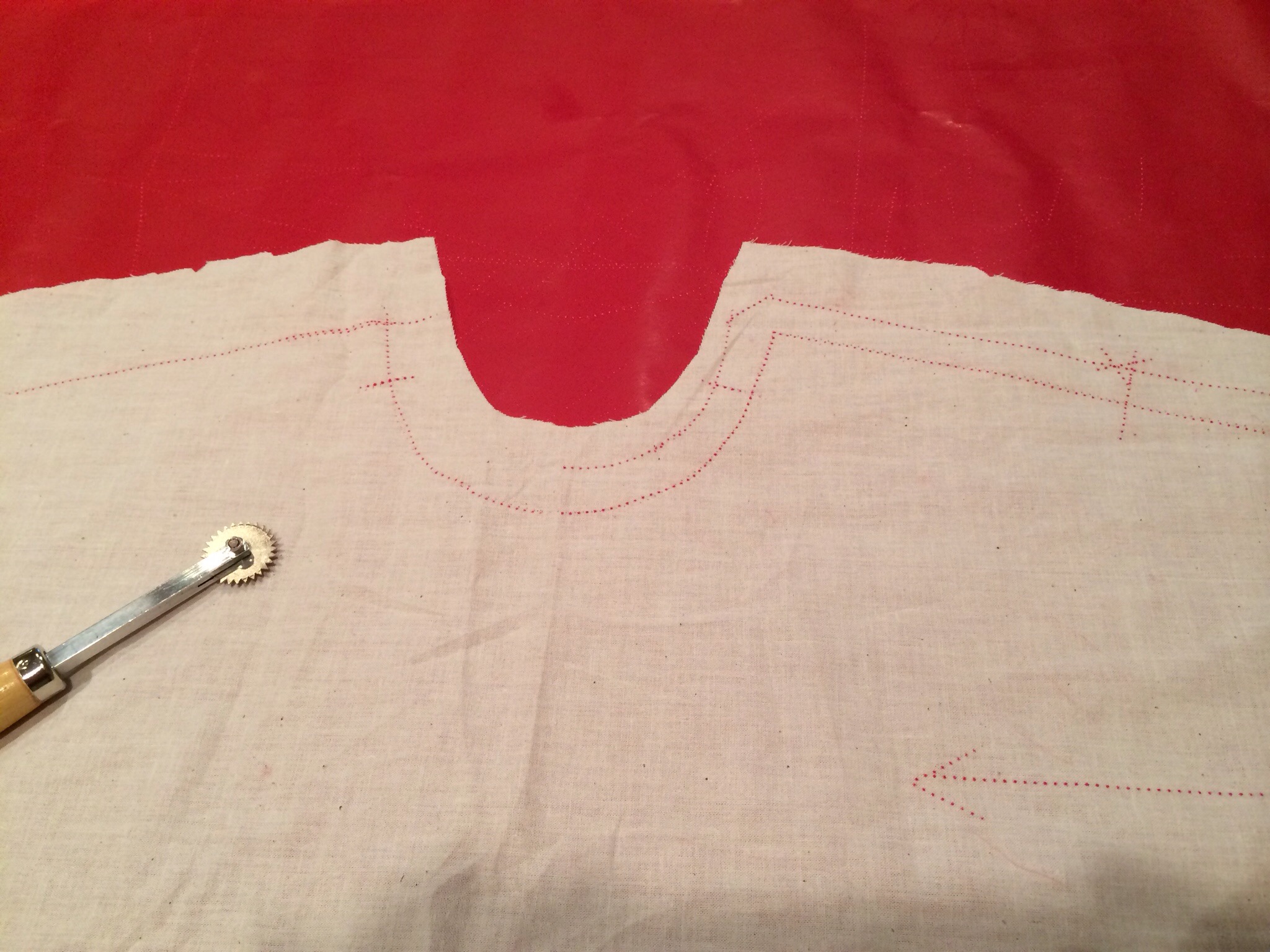
So I used large sheets of wax tracing paper and my tracing wheel to mark the seamlines and darts along the back of the fabric. You can find this big tracing paper at RichardTheThread.com and SusanKhalje.com. It helps to have several different colors for different fabrics.

IMG_3641.JPG

IMG_3642.JPG
Big caveat here (that’s legalese for “Warning, Will Robinson”), the wax tracing paper marks can become permanent on the fabric, so only try this if your fabric is thick, and only mark it on the wrong side. (The white tracing paper will come off easily with an iron, but it wouldn’t show up on this fabric.)
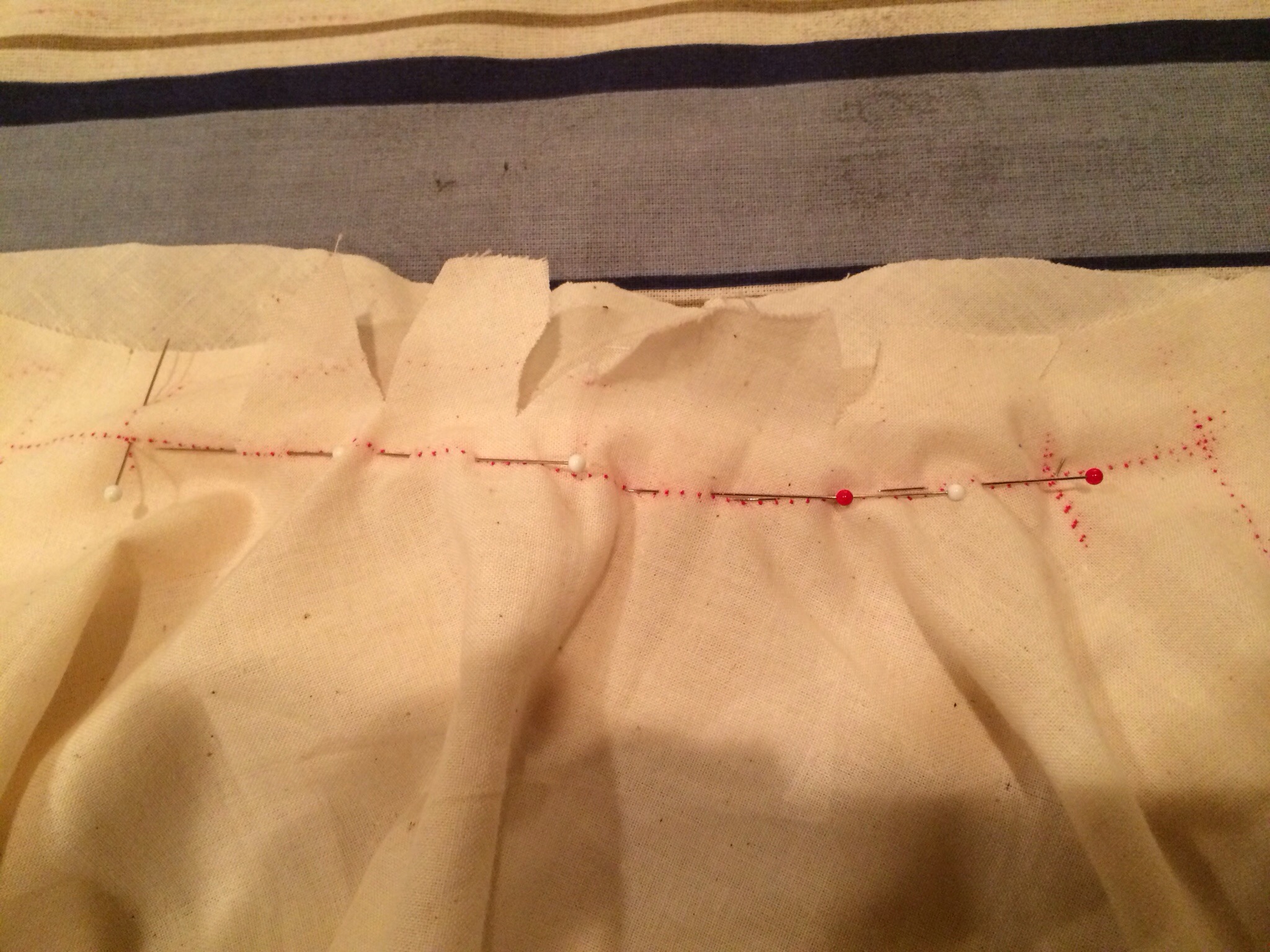
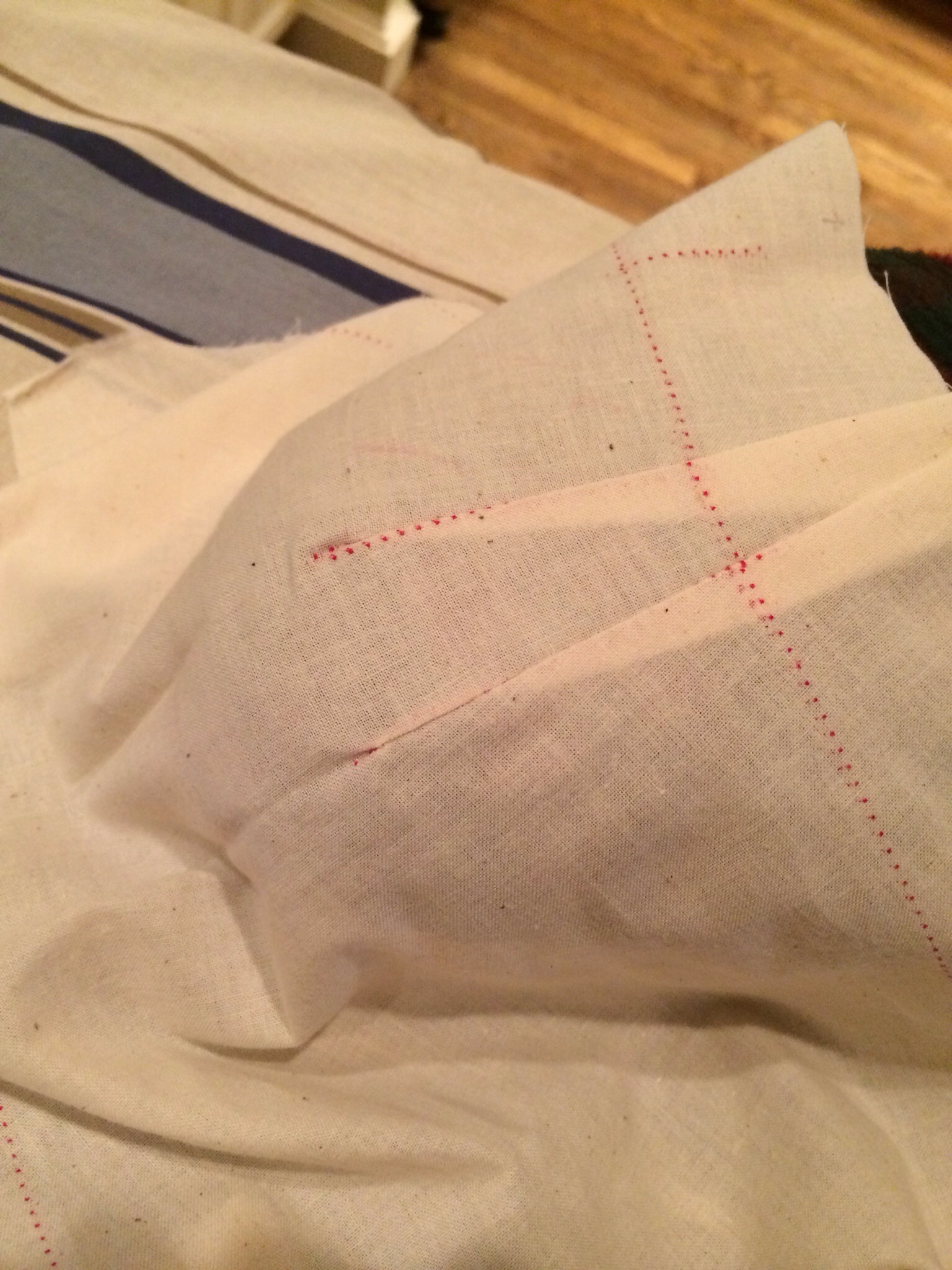
Once I was done marking the fabric, I machine-basted just outside of the tracing marks, so I would see the seamline on the right side of the fabric. This stitching will also function as stay-stitching (I hope).

IMG_3646.JPG
The reason I went through this whole rigamarole was so that I could cut the fabric with large seam allowances, leaving room beyond the seamline to make the bolero bigger if I needed to.
After that, the construction was pretty much smooth sailing with this study, easily sewn and formed silk.

IMG_3677.JPG

The easing in the shoulder went smoothly, the darts stitched up nicely, and I cheated and used fusible for the interfacing instead of organza (because I knew it would be fine, and the fusible was higher up on the stash pile than the organza). I’m using Pro-Weft Supreme Lightweight Fusible interfacing from Fashion Sewing Supply, which is a high-quality fusible with some loft. It works well for soft tailoring on Chanel-style jackets or something like this.

IMG_3665.JPG
La la la down the primrose path, and then…

IMG_3655.JPG
Looks easy, right? Except the collar edge is straight, and the neckline is curved, Edith Head!!! True, the straight edge is on the bias and stretches, but just to be safe, I hand-basted the two edges together before I stitched. Worked like a charm:

IMG_3657.JPG

<a

IMG_3658.JPG
So, there I was, back on the primrose path, la la la…until:

IMG_3667.JPG
So perfectly clear and not all that complicated, I kept telling myself during Shavasana at yoga, when I was supposed to be meditating but was grinding my teeth instead.
And here’s how it looked in real life:

IMG_3678.JPG
(When I posted that photo on InstaGram, the hashtag was #seeyouinhelledithhead.)
But this is why we’re doing these hard projects, right? To understand how they’re done? So after quite a bit of monkeying around, revisiting the instructions, and visualizing the construction, the design started to make sense and I was able to tame the beast:

IMG_3686.JPG
See, docile as a lamb. And such a beautiful design.
Tomorrow I’ll cut and construct the lining, which I’ll probably be hand-sewing in on the plane to Los Angeles at this rate. But I feel like the major problems have been solved. (Famous last words.)
Edith Head Bolero Getting Ready for Its Close-Up, Mr. DeMille

31

So I got going on that Edith Head bolero I’m making to wear to the Hollywood Costume exhibit in L.A.

IMG_0540.JPG
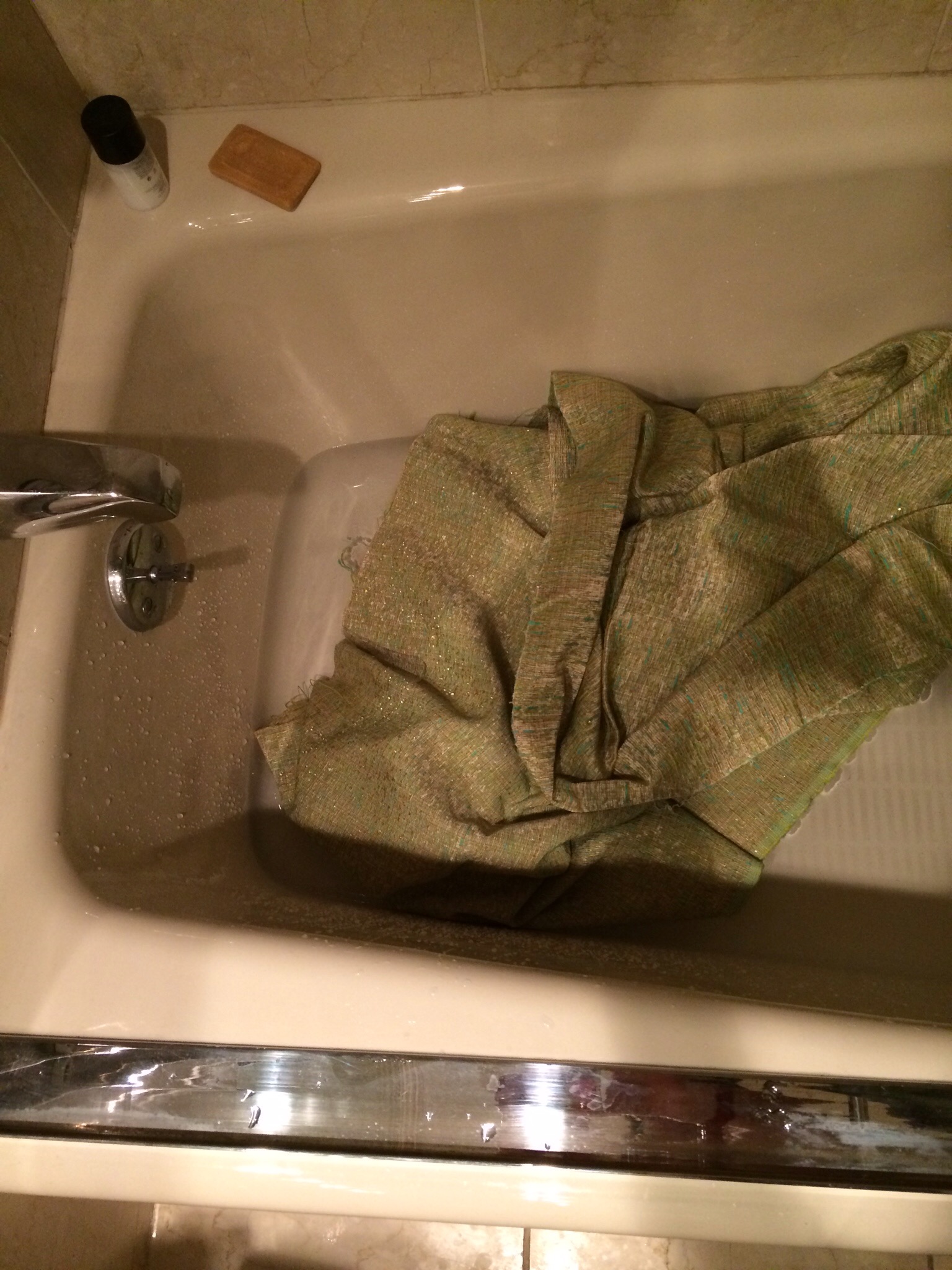
First I prepped the silk (which feels like a heavy silk duppioni) by throwing it in the bathtub.

IMG_3510.JPG
My experience is that it’s better to handwash silk first, so you don’t have shrinkage issues or nasty spots when your iron spits, but it’s a personal preference. I always test wash a 4″ x 4″ swatch first, with any fabric.
I went back and forth about what lining to use, because, though my first choice is usually silk crepe de chine, it could be 80 degrees F in L.A., and I didn’t want to have a hot flash in front of my husband’s clients. In the end I ordered a vintage rayon challis from Etsy.com, which I think will be comfortable and cool. The print has that late 50s/early 60s Doris Day vibe I’m going for (Karen of the blog Fifty Dresses brought that reference to my attention).

IMG_3587.JPG
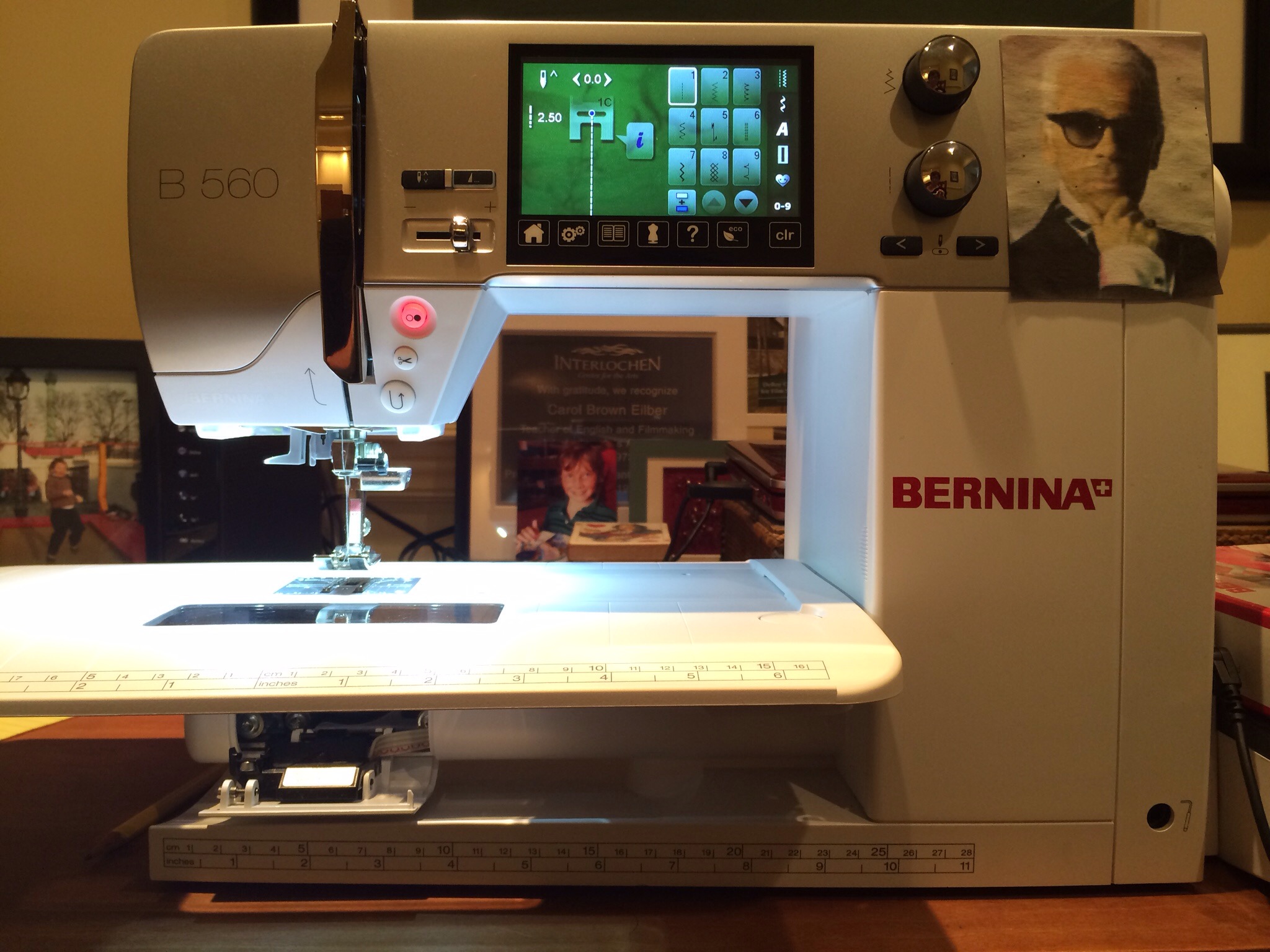
My adorable Bernina 560, AKA “My Swiss Intern, Karl,” has settled into his new Boston digs, in what I shall refer to as the sewing “nook,” as basically only me, Karl and a squirrel could fit in it.

IMG_3515.JPG That’s urban sewing for you! (For details about the Bernina USA/Jet Set Sewing arrangement, click the “Bernina Collaboration” tab above.)
(As an aside about this post’s title, it refers to Billy Wilder’s dark comedy “Sunset Boulevard” when, at the end, Norma Desmond is led off to the asylum having gone mad from basically not being able to work in Hollywood anymore. Her character is 50. 50!!!!)

IMG_0564.JPG
You know the old Hollywood saying, “Better to be nuts with style than to have never had style at all…” Or something like that.
Since this pattern is not that hard to find on eBay and Etsy.com, (I have three copies in different sizes, speaking of being nuts over 50) I decided not to trace it, and just go ahead and cut it. First I used a giant sheet of wax tracing paper and roller to mark the pattern onto my muslin.

IMG_3551.JPG
Little Miss In-A-Hurry did a lousy job of telling the cutting line from the seam line (it’s supposed to be the seam line) but I could still tell what was going on.

IMG_3552.JPG
Of course these vintage patterns are always full of surprises, and on this one, it was that the roll-collar neckerchief thingy had a straight line that needed to be connected to the curved front neckline. What the what?

IMG_3572.JPG
I have been wondering why the collar piece had been cut on the bias (I thought it was just an aesthetic element) but then realized that it gave it some give to go around the neckline. At least the two pieces weren’t curved in the opposite direction, like the Charles James pattern!

IMG_3576.JPG
Vrrrroooom!
Kimono sleeves with two darts; be still my heart. I love the attention to detail in these vintage patterns.

IMG_3571.JPG
Since the pattern was close to my size, and the sleeves were cut-in, I was happy to see that the muslin didn’t need much fitting.

IMG_3578.JPG
Being married to a vintage (literally) man with OCD (Obsessive Collecting Disorder) all I had to say was “Honey, you still got that box of vintage buttons?” and a few minutes later, I had three choices.

IMG_3577.JPG
Any opinions on which I should choose?
Right now I’d better get that fashion/lining fabric cut, I need to wear it in a week! How’s your sewing going?

Hollywood Costume Exhibit and what I’m making for it…

30

Here’s a piece of good news…later this month, my husband and I are invited to a soiree celebrating the opening of the “Hollywood Costume” exhibit, featuring a number of classic movie costumes that I am very eager to eyeball.

So of course my first thought was, what am I going to make? I’ll get to that.

The exhibit is presented by the Victoria and Albert Museum and the Academy of Motion Picture Arts and Sciences (the folks who bring you the Oscars), and it will be held at the historic art deco Wilshire May Company building in Los Angeles, soon be the location of the new Academy Museum of Motion Pictures. The exhibit runs from October 2nd, 2014, to March 2nd, 2015. (Here’s more info about the exhibit, from the Academy’s website.)

There will be more than 150 movie costumes to ogle, by revered designers such as William Travilla, Gilbert Adrian, and of course, Edith Head.

Yes, I’m excited.

In my overflowing stash of patterns, I have a few that were released by the better known costume designers, some of whom had their own ready-to-wear lines at the time.

This pattern, released by Spadea:

image

was designed by movie and television costumer Travilla, creator of Marilyn Monroe’s famous “Seven Year Itch” dress.

Seven Year Itch dress

Marilyn’s dress, which became part of Debbie Reynolds’ costume collection, was recently auctioned for $4.6 million, according to the L.A. Times blog.

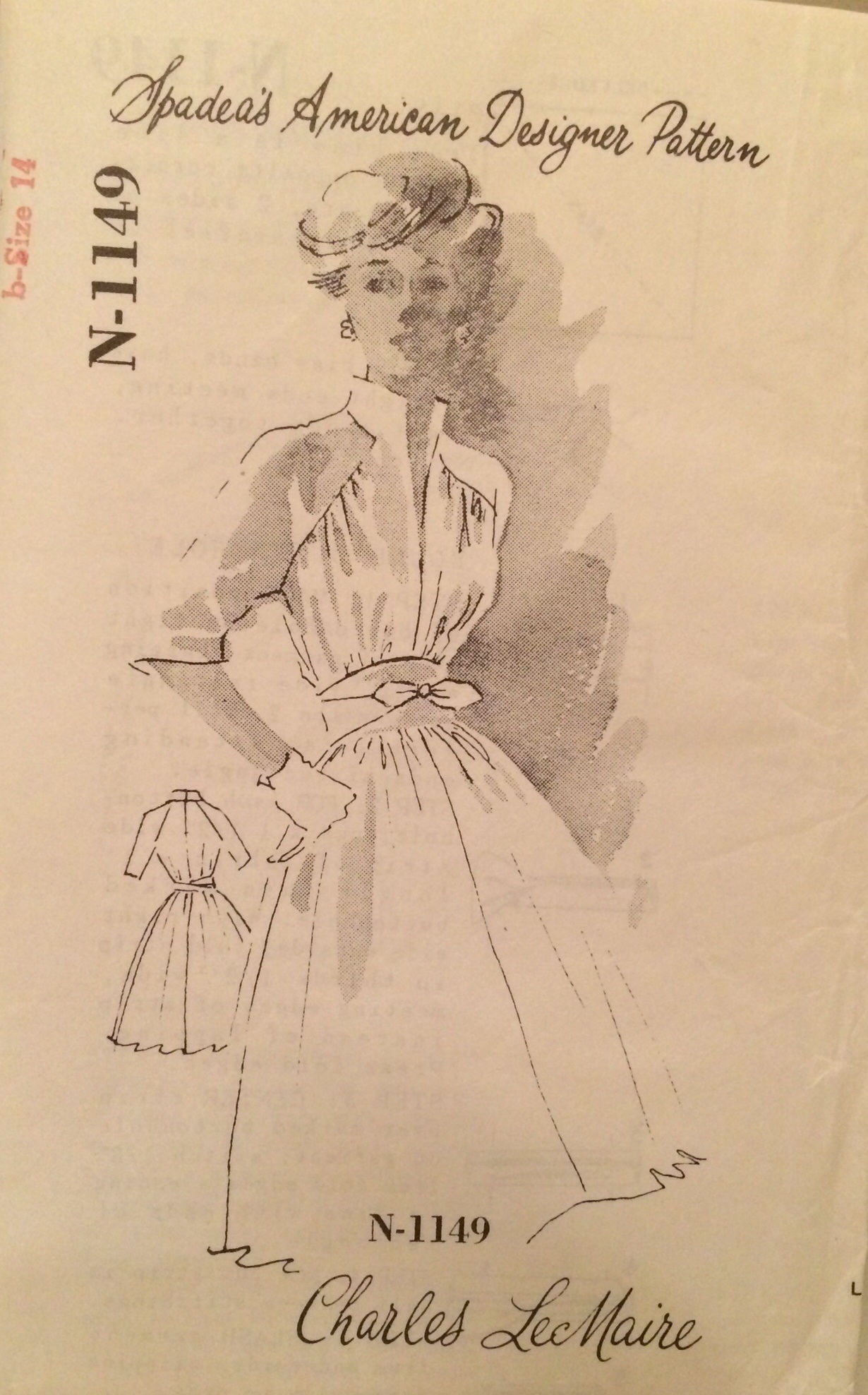
Another Spadea I have in my collection is this pattern designed by Charles LeMaire, known for costuming movies such as “All About Eve.”

image

On the pattern it says “Katherine Hepburn wears it in a film, but it has a place in everyday life.” It appears to be this dress from Desk Set.

deskset

Katherine Hepburn could make a librarian look chic. I wonder if I have enough of that gold Tyvek in my stash to pull it off?

The designer known as “Adrian” released at least one pattern in the 50s, which is on sale on Etsy now, for $175! (Pattern by Adrian) At that price, you can see why I’m reluctant to share details of my rare patterns.

The ruby slippers that Gilbert Adrian designed for Wizard of Oz will be featured in the exhibition as well. A girl knows she’s not in Kansas anymore, when she’s got those glitzy pumps on her feet.

rubyslippersstillcopy

According to the Hollywood Reporter, Leonardo DiCaprio helped the future Academy Museum of Motion Pictures acquire the shoes for their permanent collection.

Several costume designers created patterns for an obscure mail order line called “California Couture,” including Jean Louis, who designed Marilyn Monroe’s dress in which she sang “Happy Birthday, Mr. President” to JFK:

220px-Marilyn1962image

That pattern would make a good “Megan” dress for next year’s “Mad Men Challenge” hosted by blogger Julia Bobbin.

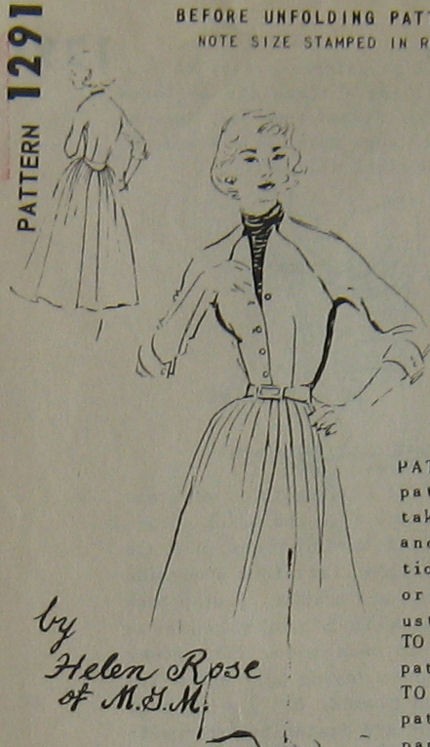
And Helen Rose, who designed, among many other things, wedding dresses for both Grace Kelly and Elizabeth Taylor, released several patterns for Spadea and California Couture:

Helen Rose Spadeaimage

There’s lots of information about Hollywood costume designers such as Adrian, Helen Rose and Jean Louis in this fun book about the vintage California look (I think I found it on Amazon):

image

I’ll admit, having grown up in snowy northern Michigan, watching “Wonderful World of Disney” and dreaming of sunny California, I have a highly romantized view of vintage Cali style.

And, of course, no costume exhibit would be complete without the diva of Hollywood costume design, Edith Head.

edith-head-vogue-28oct13-rex_b

She put out a number of sewing patterns from the 50s through the 80s, like these “Hitchcock Blonde” suits:

imageimage

Ooo, I’m going to make that turban!

Among those patterns is this fab “reverse shrug” with a pointed fold-over collar and buttons in the back, which I’m going to attempt to make for the event, to wear with a little black dress.

image

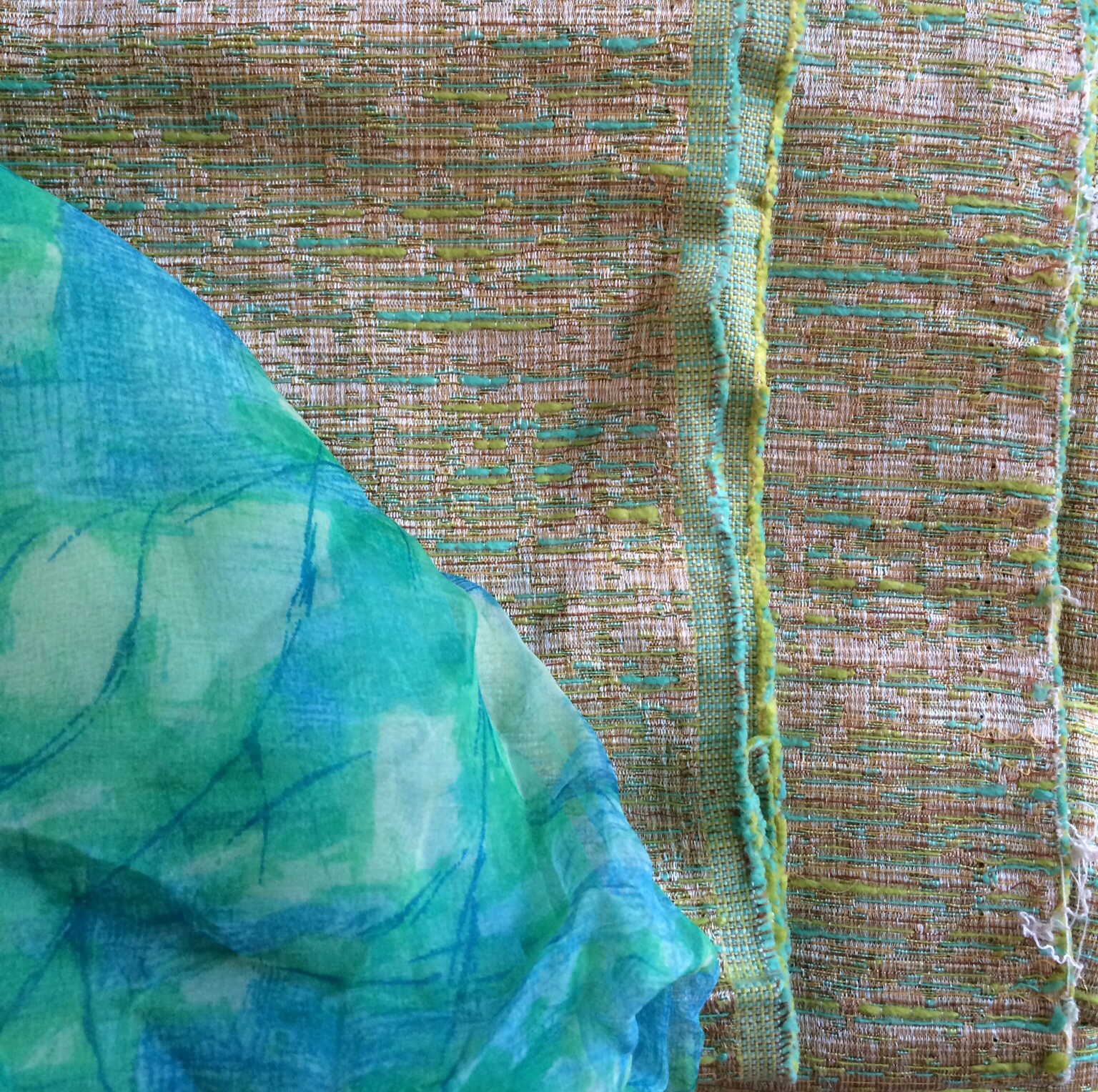
I’m torn between using this 50s-looking raw silk I bought from Mood in L.A., underlined with 60s silk organza, (requiring seam finishes, grrrr) or some drapey gold Italian wool-viscose from Elliott Berman Textiles, lined with something or other. The wool might be too hot for fall in L.A., though.

image

Whatever way I go, I’ll be busting my stash, and I get to pick out buttons!

More to come on this exciting exhibit!


What to wear to a Martha’s Vineyard wedding

13

Since President Obama and his family are here on Martha’s Vineyard, (not that we’re hanging out or anything), I’ve been giving some thought as to what people should wear to events here, specifically weddings.

“What should we wear” is the second question I get from off-islanders regarding weddings, the first being: “how many beds do you have for our extended family?” (My official answer, “Our septic system can’t handle any guests, and you don’t want to find out why.”)

To tell you what to wear to a Vineyard wedding, I need to know two things: who is it, and where is it?

If the wedding is “up island,” (in rural, expensive Aquinnah or Chilmark), then the next question is: Hippy or Hollywood?

If it’s Hollywood, you can count on gorgeous views:

image

Tons of charm, great food, lots of well-organized assistants and heavy security. I recommend that L.A. “wealthy boho” look you can find at Calypso St. Barth.

LEONE DRESS

It costs a fortune, but you know you can make something like that. Please note that the wedding will probably take place under a tent in a field something like this:

image

So wear flat shoes that won’t sink in the grass and will protect you from ticks and manure. And make sure that your dress can be pulled up easily in a porta-potty, because there’s going to be one.

If it’s a hippy wedding, odds are good you’ll be peeing in a field, so dress accordingly. If they ask you to bring food, do it. As a matter of fact, I’d eat first and bring a flask of Sancerre. Seriously, you can wear anything, even this:

image

(Doesn’t that rope thingy look like something midcentury sculptor Isamu Noguchi would have designed for a Martha Graham dance about yachting? It was about as expensive as a Noguchi, too.)

There’s a lot of poison ivy up island, so again, your footwear should be flat, disposable, or hose-able. Lily Pulitzer Crocs would be good. During one particularly bad October deluge, the bride resorted to wearing her garden clogs down the aisle.

And for any wedding in a tent or field, you need good bug spray to ward off the ticks that carry Lyme disease, and a WARM wrap or jacket for after the sun goes down.

Now let’s head “down island” for a wedding either in Edgartown (permanent host of the Preppy Olympics) or any place with the word “Club” in it.

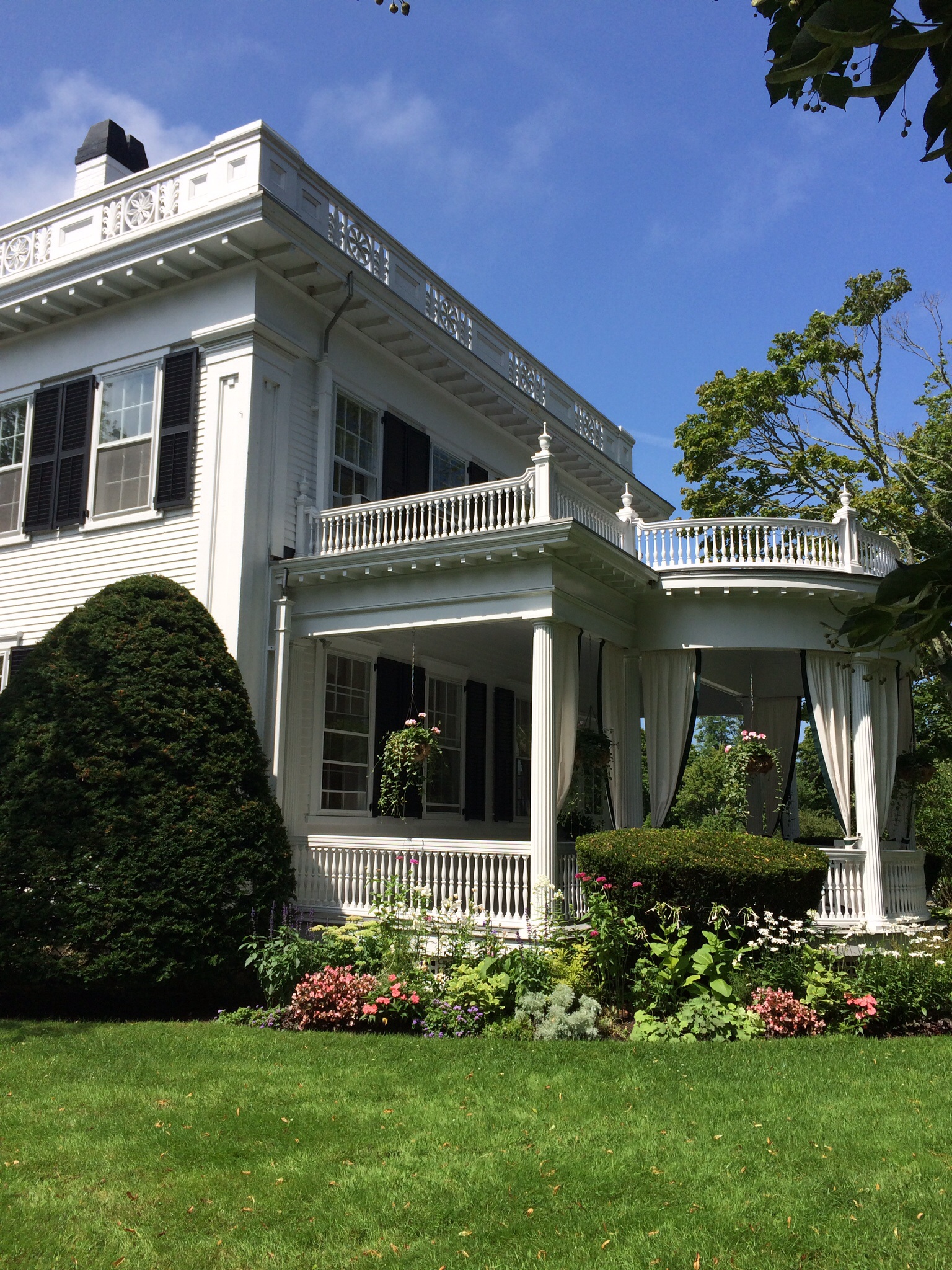
Let’s look at Edgartown. Beautifully manicured Captain’s houses:

image

Gorgeous New England seaside gardens:

image

And ample places to buy the preppy uniform of whale pants, polo shirts, breton shirts etc…

imageimage

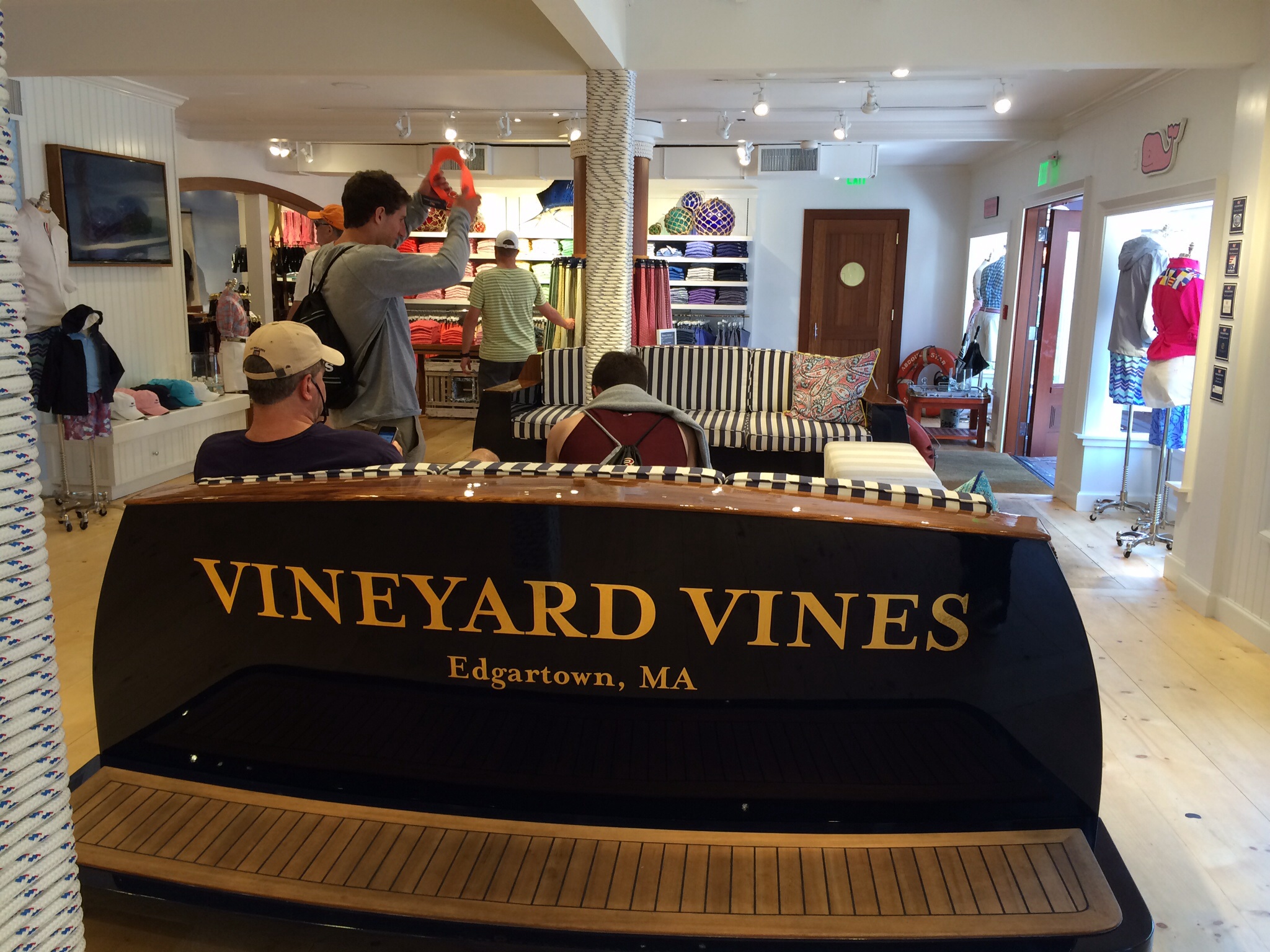
For this type of wedding “weekend,” bite the bullet and fit in. If you just landed from planet “not preppy,” you could go to this store and be all set:

image

A pretty teal dress for an afternoon wedding, white jeans and Breton shirt for whatever lunch/brunch comes your way, and a featherweight lavender cardigan for anything outdoors.

As for the khaki shorts on the left, at my Vineyard wedding 20+ years ago (at an inn with an outdoor wedding venue but indoor plumbing, thank you very much) a plus-one guy from Edgartown showed up in an oxford cloth shirt, docksiders, the ubiquitous preppy navy blazer and khaki linen shorts. Shorts! At a wedding! Mercifully for him, I can’t recall his name.

On that same afternoon, the power went off all over the island, including at the hairdresser, sparing me from looking at wedding pictures with a giant 80s bouffant hairdo. It was fate! (Note: between the salt air and the wind, everyone’s hair looks terrible on the Vineyard, so don’t worry about making an effort.)

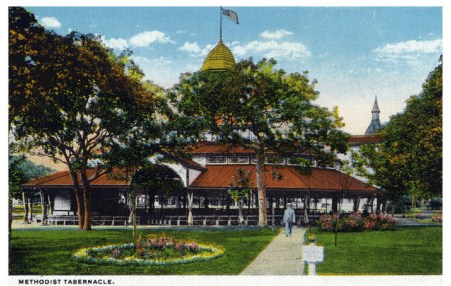
As for weddings in the other regions and cultures of the island, where the wedding could be in the tin-roofed Tabernacle:

oak-bluffs-massachusetts-martha-s-vineyard-view-of-methodist-tabernacle

Or in the sand:

image

Best to call the mother of the bride and ask. She’s probably dying to vent.

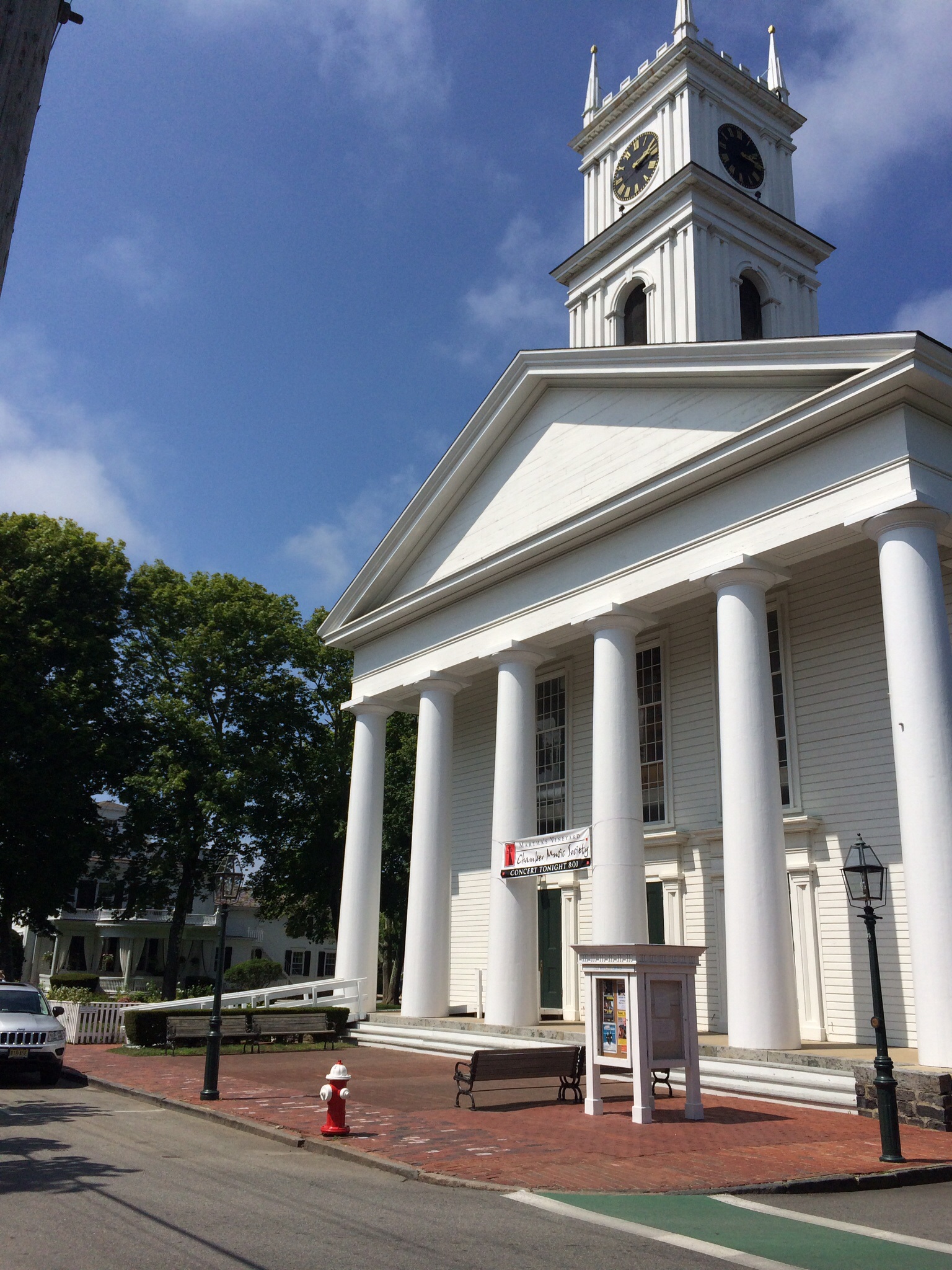
One last question about Edgartown. Is the wedding at the Whaling Church?

image

It’s gorgeous, historic, either too hot or too cold, and has the most uncomfortable seats on the planet.

For your sake, I hope the wedding looks like this:

image

Okay, that wasn’t actually a wedding. It was the Official Blues Brothers Revue, doing a fundraiser for the Vineyard Playhouse. The gorgeous trompe l’oeil painting on the back wall was done by talented Vineyard muralist Margot Datz.

While I was at the concert, sitting with boomer-age friends who, in the 70s, toured as recording artists, lived with famous musicians, and spent quality time alternately crashing in Teepees or on lumpy NYC futons, ALL we could talk about was how happy we were that the Whaling Church had new, thicker cushions for our aging bums! And even with better cushions, my sitz bones were killing me! So bring a wrap, even if it’s hot, because you’re going to need to sit on it.

And enjoy the Vineyard. Really, there’s a reason why presidents have been coming here for more than a century.

New(ish) Patterns for the Varsity, Letterman, Aviator or Bomber Jacket

18

As a blogger, I can look at my stats and know what’s bringing readers here, and I’ve been surprised lately to see that people are searching for Varsity/Letterman/Bomber/Aviator-style jacket patterns. Thinking of fall sewing already?

During the winter I wrote about how this cut of jacket was becoming a style statement, and included a link to a New York Time Style article featuring designer versions.

Elletra Weidemann

(You can find that post and info here)

While I’m in the sewing shed laboring on a project that’s not ready for prime time (oops, and going to the beach, too, forgot I told you that…) I thought I’d share some of the jacket patterns I’ve found while procrastinating–er– “researching” online.

Even though this basic style is somewhat interchangeable nowadays, the jackets come from two different places in history.

The Varsity or “Letterman” jacket started in the 1860’s at Harvard University (of course, where else, rah rah rah) when athletes had the letter “H” sewn onto their sweaters, and if they did particular well, they got to keep the letter. This started a U.S. tradition of athletes earning “letters” to wear on their wool jackets with leather sleeves.

varsity-jacket-1946

Earning a letter allowed these “jocks” to date the prettiest mean girl and beat up the sensitive guys…or at least that’s how it plays out in most American movies about high school. International readers, does this style exist in your country?

The bomber or aviator jacket was developed in the early 20th century for pilots to wear in cold airplane cockpits, and they were often made of sheepskin with shearling on the inside for warmth. During the 30s, the jackets were shortened to waist length to create the A2 style we’re familiar with now.

Brando in bomber jacket

It’s definitely a “bad boy” look.

This style has gone in and out a number of times, but now the jackets are having a moment, so stitch one up fast while they’re still hot!

Here are some patterns for women’s jackets that I found recently on BurdaStyle:

Burda slouchy varsity jacket pattern

I like the 3/4 batwing sleeves and low neckline of this pattern, found here.


Burda flowing varsity jacket

This one, found here, has blousy sleeves and slash pockets.


Burda collarless varsity jacket pattern

I like the clean neckline, snaps, and zipper pocket detail on the sleeve. You can find it here.

Here’s one for men, cut with raglan sleeves, found here:

Burda coat pattern

As I mentioned in a previous post, Kathleen Fasanella of Fashion-Incubator.com has a men’s bomber-style jacket pattern with in-depth instructions, which can also be used for manufacturing. (Info is here.)

Bomber jacket pattern


That’s all the patterns I could find, but if you’re aware of any others, please let us know in the comments. It’s a fun look to stitch up for fall.

Update: After I published this post, I heard from Gabrielle of the Up Sew Late Blog. She told me about the following patterns:

The Papercut Patterns Rigel Bomber, which has a modified “V” neck, and plain raglan sleeves or sleeves with shoulder detail:

Rigel Jacket

And the StyleArc “Sharon Sweat Top” which could be used to make this kind of jacket, or to fake a Lululemon apres yoga jacket. With a wide range of sizes and a princess seam cut, this could work for more pear-shaped women.

SHARON-TOP

Thanks for the heads up on those patterns, Gabrielle!

All of the links to these patterns, and more, can be found on this Pinterest page:  

Enough procrastinating. Back to sewing!

Not about sewing; about not sewing.

8

And stopping to smell the…well, you know the rest.

image

Even though I had a pattern project to finish, an interview to write up, and a laundry list of things to do (including the laundry), a perfect day like this is too rare to spend on chores.

So we packed up a few sandwiches and drinks, beach towels and a boogie board, and headed to the beach.

image

(I’m wearing my 40s beach jacket, which thankfully did not end up looking like Gertrude Stein’s bathrobe, and a pair of Tom’s shoes, needed to hit the clutch in the old manual Jeep Wrangler.)

We headed “up island” to the part of Martha’s Vineyard now known by the Wampanoag Indian name “Aquinnah.” The town changed the name several years ago, but the locals often still call it by the old name, “Gay Head.”

When you’ve turned onto Moshup Trail and can see the water over the windswept shrubs and poison ivy, you know you’re getting close.

image

We have access to a beach that has a parking lot you open with a key, but it’s not too far from the public beach called Philbin.

You’ve got to haul your gear over a big hill to get to the beach, so we pack light.

image

On the top of the hill is a beautiful view looking out over Aquinnah, with the Gay Head lighthouse in the distance.

image

image

Ahhh, that’s better.

We had our picnic, and I took a little stroll.

image

Those rocks get covered and uncovered, depending on whether a big storm has come through in any given year.

I turned and walked toward the multi-colored clay Gay Head Cliffs which have been drawing tourists for a couple hundred years, and were home to the Wampanoag Indians long before that. A number of Wampanoag families still live in the town.

image

Big waves today, so my son spent a lot of time surfing into shore on his boogie board, while we were jumping the waves. When I got home, my suit was full of sand and seaweed.

image

I love how the Hug Snug rayon seambinding on my jacket glistens in the sun.

image

(Oh, come on, you didn’t think I could do an entire post without bringing up sewing, did you?)

An Epic Road Trip and Meeting Susan Khalje!

22

Okay, despite the title, there was only one thing truly epic about my road trip to Maryland, and that was meeting haute couture sewing expert and master teacher Susan Khalje!

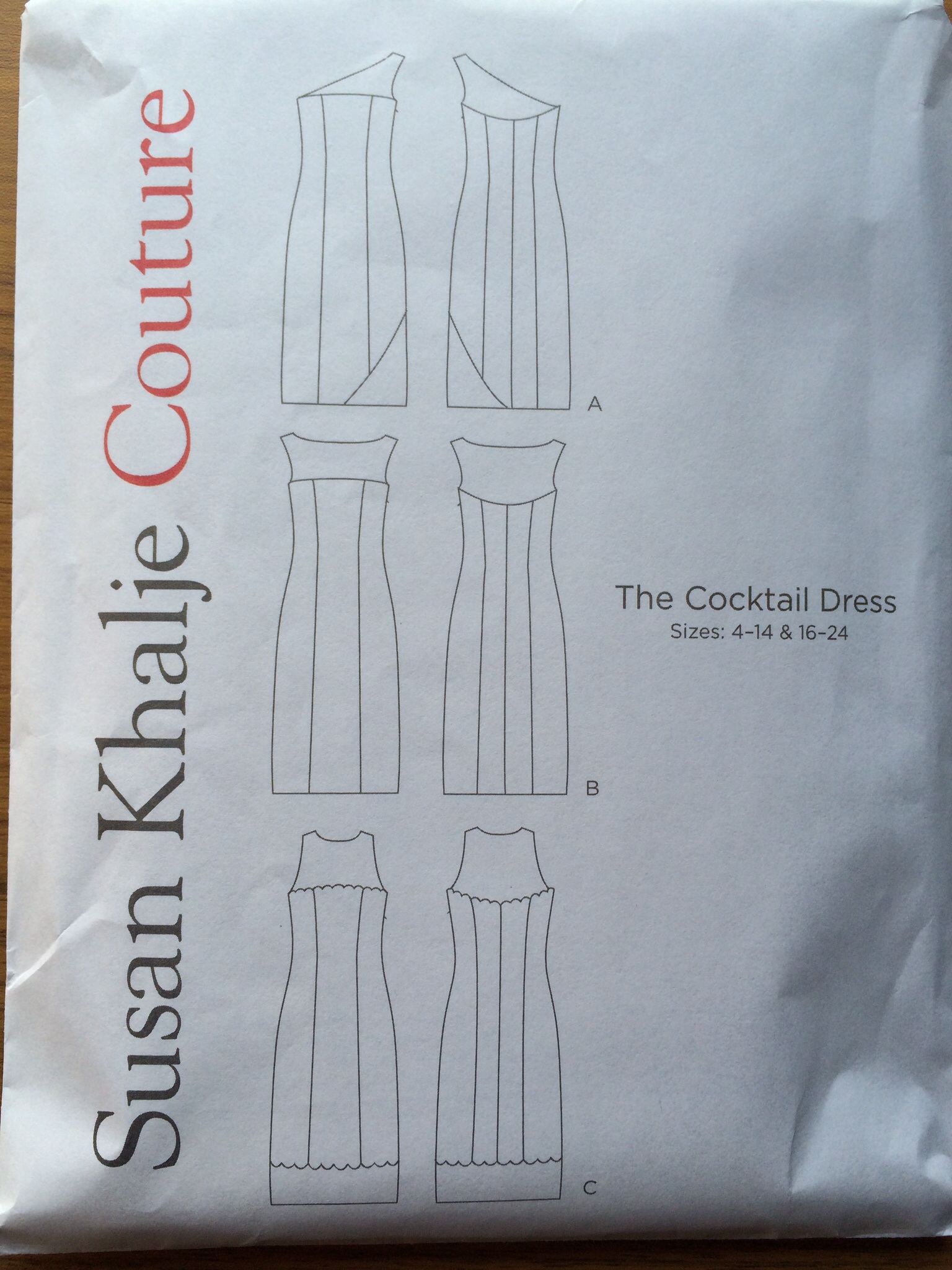
When I contacted Susan, she graciously invited me to visit her studio, north of Baltimore, where her popular haute couture sewing classes are held. I wanted to hear about her recently-launched online video series, which includes “The Cocktail Dress” course (now available), and a number of other courses in the pipeline. (Find details here on SusanKhalje.com)

Susan has given me access to the Cocktail Dress course for review, and I’m very eager to have a look. Here’s the pretty pattern that goes with the course (which comes in a range of sizes, up to a 50″ bust):

image

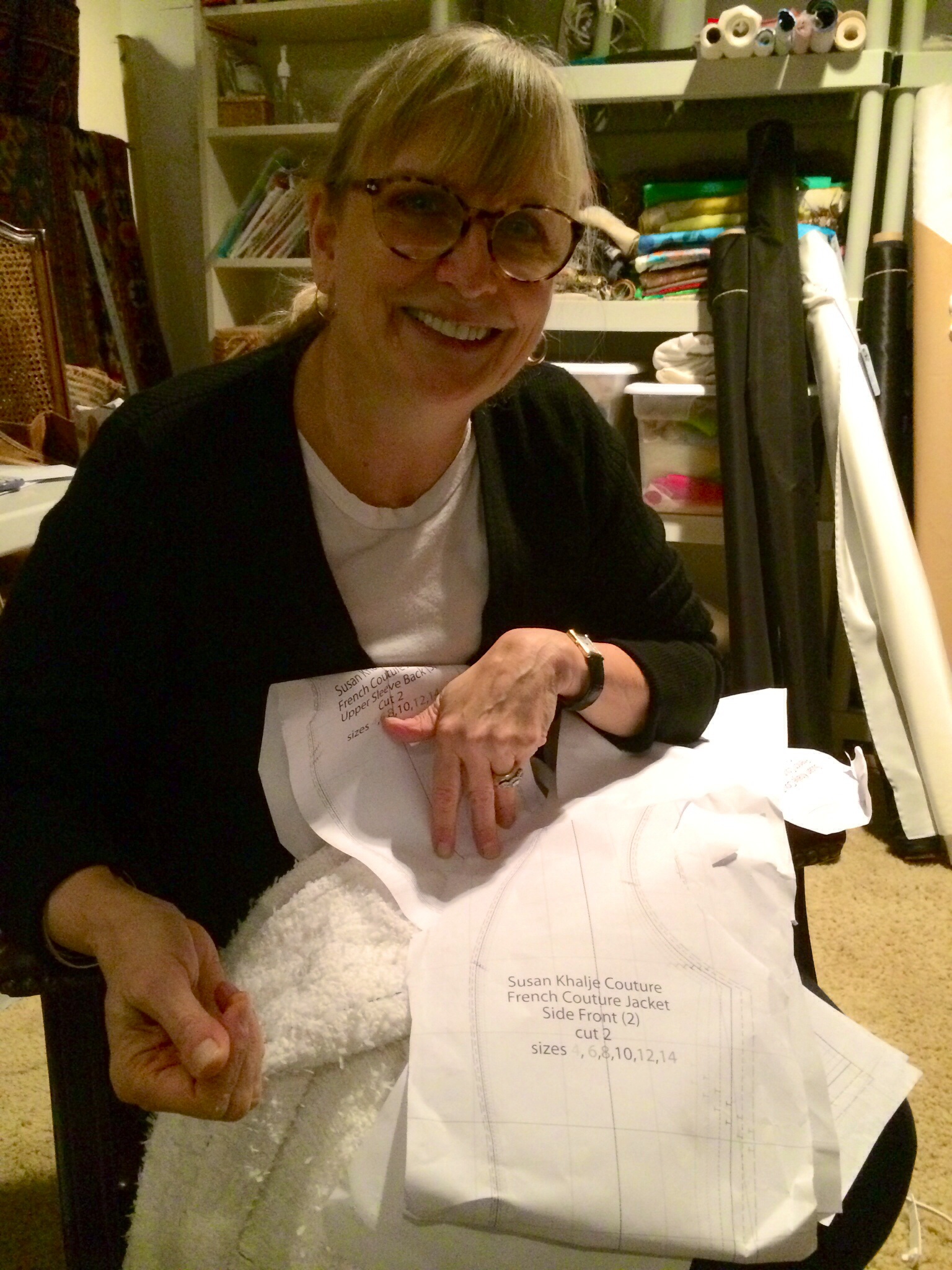
Susan even gave me a sneak peek at the French jacket pattern she’s currently tweaking, which will be released in conjunction with her highly-anticipated “French Couture Jacket” online course:

image

Between you and me, I think it will be the go-to pattern for a lot of sewing enthusiasts, so if making a Chanel-style jacket is on your bucket list, you may want to hold off until that course launches in the fall.

Susan and I talked about the sleeve alone for about 20 minutes, during which I learned its little secret… (Shhh…I’ve taken a vow of silence on that subject until the course is launched.)

Susan very nicely allowed me to interview her for a whopping two hours, giving me enough material for about 10 articles. So in the coming weeks I’ll be going over my notes and writing an article to be featured on Bernina USA’s website WeAllSew.com. (For details about the collaboration between Bernina USA and JetSetSewing.com, please click the “Bernina Collaboration” tab at the top of this post.)

I’ll let you know when that post goes up. Many thanks to Susan Khalje for taking the time to meet up with me!

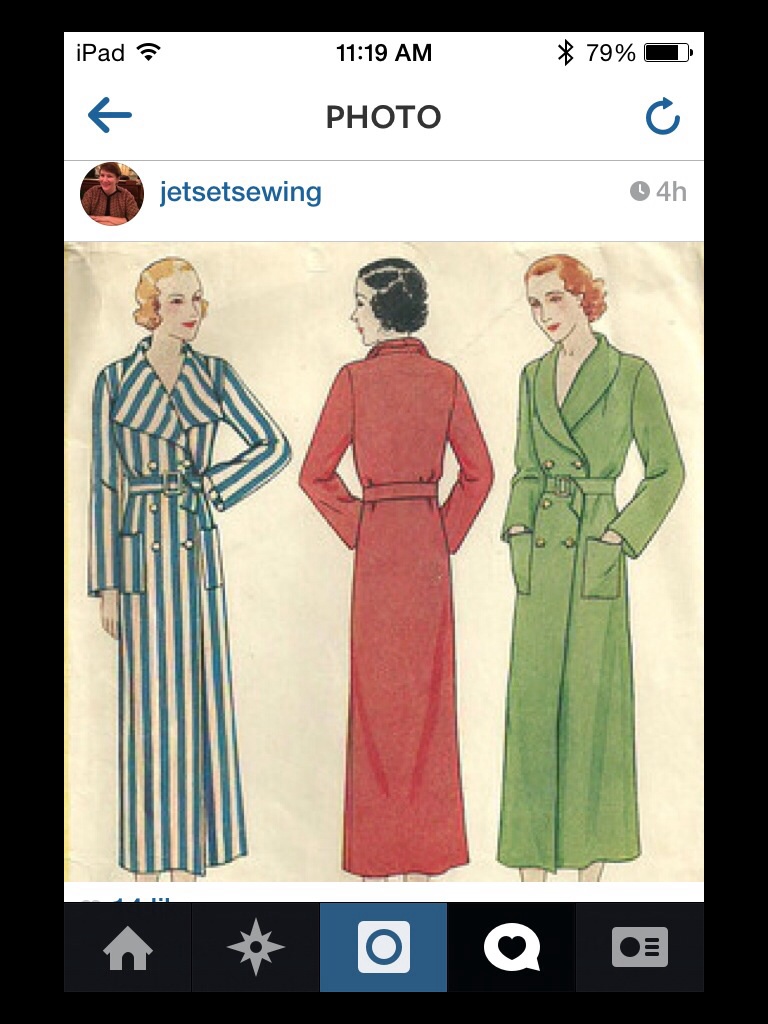
While I was on the road, I decided to join Instagram, and discovered that most of you sewing peeps were already having a party there without me! So I’ve started daily posts featuring my favorite vintage patterns, using the hashtag #patterndujour.

image

You can find me on Instagram under the name “jetsetsewing.” Let me know if you’re a reader, and I’ll be happy to follow you!

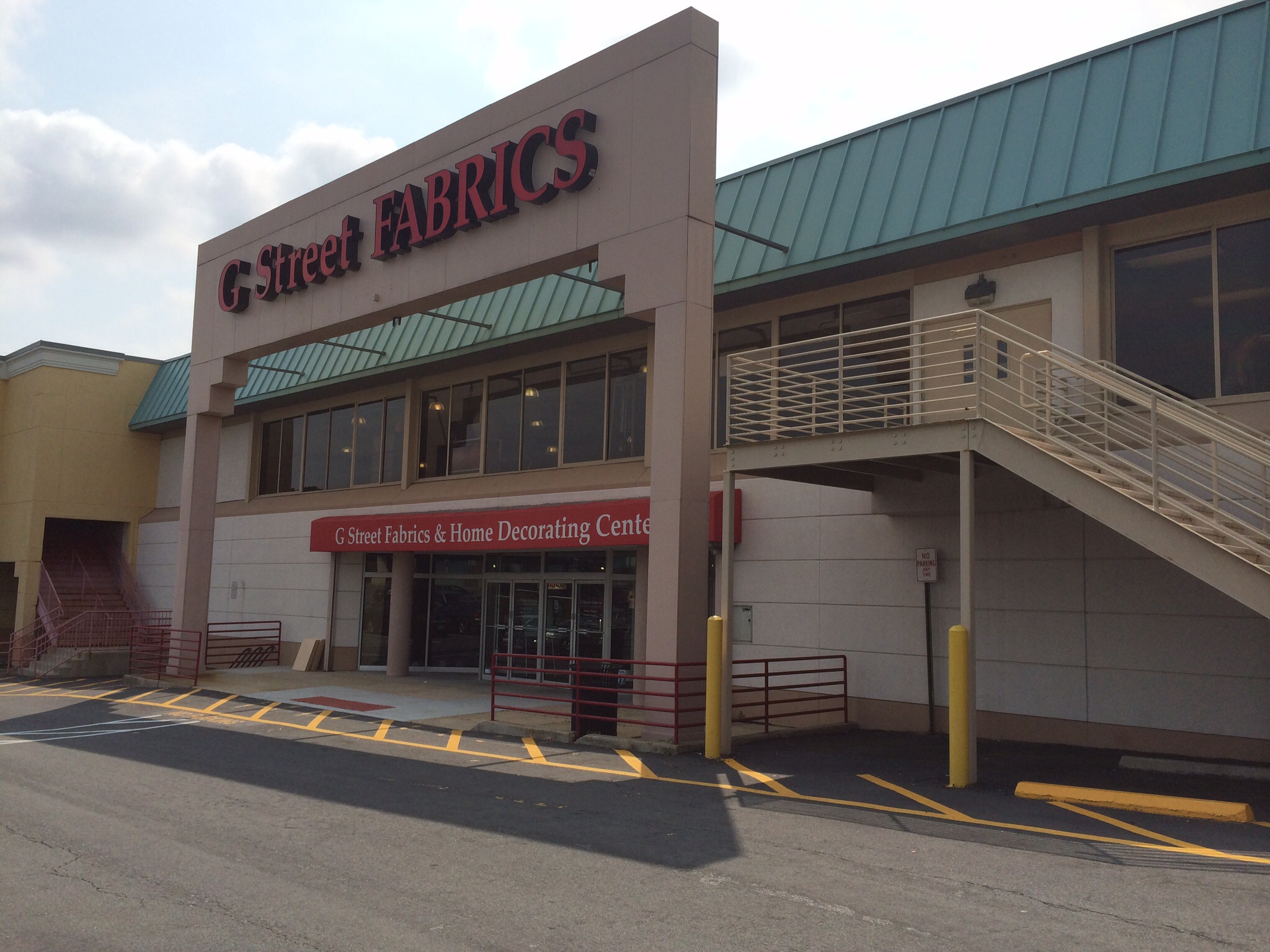
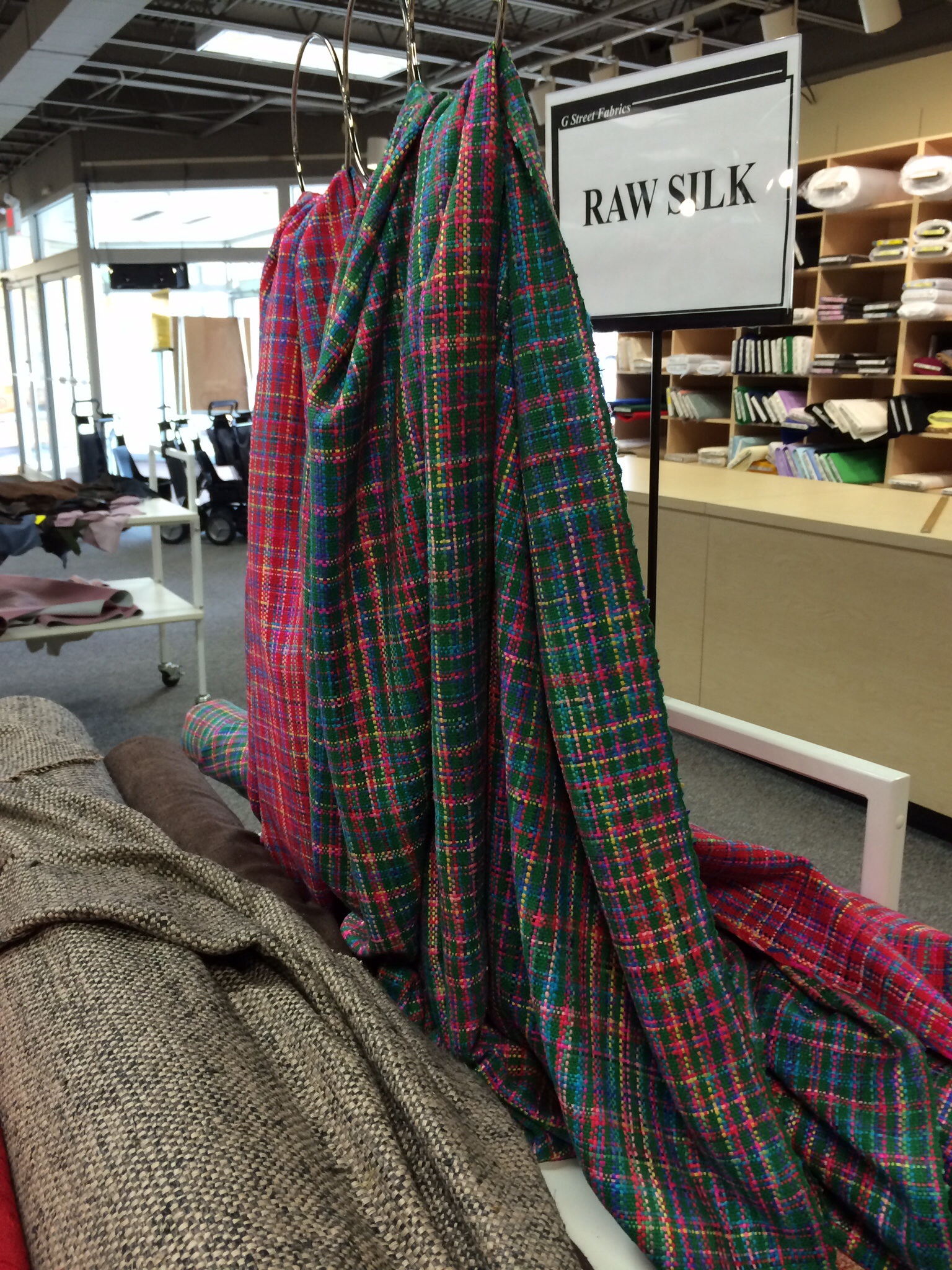
Though I was torn away from my dear Bernina 560, “Karl,” for a week, sewing was still on my mind, so I visited G Street fabrics in Rockville, Maryland, which is right outside of Washington, DC.

image

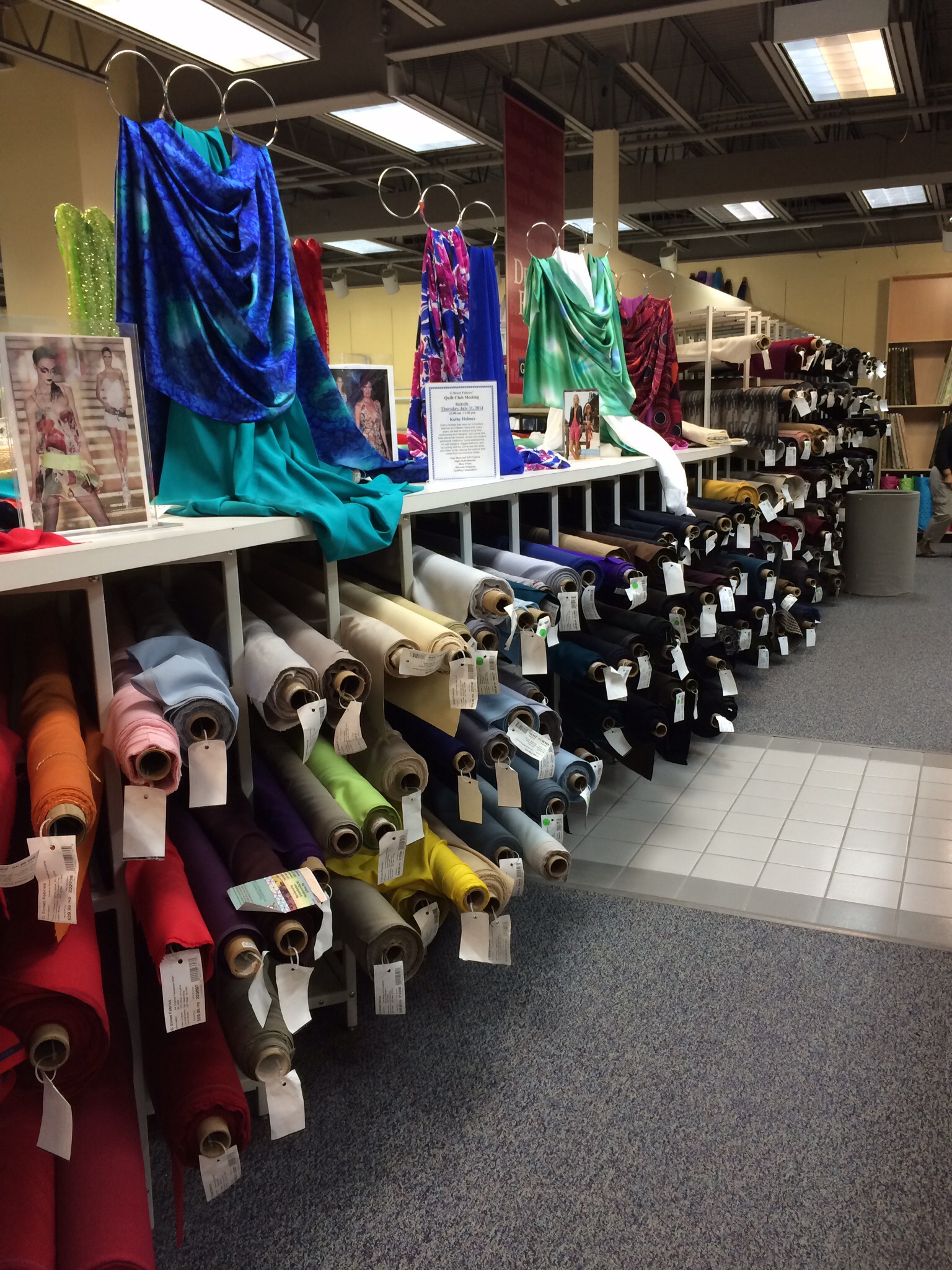
I’ll admit that I’m a little spoiled having shopped for fabrics in L.A. and Paris this year, but I did find a few fun things among the fabrics rolls.

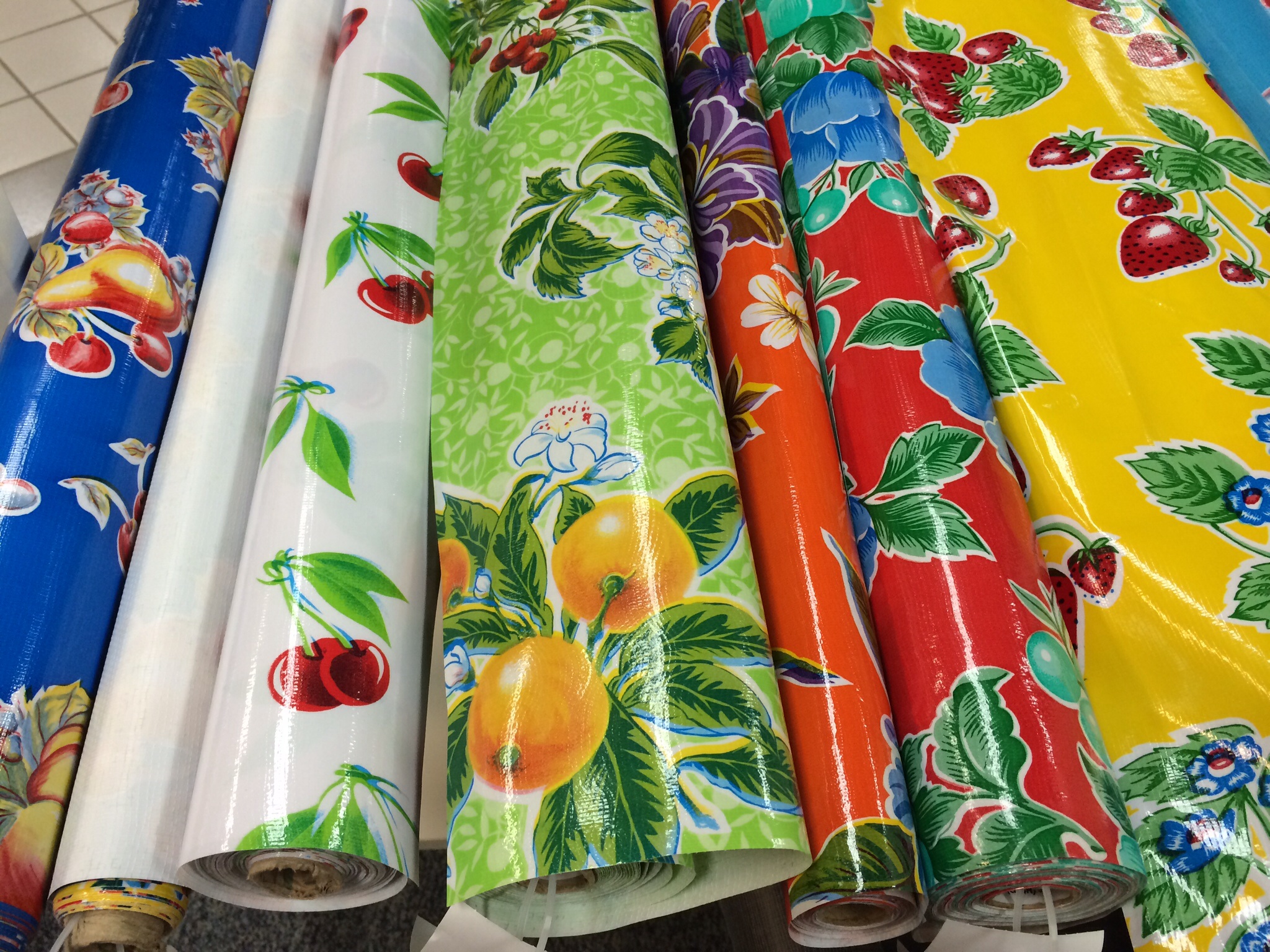
imageimage

I really liked this selection of vintage-style oilcloth yardage, but just couldn’t get in the mood to make a tablecloth.

image

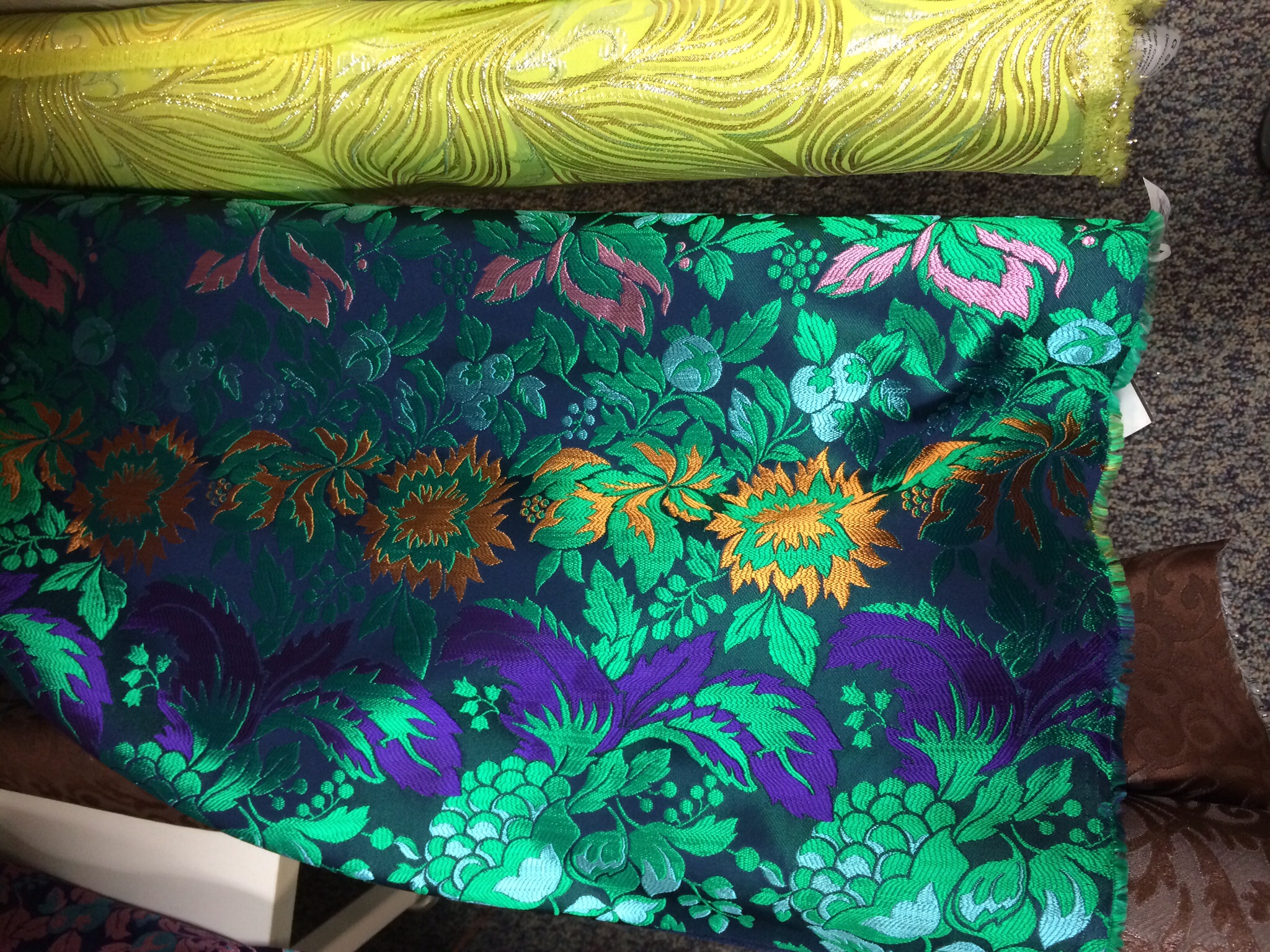
They do have a nice selection of fabrics for both basic garment sewing and high-end dress-making, as well as some quality suit fabrics and designer fabrics, like this brocade from Anna Sui.

image

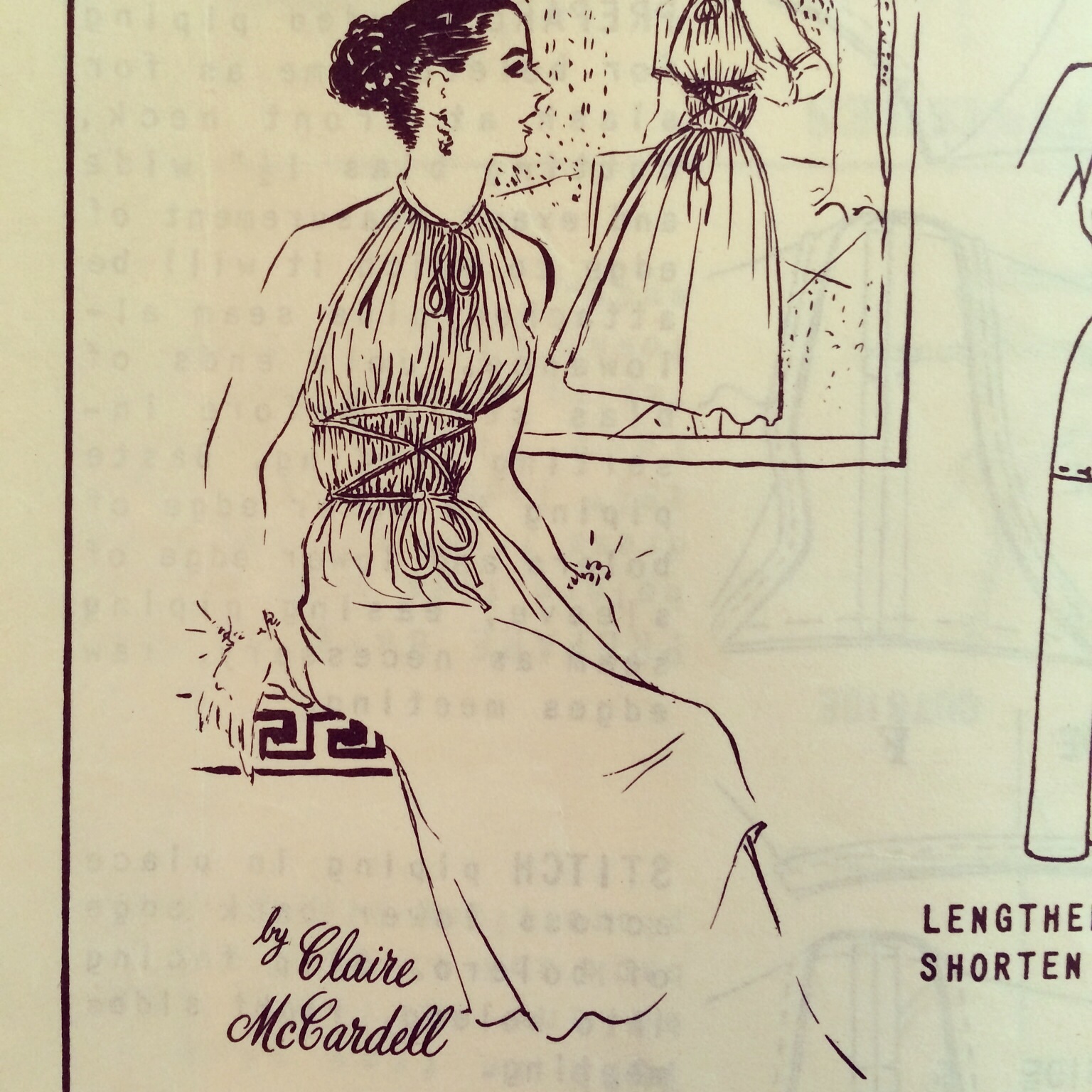
While I was there, I picked up supplies for my next project, which is to make a Claire McCardell dress and bolero jacket from this 50s Spadea pattern.

image

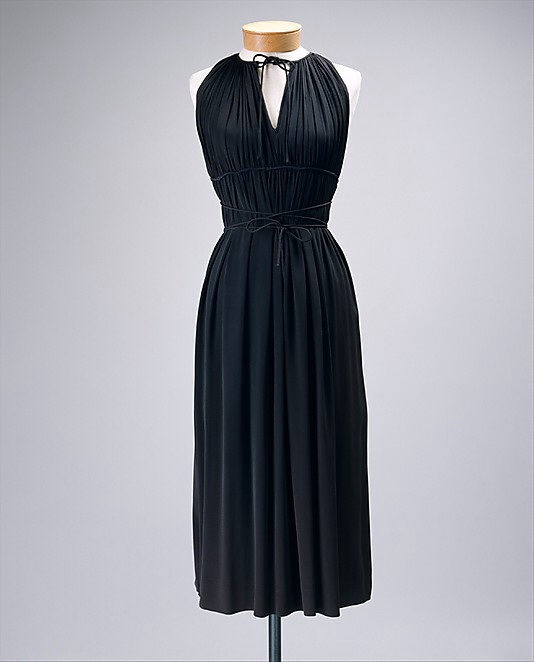
This style of Grecian-inspired design, with long adjustable strings cinching the waist, is a recurring theme in McCardell’s collections, and in fact there’s a black rayon version in the Metropolitan Museum’s Costume Institute collection.

image

(Claire McCardell Dress in the Metropolitan Museum Costume Institute’s Collection)

Though this style may look familiar now, the dart-free, adjustable-waist concept pioneered by McCardell was radical in its time.

I’ve written in the past about how the Spadea pattern company took existing garments that were being sold in stores, deconstructed them, and drafted patterns from the pieces. So by using this pattern, I should be able to create a clone of the dress in the Met. Here’s a brief history of the Spadea company, written by Lizzie of The Vintage Traveler blog: (Article about Spadea Patterns)

The pattern has a matching bolero, and in researching McCardell, I found this description of the outfit in an ad: “Evening Elegance: black crinkle-crepe sheath, red and black reversible jacket, $55.” Sounds great, huh? I’ve also seen modified versions of this dress in wool jersey, another McCardell signature.

So if all goes well, I’ll be putting together this dress from black merino jersey bought during my mad dash through The Fabric Store in L.A., (L.A. Fabric Stores), and lining the bolero with the red wool jersey I just bought at G Street Fabrics.

And the dress will be worn by…my sister?!?! No fair!

Well, here’s what we’re cooking up.

I’ve mentioned before that my sister, Janet Eilber, is the artistic director of the Martha Graham Center of Contemporary Dance, AKA The Martha Graham Dance Company. You can peruse Janet’s impressive bio here.

Like McCardell, Martha Graham knew her way around a length of jersey, and one of her most famous dances, Lamentation, is danced entirely inside a jersey tube. Graham used the fabric to give the feeling of “stretching in your own skin” from grief. Janet also told me that Martha designed many of her own costumes, via draping.

I’ve always thought that Claire McCardell’s designs, which use a recurring set of pared-down “American Look” elements, have a lot in common with Martha Graham’s spare choreography, which uses a recurring language of movement to reveal the emotional core of the dances.

So, when my sis told me that she would be speaking at the upcoming DANCE & FASHION (!!) exhibit held by the Museum at the Fashion Institute of Technology in New York, and that she needed a dress to wear, I said “have I got a designer for you!”

Here’s a link that describes the exhibit in depth: (Dance & Fashion MFIT exhibit details) The exhibit will feature actual dance costumes as well as dance-inspired designer gowns and streetwear. It sounds fantastic, so I’ll definitely be there!

The exhibit opens at The Museum at FIT on Monday, September 12th, 2014, and runs through January 3rd, 2015. On Tuesday, October 28th, dancers from the Martha Graham Company will be performing Graham’s works “Lamentation” and “Spectre-1914,” to be followed by a panel discussion including Janet, designer Doo-Ri Chung, and Melissa Marra of MFIT.

So we’re going to find out if this ingeniously simple design can be easily adjusted to fit a variety of figures, which was McCardell’s intention. I’ll be making up the dress here, then sending it to my string-bean sister to see if we can fit it via photos and sister mental telepathy. (Or possibly via Skype, as my blogging pal CarmencitaB does with some of her clients in France.)

If the whole thing’s a bust, I have some original McCardell dresses in my collection that I just might be willing to loan to my sister. Considering how many times I raided her closet as a teen, it seems only fair.

Speaking of L.A., the West Coast branch of Mood Fabrics has just reopened, after sustaining earthquake damage in the spring. I’m glad they had the opportunity to work on their roof, as the day I was there (during an early March deluge) there were garbage cans everywhere to catch the raindrops dribbling in from the old skylights.

Phew, that’s it for me! How’s your sewing going?

Hello Sailor! Breton Top patterns shove off…

16

Okay, I’ll admit it; I’m a Breton top abuser. Right now in my drawers and closet there are at least 10 shirts in this classic style in various colors and fabrics. Walking around the grocery store, I see that I’m not alone. You put one on, and it’s not like you’re wearing a T-shirt, right? You’re not a slob–you’re Audrey!

So it’s no surprise that patterns for boatneck tops like this have been among the most popular releases this year.

The latest is this pattern from Tessuti for the “Brigitte” Top, which I like because it has a high boatneck line, and four options for sleeve lengths:

Tessuti Brigitte pattern

I’m assuming the Brigitte it’s named after is Bardot:

Bardot

(Love it with the red pants, red shoes, red car…)

Another pattern released this spring is the “Coco” pattern from “Tilly and the Buttons,” for both a Breton top and dress:

Tilly Coco pattern

She always manages to get her dimple lit just right.

And I’m assuming that the “Coco” this pattern is named after is Mademoiselle Chanel, who stole this look from the boys in the 30s, and basically started the “girl in a jersey shirt” thing.

Chanel

(At the end of the post, you’ll find a pinterest page with links to all of the patterns shown in this post, saving me hours of cut and paste…)

Those of you hanging out at Jet Set Sewing over the winter already know that I have a thing for this style, as I wrangled with making a 60s “crushed boatneck” pattern for about six weeks. The resulting knit version, with matching Chanel-style bag, looks like this:

Crushed boatneck top and 2.55 bag (Details of how I made it are here.)

I recently saw a Burberry version of this style, with the boatneck folded out:

imageimage

For $250! I wouldn’t say that stripe matching is very impressive, either.

What is the enduring appeal of this style?

Well, here’s the original inspiration:

French Sailor

Bonjour sailor, new in town? My sewing pal Carmen (of the CarmencitaB blog), who lives in Breton, France, told me that the original inspiration was the French Navy’s uniform, which included a striped jersey shirt and the traditional red pom pom on the hat. Then Carmen, as I recall, you told me that nowadays French women wouldn’t be caught dead in a bourgeois Breton shirt, unless she was a rich Parisian, right? We Americans are nuts for the look, though, because secretly we want to be as haughty cool as the French.

But like the tunics I wrote about last time, this look has woven (or should I say knit) itself into western culture during the past 100 years, going from a working-man’s uniform, to a modernists’ casual-wear:

Picasso (Picasso)

Morphing to 50s film, both mainstream and new wave:

AudreyJean Seberg (Audrey Hepburn and Jean Seburg)

Going rock ‘n’ roll and pop:

MickMadonna (Mick and Madonna)

And then inspiring designers like Jean-Paul Gaultier to riff on the classic design for years.

GaulthierPrincess Caroline in Gaultier (Princess Caroline of Monaco in Gaultier)

And the look is still a modern girl’s best friend:

Sofia CoppolaDuchess of Cambridge (Sophia Coppola and the Duchess of Cambridge)

Over stateside, this look has become a wardrobe staple, (or default, in my case) so let’s all save roughly $225 and make our own, shall we?

In addition to the “Brigitte” and “Coco” patterns, there are a number of patterns that can be used to create this style. Once you’ve found a favorite, and have it properly fitted, these tops can be easy to crank out (if you have the patience to match those stripes). If you’re not accustomed to sewing with knits, Colette Patterns has just released a new book, The Colette Guide to Sewing Knits, with a lot of up-to-date information.

Here are some other Breton shirt patterns that are out now:

These two are from BurdaStyle. The one on the left has a chic Audrey-like band detail across the top, and the one on the right is fitted for larger sizes, and can be color-blocked:

Burda Jersey Tunic patternBurda Tunic pattern

I’ve tried this pattern from New Look, and it’s authentic and easy:

New Look 6838

This Sandra Betzina pattern, Vogue 1363, can be made with or without darts, making for better fit options if you’re busty. I would bring up and straighten out that ballerina neckline a bit to make it a true boatneck. This pattern goes up to a 55″ bust.

Vogue 1363


And here’s a recently re-released Simplicity vintage pattern, which can be made with a woven:

Simplicity 1364 boatneck pattern re-release

I really like the French darts and dropped shoulders on that one.

Here’s where you can find the links to all of these patterns, as well as pictures of the zillions of celebrities who’ve used this look to pretend they’re not wearing a T-shirt.

In my last post, I found I touched a nerve writing about the history of the tunic, as many readers confessed to having tunic moments in their past.

Some of you are making tunics this summer, and I’d love it if you would send photos to me so I can post them. Lynn, Lizzie and Mary, I’ll be looking for photos from you! If anyone else is making a tunic or vintage-style beach cover-up, please send it my way. My email address is under the “about” tab above.

As for me, seconds before I was going to cut that modern Vogue tunic pattern:

Vogue patterns 8897

to make a Tory Burch “homage” out of striped linen, I had a change of heart, and decided to try to recreate this 40s beach robe instead:

image

Unfortunately, even though the pattern is a vintage size medium (which usually runs small), it turned out to be enormously wide under the arms. So I’ll be posting pictures when I’ve gotten it fitted and it stops looking like Gertrude Stein’s bathrobe.

In the meantime, I’m waiting for a new arrival in my summer sewing Batcave. (No, not THAT kind of new arrival…good grief, it was bad enough that I had my baby at 44…) I’ll let you in on my new bundle of joy when it arrives next week. Actually, it’s more like dreamy personal assistant that never talks back.

I hope your summer sewing is going well!

$9 Couture Course

14

As I was listlessly shlumping through the grocery store yesterday, (because I’m a sewing enthusiast, not a cooking enthusiast) I spotted a new edition of the “Best of Threads Magazine: Designer Techniques” series tucked among the quiltin’ and craftin’ magazines.

image

As I leafed through it, my eyes bugged out, because it’s FULL of great articles by, first of all, the two Godmothers of Haute Couture I wrote about recently, Susan Khalje and Claire Shaeffer, as well as  numerous other articles about vintage designers and their techniques, all from the Threads Magazine archives.

For example, there’s an article by Susan Khalje giving the play-by-play of her method of constructing Chanel-style jackets, which I used in my research to construct my jackets:

image

The magazine also includes articles by Susan about making muslins and creating her version of the couture little black dress. (Note: if you’re thinking of making a Chanel-style jacket using Susan’s method, I would hold out until later in the year when she releases her video series.)
There’s a large section about various vintage designers and their techniques, including articles about Scaasi, Galanos, and Valentina, all written by couture expert Claire Shaeffer.

image

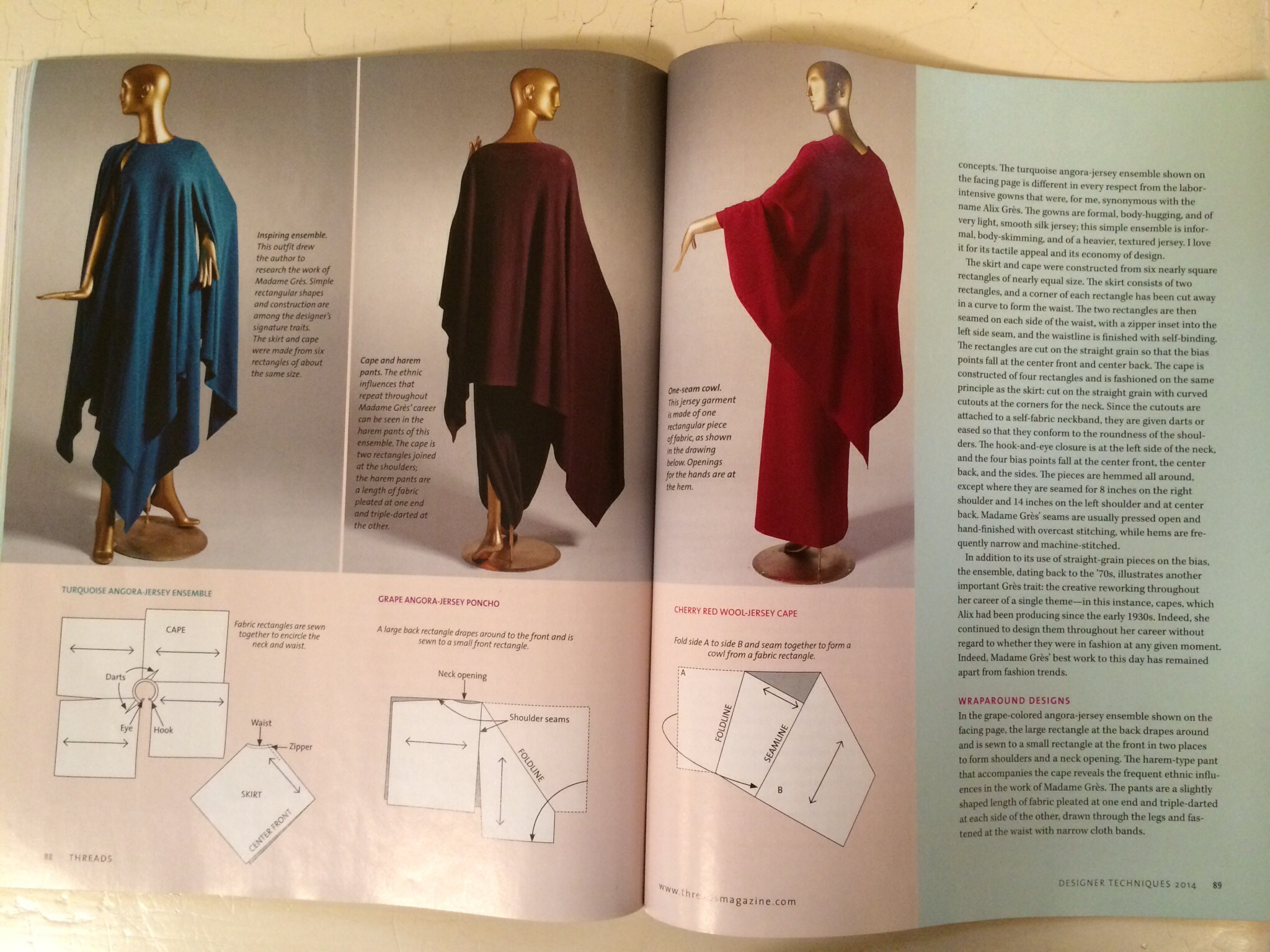
My favorites were two articles about how Madeleine Vionnet and Madame Gres manipulated fabric to create their geometric designs, which included drawings of how Madame Gres’ jersey wraps were constructed:

image

Let me tell you, I wanted to skip making dinner and run into my studio to muslin the red wrap made with one seam on the right.

Throughout the magazine there are pages of clearly-illustrated sewing tips demonstrating vintage and haute couture construction and finishing methods. So worth the $9 price tag! And it made my trip to the grocery store bearable!

The magazine can be ordered from the Threads website, in either hard copy or PDF download form here: (Best of Threads Designer Techniques: Make It Couture). Check it out!

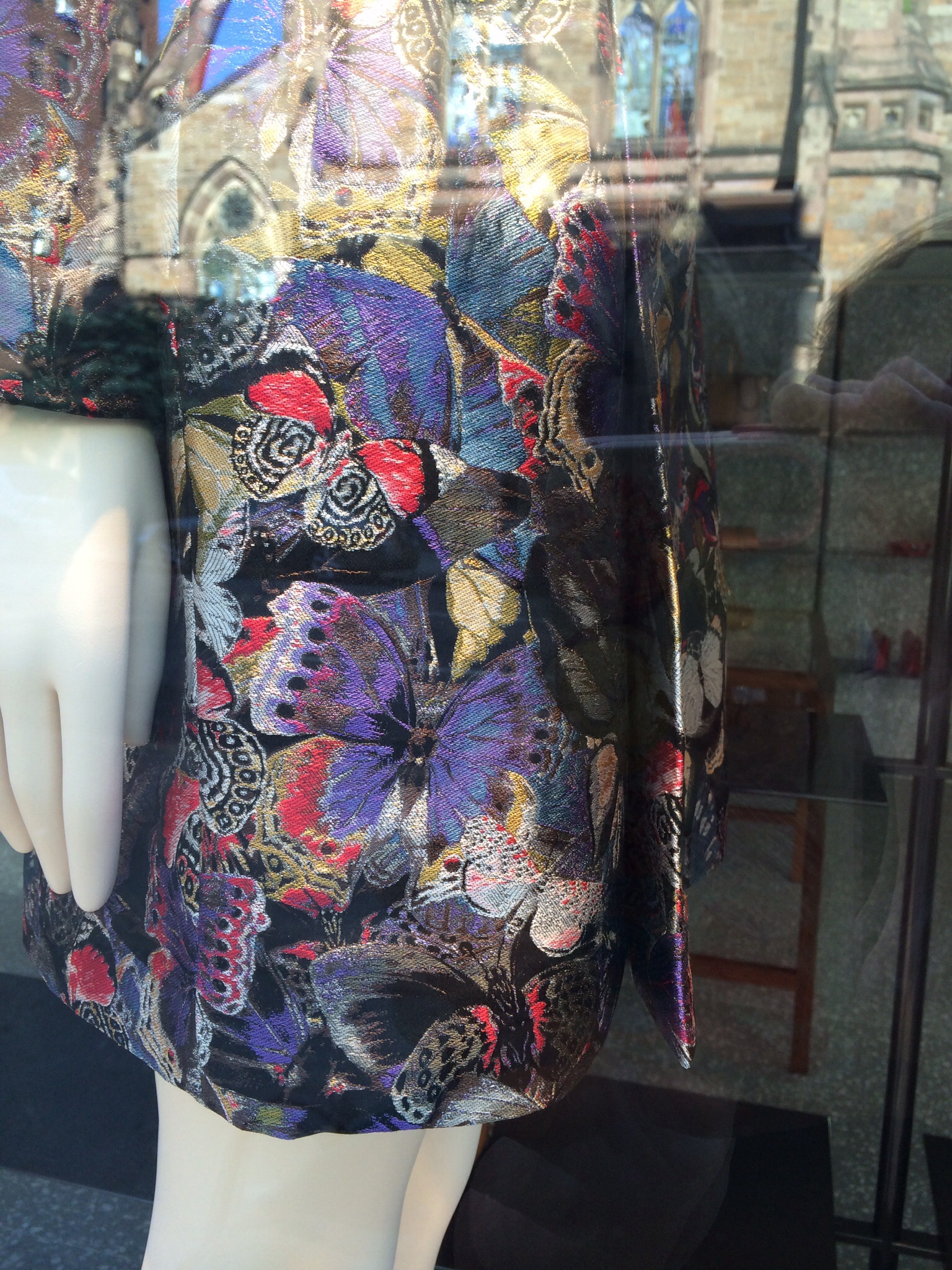
Before I left Boston, I did a little window shopping on Newbury Street as I was on my to Starbucks to get pastries for breakfast (avoiding the grocery store again). Valentino had just been renovated, and there were a number of interesting fabrics and details in the window:

imageimage

image

Love that embroidered fabric. And check this out:

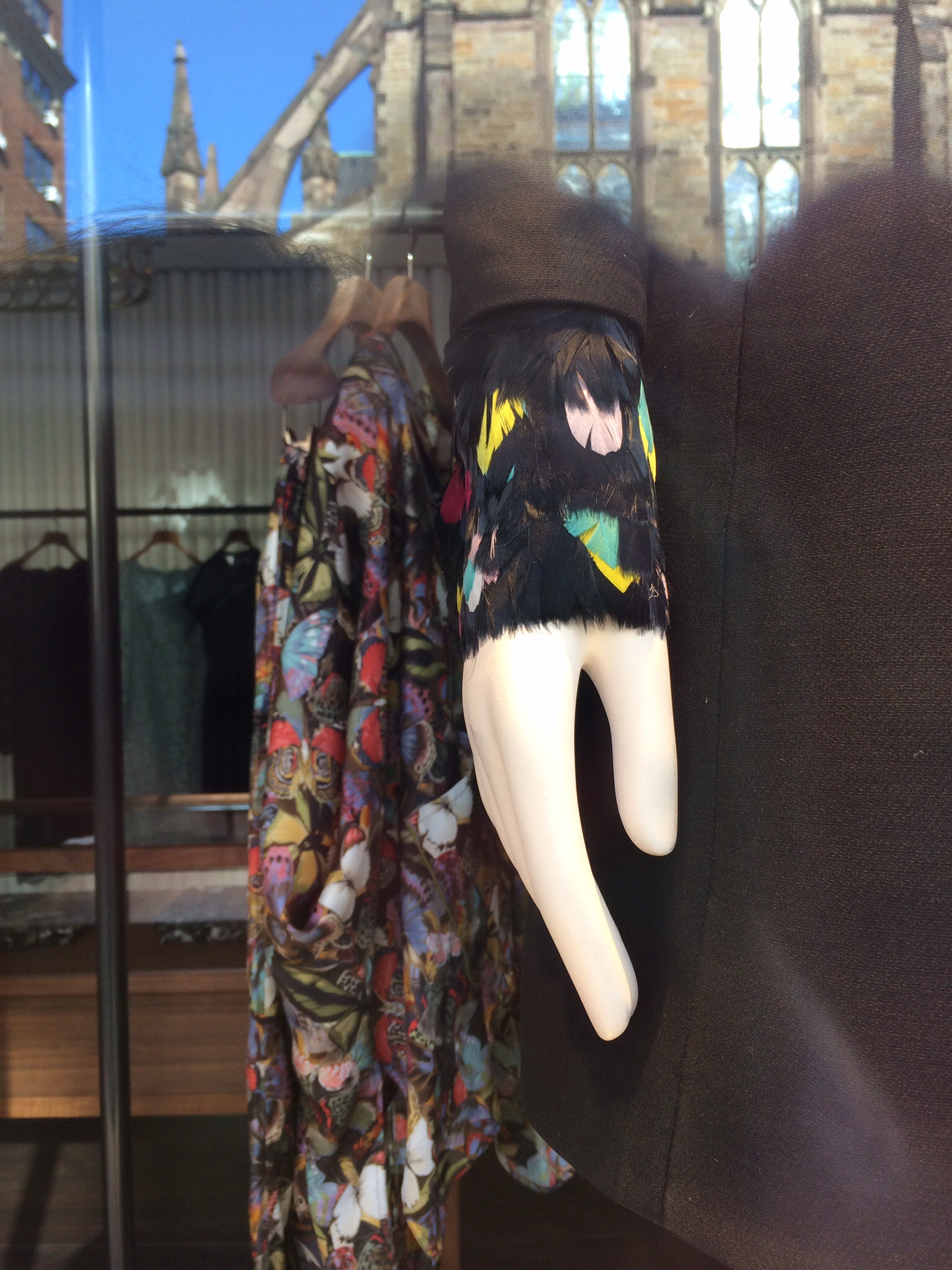
image

A little black dress trimmed at the neckline and cuffs with multicolored feathers!

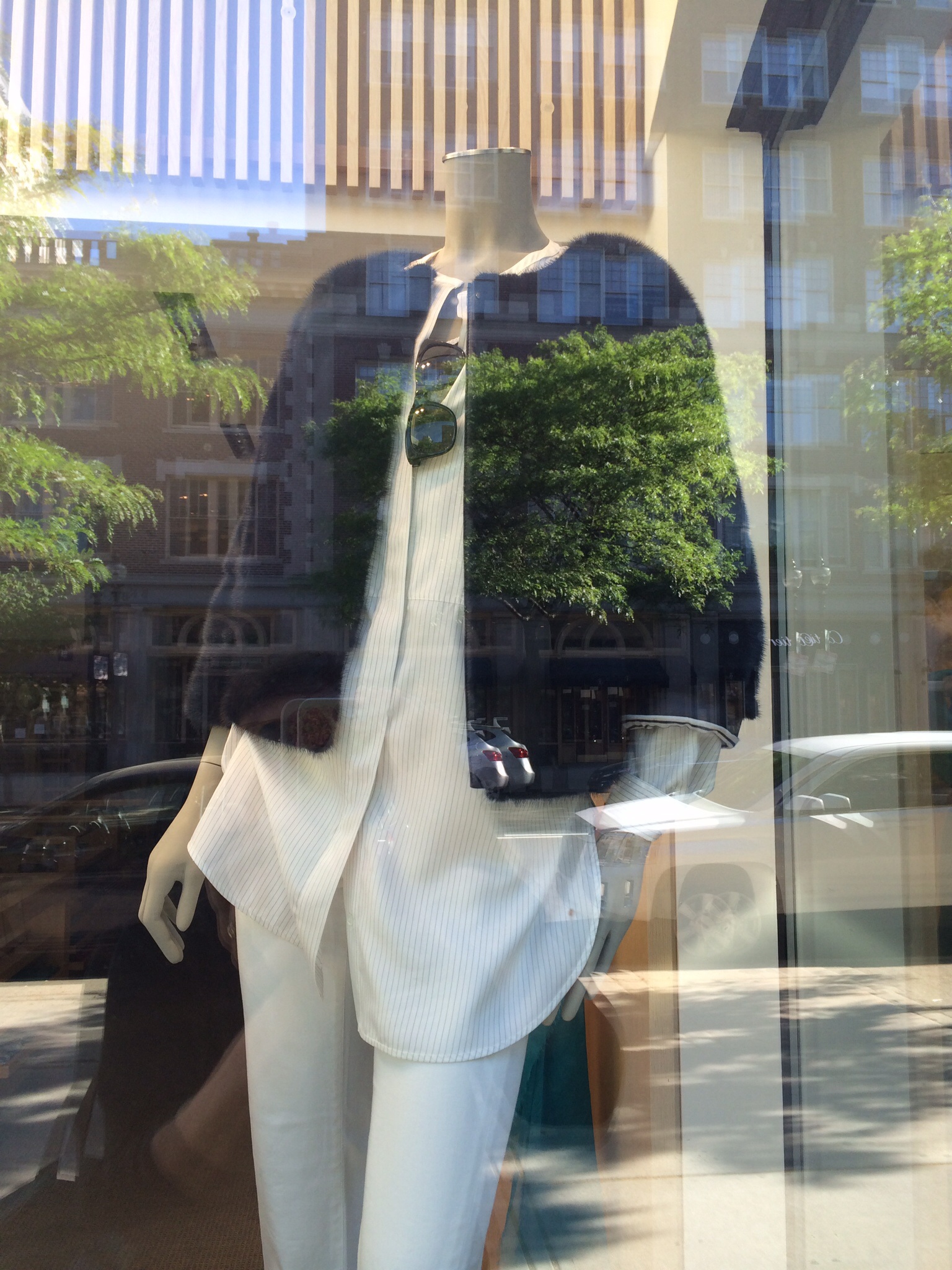
In the window of the Italian luxury store Loro Piana, they were showing a short fur Chanel-style jacket, which I guess is what you wear when it gets chilly on the yacht:

image

In the 70s we used to call that style a “chubby.”

The outpost of the upscale Swiss brand Akris, known for it’s simple designs made from luxury fabrics, had this pretty black knit dress and some of their classic bags in the window:

image

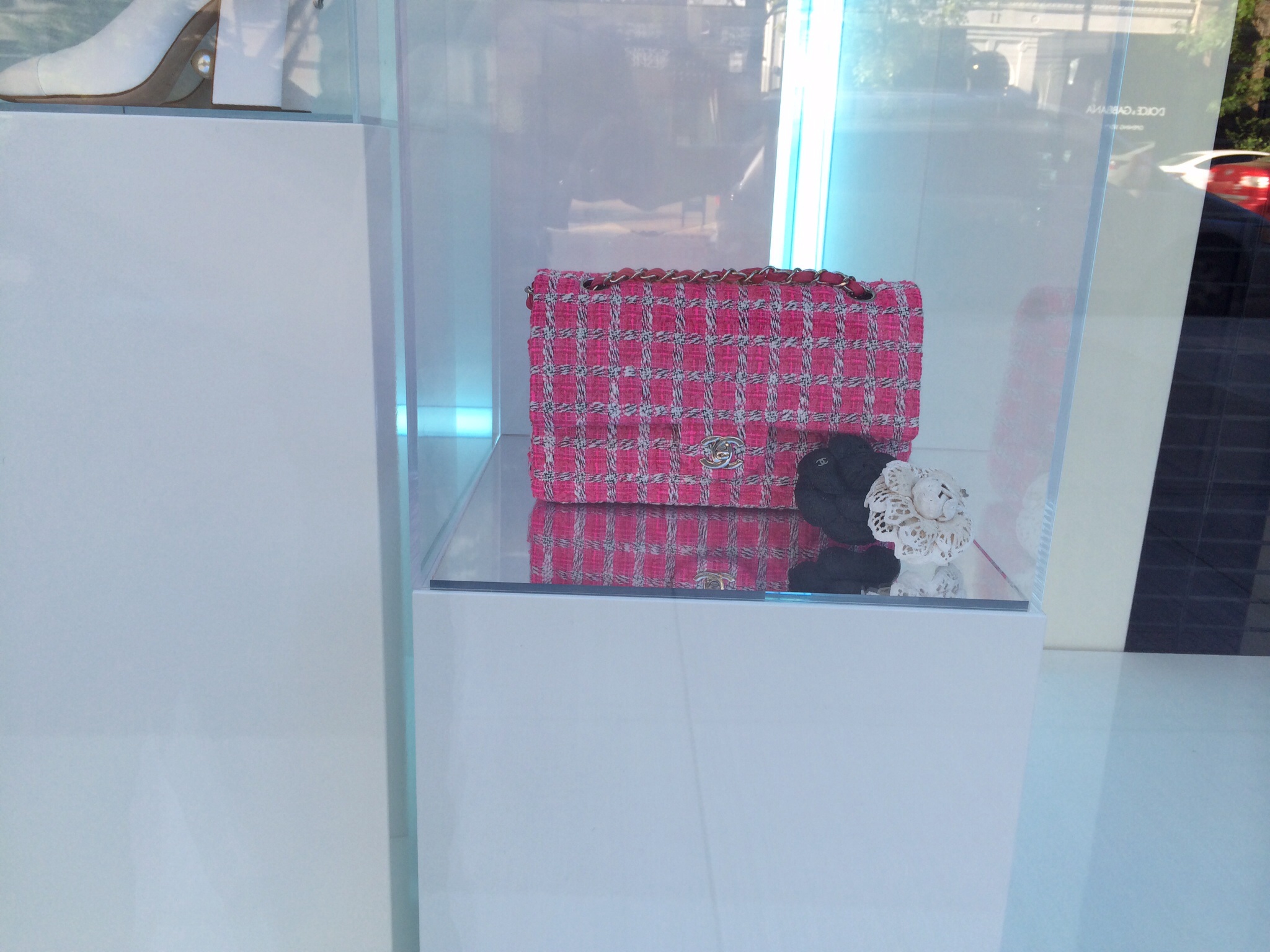
Chanel was getting festive with a pink boucle 2.55 bag crafted out of tweed (how long is that going to last?):

image

as well as, shall we call it a “bedazzled” 2.55 bag covered in crystals, along with a plastic cuff bracelet with the “Double C” logo in faux pearls:

image

Give me a break, Karl.

Also on this high-end street is a new branch of the a vintage-repro company called “Bettie Paige,” named after the 50s cult pin-up. It seems like a strange place for this store, but they do have some cute designs:

imageimage

Perfect if you need costumes in a hurry for a revival of the musical “State Fair.”

But soon it was time to pack up the car and head for the Martha’s Vineyard ferry. When I got to the island, I saw that the roses were blooming:

image

The barn swallows have two nests under the eaves this year:

image

The peach tree we thought had bitten the dust was miraculously budding fruit:

image

And my summer sewing space was there, patiently waiting for me to unpack:

image

Boston Museum of Fine Arts Quilts and Color Exhibit

12

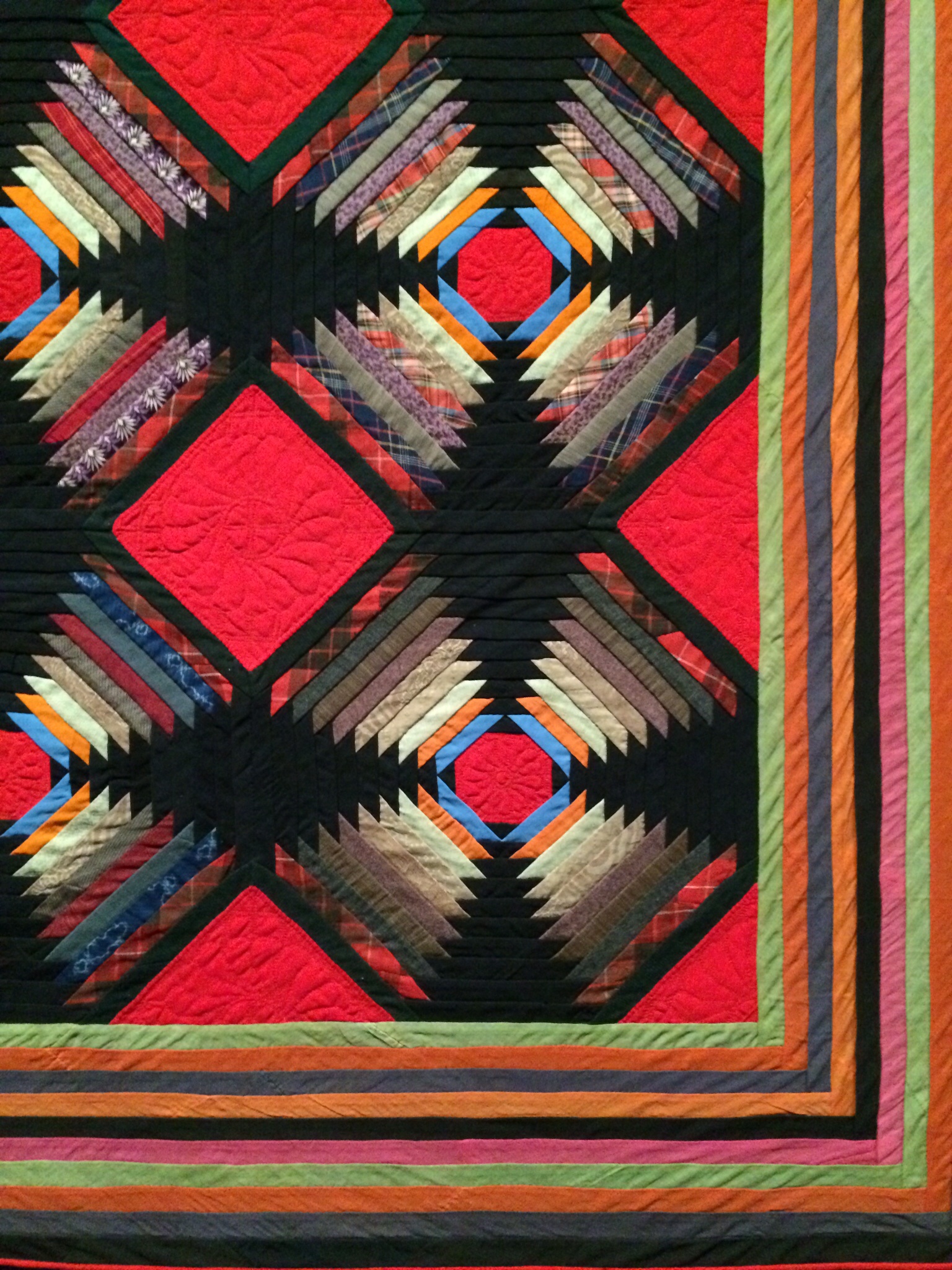
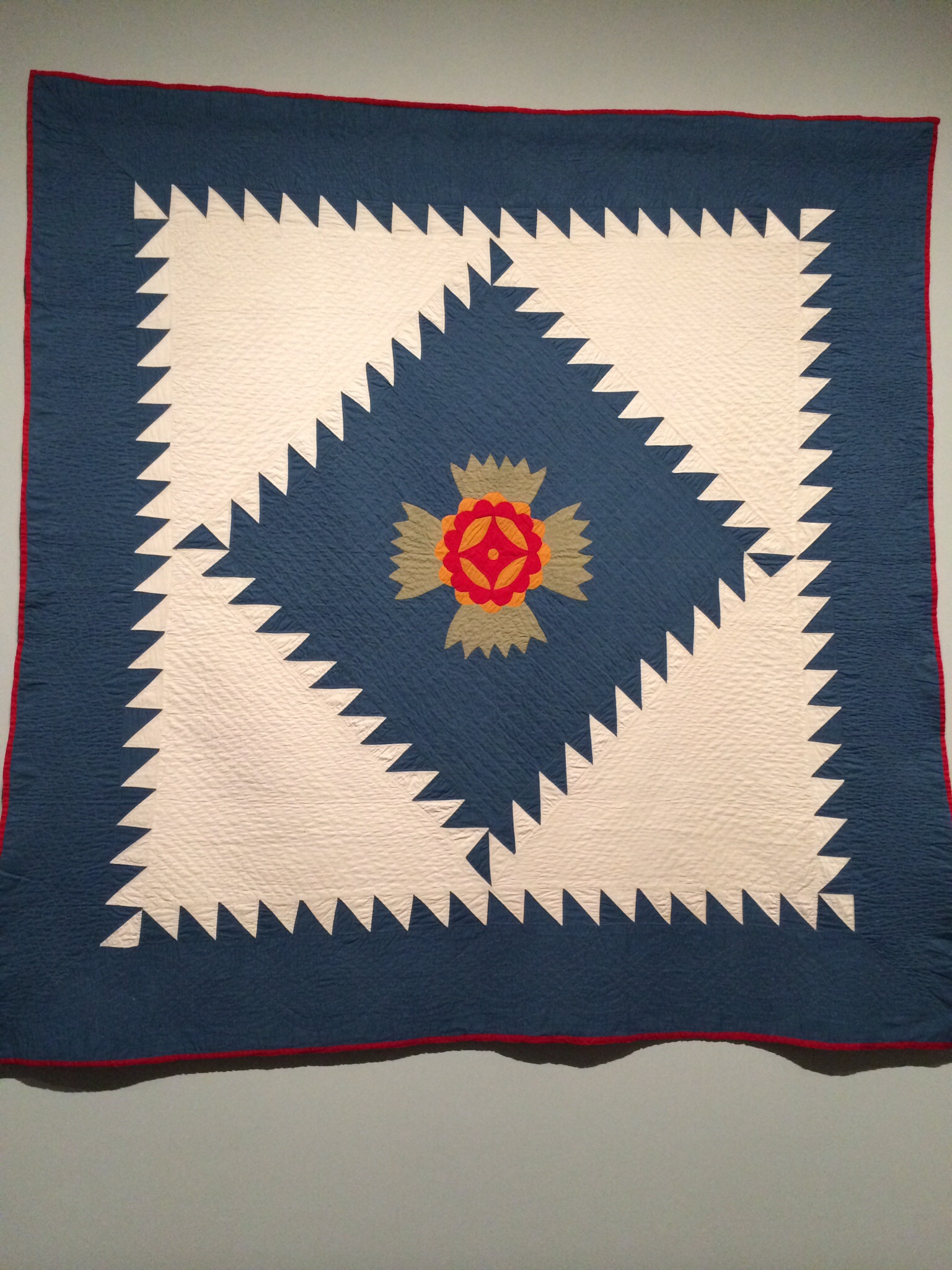
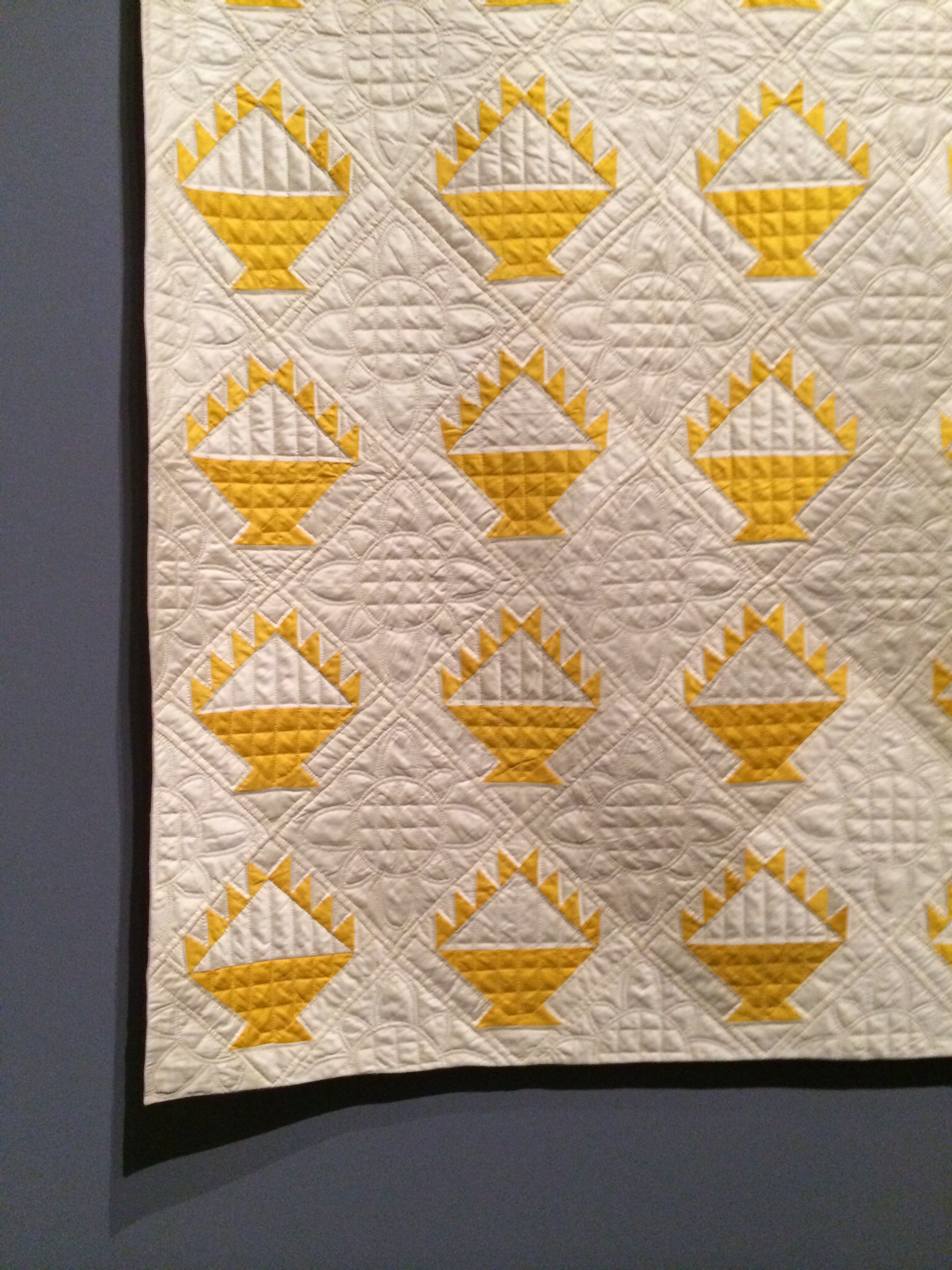
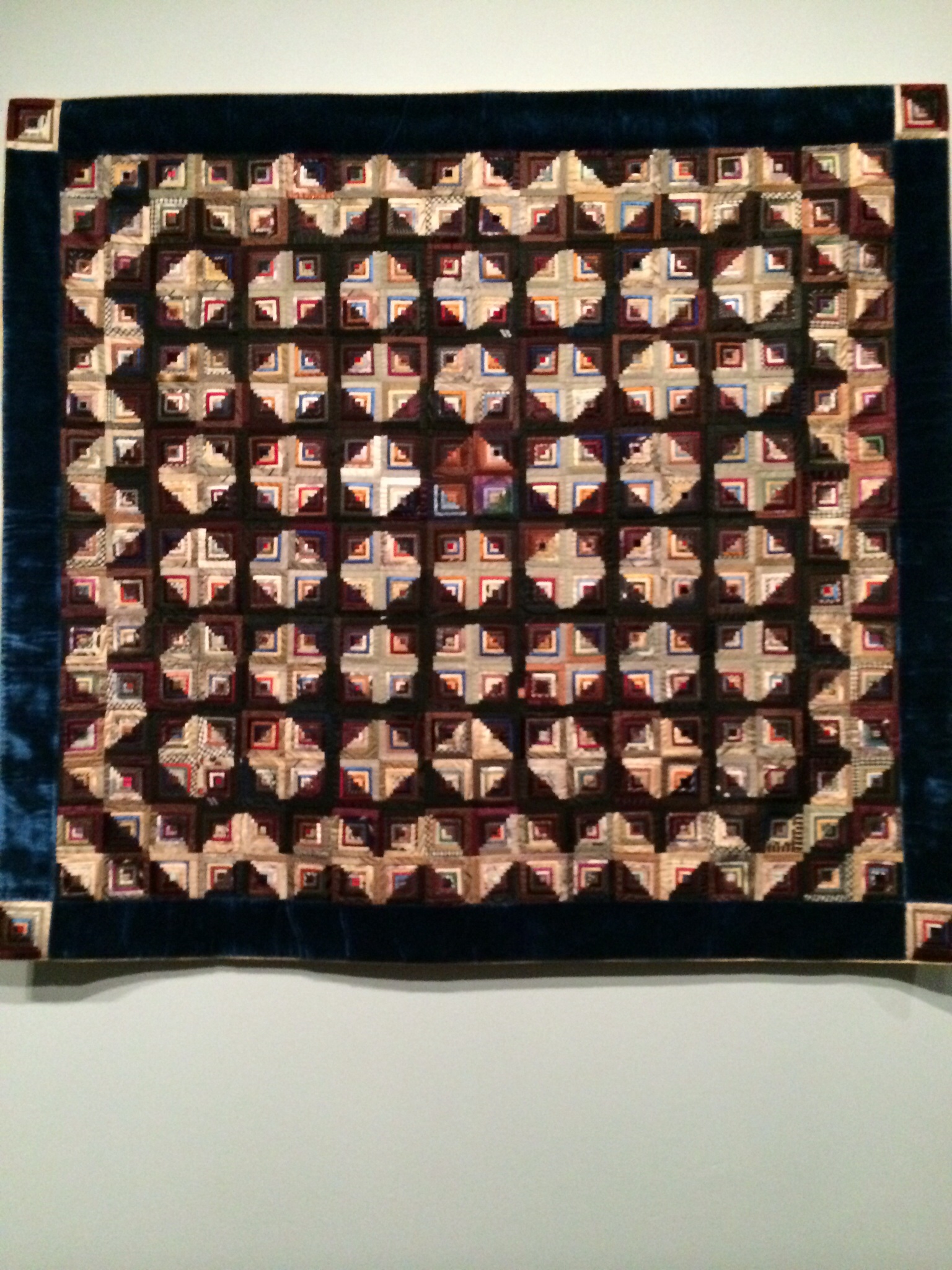
Yesterday I had the good fortune to visit another exhibit celebrating ways that fabric and thread can create works of art. The Boston Museum of Fine Arts has been using “color” as its theme this year, and the exhibit “Quilts and Color” celebrates that concept.

image

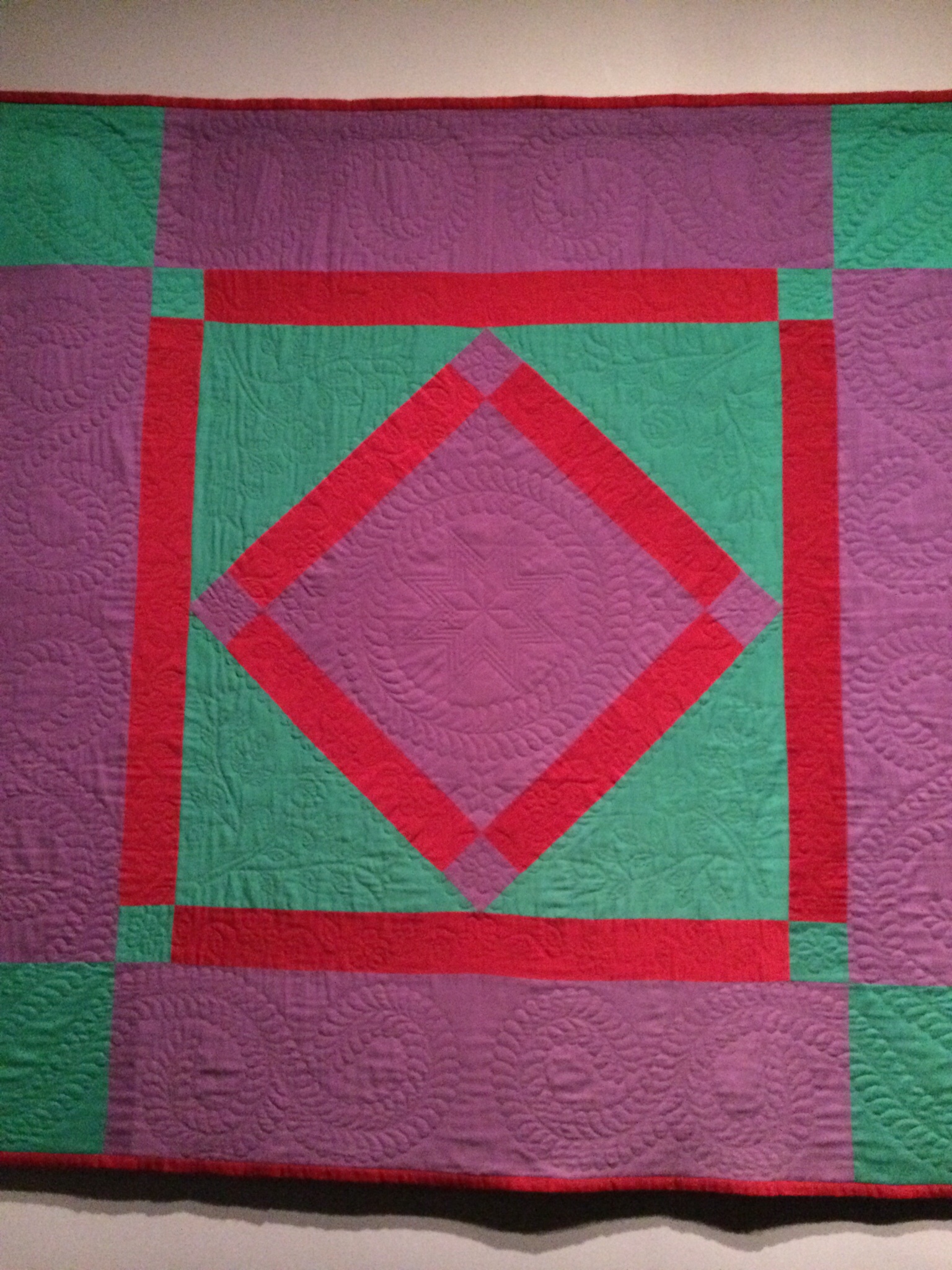
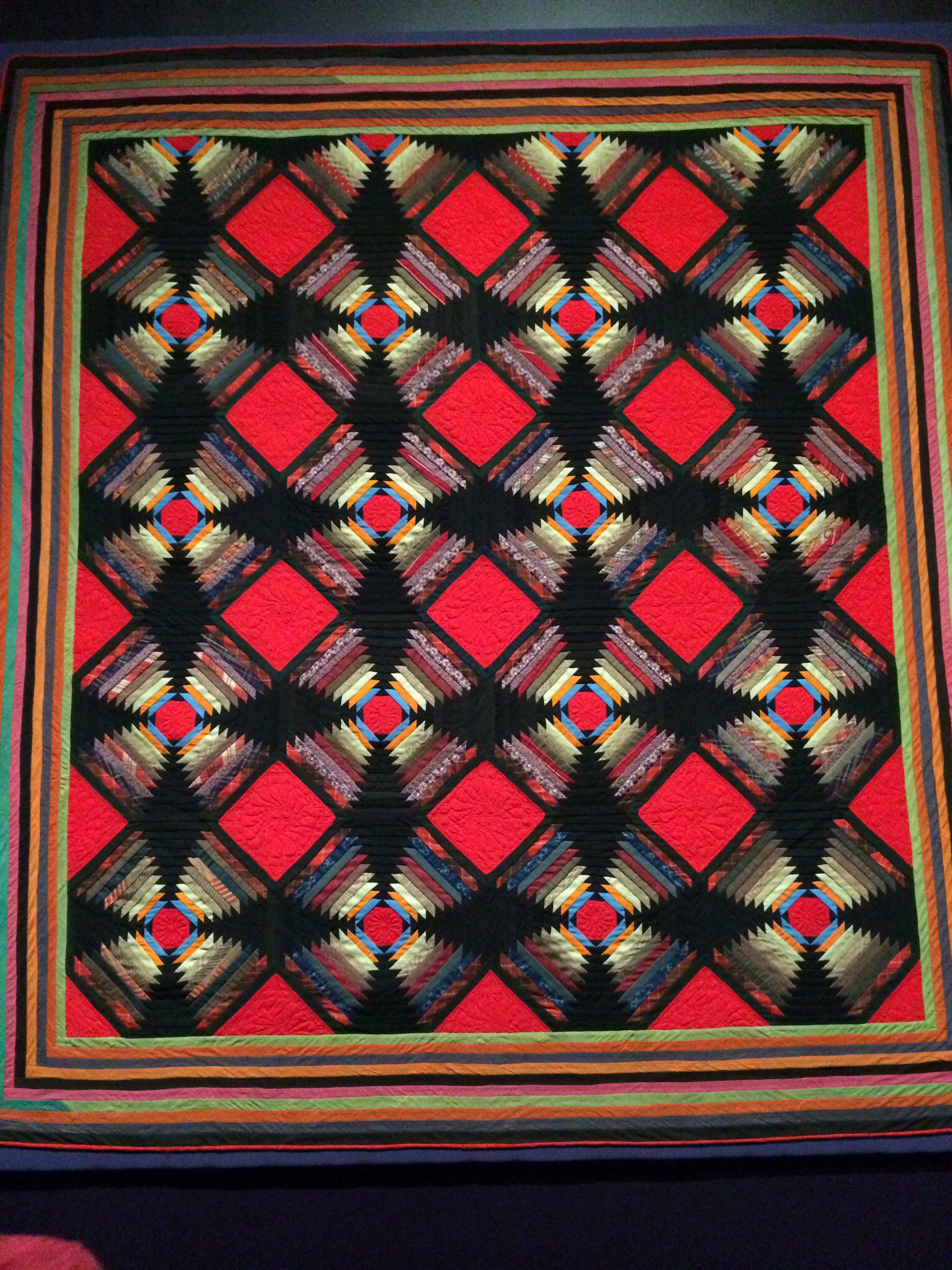
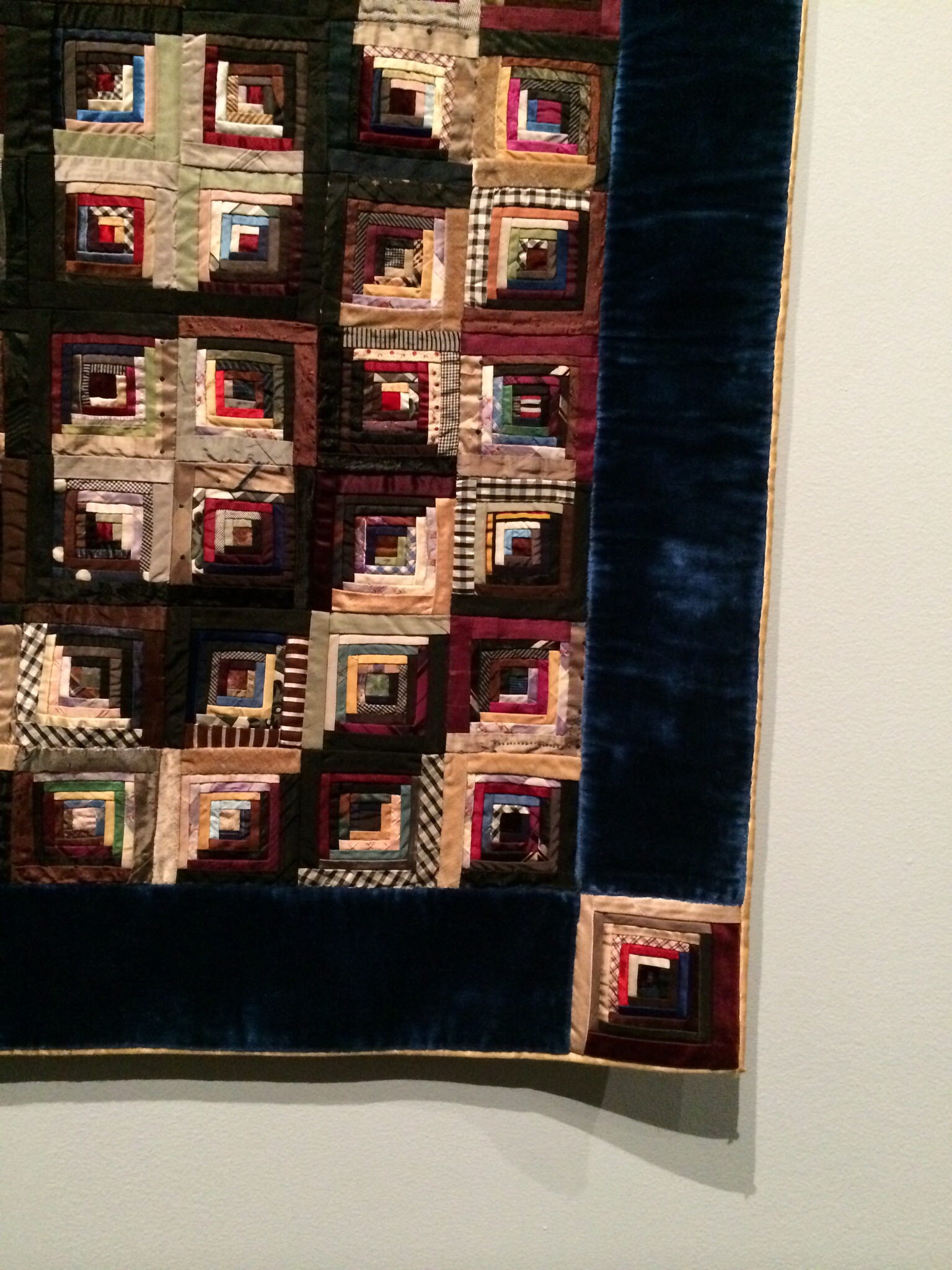
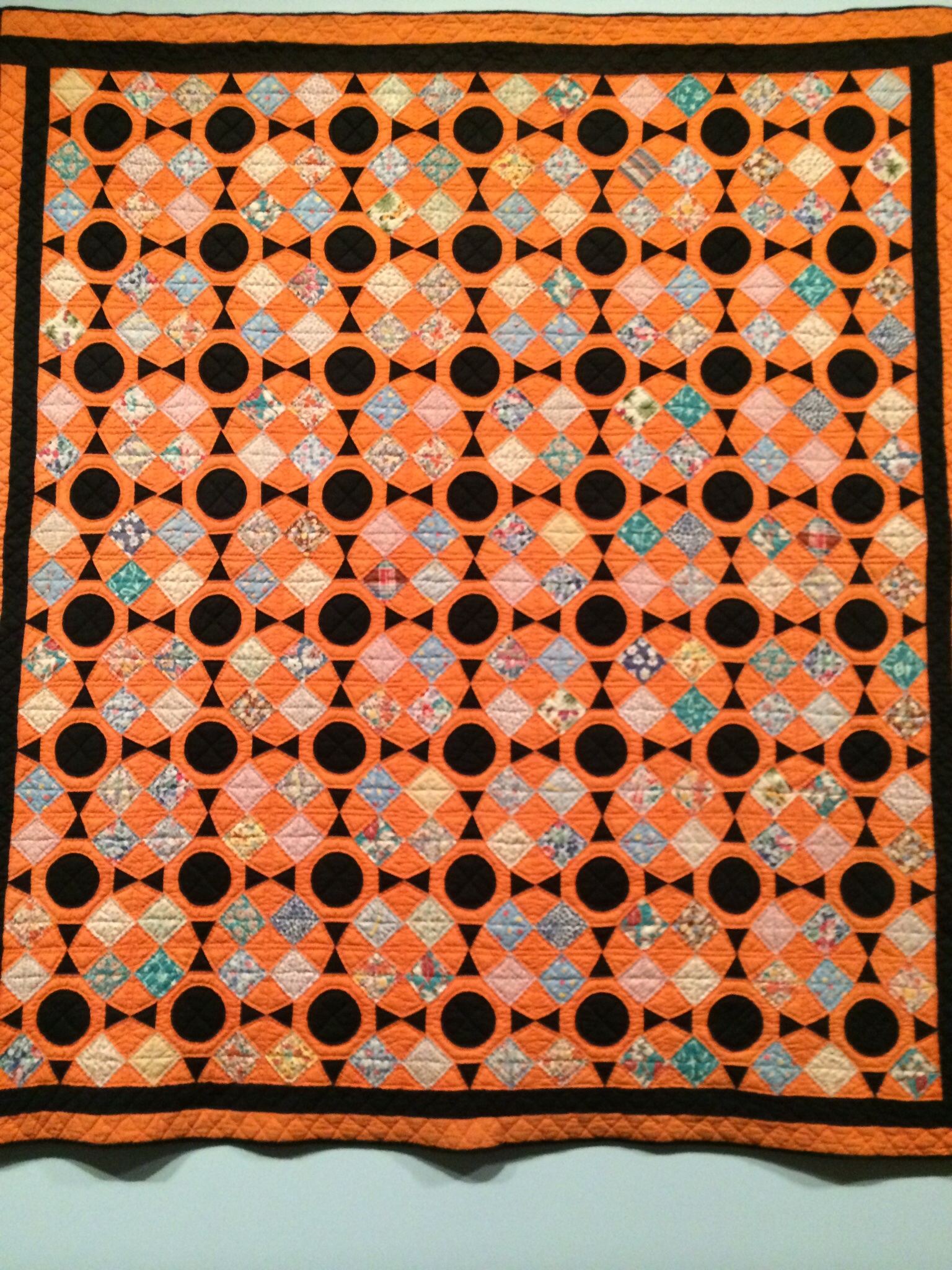
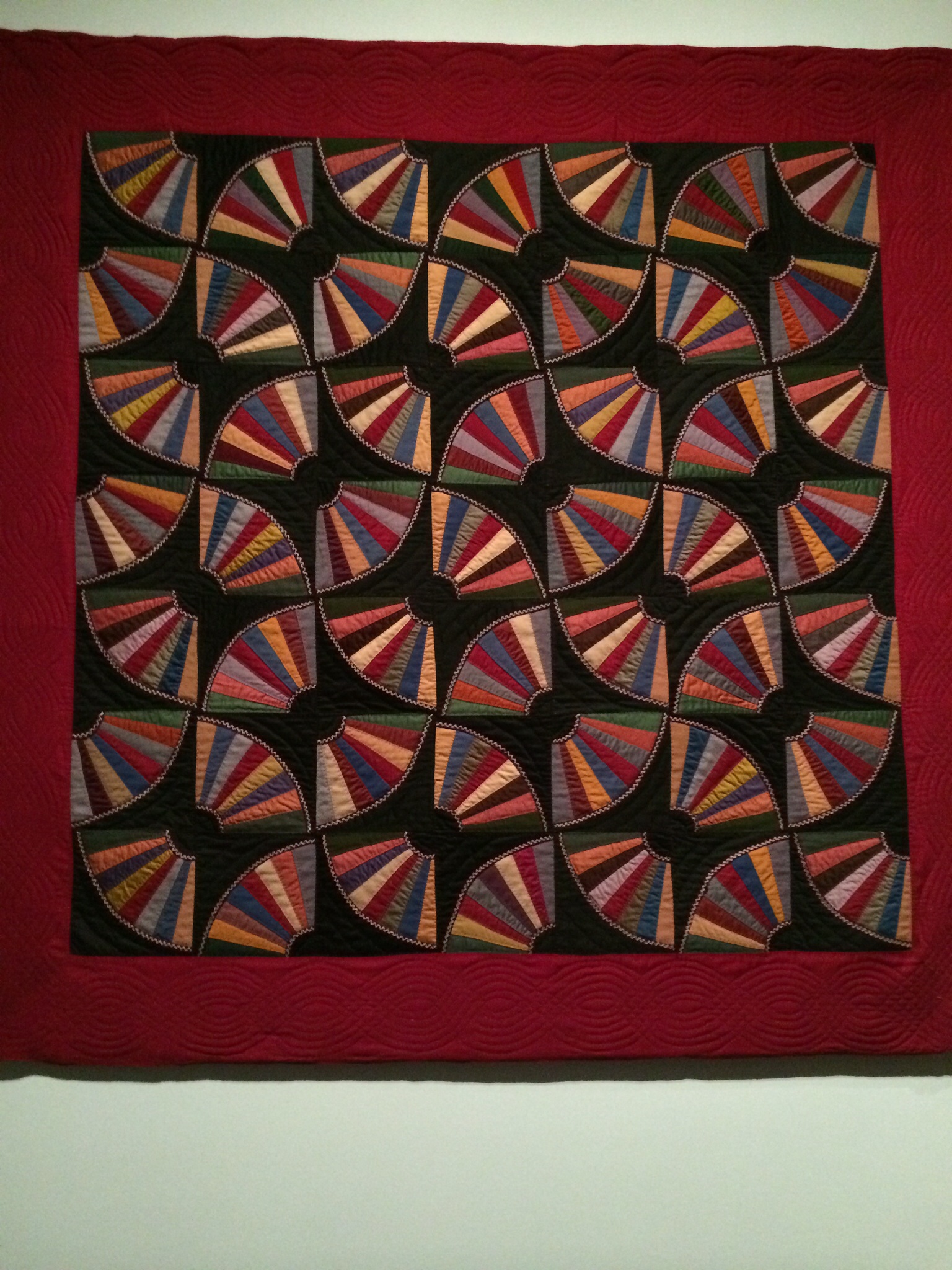
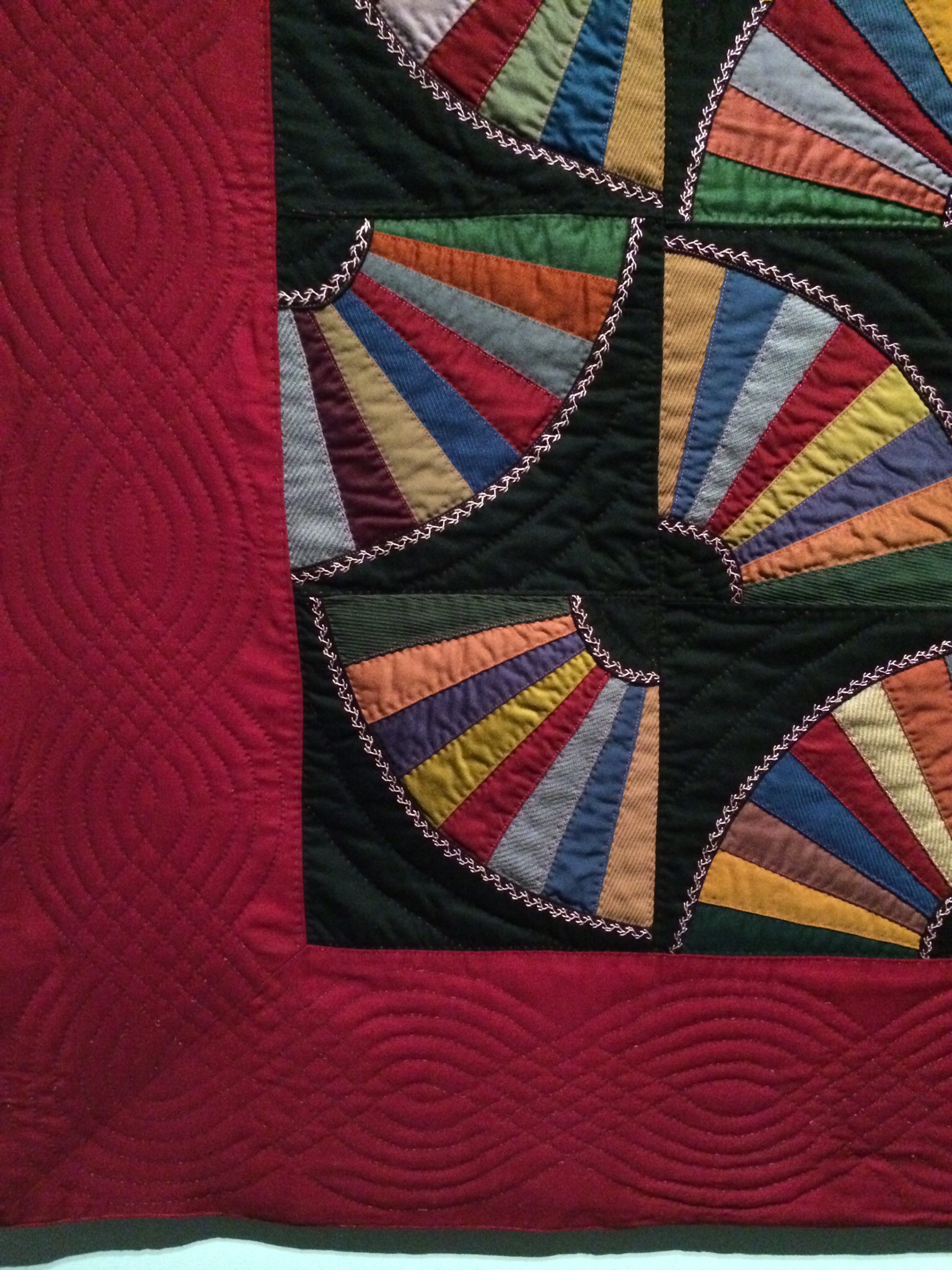
When you walk into the spacious gallery with high ceilings, the individual quilts are hung and lit like overscale paintings. Quilts that first appear to be abstract art become marvels of precise stitching upon closer inspection.

imageimage

The quilts displayed are from the collection of Paul Pilgrim and Gerald Roy. Here’s more information about the exhibit and the collectors from the MFA’s website:

(Quilts and Color Exhibit)

The quilts, which are primarily from the 1800s and early 20th century, are marvels of design, planning, stitch execution, and mostly likely teamwork among the makers. Not being a quilter, I can’t give technical details, but both my non-sewing friend and I were completely floored by the beauty and mastery displayed.

imageimage

imageimage

imageimage

imageimage

imageimage

imageimage

imageimage

imageimage

It’s impressive that these (mostly) women artistsans, who had so many other things to do in the pre-mechanized age, could take the time to design, plan, and create such labor-intensive works of art.

Looking at this exhibit, I was struck by the notion that what makes us human is less about how we’ve learned to use tools and weapons, and more about how we’re willing to take some additional time to make a useful item more beautiful. Any of us who have picked up a needle and thread for pleasure know that feeling.

The exhibit runs through July 27th. I highly recommend it.