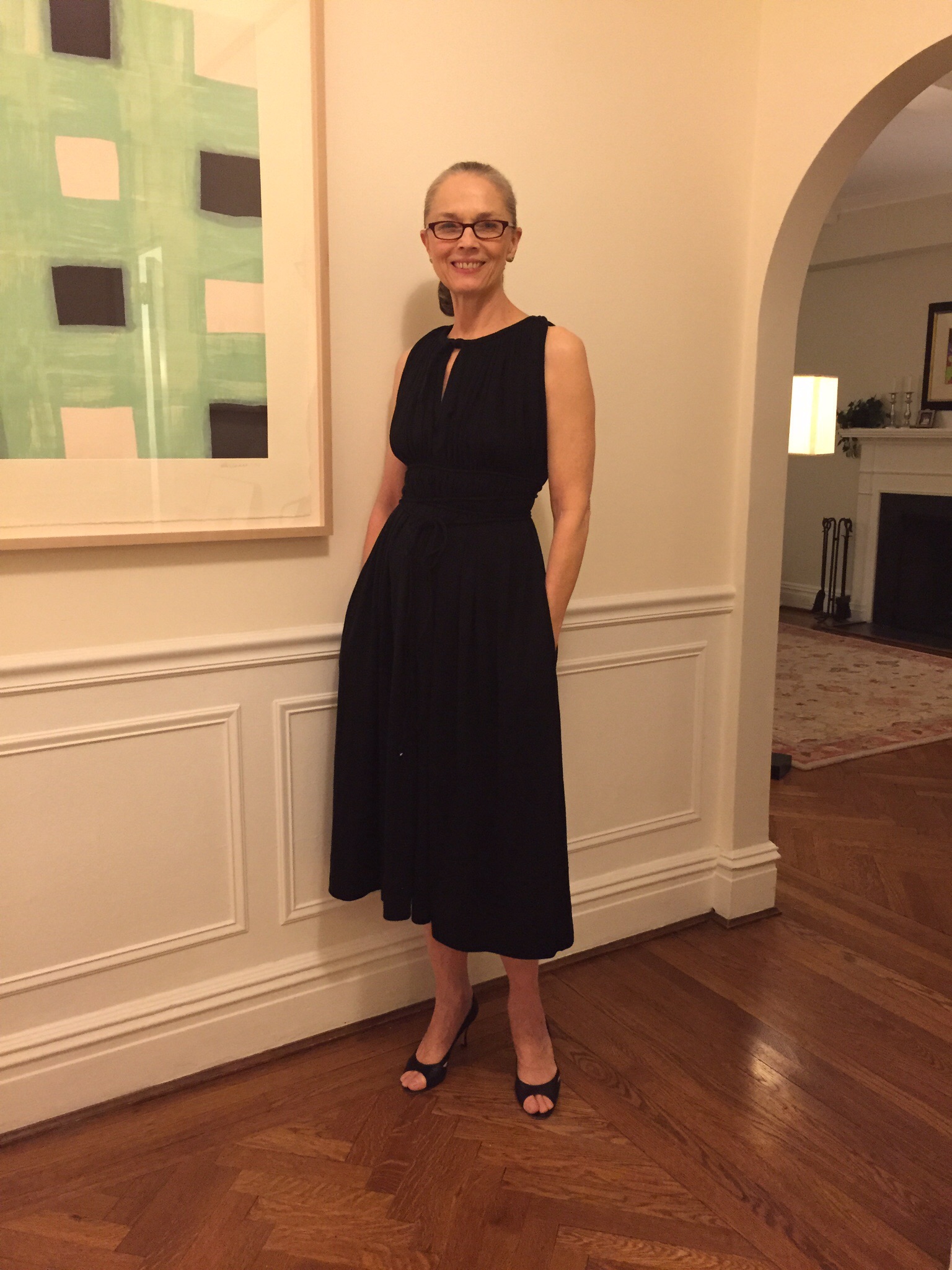
So I hightailed it down to New York to see my sister swanning around in that Claire McCardell dress I whipped up (details here), and got a quick peek at the Dance & Fashion exhibition going on through January 3rd, 2015, at the Museum at the Fashion Institute of Technology.
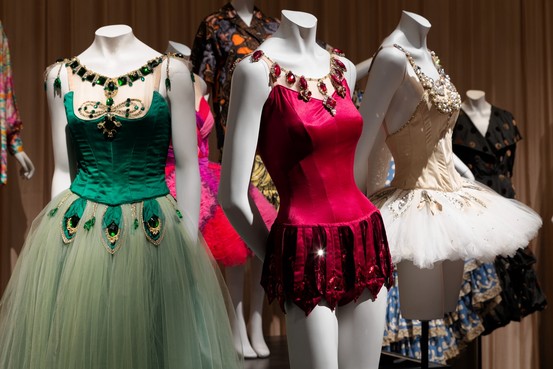
Those are the “emerald,” “ruby” and “diamond” costumes from George Balanchine’s old war-horse…oops, I mean…much-loved ballet “Jewels.” They’re as gorgeous up close as they are on stage.
I don’t have many photos to share, since just as I discretely lifted my camera for a pic of those Ballets Russes costumes snuggling up with designs by Paul Poiret and Yves St. Laurent, a polite “no pictures” came out of the dark. Those museum guards are on top of it!
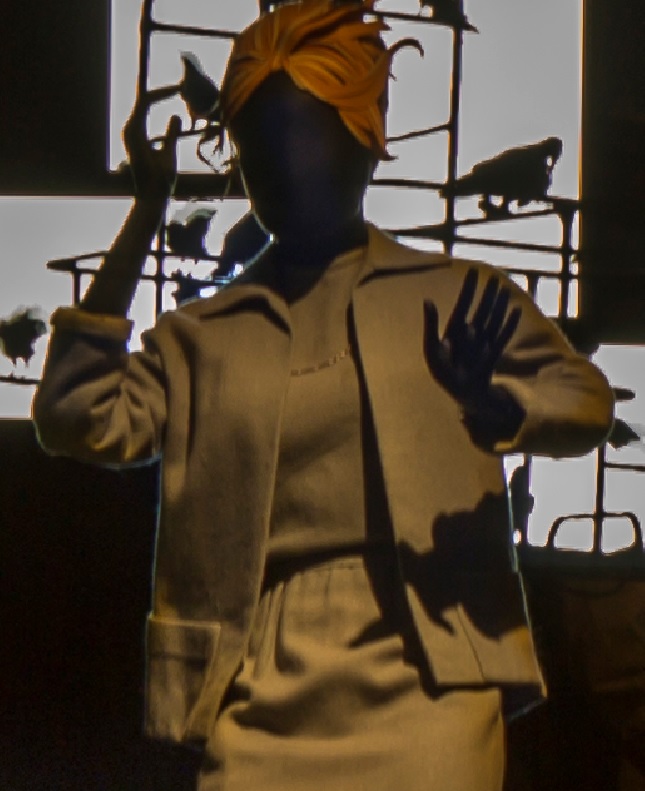
The exhibit compares actual dance costumes with related designer streetwear and gowns, and also features costumes that were created for dances by fashion designers. It covers everything from the romantic era of ballet into modern dance and beyond to post-modern collaborations. For example, there are several of the costumes created by the designer Halston in the 70s for the Martha Graham Dance Company, like this one:
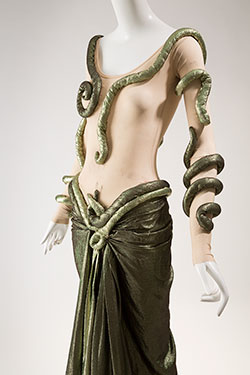
(Some night I’m going to borrow that to wear around the house, just to see if anyone notices…)
Since I was there as a guest and not a journalist, I’m going to send you to this excellent article from the Wall Street Journal, written by Laura Jacobs, for a play-by-play of the exhibit. (Where The Body Can Dance With The Soul)
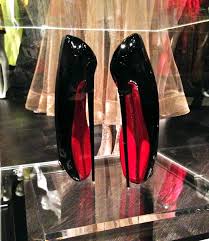
I will say, though, after looking at these Louboutine fetish shoes, and having been on my feet all day, I silently gave thanks that there’s no chance in hell I’ll ever have to get back in a pair of pointe shoes.
After executing a few “pas de bourrees” around the room (not really, mercifully for the others there) I headed to the auditorium where my sister (Janet Eilber, Artistic Director of the Martha Graham Company), along with designer Doo-Ri Chung, were speaking about the collaboration of Dance and Fashion.
I was surprised to hear, even after the many years I had seen Janet perform with the Graham Company, and having studied modern dance for a summer with “Miss Graham” myself, that Martha Graham actually did much of the draping of her costumes herself, and was inspired as a choreographer by the properties of the fabric she was using.
The two Graham solo dances that were performed during the event highlighted this: Lamentation, which is performed enveloped in a tube of jersey, and Spectre-1914, about the onset of World War 1, performed in a giant skirt that spreads several yards in all directions beyond the dancer’s feet.
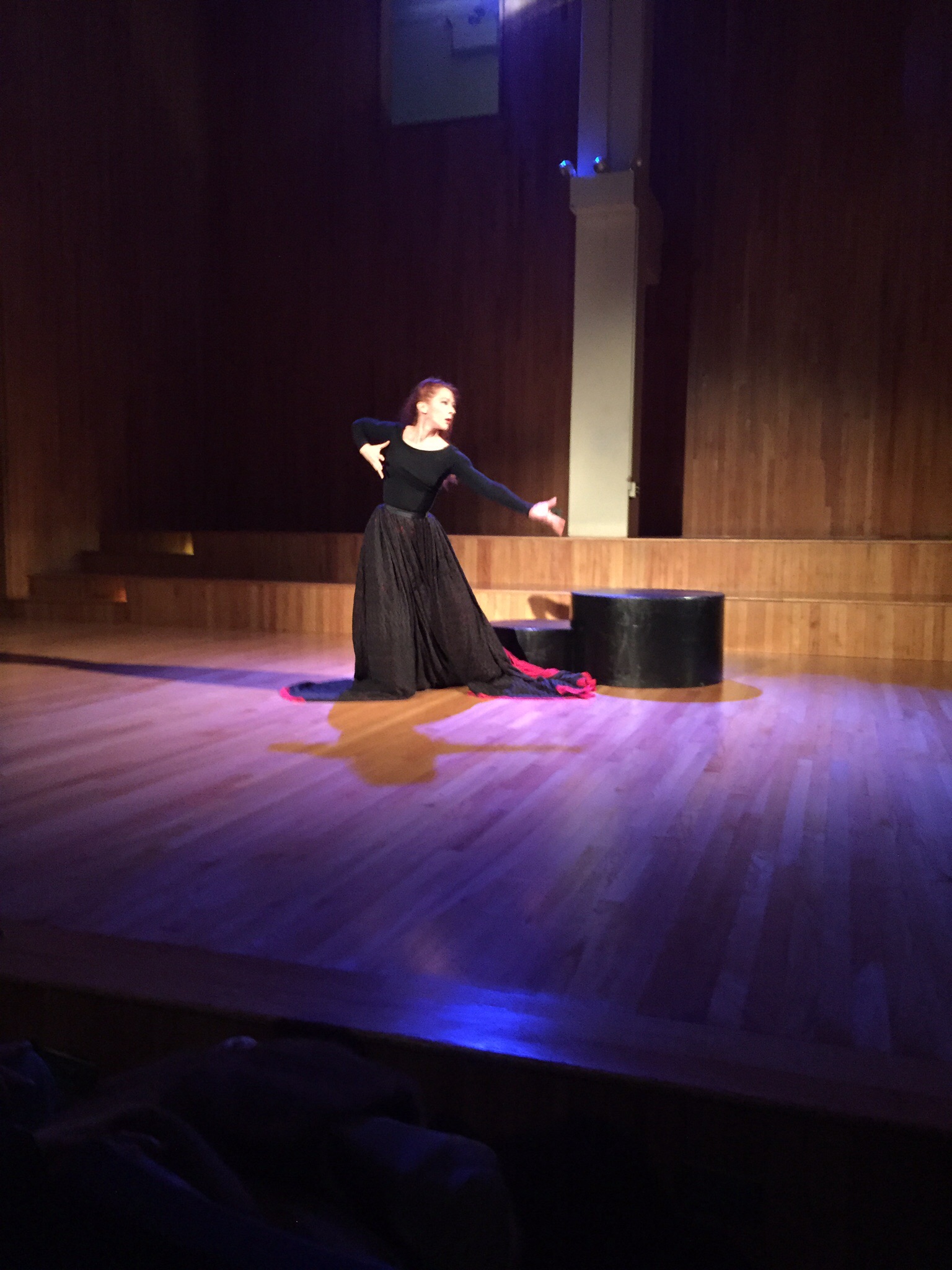
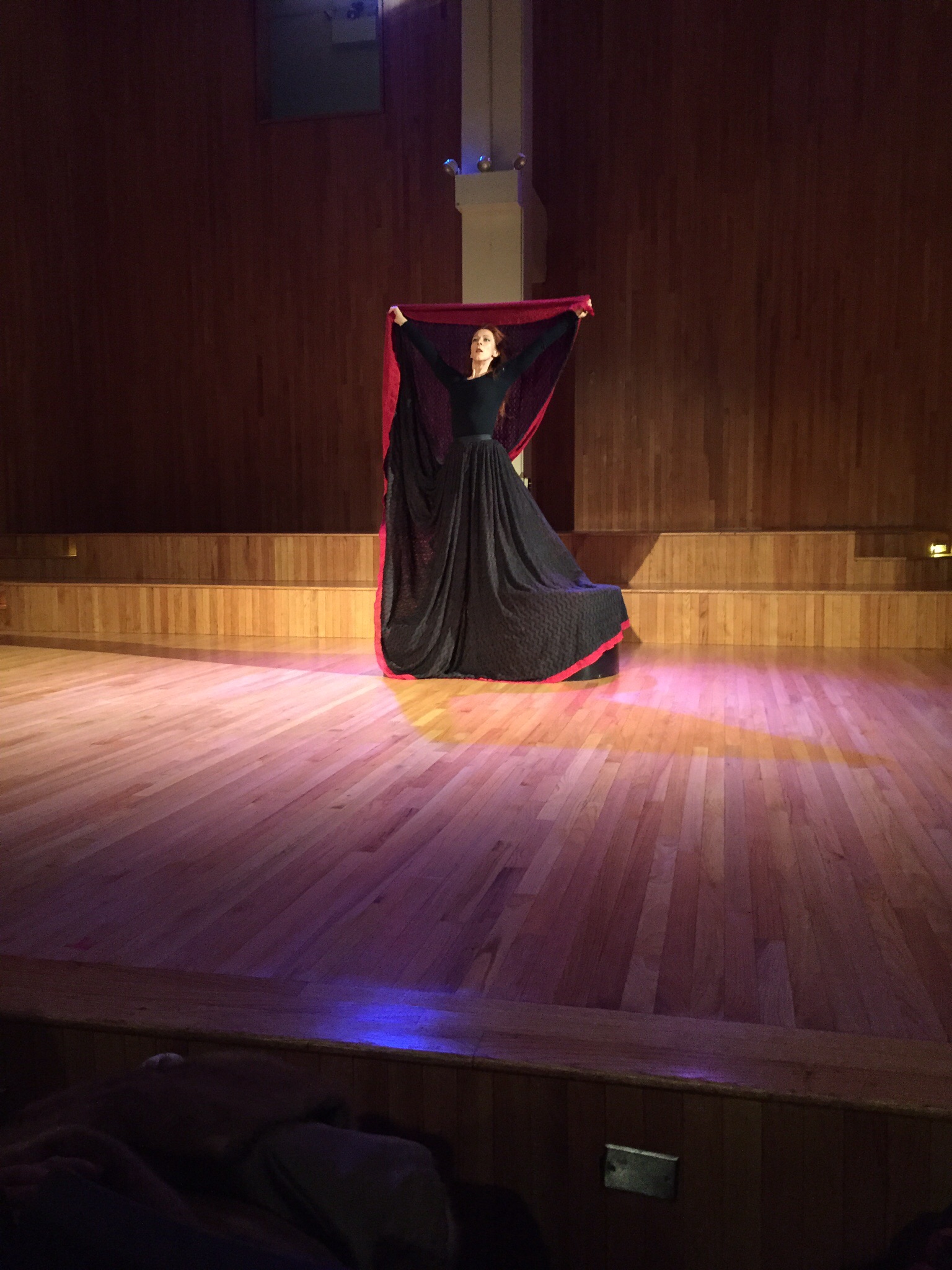
During this performance, dancer Blakeley White-McGuire expertly manipulated the yards and yards of black fabric, lined in red, conjuring images like the flames of war, the wings of death, flowing blood, or the shroud of a coffin.
Here’s picture of the panel, consisting of moderator Melissa Marra from the Museum at FIT (left), Janet in her McCardell (middle), and Doo-Ri Chung (right). They’re looking at a picture of Janet dancing back in the day, in the Martha Graham ballet…er…help me out, Janet…”Seraphic Dialogue”, about Joan of Arc?
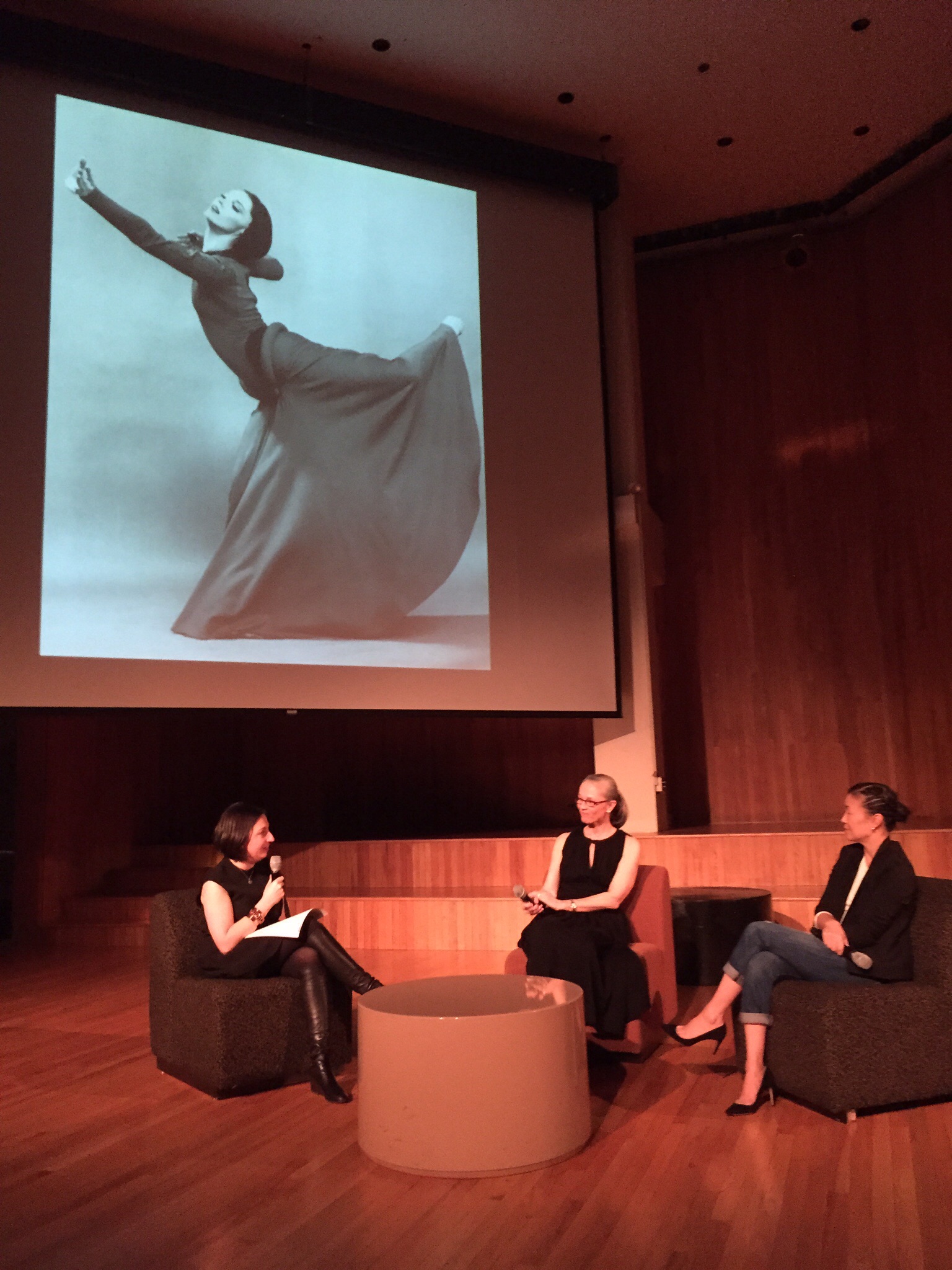
During the discussion, Janet talked about how Martha Graham created costumes by pinching and draping the fabric, and in one instance, she came up with a costume made entirely from one uncut piece of fabric. Janet remembered how, when she was dancing with the company in the 70s, Halston would collaborate with Graham, and make costumes from fabric that was far more expensive than the normal dance company budget. In one case, he used silk jersey for costumes that were like long palazzo pants, but with each performance, the drape of the fabric would “grow” and the pants would be pooling around the dancers feet! They had to trim off several inches at the hem during the course of the tour.
Doo-Ri Chung, who is known for her expertise in draping jersey, had some interesting points to make about the challenge of working with that kind of knit. She mentioned that in terms of ready-to-wear, jersey often lacks “hanger appeal” (meaning it doesn’t look that enticing to consumers on a hanger) and said that jersey also needs volume in the design, to keep it from being too form-fitting. I found that point particularly interesting, as the McCardell dress I made for Janet has loads of volume and gathers, but doesn’t feel heavy or bulky on when worn.
Here’s the report from Janet on what it feels like to wear an original McCardell design, made from new fabric: “The McCardell dress is a pleasure to wear. Getting dressed up has never been so comfortable! I’ve discovered that the wool jersey drapes itself just beautifully, no matter what I am doing. I just throw it on, wrap the bodice cords according to my comfort level of the day (hope they are long enough to accommodate Thanksgiving) and make an entrance!”
There was a spirited discussion of designer McCardell as well, who, along with designer and life-long friend Mildred Orrick, popularized the leotard-style bodysuit in the 40s, to be worn under a jumper. The idea was that the modern college girl could layer and stay warm in drafty WWII-era classes.
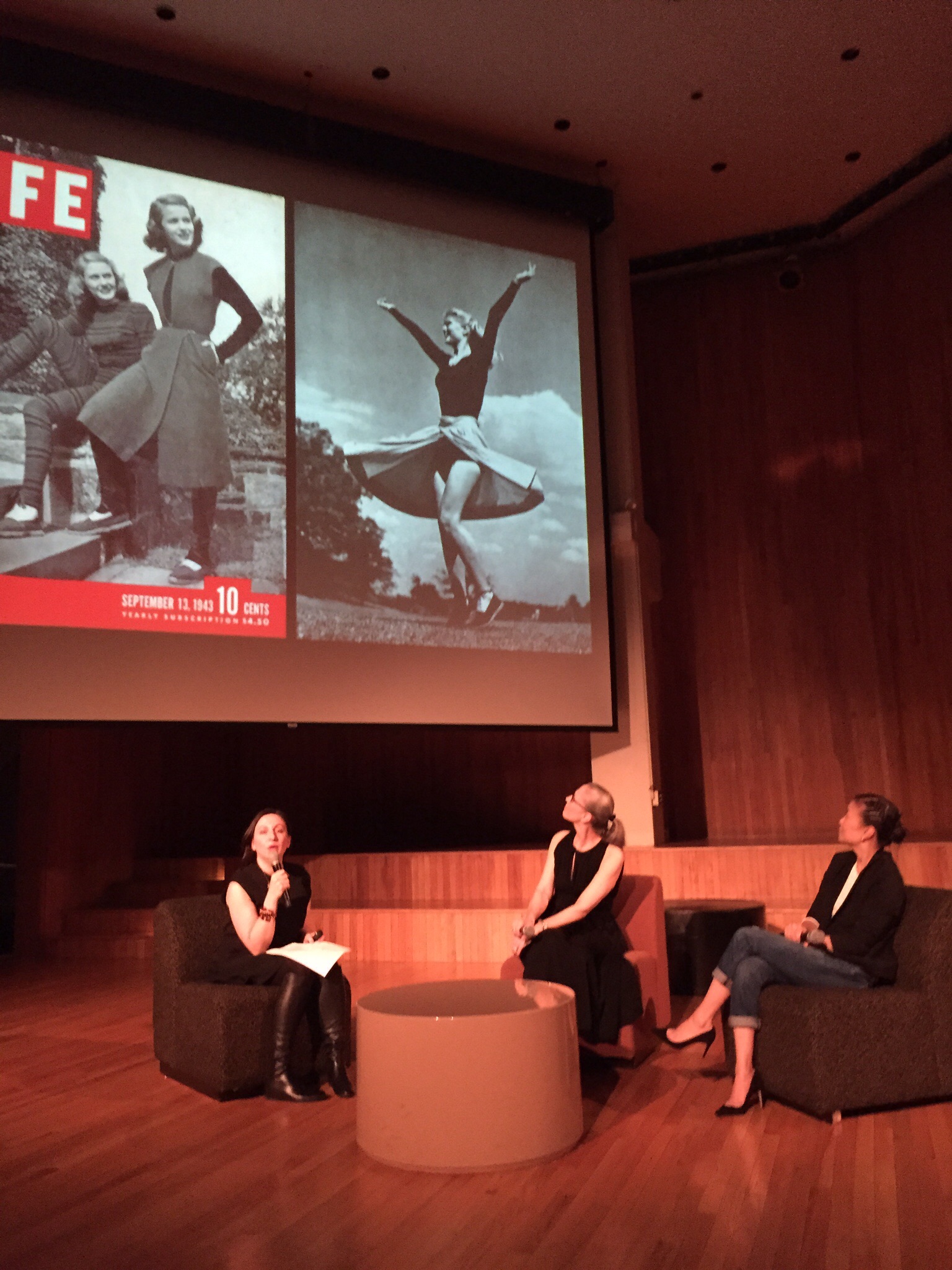
I was excited to see that the exhibit itself included a pair of the ballet flats invented by McCardell, in collaboration with the ballet shoemaker Capezio, which gave women comfortable cloth shoes to wear during WWII rationing. She designed them to be worn at home, then was surprised to start seeing them in the subway!
As the panel’s Q & A was wrapping up, my awesome sister, who, as you’ve probably guessed, is no shrinking violet, jumped up and said, “no one’s asked who I’m wearing! Well, I’m related to JetSetSewing.com, who made this original Claire McCardell dress for me from a 50s pattern.” You go girl!
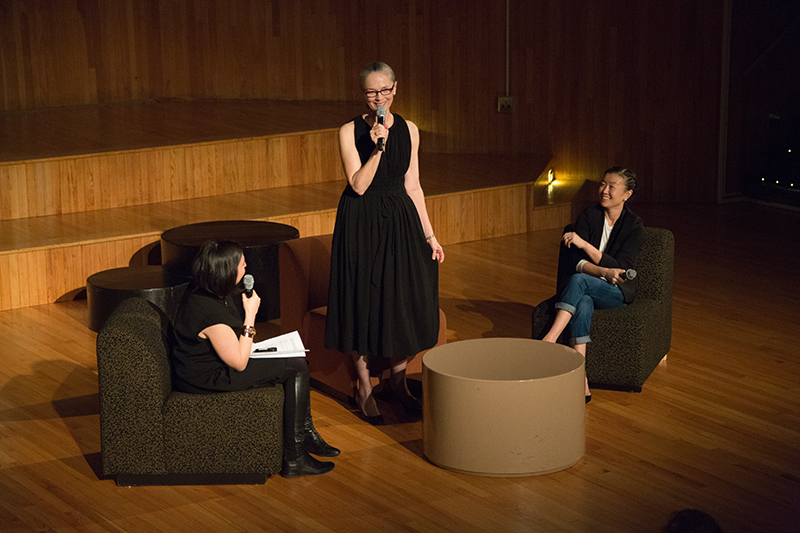
Needless to say it was pretty exciting as a home-sewing maven to get a shoutout at FIT! You looked great, Janet!
Then the following week, I saw on Twitter that Janet was back at FIT in the dress again.
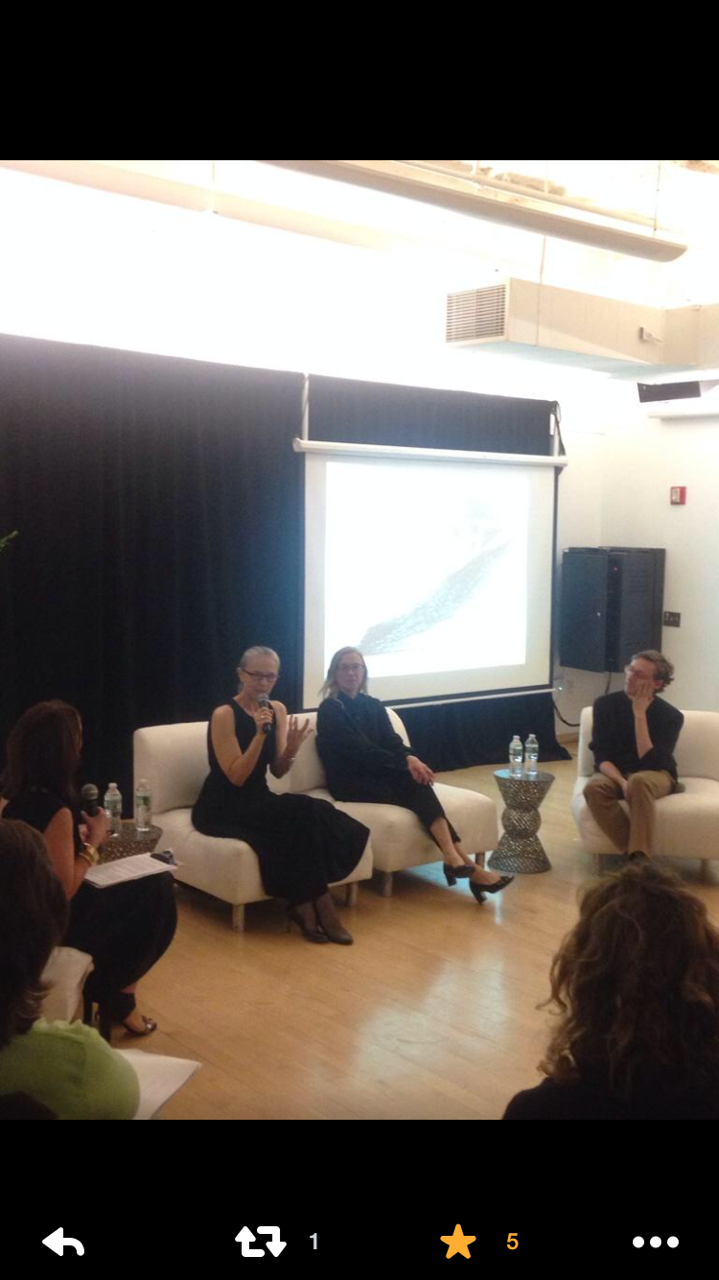
It made me glad that Twitter wasn’t around when I was younger, as I’m sure I would have been busted frequently for borrowing my big sisters’ clothes.
Don’t forget that the Martha Graham Dance Company’s New York Season is coming up in February! It’s a mix of classic Graham works and pieces by current choreographers.
After I got back, I was pleased to see that Marianne, of the blog Foxgloves and Thimbles in the Netherlands, had downloaded and stitched up a beautiful holiday version of my 5os “Hepburn” scarf pattern, using silk dupioni. Thanks Marianne; it looks gorgeous!
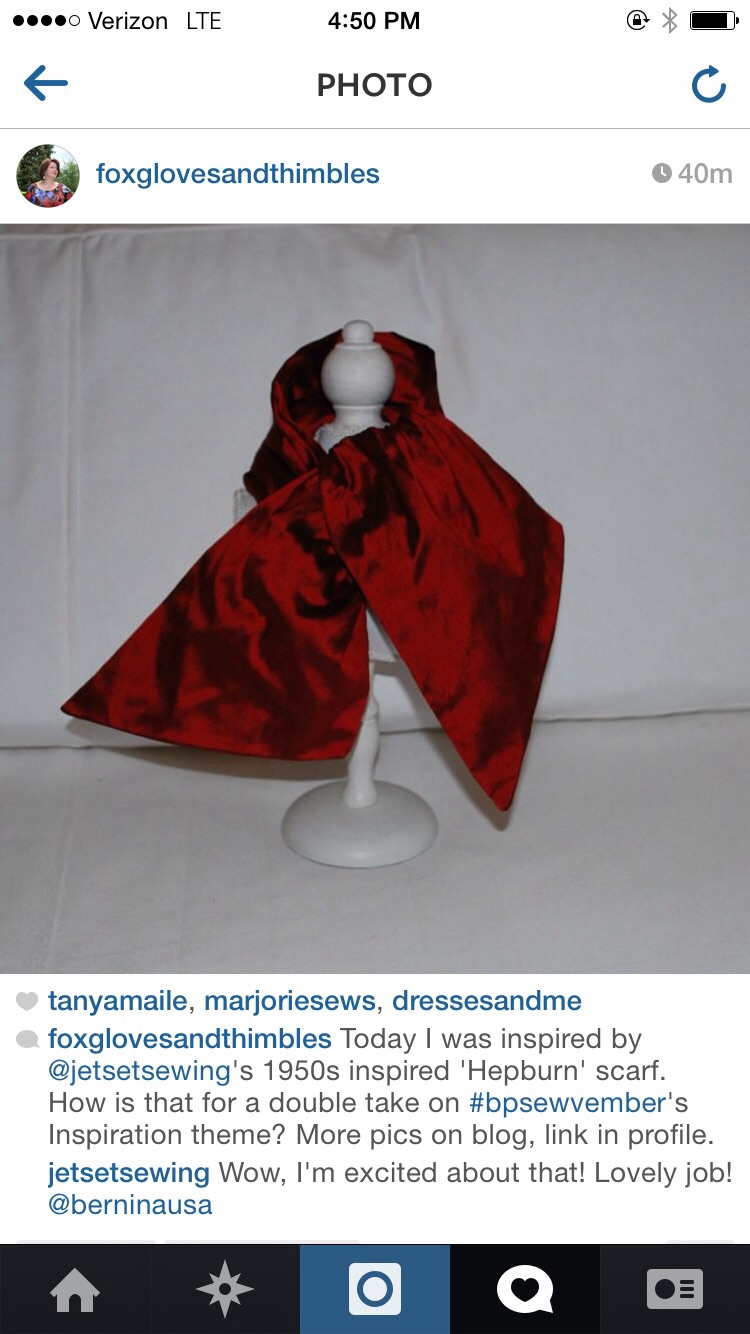
(I snitched that picture off of InstaGram.)
The pattern is available as a free download on the Bernina U.S.A. website WeAllSew.com. It’s quick and easy for holiday sewing! For details about JetSetSewing’s collaboration with Bernina, please click the “Bernina Collaboration” tab.
And lastly, I was thrilled to see the official list of BurdaStyle’s 50 favorite bloggers, where Jet Set Sewing was nestled right below Gertie’s New Blog for Better Sewing. Loads of great blogs on the list; check it out:
Click to access BurdaTopBloggerPDF_v3.pdf
My thanks to BurdaStyle!
As for me and my Swiss intern, Karl the Bernina 560, it’s time for a little rest and stash closet cleaning (still waiting for you to get on top of that, Karl), as well as packing my bags for an epic sewing meetup…in Paris!
(No, Karl, I’m sorry, you’re far, far too heavy for my carry-on…please, no tears…)







 Jet Set Sewing